
 Español
 Français
 Pусский
 繁體中文
繁體中文 简体中文
简体中文 Select another language


ew names resonate as strongly in watchmaking history as that of the Leroy dynasty. Founded in Paris by Charles Leroy in 1785, watchmaker to the French Navy and exhibitor at the first Paris World’s Fair, the maison distinguished itself for more than two centuries through an absolute pursuit of precision and complexity. Until 1989, it held the record for the most complicated watch in the world, now preserved at the Musée du Temps in Besançon.
After its integration in 2004 into the Festina Group ecosystem alongside Perrelet and Soprod, L.Leroy followed a more discreet trajectory. Certain collections were discontinued as early as 2012–2013. An attempt at revival with an observatory chronometer in 2014, followed by a unique piece presented at Only Watch in 2015, were not enough to sustainably re-establish the brand. Nearly ten years of silence followed.

“There were attempts, but no real continuity. The revival had to be done differently, with a clear vision and extreme exacting standards,” explains Hugo Lesizza, who joined the project in 2019.
From subtle signals to a confident revival
The first stir came with a tactile watch presented confidentially for Only Watch 2023 (the watch was withdrawn following the suspension of the charity auction, editor’s note). For the first time in the modern history of L.Leroy, a material other than gold was used: titanium. Refined guilloché, hand engraving, and a watchmaking language faithful to the maison’s DNA—the piece was ultimately withdrawn from the sale, but marked a turning point.

“It was deliberately discreet. A first step. But this language, this material—we will use them again,” Hugo Lesizza confided at the time.


The true reappearance came in 2025 with the Bal du Temps, a very high complication combining a tourbillon and minute repeater, offered in 18-carat 5N gold, platinum, and grade 5 titanium. A manifesto piece, produced in extremely limited quantities.
Osmior: the aesthetic thread
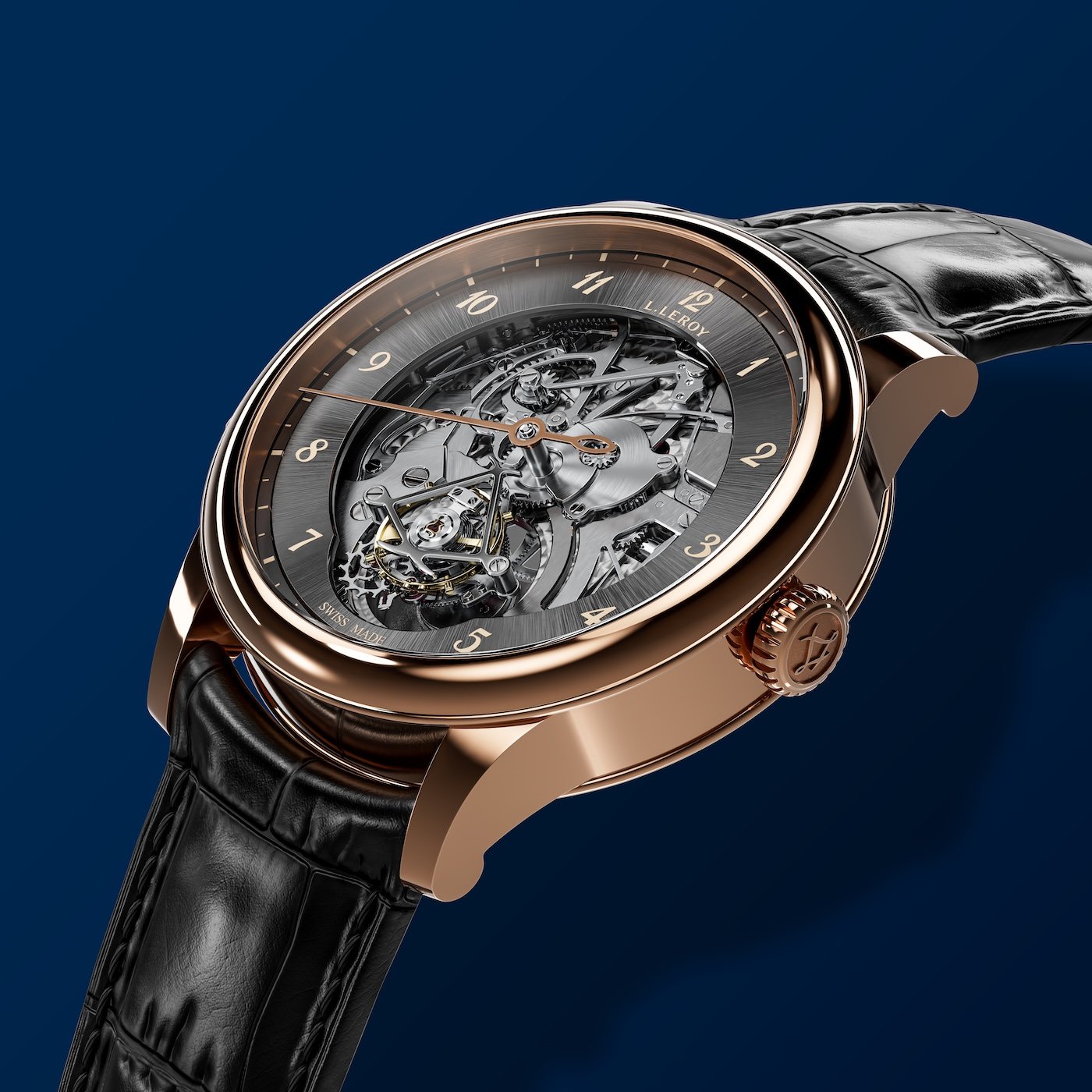
At the heart of this renaissance lies a collection: Osmior. Its aesthetic draws directly from Leroy’s historical codes: distinctive numerals, dial architecture inspired by 19th-century pocket watches, already revisited in the 1990s and again in the 2010s.
“We worked from historical vintage Leroy pieces. The codes are powerful, immediately recognisable. Osmior is the synthesis of this DNA,” notes Hugo Lesizza.
The development of the calibres is carried out in Geneva by a specialised workshop, with no industrial link to Soprod. L.Leroy does not currently claim integrated production, but rather an independent high watchmaking approach consistent with its positioning.


A claimed exclusivity
The revival of L.Leroy is not measured in volumes. The Bal du Temps will be produced in around fifteen pieces across all materials, and annual production will never exceed a few dozen watches.
Today, the brand has a handful of active points of sale, such as Dubail in Paris, Cellini in New York, and Pisa in Milan, complemented by direct sales to collectors. The Middle East—Dubai and Saudi Arabia—represents a priority development axis, always within an अत्यremely selective approach.
Leveraging an exceptional heritage
L.Leroy holds a unique treasure: nearly 400,000 digitised historical archives, enabling research back to early sales registers, as well as more than 200 preserved pieces—pocket watches, early wristwatches, and precision instruments. “It is a true treasure trove. We are currently structuring this heritage, with the idea of eventually making it visible,” explains the executive.

L.Leroy’s identity remains deliberately nuanced. While the brand can no longer claim “Made in France,” it fully embraces its Parisian roots.
“We cannot say we are a French manufacture today. But we are proud of our origins. Leroy is the watchmaker to the Navy, the Paris World’s Fair, a deeply French history,” Hugo Lesizza states.
A deliberate distinction, far from other French revivals such as France Ébauches within the same group, positioned in very different industrial segments.
A favourable momentum
The return of L.Leroy comes in a favourable context for independent Haute Horlogerie, echoing the successful revival of Ferdinand Berthoud, a historical contemporary of the Leroys.
“We are speaking to collectors interested in Patek Philippe, F.P. Journe, H. Moser & Cie, or Greubel Forsey—enthusiasts of history as much as independence,” observes Hugo Lesizza.


The signals are encouraging: a resurgence in archive requests, renewed interest at auction, and a now structured calendar. Following the Bal du Temps at Geneva Watch Days, the Elyor, the latest addition to the classical Osmior collection, will be presented during Geneva Watch Week.

The name “Elyor” is an anagram of Leroy. During the Reign of Terror of the French Revolution (1793–1794), Leroy—whose surname sounded too royal—signed his creations this way to avoid harassment from revolutionaries.

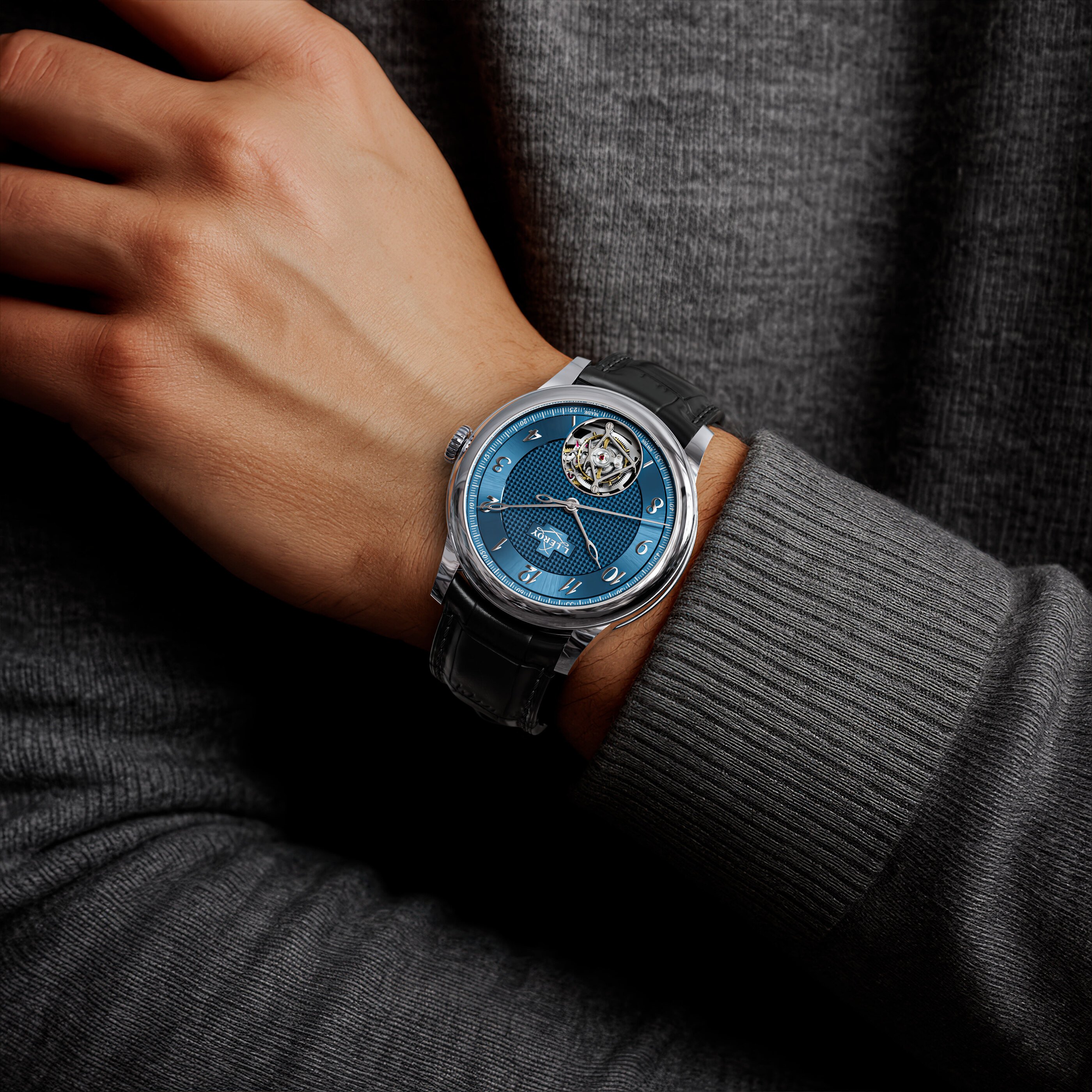
For the first time in the brand’s history, this flying tourbillon model incorporates a micro-rotor. Produced in small numbers and available in three different versions, it features a drum-shaped case—traditionally reserved by the brand for its classical-style watches—and measures 42 mm in diameter with a thickness of 11.88 mm, including the domed sapphire crystal.
“This time, it’s happening. L.Leroy is back—for good,” concludes Hugo Lesizza.