


 Español
 Français
 Pусский
 繁體中文
 简体中文
 Select another language


hat can a mechanical watch offer a world in which time is available on almost every screen? For Supernova, the answer begins with another question: why consider the wristwatch a finished invention?
Watchmaking’s accumulated expertise — its movements, materials, finishing techniques and exacting standards — provides ample foundations for further exploration. The young brand’s ambition is to draw on that heritage while engaging with the technologies shaping everyday life.
Its first watch, the SN 2140, gives this proposition a concrete form. At first glance, it is a restrained mechanical timepiece in a titanium cushion case. Less obviously, it incorporates a contactless payment system based on the Lightning Network. The meeting of these two worlds is the starting point for Supernova.

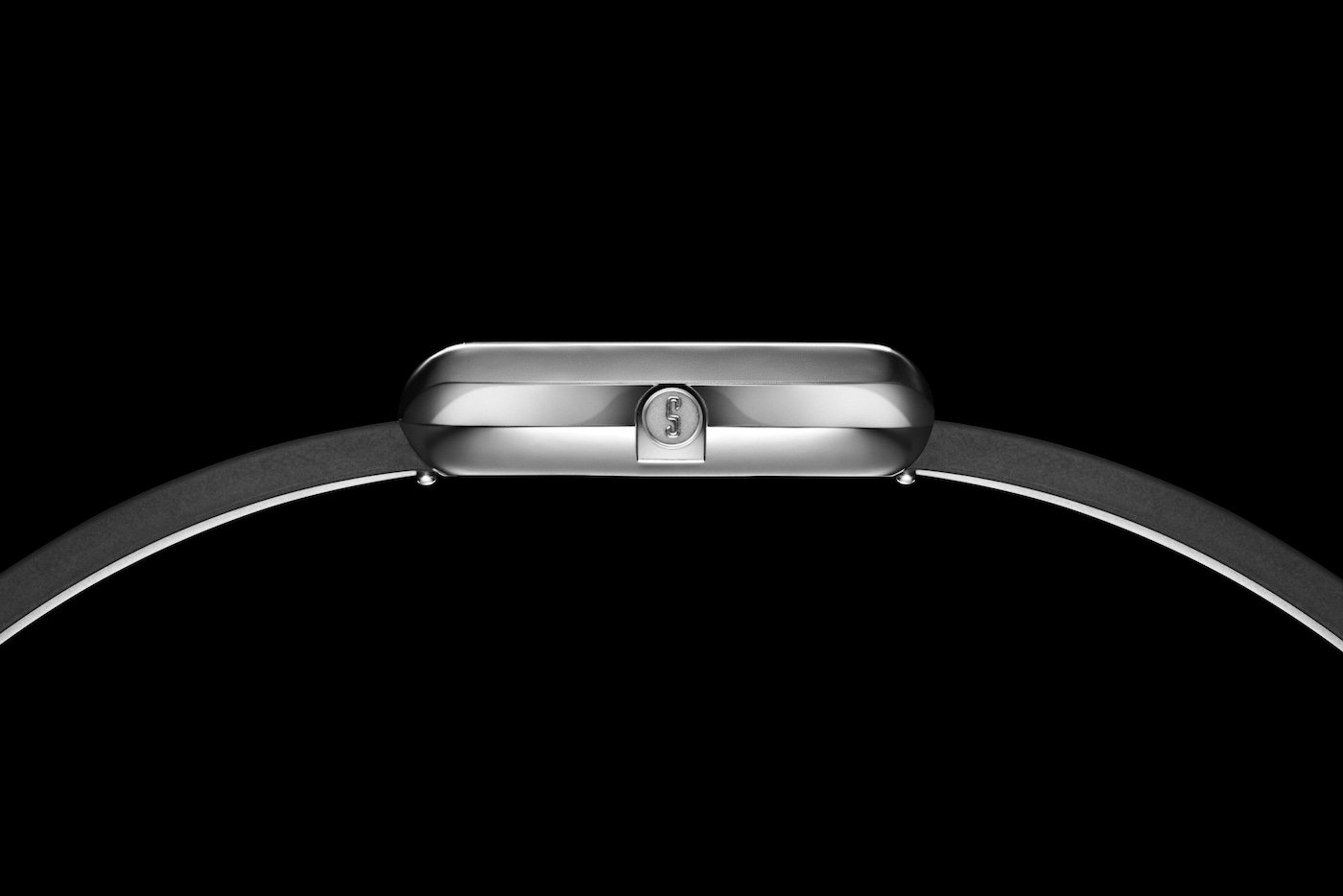
The SN 2140 makes its first impression through proportion and finish. Measuring 36.5 mm by 40.7 mm and 9.6 mm thick, its Grade 5 titanium case combines brushed, sandblasted and polished surfaces. Available in natural titanium or with a black PVD treatment, it weighs 43 grams without the strap.
Inside is an élaboré-grade ETA 2892, whose slim construction helps keep the case profile in check. Visible through the sapphire caseback, the movement features Geneva stripes, blued screws and a rotor matched to the dial colour. It operates at 4 Hz and offers a 42-hour power reserve.
The circular-brushed dial comes in light grey or dark anthracite. Super-LumiNova® on the hands and markers introduces a second visual register after dark, bringing colour and legibility to an otherwise understated composition.
Supplied with interchangeable leather and rubber straps, the watch places the emphasis on comfort and versatility. Its proportions are intended to move beyond conventional gender categories, with the focus on how it sits on the wrist. These are familiar watchmaking considerations, and they remain central to the project.
The less familiar part lies within the sapphire crystal. Integrating the antenna needed for contactless payments, while preserving the watch’s proportions and appearance, was one of the principal development challenges. The solution took two years of research, development and industrialisation.
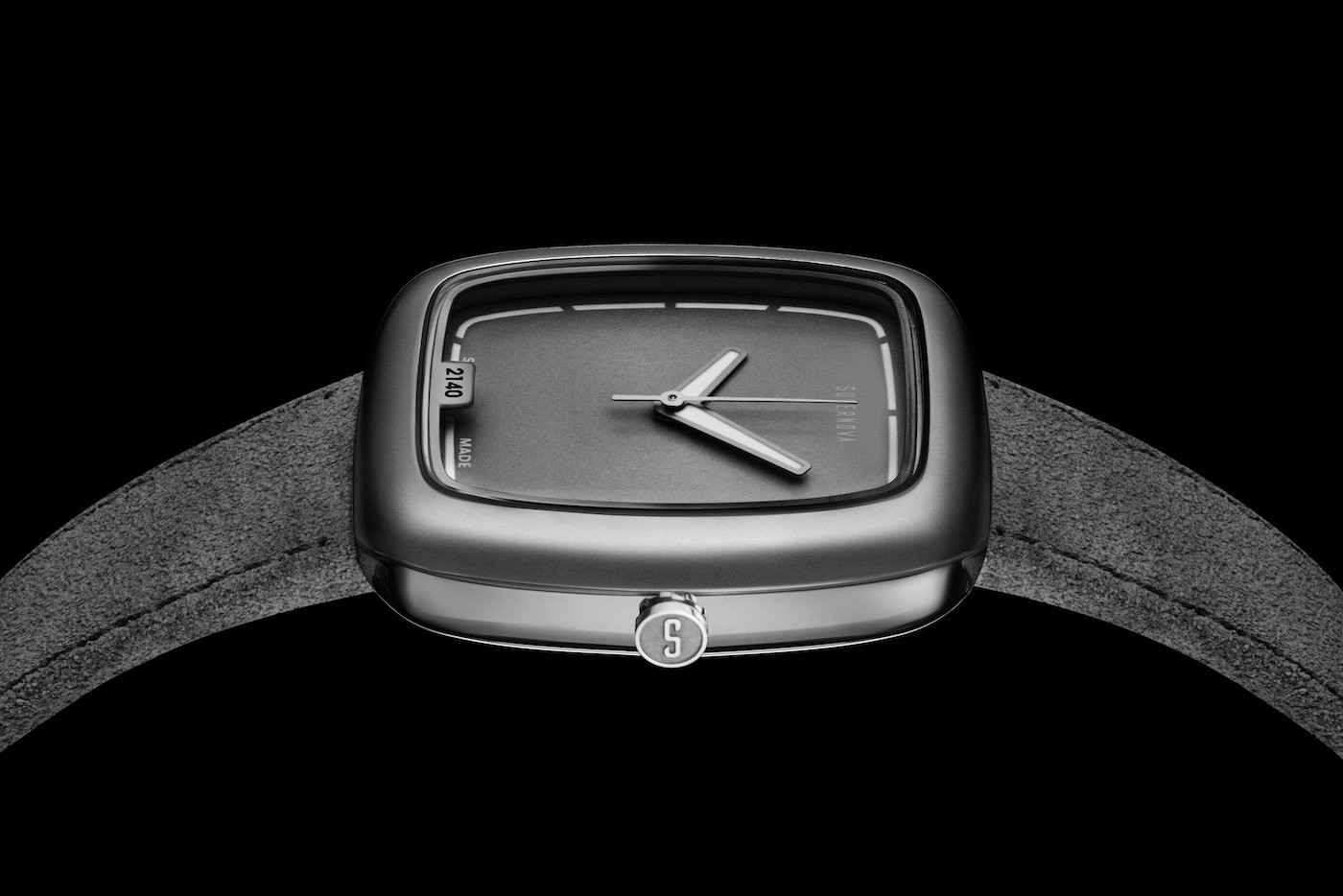
Invisible to the naked eye, the antenna is integrated directly into the crystal. This allows the SN 2140 to accommodate its additional function without announcing it on the dial or altering the character of the case. For the founders, that discretion was essential: the object had to stand on its own as a watch.
Two paths to the wrist
Julien Szulewski’s interest in watchmaking developed after he settled in Switzerland several years ago. Beyond the major names in the shop windows, he discovered the independent scene: watchmakers and entrepreneurs pursuing personal visions, often against considerable odds.
The arrival of smartwatches brought a recurring debate into sharper focus. Connected devices promised information and functionality on the wrist; mechanical watches were again confronted with predictions of obsolescence. Szulewski saw room for a more productive exchange between the two.
His interest lay in what might happen if traditional watchmaking and contemporary technology were brought together thoughtfully. A challenge described as impossible was, for him, a reason to investigate further.
Nuno Pires arrived at watchmaking from a different direction. An engineer with a joint doctorate from EPFL and Técnico Lisboa, he built his career in the research, development and industrialisation of wireless technologies.
His interests extended beyond what those technologies could do to how they were structured — particularly when their design offered individuals greater control over data and transactions. That concern would later become central to Supernova.
After moving to the Swiss Jura, Pires found a parallel interest in watchmaking. Here, too, much of what determines an object’s quality remains out of sight: the choice of movement, the attention paid to finishing, the decisions that allow a watch to remain serviceable over decades. His experience of taking projects from early experiments into industrial production brought a practical dimension to that affinity.
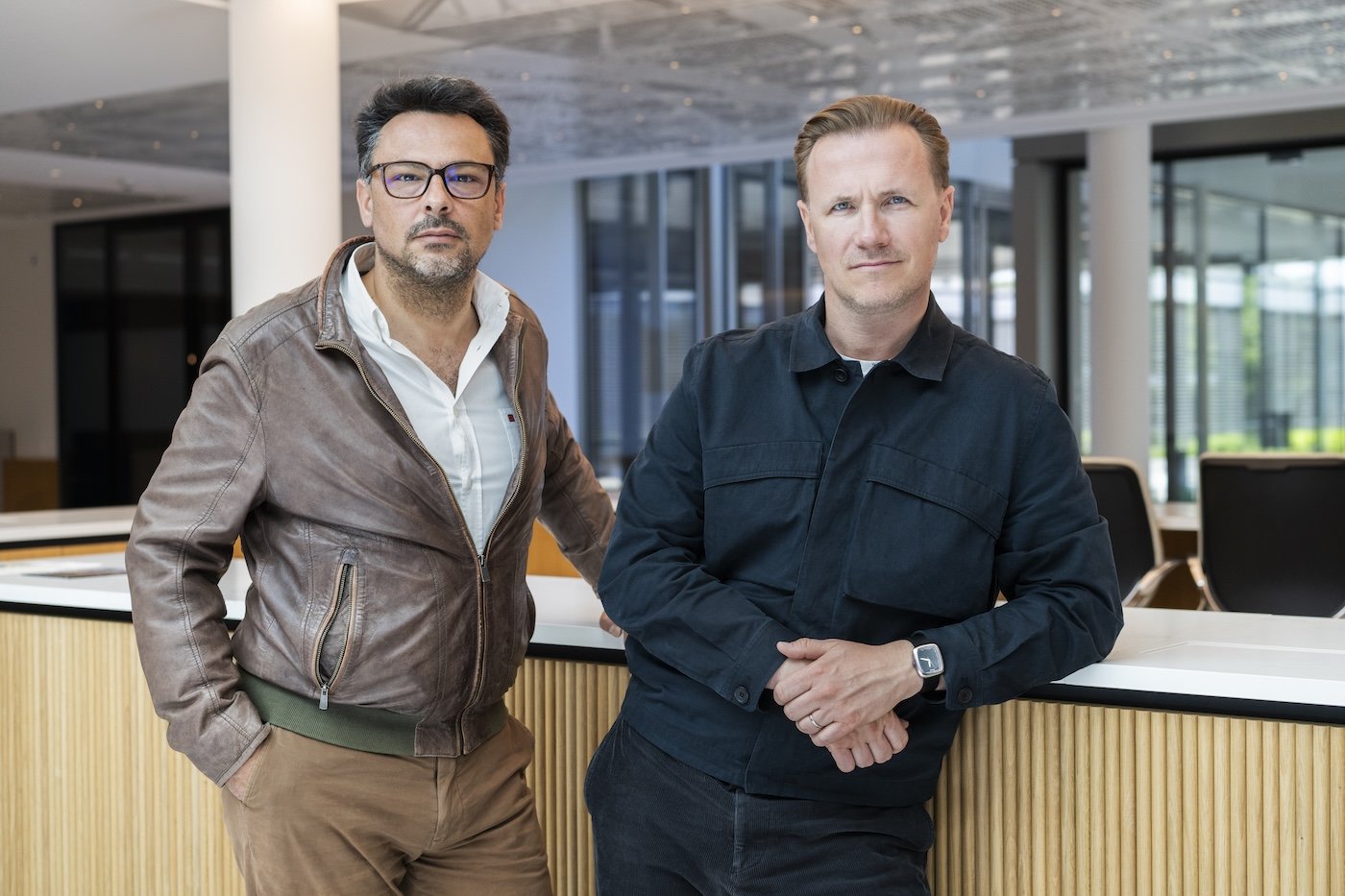
The two met over lunch while working on another watchmaking project. Their conversation revealed a shared conviction: the mechanical watch still had territory to explore.
Supernova grew from that exchange. Its founders wanted to work within the traditions of watchmaking while asking what a watch might contribute to contemporary life. The SN 2140 is their first response, bringing a familiar mechanical architecture into contact with a different approach to digital payments.
“A bubble of privacy on the wrist”
Everyday transactions generate information. Alongside our purchases, our movements, habits and preferences leave digital traces, often with little conscious attention on our part.
Supernova places this question at the centre of its project. Szulewski describes the idea as “a bubble of privacy on the wrist”. The phrase expresses the founders’ ambition: to make the watch a starting point for thinking about the systems through which we transact, and the choices those systems allow.
The technology they selected is the Lightning Network, a network built on top of the Bitcoin protocol and designed to enable fast, low-cost peer-to-peer payments. The SN 2140 implements the open Bolt Card standard, allowing contactless Lightning payments through compatible applications and terminals.
Contactless payment is, of course, already available in many forms. For Supernova’s founders, the attraction lay in the underlying approach as much as in the convenience of the gesture. They were interested in a payment network whose development opens up different possibilities for how transactions are organised.
Their comparison is with the internet of the 1990s: a technology with working applications, an expanding community and a future still taking shape. It is a comparison that conveys their enthusiasm, rather than a forecast of where Lightning will ultimately lead.
The SN 2140 gives that interest a physical expression. Its payment function introduces a contemporary use into an object built around an established mechanical movement. The most technically unusual component remains concealed in a material already familiar to watchmaking.
Whether that combination resonates will depend on the wearer. Some may be drawn to the founders’ thinking about privacy and transactions; others to the engineering involved in integrating an antenna into sapphire. Others may simply appreciate a compact titanium watch with an unexpected capability.
For Supernova, the first question was whether these elements could coexist coherently on the wrist. The SN 2140 is its answer — and the opening proposition of a brand that sees further room for exploration.
TECHNICAL SPECIFICATIONS
Case
- Shape: Cushion
- Material: Grade 5 titanium
- Crystal: Sapphire
- Caseback: Grade 5 titanium with sapphire window
- Finishing: Brushed, sandblasted and polished; natural titanium or black PVD treatment
- Dimensions: 36.5 mm × 40.7 mm
- Thickness: 9.6 mm
- Water resistance: 5 ATM
Movement
- Calibre: ETA 2892, élaboré grade
- Finishing: Blued screws, Geneva stripes and a rhodium-plated rotor matched to the dial colour
- Frequency: 28,800 vibrations per hour (4 Hz)
- Power reserve: 42 hours
Payment Functionality
- Description: Contactless peer-to-peer Lightning payments for everyday purchases; custom-designed Supernova antenna and contactless payment chip integrated directly into the sapphire crystal
- Compatibility: Bolt Card standard, Lightning Network
Dial
- Finishing: Circular-brushed
- Available colours: Light grey or dark anthracite
- Hands and markers: Super-LumiNova®
Strap
- Supplied with two interchangeable straps
- Leather: Light grey nubuck or dark anthracite fine-grain leather
- Rubber: Grey or black
- Quick-release spring bars
- Width: 20 mm
- Supernova buckle: Grade 5 titanium, matched to the case
Edition & Markings
- Limited edition of 2,140 pieces
- Titanium – Swiss made
- Water resistant 5 ATM
- SN21400/0000 | SWISS MADE 2140
References:
- SN 2140
- Retail price: CHF 2’450
- Availability: Available to pre-order
- Assembly: Le Locle
- Weight: 43 g, excluding strap


