


 Español
 Français
 Pусский
 繁體中文
繁體中文 简体中文
简体中文 Select another language


ith more than 100,000 visitors expected in 2025, the Patek Philippe Museum is the most visited private museum in Geneva. It has succeeded in attracting both the general public — who instinctively associate Geneva with the world of watchmaking — and seasoned connoisseurs, managing to satisfy both audiences, no easy feat.
Building bridges between different audiences, as well as between art and technology and between physical and digital culture, has been a defining theme of Dr Peter Friess’s career. He joined the museum in 2015 and will continue to contribute to its mission for another two years, notably by completing the catalogues that inventory and showcase its vast collections. Built under the impetus of Philippe Stern, these comprise some 3,500 pieces spanning 500 years of watchmaking history.

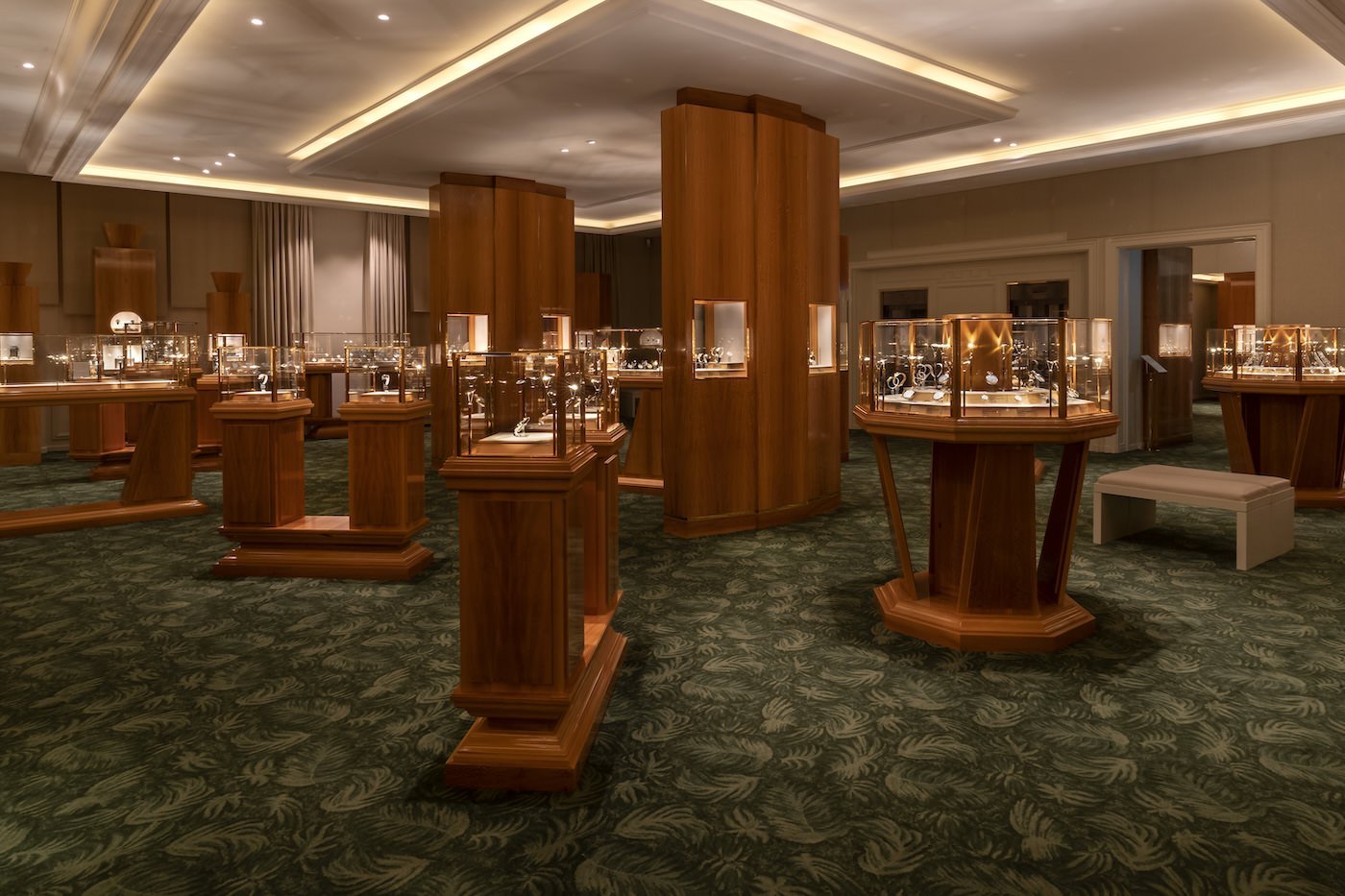
A distinctive feature of the museum, which opened its doors in 2001, is that it is not ‘just’ about Patek Philippe. Half of its exhibition rooms are dedicated to pieces that predate the founding of the Geneva-based manufacture in 1839. Its success is all the more remarkable given that the institution does not strictly follow the codes of a traditional ‘corporate museum’.
Europa Star: You are known as the curator of the Patek Philippe Museum and have had a career in major cultural and scientific institutions, particularly in the United States. But for you, it all really began at the workbench…
Peter Friess: Yes, I trained as a watchmaker in my native region of Bavaria, where my father owned a watch shop. When I was in my third year at the local watchmaking school, my father took me to visit the Bavarian National Museum in Munich. After the visit, we met the museum’s curator, who told us he was preparing a watchmaking exhibition in collaboration with the Smithsonian Institution in Washington DC.
This was in 1977. The highlight of the exhibition was five clocks by Jost Bürgi (1552–1632), the great Swiss Renaissance clockmaker, which needed to be restored — a task in which I was able to participate. I was only 17 at the time — practically a baby! But it changed my life.

How?
After this extraordinary experience, I spoke at length with my father. I realised I didn’t want to return to the shop — that wasn’t where I saw my life unfolding. I wanted to work in a museum. To do that, I first had to complete my baccalaureate and then study art history.
Very early on, what interested me most was the bridge that could be built between art and technology. What techniques did the great painters use? What equipment did Michelangelo rely on to paint the Sistine Chapel without distorting perspective? One case that fascinated me was Dominique-Vivant Denon (1747–1825), the painter Napoleon called upon during the Egyptian campaign. His imagination was boundless: he used a hot-air balloon to gain an overview of the pyramids and, back in Paris, invented a machine to reproduce Egyptian sunlight. His work was exhibited at the Musée des Arts et Métiers, but it received little attention.


And after your studies?
I joined the Deutsches Museum in Munich to work in a watch restoration workshop. In my spare time, I developed a passion for computer programming, so I designed a small piece of software to compare watches. As the project grew, I needed a more powerful computer, but as a civil servant I didn’t have the budget for it.
So I called Apple to explain my situation. This led to some extraordinary encounters — the kind that happen when you move between different worlds that, in the end, form a single one. I don’t believe there is a fundamental difference between art and technology.


This was a golden age for computing, while mechanical watchmaking was struggling…
To preserve mechanical watchmaking, it was essential to share knowledge, to explain what made it great, and to reach a wider audience. What I have always loved is developing formats — exploring ways of presenting information to visitors.
That is exactly what we do at the Patek Philippe Museum today with tools such as the iPad. In 1995, I founded a branch of the Deutsches Museum in Bonn, focusing on innovative formats: scientific study days for schools, television programmes produced within the museum, even direct communication with astronauts. It was science brought to life — not abstract, but tangible — designed to spark curiosity, especially among younger visitors. That is essential.


How did you end up in Silicon Valley?
It was Ann Bowers, the widow of Intel co-founder Robert Noyce, who persuaded me to move there to run the Tech Museum of Innovation in San Jose, whose motto is ‘Inspire everyone.’ It is not a museum in the traditional sense, but rather a place offering hundreds of hands-on experiments. For example, we collaborated with the virtual-reality platform Second Life to create parallel experiences online and in the museum. With Apple, we developed immersive classroom experiences. Later, I joined the Smithsonian Institution in Washington DC to organise a travelling exhibition marking the centenary of the Nobel Prize in 2001 — an interactive journey through time and across disciplines. It was a great success. Many laureates told us that the exhibition felt like a second recognition of their work. I have always considered the museum to be a medium in its own right, with communication at its core.
Did you already have contacts with Patek Philippe at that time?
Not yet, although I always maintained my connection with watchmaking. I used to bring mechanical watches to dinners in Silicon Valley as conversation starters with tech entrepreneurs, many of whom were already fascinated by this craft. My first contact with Patek Philippe came in 2010. I hadn’t yet visited the museum, so I took time to study the premises, the archives, the restoration workshop and the manufacture in depth. They gave me this precious time — in a sense, to ‘become part of the family’ — before I officially joined the museum in 2014.


What were your impressions when you arrived?
As my mentor Ann Bowers often asked: why does a company need a museum? Is it simply the owner’s hobby, or something more? In the case of Patek Philippe, it was clearly much more than a hobby. Philippe Stern’s passion was extraordinary — he knew the 3,500 watches in the collection by heart.
But the essential question is always the same: how does a museum fit into a company? You see many watches during a visit, but what do you actually learn? These were the questions that needed answering. The challenge of running a museum lies in making its relevance measurable.


What answers did you give to those questions?
I wanted every visitor to leave with two key messages. First, that every watch contains a little bit of Patek Philippe, because it was Jean-Adrien Philippe who invented the crown — in that sense, it is a universal contribution. Second, that watchmaking is a European success story, an alliance between craftsmanship and science that constantly reinforce one another. Think of Galileo, Huygens, and many others, when scientific discoveries suddenly changed history. This dialogue between science and art has guided my entire career.
What did Philippe Stern emphasise in your initial meetings?
He told me what mattered most to him: more than a Patek Philippe museum, it should be a museum dedicated to portable watchmaking. It is not a point of sale. Every January, he selects a single watch from his collection to add to the museum. We want international visitors as well as the people of Geneva to come to the museum. That requires trust, proximity, and sustained work on the institution’s reputation.
One of my most important tasks was also to compile a catalogue of the collections, which did not exist at the time. This was necessary for insurance purposes, of course, but above all it is a prerequisite for any curator: you must know exactly what you have. This has been a major undertaking over the past 15 years. When I arrived, the watches had no labels and there was no computer database. We gathered all the information into a single system, which also made it possible to display content on the iPads that now accompany visitors through the museum.
Has this work led to an increase in visitor numbers?
Yes, the growth has been considerable and steady — except, of course, during the pandemic (he turns to his computer and shows us the year-on-year curve). In 2010, the museum welcomed 14,000 visitors. In 2025, we exceeded 100,000 visitors. We have introduced an electronic ticketing system to spread visits more evenly and avoid overcrowding, and we are working with architects on improvements to visitor flow.
Do you exhibit all the pieces?
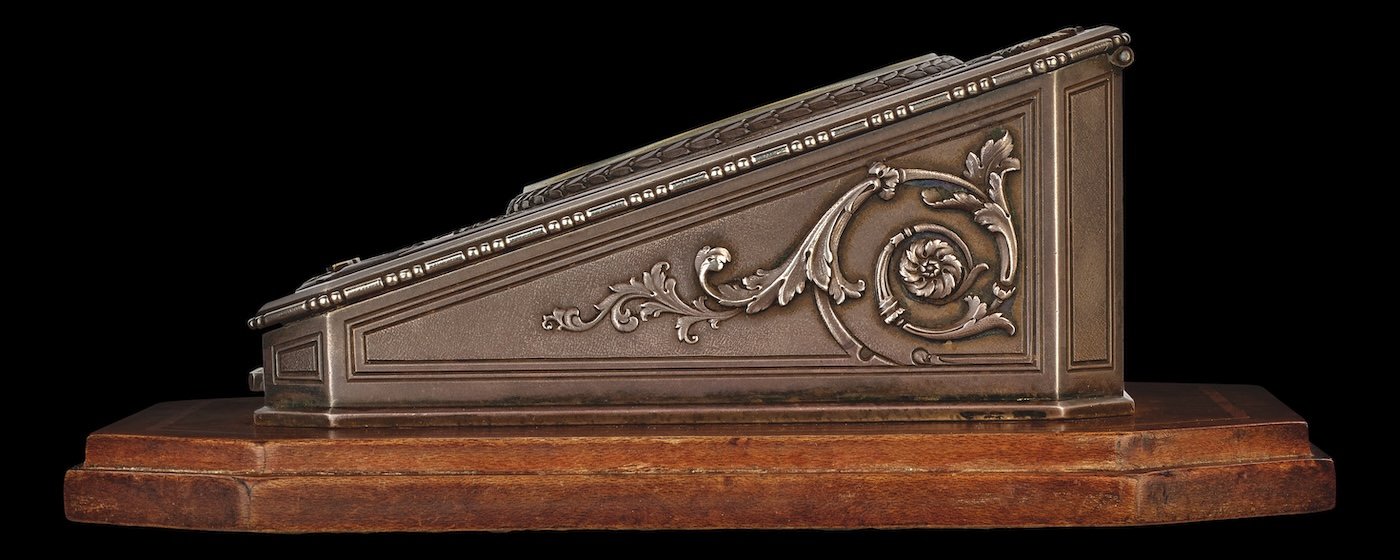
Yes, at least when it comes to the antique collection. As Philippe Stern himself likes to say, we do not collect for safes. As for Patek Philippe pieces, some are held in reserve for Haute Horlogerie and world exhibitions organised by the brand.
And what do you exhibit online?
That is a major question: deciding what to share online and what to keep for the physical visit. The brand has recently launched a new website where the collections are far more visible.
How do you acquire new pieces?
I have the advantage of knowing most major collectors. I study auction catalogues closely and am deeply integrated into this network, so people often approach me directly to offer pieces. We remain selective, but also very flexible — as only a family business can be. If I identify a piece that would enrich the collection, I can present my arguments directly to the Stern family, and a decision can be made very quickly.


