


 Español
 Français
 Pусский
 繁體中文
 简体中文
 Select another language


pre-owned watch can be authenticated, serviced and held to exacting quality standards. But who defines those standards, and what does certification actually guarantee? For John Shmerler, these questions are central to understanding the secondary market.
The 1916 Company operates both a Rolex Certified Pre-Owned collection and a broader pre-owned business, with a deliberate distinction between the two. Speaking to Europa Star, its CEO discusses the impact of Rolex’s programme, the service capabilities needed to support it, and the limits of certification as a universal label.

Europa Star: How have you structured CPO and pre-owned at The 1916 Company, and what role does each play in the business today?
John Shmerler: The 1916 Company is, and has been for more than a decade, a global leader in the secondary watch market. Our pre-owned business has two segments: The 1916 Company Pre-Owned Collection, which covers a range of brands and specialises in independents, rare and complicated pieces, and the Rolex Certified Pre-Owned collection. The two segments have similarities but are distinct, and together they form an important pillar of The 1916 Company.
We use the terms “CPO” and “certified” only in reference to Rolex Certified Pre-Owned watches. We don’t work with any other brand that has a structured, brand-certified pre-owned programme. All other brands and models are presented as The 1916 Company Pre-Owned.
You moved into pre-owned long before most of the industry took it seriously. What did you understand early that others were still missing?
The total number of watches in the ecosystem only goes up. The beauty of watch collecting is that people don’t throw watches away. They wear them, sell them, or keep them in a drawer, and manufacturers introduce new ones every year. So as people grow and modify their collections, the universe of inventory available on the secondary market grows annually.
We recognised early that collectors were going to demand some liquidity from their watches. A large part of what we do each day is buy, sell and trade to meet that demand. We do this in our stores and Collector’s Lounges, on our digital platforms and through our app.
We also saw that a pre-owned watch did not have to be sold “as is.” That’s the old construct – buying a watch and reselling it in the condition you received it – and it still exists in some places. When WatchBox, one of our legacy companies, entered the market, it introduced a new construct: a watch had to meet a standard before it was sold, so the collector received more than they expected. That helped shift the pre-owned conversation from authenticity alone to quality standards. Rolex then introduced Rolex Certified Pre-Owned, a separate construct with its own standard, defined by Rolex and offered only through its authorised retailers. You can still operate in the old construct. We don’t, and that’s what differentiates us.
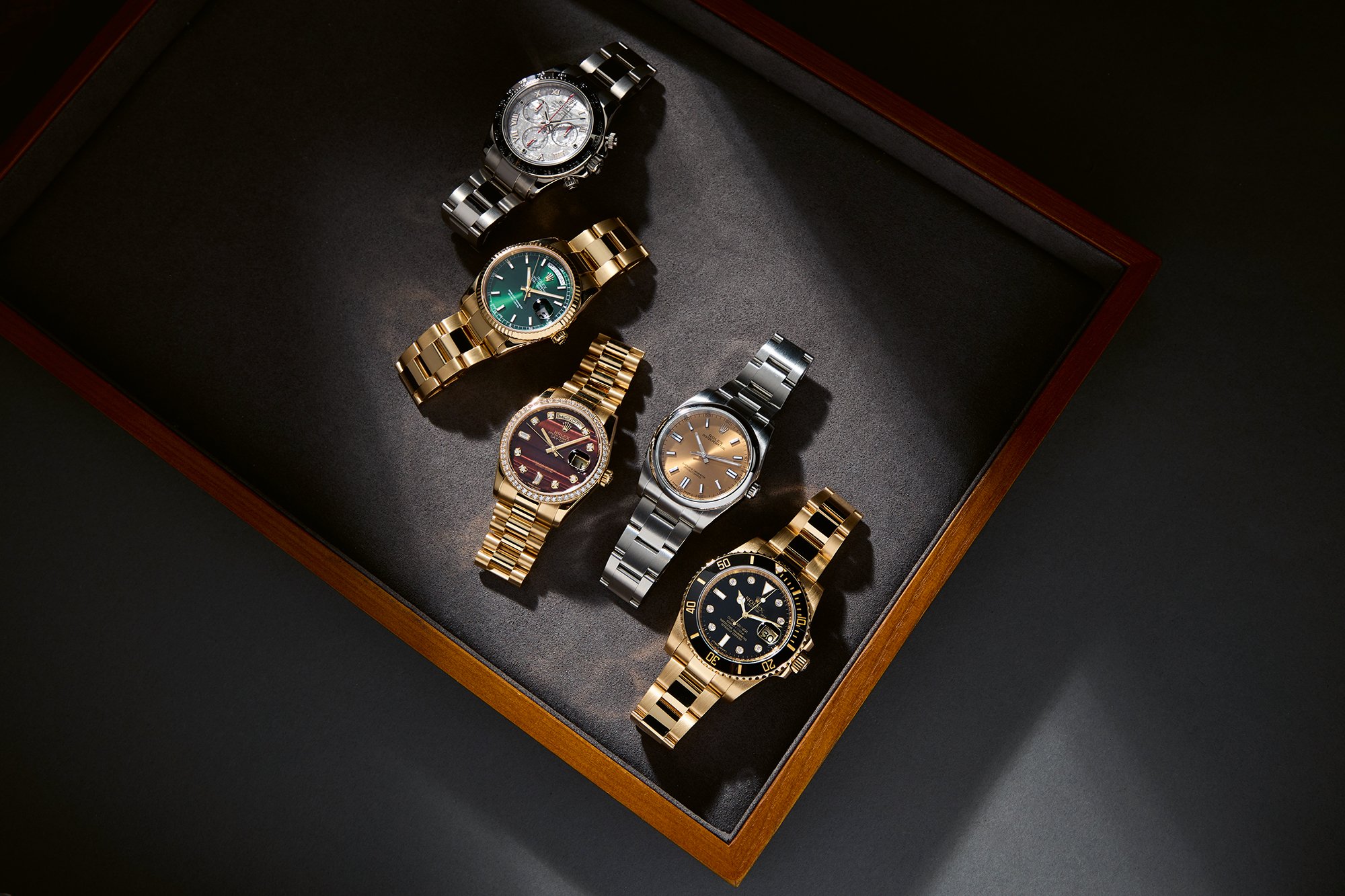
Rolex CPO was a landmark move into the secondary market. Several years on, what has it actually changed – for retailers, for consumers and for the market itself?
For consumers, the Rolex Certified Pre-Owned programme has provided full confidence to buy in the secondary market. In my opinion, it has opened the category to people who may never have considered buying a pre-owned watch before, and who now buy knowing there is no risk around authenticity or the mechanical workings of the watch.
For retailers still selling pre-owned Rolex in the old construct, there are more questions to answer – about authenticity, about service history, and about why a collector should buy a watch knowing that it has not been certified by Rolex. This is increasingly something they must defend.
For the market, the data from WatchCharts and EveryWatch show Rolex Certified Pre-Owned gaining traction month after month. The market is clearly seeing the effect.
If you had to choose one number or metric that every watch executive should be watching in CPO and pre-owned today, what would it be?
The relationship between secondary market prices and retail prices. It is one of the clearest indications of the strength of a brand.

Has Rolex CPO changed the way authorised retailers think about pre-owned – from an adjacent business to a core part of the customer relationship?
I can’t speak for other retailers. For us, pre-owned has always been a holistic part of the business – since before The 1916 Company, and even before the WatchBox era. The DNA of our business was finding the intersection of the primary and secondary markets, and we believe in offering collectors both. That has never changed.
How do you see the market evolving between certified and non-certified watches? Are we moving towards a clearer two-tier structure?
Rolex is the only brand we work with that takes an active role in certifying its pre-owned watches, and I don’t see other brands making as concerted an effort to build a structured programme. So I don’t see the market evolving much from where it is today.

The idea that retailers may have something they independently call “certified” is a huge variable. What does a 1916 Company certification mean relative to another retailer’s, or an independent jeweller’s? What Rolex did in instituting a global programme was provide a single, defined standard. Used in any other context, “certified pre-owned” is an ambiguous term. That is why The 1916 Company does not describe any watch as certified unless it is part of the Rolex Certified Pre-Owned programme.
Outside of the programme, we hold our pre-owned watches to a higher aesthetic and mechanical standard than we see in the general marketplace, from polishing and bracelet length to timekeeping. We have built our brand on that quality. But if we called it “certified,” it would not carry a universal meaning for the collector.
Do you expect CPO to become a standard pillar of the Swiss watch industry? And is the Rolex model genuinely replicable, or is Rolex an exceptional case?
Any brand that decides to take this on is showing an enormous commitment to the consumer and putting a stake in the ground for what the brand should mean. At this point, Rolex is the only one that has said it expects a Rolex to outlive its first owner – and to be bought, sold and enjoyed well beyond that owner’s family.
So, is it replicable? It could be, but it requires significant resources, time and effort from the brand. A large part of that is after-sales service. To run a credible certified programme, you have to be able to service the watches and get parts, and anyone who knows me has heard me say that service remains one of the biggest holdbacks across the industry.

What does the Swiss watch industry still misunderstand about how collectors and consumers actually behave in the pre-owned market?
I can’t say what the industry does or doesn’t understand. What I see is more executives appreciating the correlation between secondary market and primary market prices, and beginning to understand that collectors enjoy the optionality of buying across both markets. Many collectors are simply thinking about their next watch, whether it is new or pre-owned, and the full landscape – current production and everything that came before it – gives them far more to choose from.
CPO gives brands and retailers access to valuable data on ownership cycles, trade-ins and resale behavior. How strategically important is that data becoming, and who controls it?
It matters, but no retailer controls all of it. The industry is splintered across retailers, dealers, marketplaces and consumer-to-consumer trades, and collectors are becoming far less loyal across the spectrum. No one gets a complete picture. Third-party platforms like EveryWatch and WatchCharts are doing a very good job of assembling that data and making it available to anyone who subscribes. Because we buy, sell and trade at a greater scale than a traditional retailer, our own data gives us a broader view – but we are still working from part of the picture.
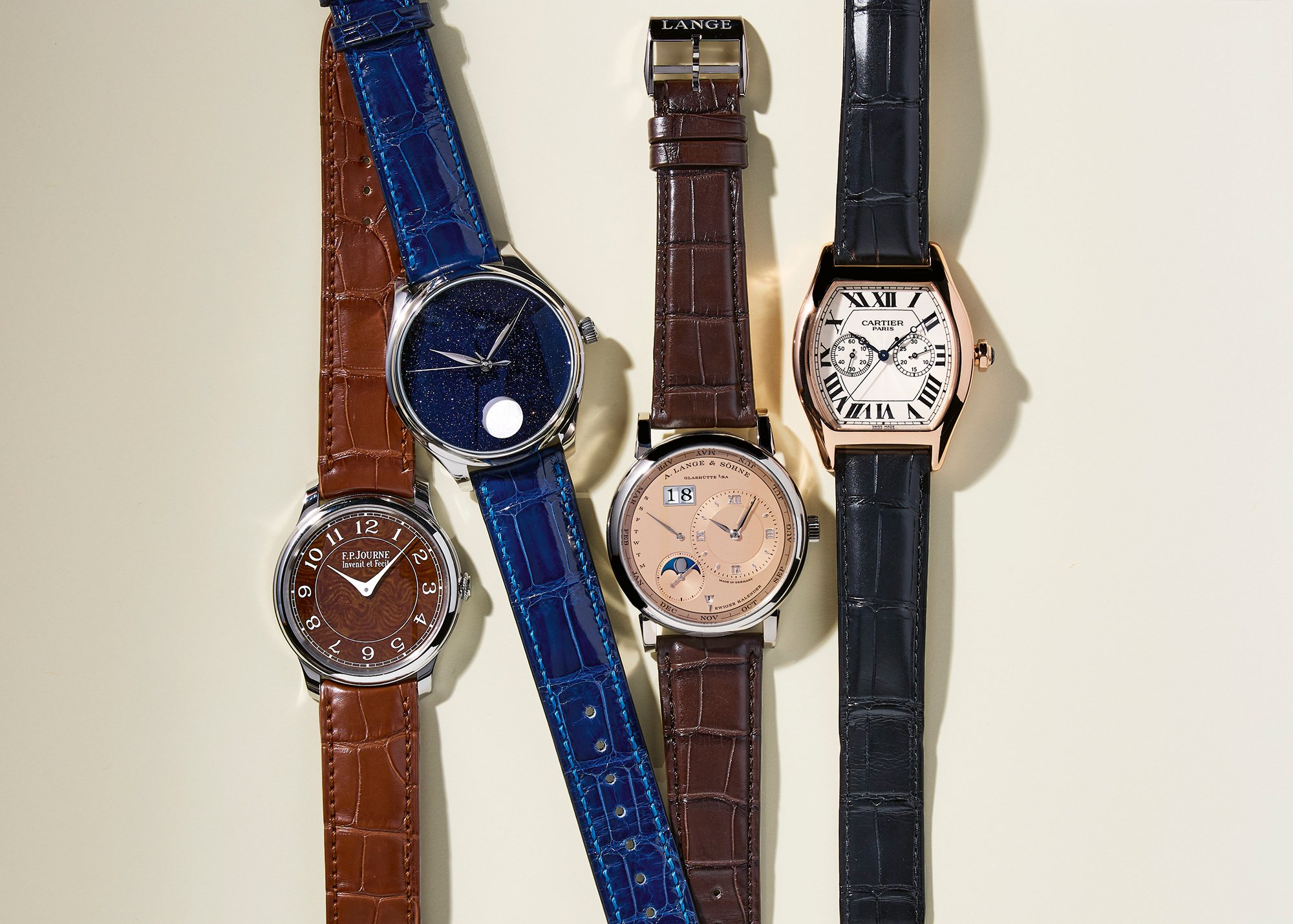
Between brands, authorised retailers and independent secondary-market players, who is best positioned to own the customer relationship across the full life cycle of a watch?
Nobody. Collectors are free to do what they want, and they spread their business around. Even the most loyal client is talking to others. I don’t believe in the concept of owning a customer relationship. We participate in it. If one of our best clients wants a new watch from a brand we don’t carry, they will go to that brand or another retailer, and that is a natural part of collecting.
What we are best equipped to do is support a collector through the life of their collection. Collectors move between the primary and secondary markets, and because we operate in both, we can meet them wherever they are. Often, the watch one client is ready to trade is exactly the watch another has been searching for.


