

 Español
 Français
 Pусский
 繁體中文
繁體中文 简体中文
简体中文 Select another language

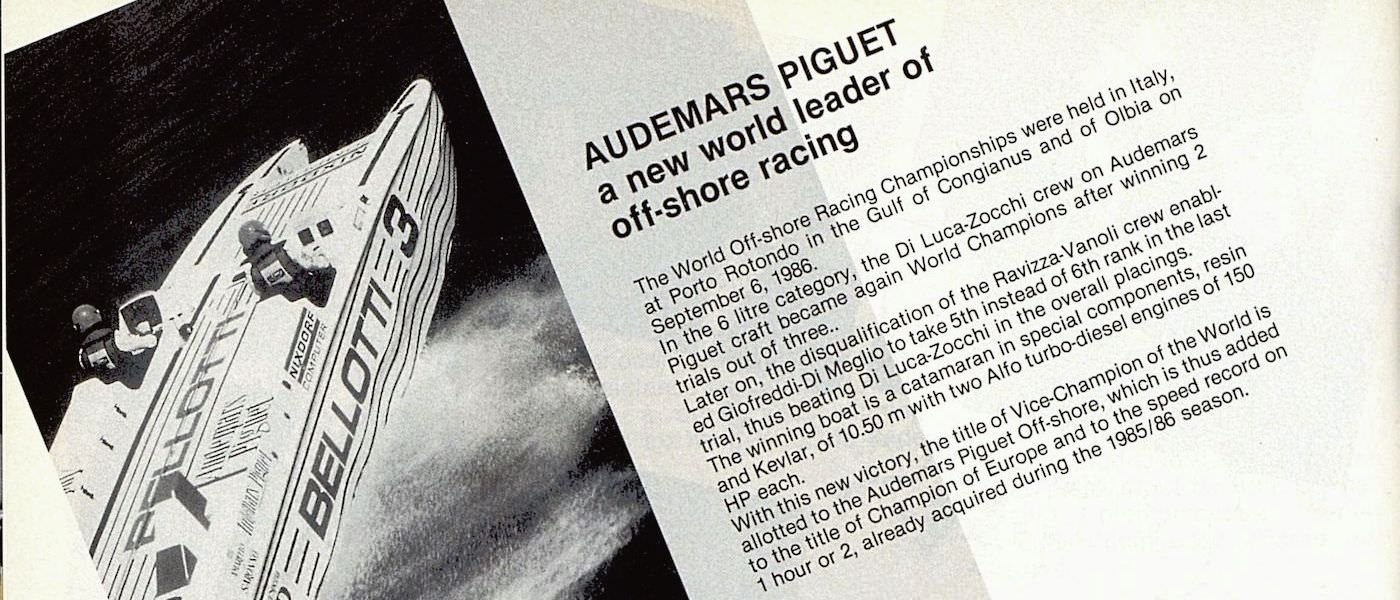
ffshore” was a name and a concept before it was a watch. Dierk Wettengel, who ran the German market for Audemars Piguet, is credited by the company for suggesting a watch tie-in to the exciting world of powerboat racing. A trend-spotter like his Italian counterpart Carlo de Marchi, who had urged the company to create the original Royal Oak in 1972, Wettengel saw the opportunity for a “leading piece for the 1990s” inspired by the large and bold boats from brands like Cigarette. Audemars Piguet had been involved in the sport since the mid-1980s, sponsoring racing boats alongside brands like Corum and Paul Picot. Co-CEO Steve Urquhart agreed to register the Offshore brand in February 1989, before any design work had started.
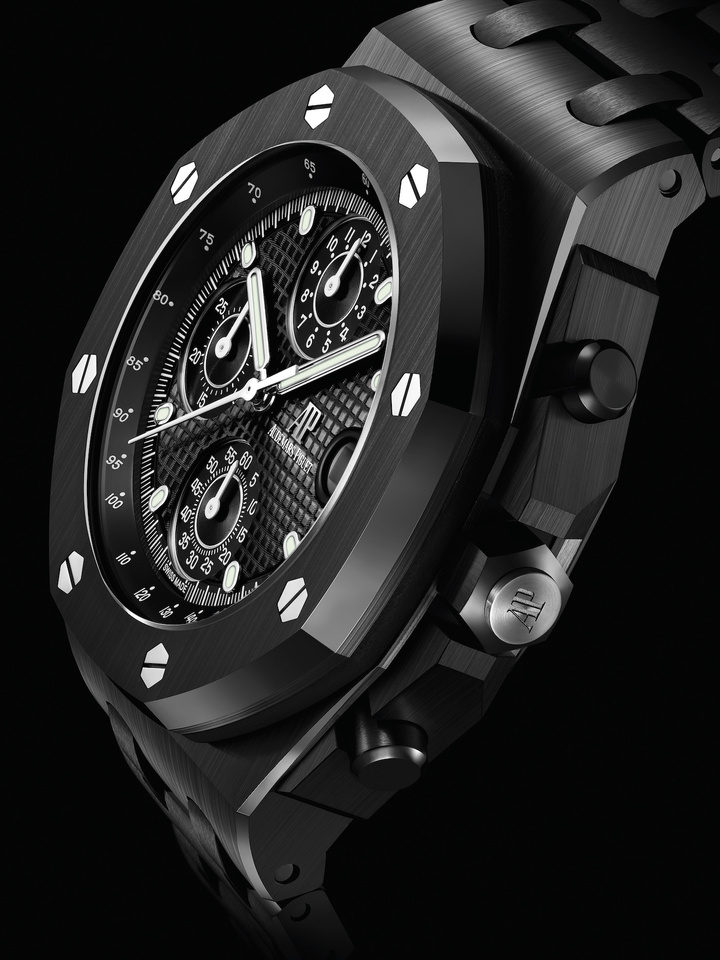
Urquhart assigned the project to Emmanuel Gueit, a young designer full of fresh ideas. On the last day of the 1989 Basel Fair, joint CEOs Georges-Henri Meylan and Urquhart showed a set of concept paintings by Emmanuel Gueit of a truly outrageous watch: Massively over-sized at 42 mm across and 16 mm thick, it looked like a Royal Oak on steroids. This very first concept included signature Offshore elements: Exposed gaskets and colorful rubber-coated crowns. Although the magnetic compass subdial did not make production, it is clear that sports-watch complications were part of the formula from the very beginning. Acceptance of this audacious design took a while, and development of the production watch even longer, but the Royal Oak Offshore was ultimately launched in 1993.
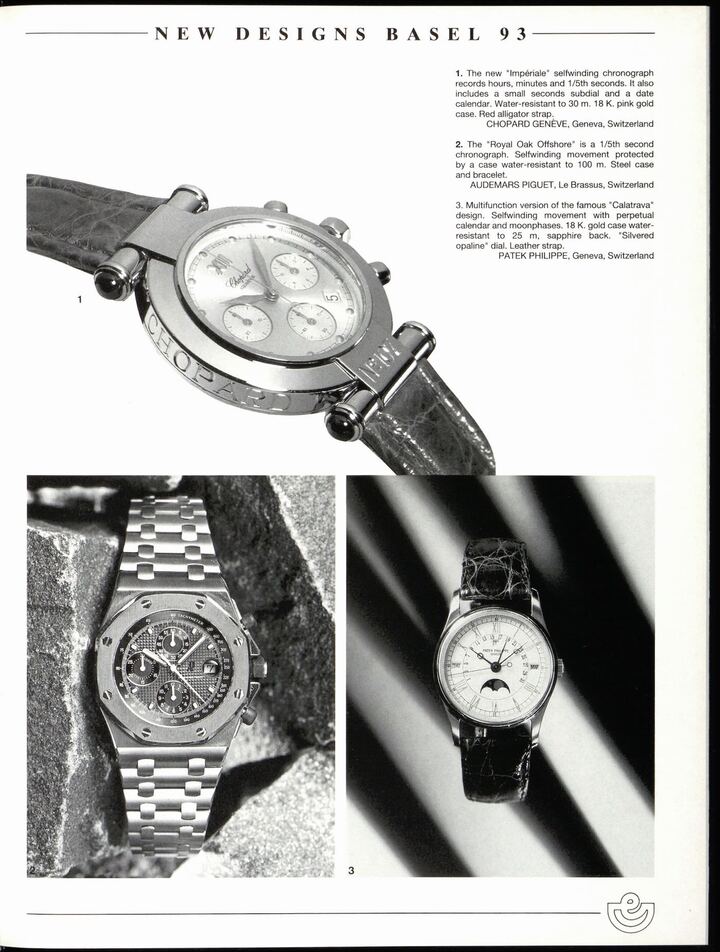
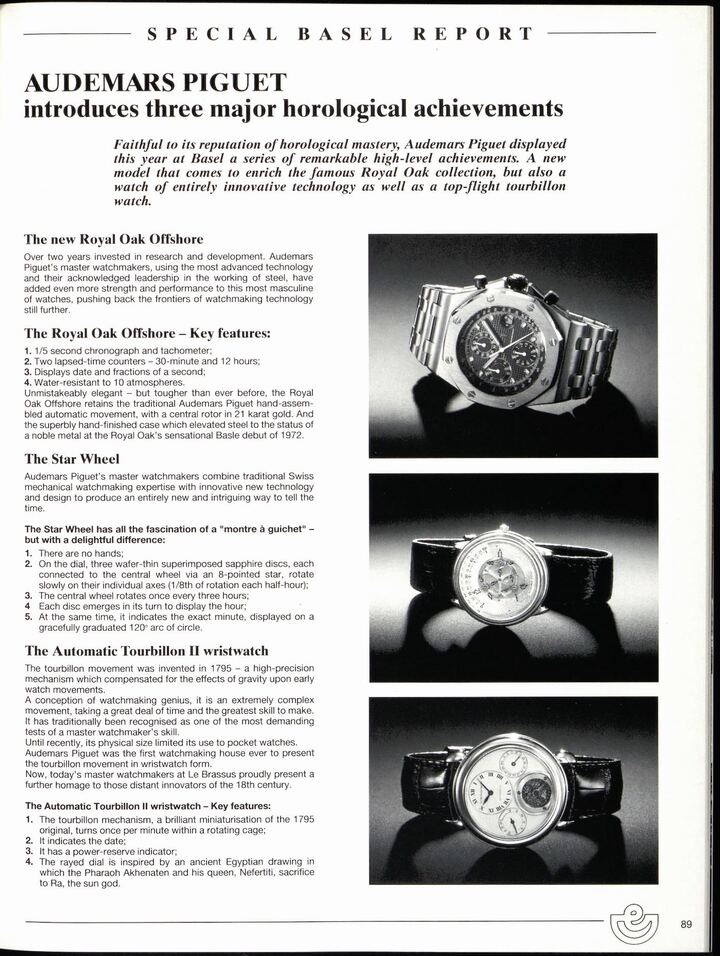
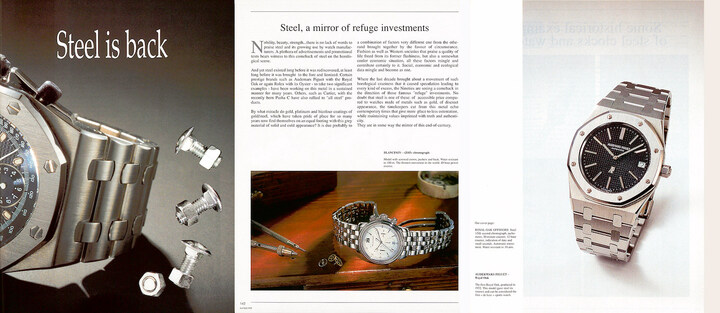
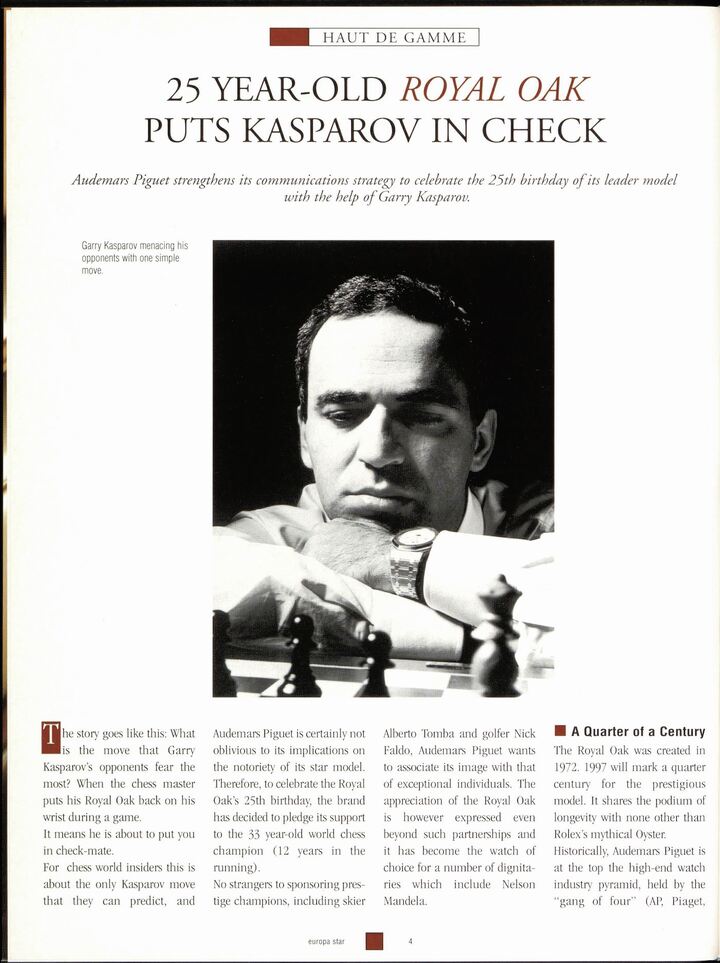
Legendary designer Gérald Genta, creator of the original Royal Oak, called it a “sea elephant” and exclaimed "You have spoilt my watch, you’re a murderer!” But younger buyers, particularly in Italy, instantly took to the Royal Oak Offshore, proving that it was exactly the new design trend Urquhart sought. Despite the initial controversy, the Offshore gradually gained commercial traction as buyers in the United States and Germany caught on.
The Audemars Piguet Royal Oak started the luxury steel sports watch trend, but it was not until the launch of the Royal Oak Offshore line that the lineup included a chronograph. Although designed with the Frédéric Piguet Cal. FP 1185 in mind, the 42 mm Offshore was launched with a large Dubois Dépraz chronograph module that better fit the large case. This left the smaller movement to be used in the standard Royal Oak Chronograph, launched in 1997 alongside a tourbillon and Grande Complication to celebrate the 25th anniversary of that model.
After three years as a single model, the Royal Oak Offshore became a true product line in 1996 with six new references announced. Given that the Offshore was intended to be a large, complicated watch for men, it is surprising that the collection expanded so quickly to cater to a wider audience. References 79290 and 77151 were designed specifically for women, with smaller 30 mm cases and the simple time-and-date Cal. 2140. The mid-size 38 mm models used Cal. 2127/2827, which included a complete calendar with day and month aperture displays and a peripheral date indication. And the 42 mm model was now offered with a leather strap. All three watches seemingly contradicted the mission of the Royal Oak Offshore due to their size, classic complication, and lack of a bracelet, yet they retained the bold sports styling and appealed to the same audience.
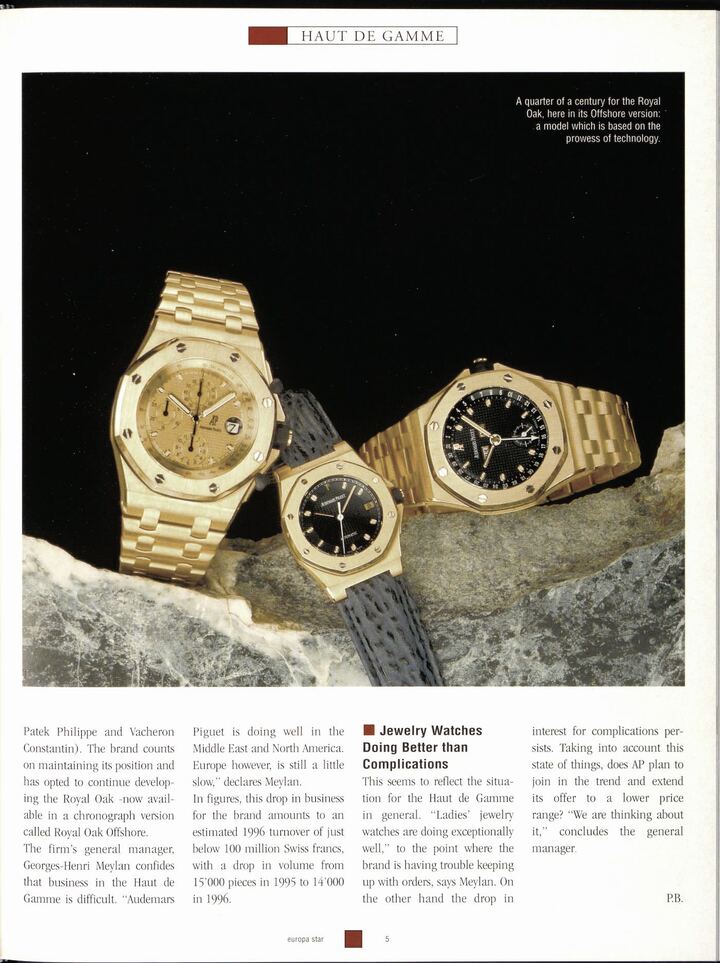
Sales of the Royal Oak Offshore surpassed the 1,000 mark in 1997 as the line continued to expand. This year saw the introduction of new complications, including a perpetual calendar and world time, as well as gemsetting and vibrant color variations designed by Emmanuel Gueit to celebrate the 25th anniversary of the Royal Oak. This expansion and diversification of models played a pivotal role in propelling the Royal Oak Offshore to new heights, especially with the introduction of titanium models the following year.
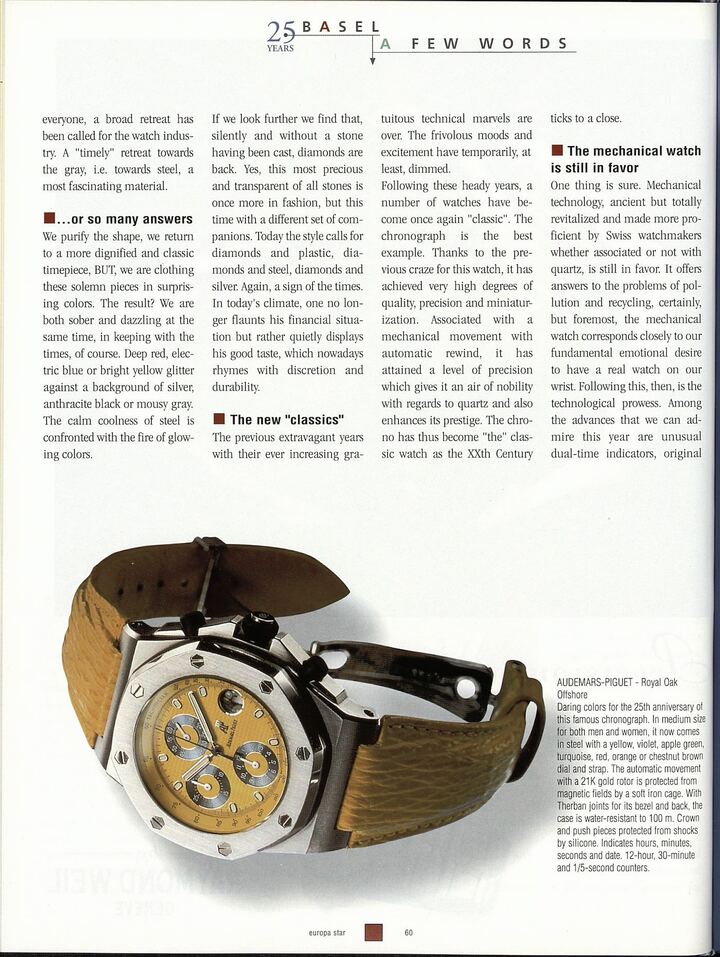
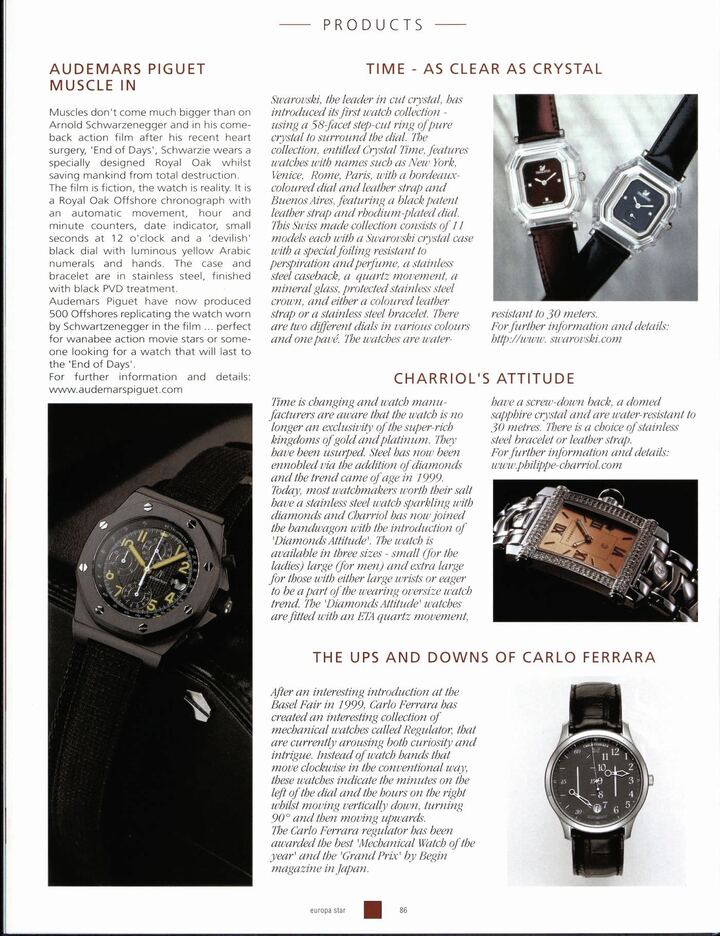
The Royal Oak Offshore has long been a platform for collaboration with stars of film, music, and sports. This began in the autumn of 1997, when actor Arnold Schwarzenegger visited the Audemars Piguet museum in Le Brassus alongside young salesman François-Henry Bennahmias. This would prove a pivotal movement for the Offshore line, as it initiated a series of limited edition charitable collaborations between Schwarzenegger and Audemars Piguet. The actor connected with the spirit of the Offshore collection, having acquired his first example two years prior. This visit resulted in the creation of the iconic Royal Oak Offshore End of Days (Ref. 25770SN), with a striking blacked-out design and a Kevlar and Velcro strap. The watch, combining ruggedness and technology, appeared on Schwarzenegger’s wrist in his 1999 film “End of Days.” Bennahmias’ connections and creativity were rewarded when he was named CEO in 2012, a position he held until this year.
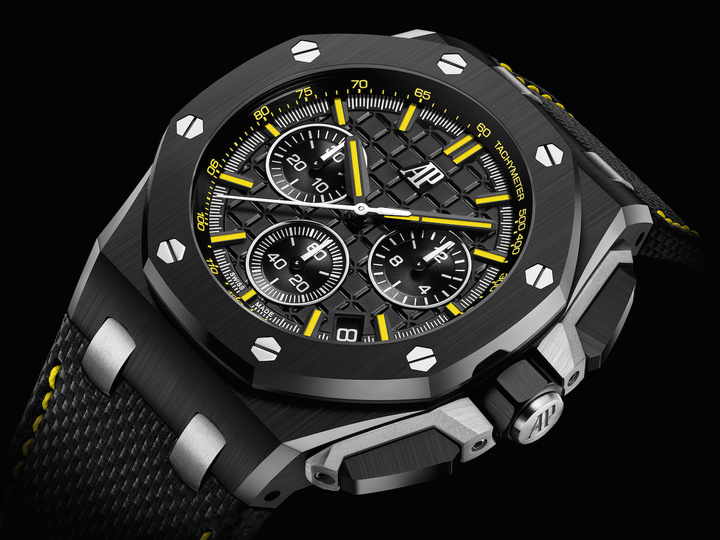
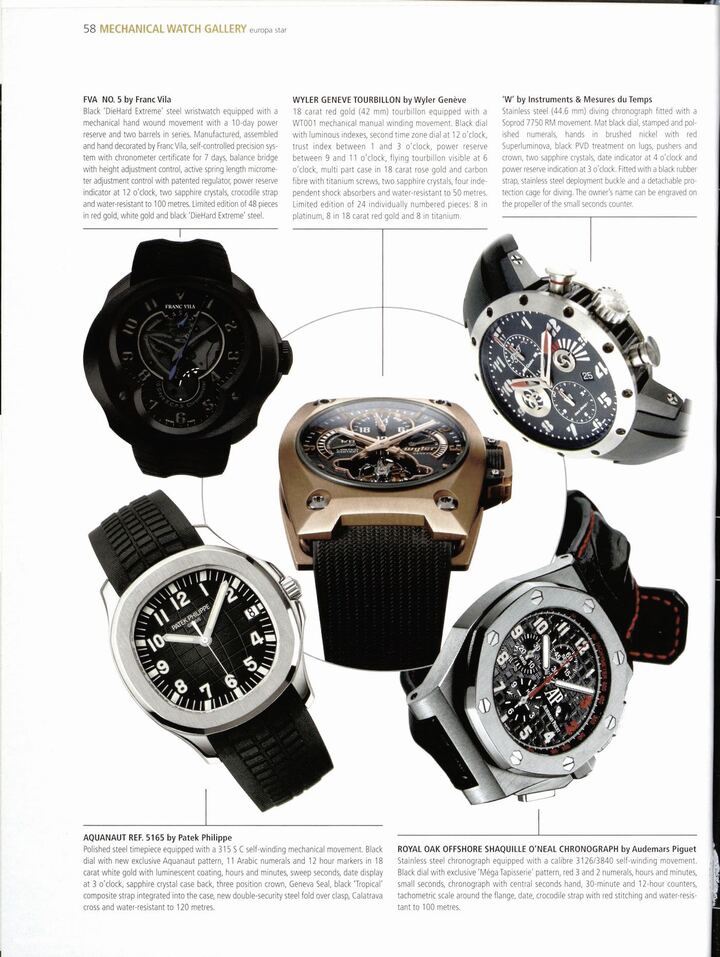
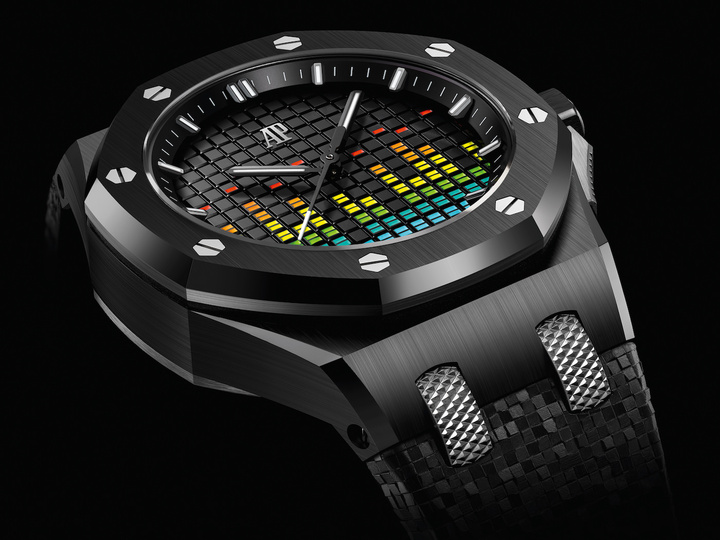
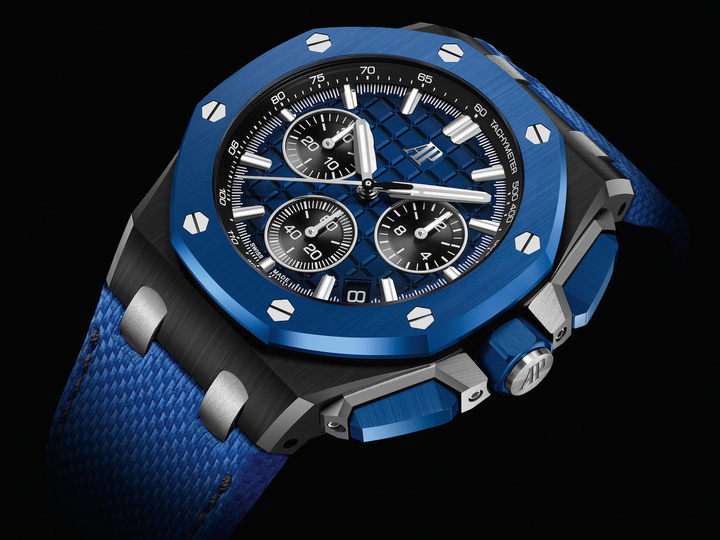
Audemars Piguet’s combination of materials began with the steel and rubber original but quickly expanded to include titanium, ceramic, as well as precious metals and gemstones. Regardless of the material, buyers can count on boldness and contrast in any Royal Oak Offshore model, not to mention a commitment to ruggedness and complications.
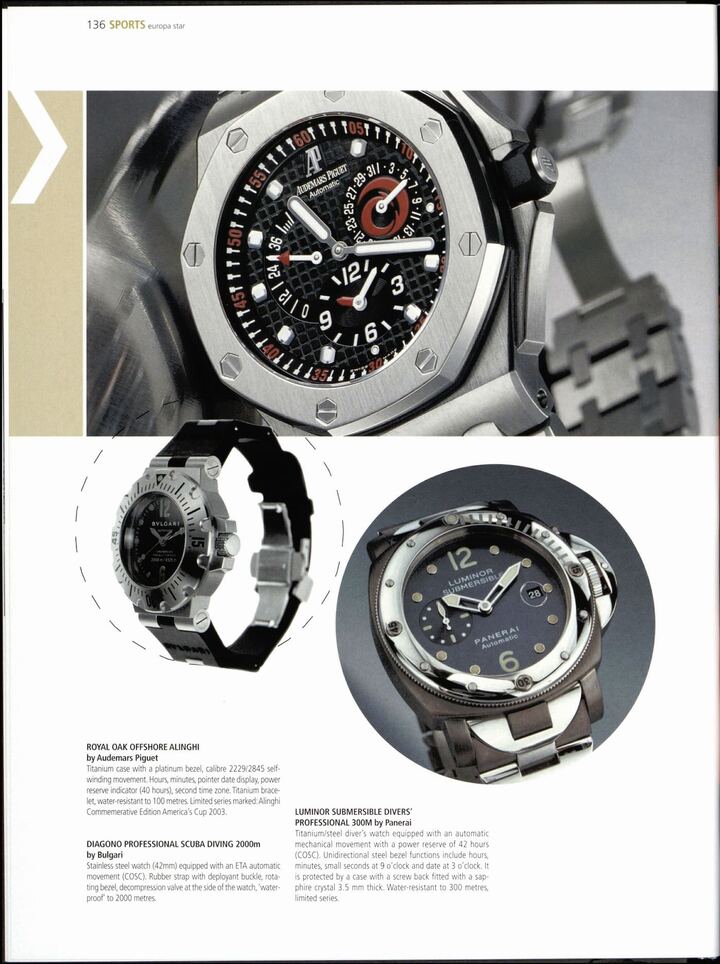
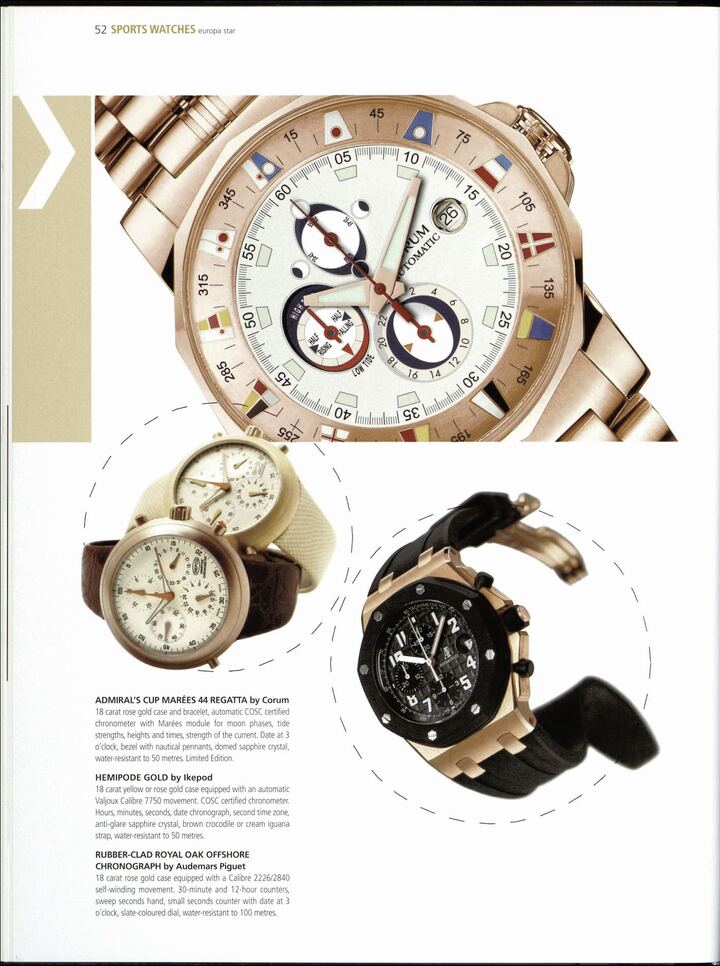
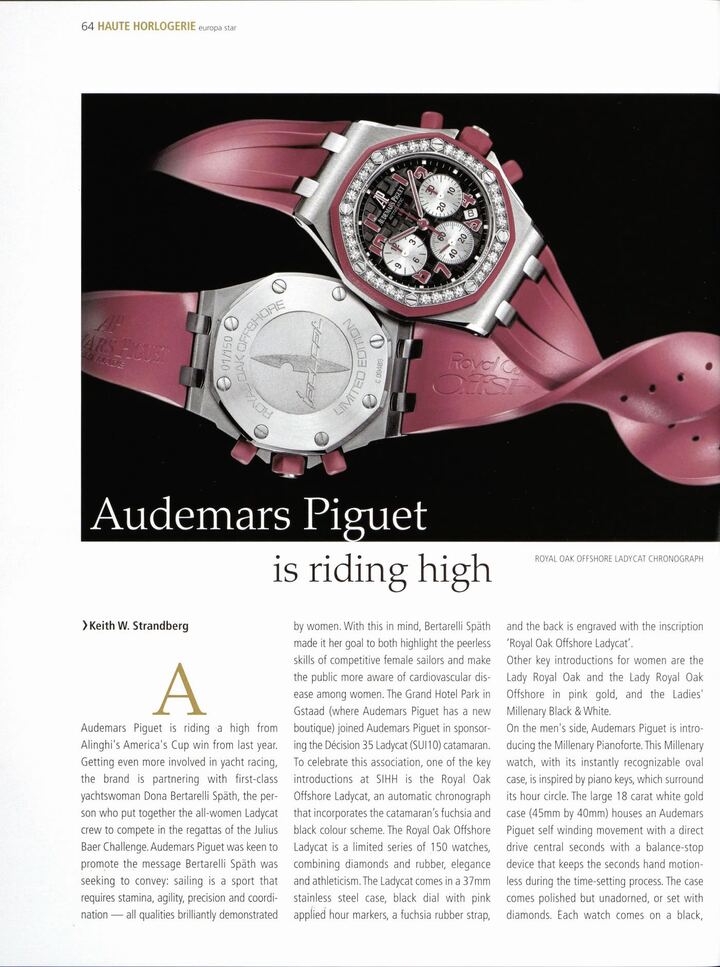
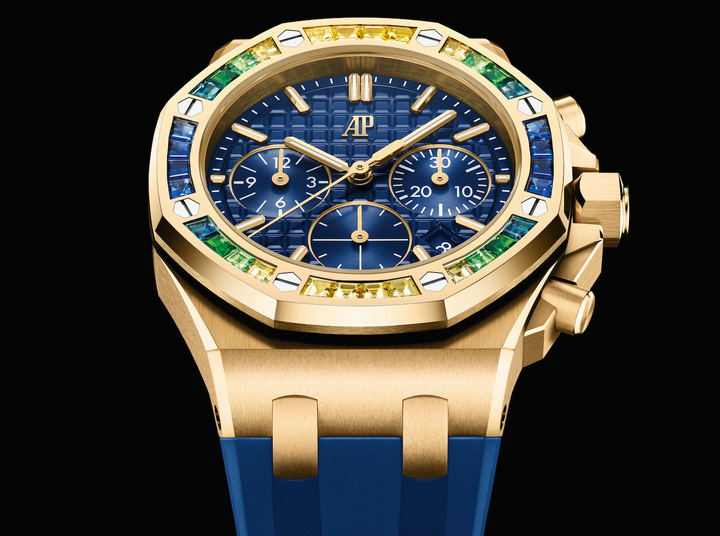
Audemars Piguet has historically specialized in complications of the highest order. The Royal Oak Offshore line was conceived as a complicated watch, and the Le Brassus watchmakers have produced a dizzying assortment of functions over the last three decades. As the signature sports complication, many Royal Oak Offshore models feature a chronograph, but date and time displays are just as common. At the highest level, Audemars Piguet has equipped Offshore watches with nearly every technical feature, including a tourbillon and a Grande Complication.
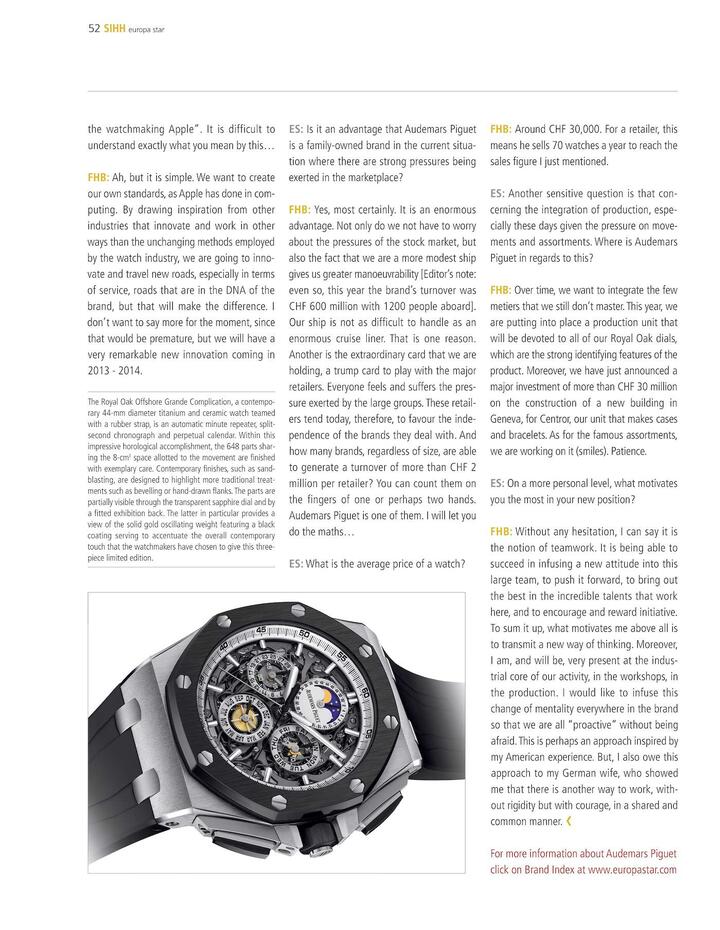


The Audemars Piguet Royal Oak Offshore has always been big, bold, and complicated. For three decades the original Offshore concept has shown that it is possible to combine exotic and familiar materials and features in an eye-catching way while still remaining true to Swiss watchmaking traditions. The original watch became a full range of diverse models for anyone wanting to stand out from the crowd, and this has attracted both celebrities and connoisseurs around the world. As we celebrate the 30th anniversary of the Royal Oak Offshore, we see how Audemars Piguet has woven this rich history into a range of watches that continue to explore new design ideas.