
 Español
 Français
 Pусский
 繁體中文
 简体中文
 Select another language


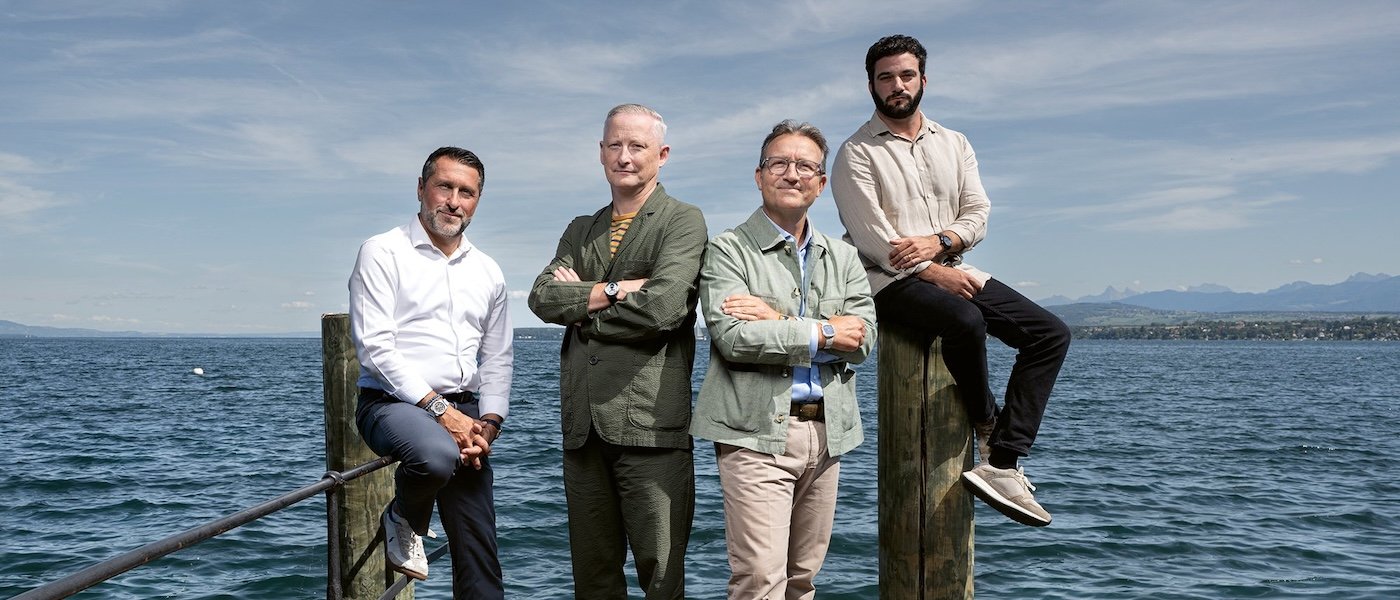
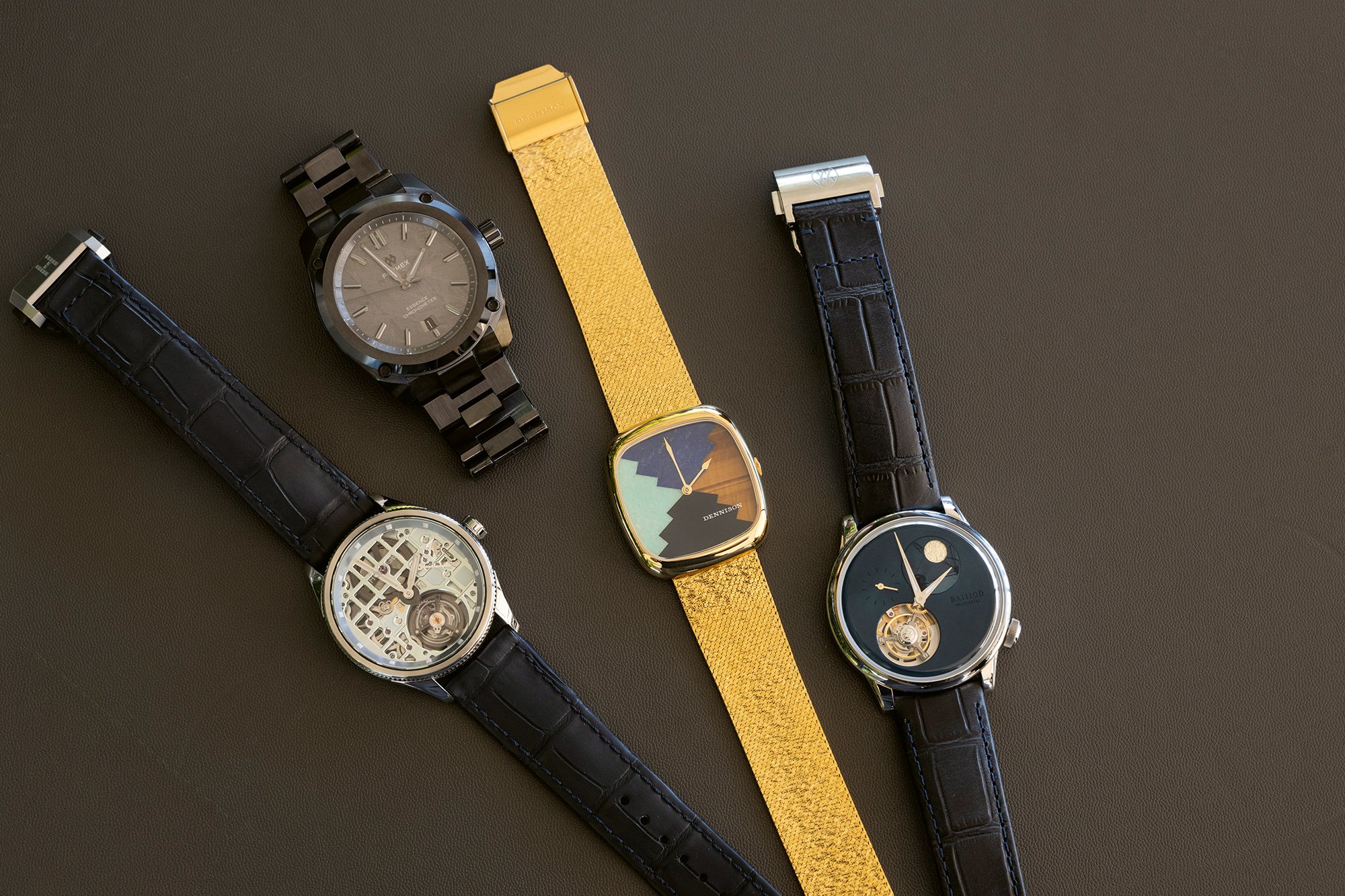
he list of independents working to bring quality watches to a wider audience gets longer every day. From this plethora of brands, we have chosen four that we see as representing various facets of this democratisation.
All come from different backgrounds and have made individual journeys, but their destination is the same: well-executed watches with a growing emphasis on horological substance, and what they like to call “transparent” pricing.
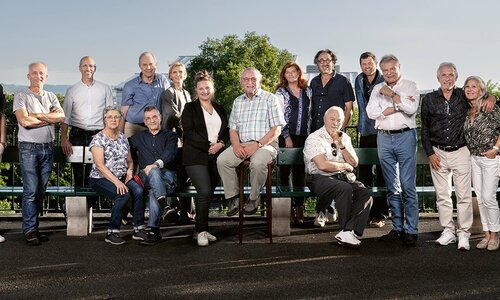
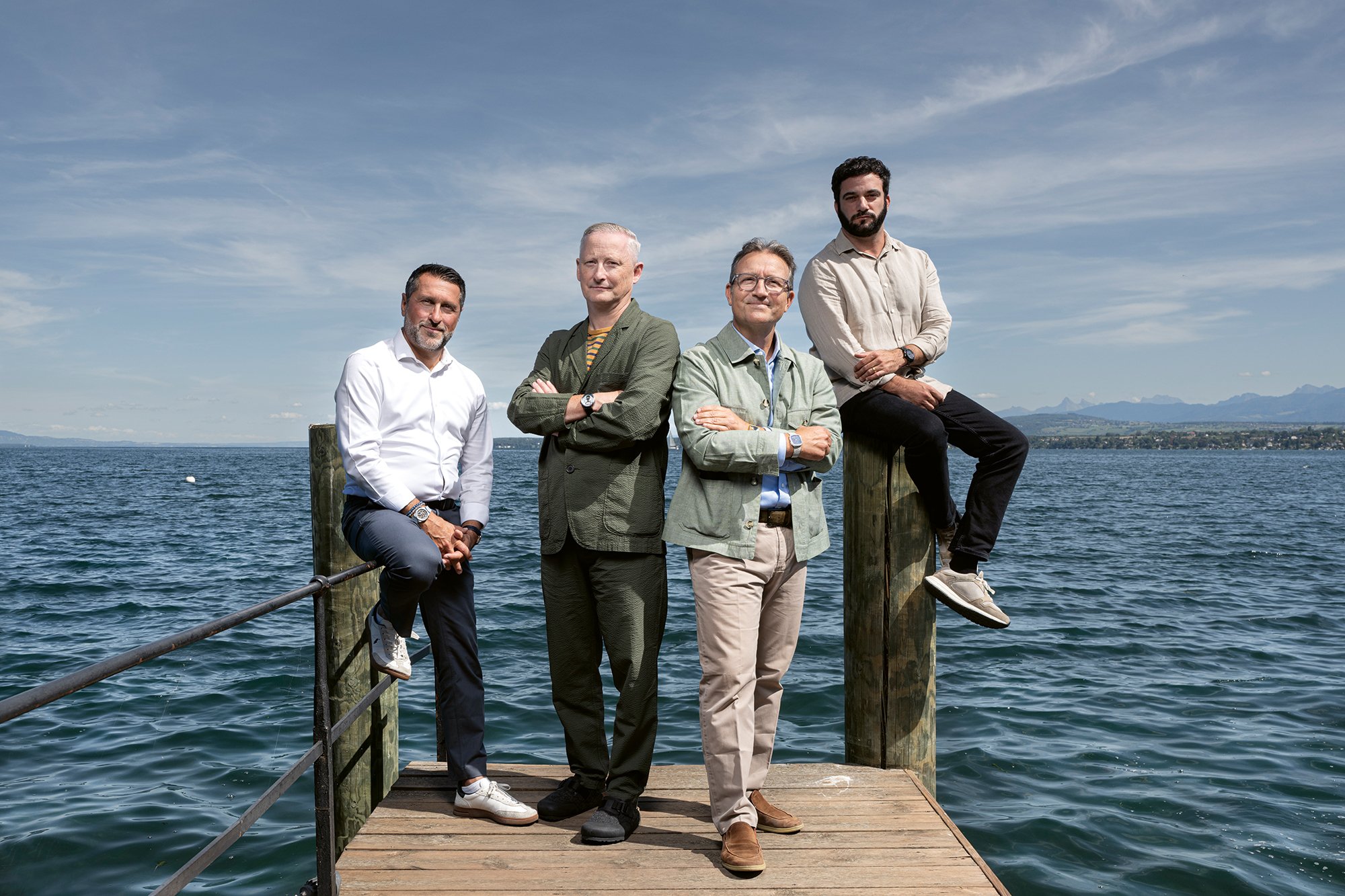
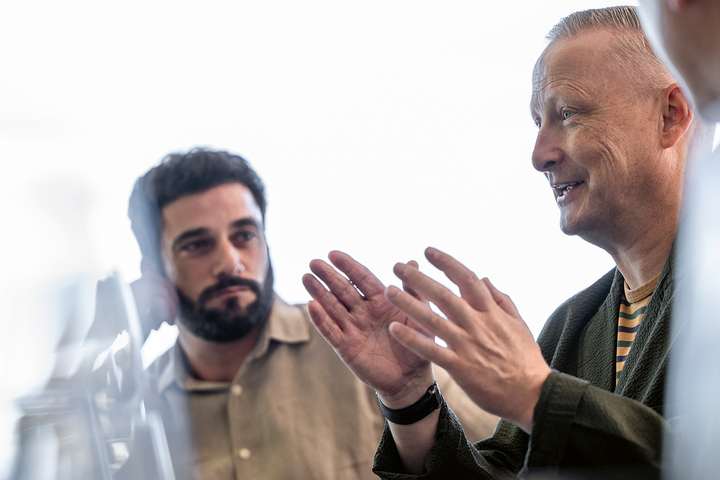
Joining Europa Star around the table are David Sharp, COO of Horage, Raphaël Granito, CEO of Formex, Thomas Baillod, founder of BA111OD and Stephane Cheikh, Managing Director of Dennison.
Europa Star: Each of you has contributed to a certain democratisation of the watch market, but from very different angles.
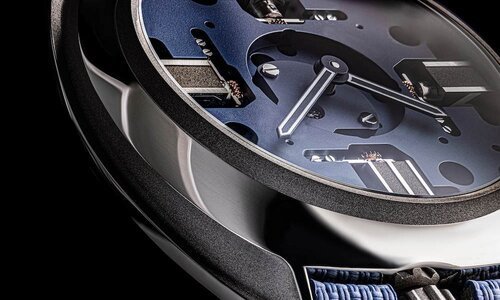
Horage brings a solid foundation of engineering and R&D. Formex, through the Granito family and Dexel, has an industrial background that spans generations, manufacturing straps, cases and components, and now the finished product. Thomas Baillod, you’re an entrepreneur more than a watchmaker in the traditional sense and have worked for companies including Victorinox. You’ve focused on business models to challenge conventional distribution. Last but not least, Dennison comes with a strong design ethos combined with a long industrial past. So, you’re four very different brands but, beyond these differences, you share a similar mindset.
Let’s kick things off with Horage. David, it hasn’t always been easy for a company such as yours, with its strong engineering focus, to make its voice heard. You’re very open in talking about your R&D. When you started to develop your own movements, this must have seemed like a crazy idea to some. What’s the situation today?
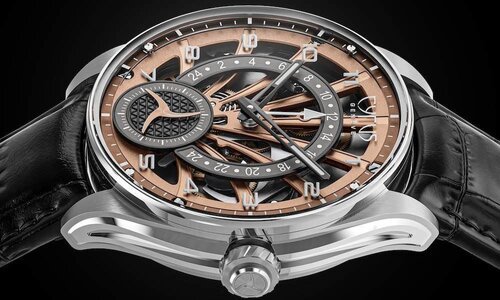
David Sharp: I’d say we’re all about bringing innovation to the mechanical watch while retaining its purity. By which I mean, advancing mechanical watchmaking without undermining its essence. This is something we can achieve through silicon, for example. Obviously we’re not the only ones working on this, but we are one of the relatively few independents that are actively exploring these technologies and new manufacturing processes.
We now have several movements that have gained in maturity and reliability. So we can do more to consolidate the range, make what we’re doing more coherent and tell the overall narrative more effectively.
For a long time, we talked a lot about engineering and I’ll always be that guy who enjoys looking at a good piece of engineering! But customers want something else, too. Increasingly, they want to know who’s behind the brand, to understand what motivates us and where we’re coming from.
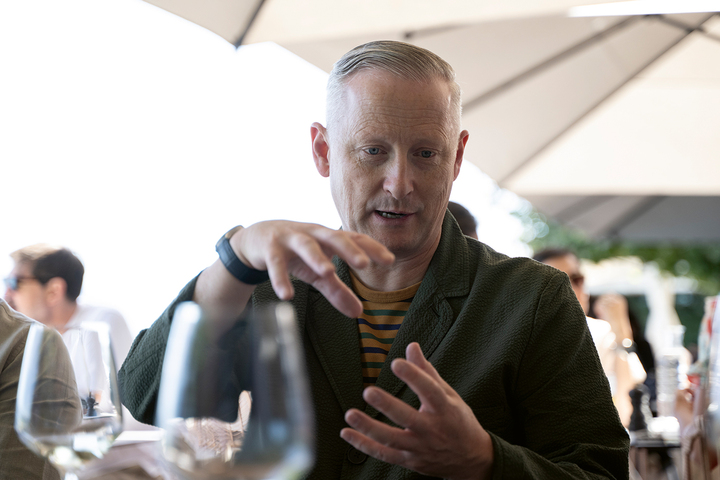
“Transparency is important. And profit isn’t a dirty word. A business has to make a profit because that’s what pays the wages, finances development and is how we create the next watches. But you have to treat the customer fairly.”
We’re struck by how open you are to collaborations. For example, Horage, you’ve collaborated with Formex, which operates in a completely different segment.
Raphaël Granito: We’ve known each other for a while and our businesses are just 600 metres apart, in Biel/Bienne. Horage has never wanted to become an OEM, manufacturing movements for dozens of other brands, but certain projects can be of interest. They’re very particular about who they work with. For us, it was a fantastic opportunity to have a high-spec, performance-driven manufacture movement that would equip the kind of practical everyday watch that is the heart of Formex. It costs three to four times more than certain of our traditional models, but from a design and technology perspective, it’s a different product. This was our chance to show off everything we’ve learned over the years. You might hear me talk about “designeering”, a portmanteau of “design” and “engineering”. At Dexel I learned to start with technical specifications and build a design around them that aligns with brand identity. I think the collaboration with Horage has produced a really fresh watch that is still inherently Formex.
And we’ll come back to that. First, though, we’ll carry on round the table. Thomas, BA111OD comes not from industrial experience but from a rethinking of business models.
Thomas Baillod: That’s right. BA111OD originated from an idea for a business model. The traditional model was designed to enable a chain of intermediaries to take their margin, because that’s how the distribution system worked. But that model has changed. With a few exceptions, every major brand also sells direct to consumers through their website. In which case, when some of the intermediaries have disappeared, why should multipliers and retail prices stay exactly the same? That’s the real question.
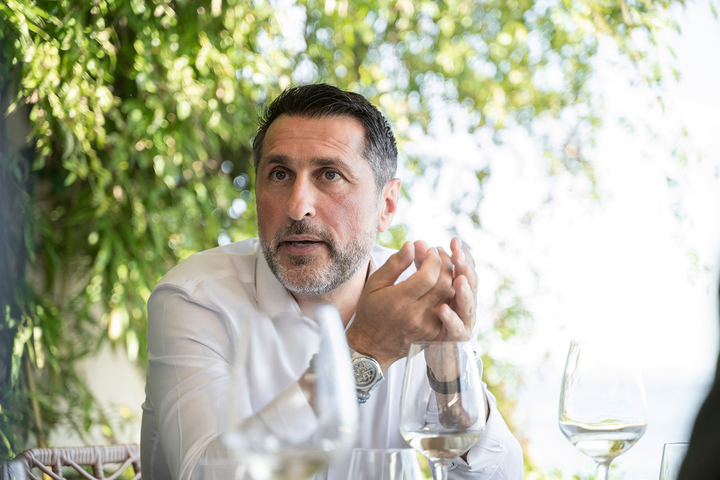
“To say we’re writing our own playbook is a better description than simply saying we’re democratising watchmaking. An independent brand can also enter high-end segments.”
When a brand sells directly to a consumer at the same price it would through the traditional retail channel, it captures a substantially larger margin. Under our model, with a pricing multiplier of 3 or 3.5, our margin remains broadly in line with that of many other brands and a proportion of what would have been the distribution margin is passed on to the customer as a lower price. It’s a perfectly viable model.
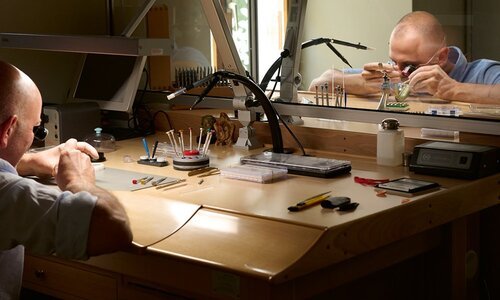
Once we had the model, we then had to build the rest, beginning with design then introducing greater technical and mechanical substance. We set up our own atelier and started in-house assembly.
We now have an industrial tool with the capacity to produce tourbillons and we also have a micro-rotor. This gives us far greater freedom, in the longer term, to develop manufacture movements in-house. Behind the initial model, we’re steadily developing genuine horological depth. Our prices range from CHF 595 to CHF 12,200, which in traditional marketing terms is almost a heresy, as it means we cover four price segments. Normally, a watch brand tries to stay within two, possibly three segments whereas our idea is to create a link. Irrespective of price, we aim to deliver a lot of watch for the money and push the product as far as possible at every level. A watch at CHF 595 has to be exceptional within its segment. A watch at CHF 12,200 must reach a genuine level of excellence.
Although you are bringing in traditional retail, too, is that right?
TB: I’m often asked how we can apply this model to retailers. It’s a fairly simple answer: we might offer a lower margin than usual but we try to make up for this with faster turnover. A retailer’s profit depends not just on the percentage margin they make on a sale. It also depends on how frequently they renew their stock. Less margin, faster turnover: that can be an interesting equation.
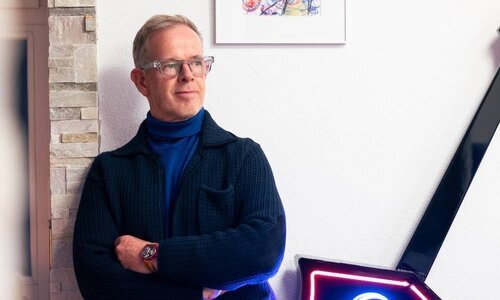
Stephane Cheikh, you’re one of the faces of Dennison, a brand reputed for its designs and for democratising stone dials. When we show a Dennison watch to someone without giving away the price, perceived value is generally much higher than the recommended price. Where does this positioning come from?
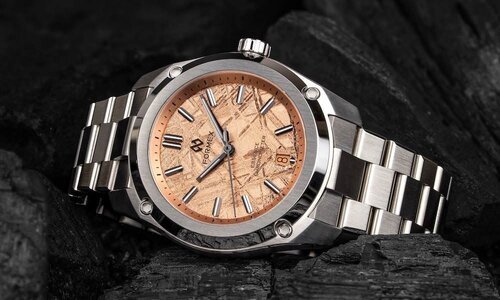
Stephane Cheikh: The starting point was really the design and meeting Emmanuel Gueit. We tried to give him a brief but he basically told us, “Just let me get on with it and I’ll come back with different things for you to look at.” He had a really interesting approach. Dennison ceased trading in the 1960s and Emmanuel asked himself: if Dennison had carried on producing cases and watches throughout those decades, what would they look like today? He didn’t want to simply copy a vintage watch. He wanted to imagine a fictional continuation for the brand.
The stone dials followed on naturally. There is a profound aesthetic culture behind everything Emmanuel does. This isn’t someone who sees something trending on Instagram then decides to draw a watch with a stone dial. He has an authentic design language.
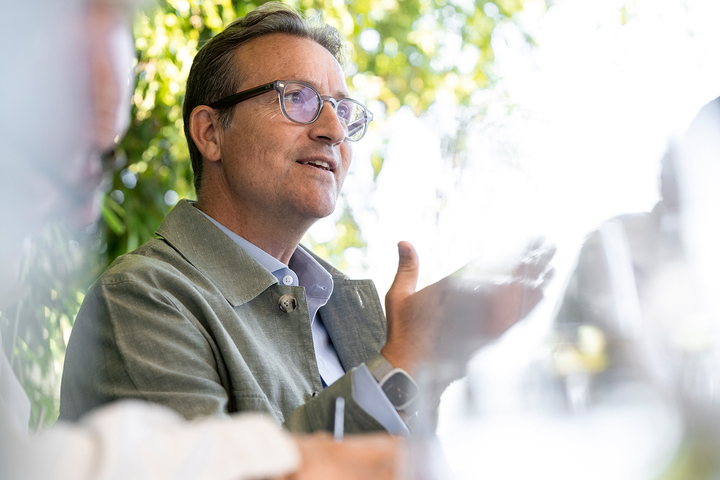
“Maybe it’s not an individual brand that will become part of the mainstream but rather a group, a form of independence, that’s starting to attract a wider audience. I think we’re building something together.”
You might say we were in the right place at the right time, as stone dials are currently a thing, but already, Emmanuel wants us to start thinking about what comes next. We’re working on a new case architecture and probably some sportier products. People currently associate Dennison with dressier watches and sometimes a customer will say, “I love the watch but can I wear it to the beach, on a boat, or over a weekend when I’ll be playing a lot of sport?” We’re going to expand the brand’s territory but progressively. Step by step.
How does Dennison approach distribution?
SC: Initially we planned to sell online only, then we did our sums. Once you’ve added up payment commissions, website hosting, currency exchange, shipping and especially customer acquisition cost, direct-to-consumer is by no means free. At times we were investing as much as 20% of our turnover in online marketing, mainly via Meta and Google.
When you sell through retail channels, part of those costs disappear. We’ve started working with retailers although not necessarily at traditional margins. Retailers were asking for 50%, then 45%, then 40%... and a lot of the time we told them no. You have to agree on a point where the retailer makes a decent living without completely undermining our business model. Also, customers like to see our stone dials “in the flesh”. Because each stone is different, the boutique experience is hugely important.
Having said that, we’re very attentive to how we’re perceived and that people don’t see us as a fashion brand. One thing we don’t want is to be in a territory of watches selling for $100 or $200 and built solely around a trend. This is one reason we’ve developed more ambitious, more expensive products: to show that behind the design there is real substance. The majority of our models are priced around CHF 660, CHF 800 or CHF 1,000, depending on the stone for the dial. The Mini, which is our smallest size, aimed at a female clientele, sells for around CHF 500. We’re a young brand and we know exactly who we are. We try to maintain production within certain limits, including for our best-sellers. We don’t want a particular model to become so ubiquitous it becomes less desirable.
Horage has also given considerable thought to margins and distribution.
DS: Independents are enjoying momentum because consumers are better informed. What do I mean by that? Rents, groceries, the price of just about everything is going up. Someone can really love a watch and want to buy it, but when you’re on an engineer’s salary, you have to be able to justify the expense. A brand can no longer say “that’s how much it costs, end of” to a customer who understands how a watch is made, how much a movement can cost, what’s difficult to produce and what isn’t.
The media also play an important role by taking customers “behind the scenes”. You can no longer tell people what you want them to hear quite so easily. Which is a good thing.
We aim to be transparent about pricing. This is especially visible where precious metals are involved. If we make a gold watch, we tell the client the actual cost of the gold, the work involved in machining the case, finishing, polishing, and why the price increases. A case that has a particularly complex shape, for example, can cost more to machine.
With platinum, the cost of the raw material is only one part of it. Platinum is notoriously difficult to machine and is hard on tools. We don’t want to take a steel watch, make it in precious metal and multiply the price by some arbitrary factor. We want to be able to explain why a product costs more. Transparency is important. And profit isn’t a dirty word. A business has to make a profit because that’s what pays the wages, finances development and is how we create the next watches. But you have to treat the customer fairly.
Raphaël Granito, you say you’ve made Formex “an independent company that can stand on its own two feet” and that it took you “three or four years” to get there. What’s your industrial model and how do you approach distribution?
RG: When I first took over Formex I was on my own, although I did have the support of Dexel’s technical services and product design team. I knew exactly how this industrial structure worked, as a manufacturer of components, mainly cases and straps. I introduced T2 [assembling the watch head and casing] and T3 [strap assembly] stages, as well as final assembly. In other words, build a complete watch.
We advanced at a steady pace without burning through too much capital, as there were no outside investors. We financed everything privately but fairly quickly reached a level of sales sufficient to finance the business. We learned a lot about marketing: how to best reinvest every penny that came in.
Now Formex employs a team of 16 people and has its own design engineering studio, logistics and production divisions. We’re fully independent, although Dexel still provides us with certain technical services. The balance has shifted. We’re more involved with team meetings where design ideas are developed collectively.
What about distribution?
RG: One of the first decisions on taking over Formex was to adopt a direct-to-consumer model. We multiplied production cost by around three to calculate the retail price excluding tax. This laid the foundations for our current business model.
Today, we also work with retailers, although we never went out intent on finding retail partners. I didn’t want to contact retailers, only to tell them we couldn’t offer them the usual industry margins if we were to remain a “democratic” brand. The majority of our retailers wanted to work with us and knew what they were signing up for. This way, retail has become an important growth driver.

“The number-one priority is resilience and longevity. For me, cashflow is the lifeblood of the business. It’s also what leaves me free to create the products I want to create, and take certain risks.”
We don’t take a conventional approach towards pricing because we don’t want to limit ourselves to a single category. The core of the range, where we have our highest volumes, is between CHF 1,500 and CHF 4,000, but a model with, say, a micro-rotor and silicon, on a Horage base movement, will come in at around CHF 6,000 to CHF 6,500.
Another cardinal rule: never give discounts. And don’t overproduce. Thanks to granular knowledge of our customers, we can forecast fairly accurately how many units of a given model we’ll be able to sell, sometimes even before presenting it. This means we don’t end up with vast quantities of surplus inventory, and no surplus inventory means no need to sell off watches at a 20% or 30% discount, simply to generate cashflow.
This is key when working with retailers on a lower margin. We also have a really engaged community who know they have almost zero chance of finding a new Formex watch at a discounted price. This protects the value of the product.

You all emerged when established business models were being overturned and you’ve benefited from the disruption of traditional channels. But it takes more than a business model to sell a watch. You need a desirable product, a design language and substance.
SC: It’s thanks in part to the success of our core range, and volume in this price segment, that we’ve been able to explore higher levels and launch a few significantly more expensive gem-set watches, with smaller margins and smaller volumes. The objective was first and foremost to show that Dennison can also produce watches in a high-end category.
Globally speaking, models without gems are priced between CHF 500 and CHF 1,000, while certain models with baguette-set diamonds, rubies, sapphires or tanzanites can reach CHF 15,000.
RG: I think we all reinvest profit in building our brands, product development, even acquiring or developing industrial tools. The number-one priority is resilience and longevity. For me, cashflow is the lifeblood of the business. It’s also what leaves me free to create the products I want to create, and take certain risks. As long as the business is healthy, staff enjoy working here, there’s a good atmosphere and customers appreciate what we do, then I think we’ve already achieved something.
TB: I think this reflects a contemporary mindset, to choose quality over quantity, including quality of life. We’re all entrepreneurs and we’ve all worked incredibly hard. At some point, the objective is also to have the freedom to take a step back, steer the company, and have time to think about strategy and creativity.
We’ve mentioned substance and I think the tourbillon is a good example. For years, the tourbillon was a money-spinner for haute horlogerie brands. Now it’s becoming a much broader, more mainstream complication. Horage has produced a tourbillon. So has BA111OD. Back when “tourbillon-mania” was taking off, we published an article by a former watchmaking teacher who scientifically demonstrated that a tourbillon serves no real purpose in a modern wristwatch. It sparked a huge reaction. We were practically accused of wanting to kill off the tourbillon. Now it’s common knowledge. By releasing tourbillons at “democratic” prices, you’re tearing up the status quo, writing your own playbook.
TB: I think that’s a better description than simply saying we’re democratising watchmaking, because an independent brand can also enter more high-end segments. The gap that traditionally separates luxury from everything else has gone. That’s the real change and not just in watchmaking. We’re seeing a huge number of collaborations in other industries. Communication is becoming more relaxed, CEOs are more approachable. Certain brands prefer to maintain this distance and are still sitting on their pedestal, but you can rest assured they’re keeping a close eye on what’s going on around them. All these independents that refuse to be pigeon-holed…
Maybe the question is less about who the next big independent brand will be and more about the collective aspect. Maybe that’s the real takeaway from today: a generation of independents has made watchmaking more approachable in its message, more transparent, more open and most of all, less bound by convention. These are brands that aren’t looking to produce hundreds of thousands of watches, that don’t necessarily want to be the name on everyone’s lips but which are, together, reshaping consumer expectations. And possibly changing how the industry’s established names operate, too.
DS: The more independents work together, the better it will be. There is strength in numbers.
SC: I think you have the answer there. Maybe it’s not an individual brand — yours, mine or another — that will become part of the mainstream but rather a group, a form of independence, that’s starting to attract a wider audience. I think we’re building something together. Like fish swimming in a shoal.