
 Español
 Français
 Pусский
 繁體中文
繁體中文 简体中文
简体中文 Select another language


elaunched - or more precisely reimagined - just over four years ago, Tiffany & Co.’s watchmaking division has developed a distinctive identity, firmly anchored in jewellery. “It is perhaps the best-kept secret in watchmaking - few people are aware of our history, including our manufacture founded in 1874 in the heart of Geneva, on Place Cornavin, which produced highly sophisticated and beautifully decorated pocket watches,” says Nicolas Beau. With a distinguished career spanning Cartier, Baume & Mercier and Chanel, he has overseen this activity within the venerable New York jeweler since its acquisition by LVMH in 2021.
But from the outset, he is keen to clarify: “Tiffany & Co. has always been a jeweller that made watches; it is not a jewellery-and-watchmaking house.” Indeed, aside from the more accessible Union Square and Atlas collections - positioned in the $3,000 to $6,000 segment - all Tiffany timepieces draw directly on the House’s rich jewellery heritage.

In early 2026, we met Nicolas Beau at Tiffany & Co.’s watchmaking headquarters in Geneva, and again in Milan during LVMH Watch Week. On Via Montenapoleone, the Peter Marino-designed flagship has just been crowned “World’s Most Beautiful Boutique” (Prix Versailles 2025).
Daniel Arsham’s Stratified Venus of Arles welcomes visitors to the former palazzo, which unfolds across more than 1,200 square metres of turquoise-hued transparency. Since joining LVMH, Tiffany has undergone a profound transformation: on average, we are told, one of its 370-plus boutiques worldwide is renovated every nine to ten days. At the top of Palazzo Taverna - Tiffany’s largest European boutique - a dedicated watchmaking space provides the ideal setting to discuss this renaissance with Nicolas Beau.


Europa Star: What are your main objectives for 2026 as the relaunch of Tiffany & Co. watchmaking gathers pace?
Nicolas Beau: Our priority is to pursue the coherent deployment of our collections. This year, our new “classic” timepiece is the Tiffany Timer, while we are simultaneously reinforcing our jewellery watch offering. It is also essential to raise awareness of our watchmaking heritage, which remains too little known. In New York, we hold more than 300 historical pieces, including chronographs and enamel watches.
The artisanal savoir-faire we apply to watchmaking comes directly from jewellery and is naturally transposed into our timepieces. That is what sets us apart. Today, our offering is clearly structured: on the one hand, classic watches - currently Atlas and Union Square; on the other, jewellery watches. While strongly horological in spirit, the Timer incorporates numerous jewellery codes. It stands at the crossroads of these two worlds.
Alongside this, we continue to develop timepieces with L’Épée 1839, a longstanding Tiffany partner. We are also investing in promising technologies, such as the solar quartz used in the Rope Watch - supported by the group’s stake in La Joux-Perret. For me, solar energy represents the future of quartz.


Do you believe the foundations for this revival are now firmly in place?
Yes, the foundations are there - but they are, by nature, evolving. Our watchmaking is inspired by jewellery and will develop in parallel with it. Tiffany jewellery is in constant motion, with annual collections often produced in very limited series. Watchmaking must interpret this creativity, without necessarily multiplying permanent collections.
A traditional watch brand typically relies on one or two iconic pillars. At Tiffany, we will evolve in close step with jewellery. Collections such as HardWear, Bird on the Rock and the Tiffany Timer are direct expressions of our jewellery DNA.

Speaking of which, can you tell us about the origins of this model?
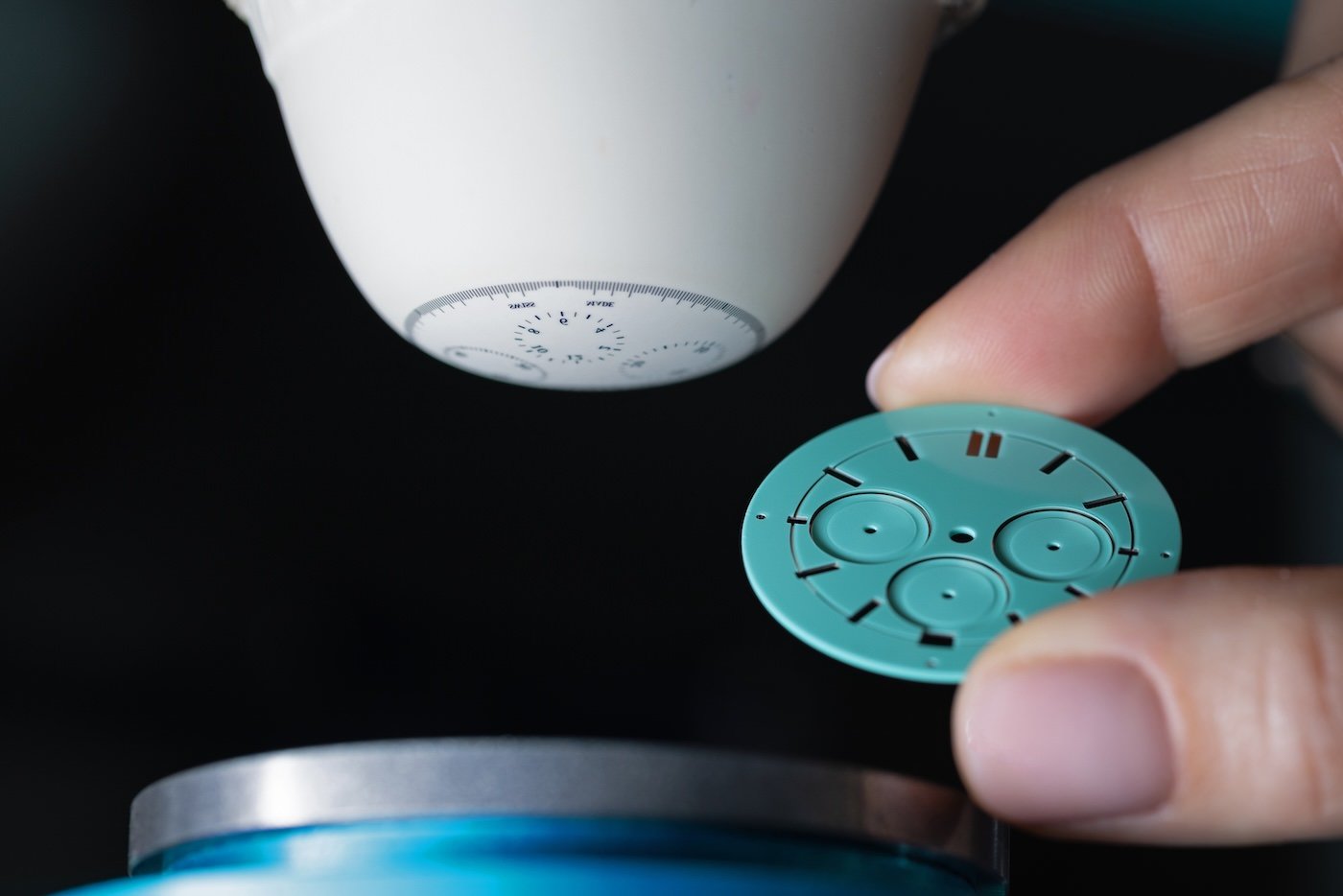
The Timer draws on both our rich chronographic heritage - more than 160 years of history - and the aesthetic codes of Tiffany jewellery. In a sense, it is a jeweller’s interpretation of the chronograph. It marks the beginning of a new collection and is the first chronograph of our new watchmaking era, fully aligned with our strategy of creating watchmaking from jewellery. Choosing a chronograph was an obvious decision: to overlook 160 years of chronograph history would have been unthinkable.
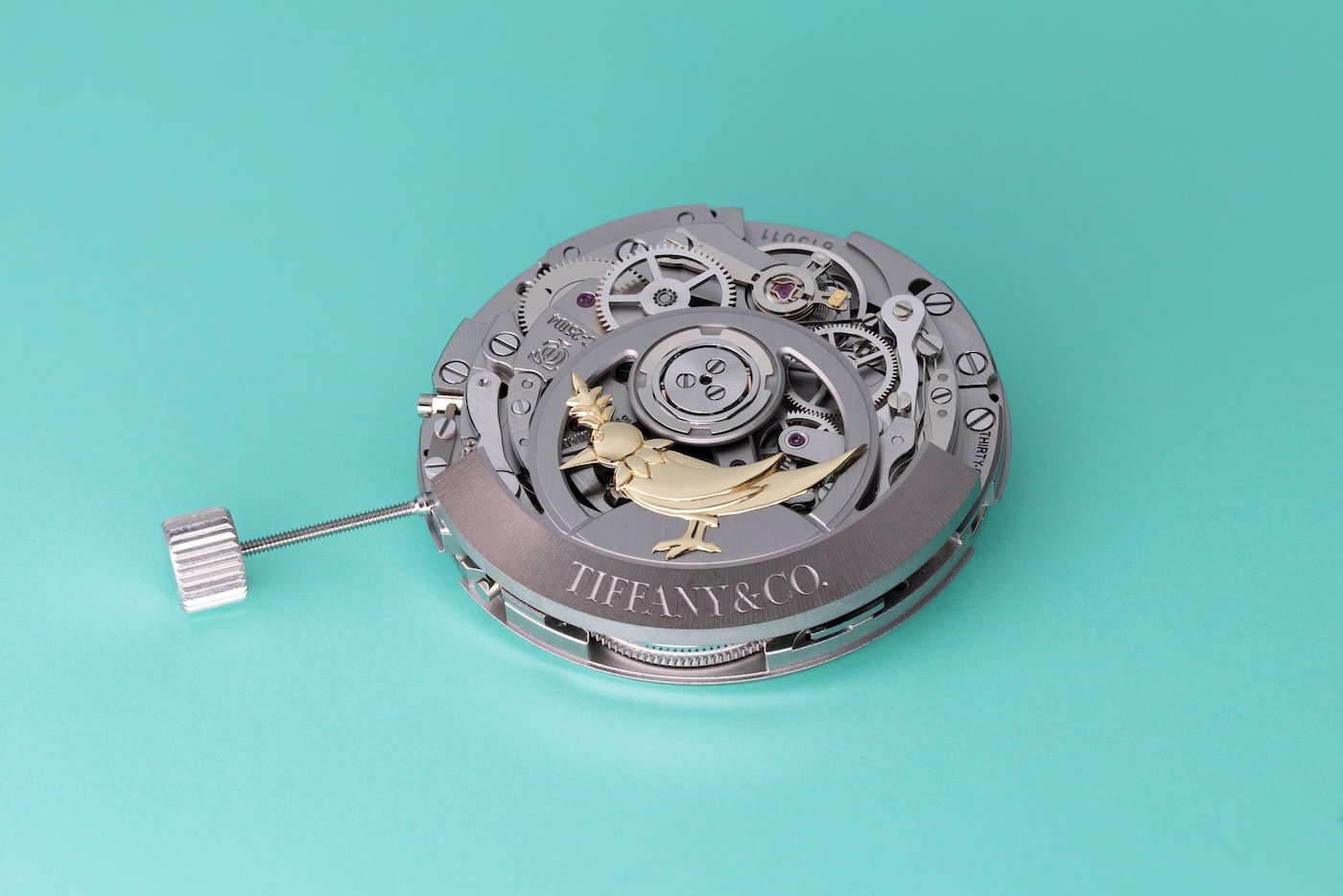
The Tiffany Timer embodies this legacy through a jeweller’s lens. It features platinum, the House’s preferred metal, diamond-set hour markers and, naturally, the Bird on the Rock on the rotor. Ultimately, it is not the movement alone that defines the watch, but the creative intention behind it. We were fortunate to draw on Zenith’s expertise, adapting the El Primero calibre to our specifications.

How would you position Tiffany watches - feminine, masculine, or both?
At Tiffany, this debate simply does not arise. Our strength lies precisely in our jewellery DNA: an infinite palette of colours, stones and materials, combined with profound creativity.
Tiffany Blue seems even more prominent in watchmaking than in jewellery. Why is that?
We are incredibly fortunate to have a timeless, highly distinctive colour that harmonises with all others. Tiffany Blue is organic and natural - it is the colour of the sky. Recently, someone in New York said to me, “Today the sky looks like Tiffany Blue.” The evocative power of that image is extraordinary.
The Blue Box dates back to 1845, while the Pantone shade was officially registered in 1998. Its use in watchmaking is relatively recent. Historically, the hue varied from one edition of the Blue Book to another. This inspired us to develop a chromatic palette ranging from emerald to navy, including topaz - as illustrated by the rainbow bezel of the Eternity watch. Such richness of colour allows us to express our identity fully in watchmaking.

The Tiffany Timer is equipped with a Zenith El Primero movement. How are your operations structured, and what synergies exist within the group?
The organisation of Tiffany Horlogerie reflects a resolutely modern vision of fine watchmaking. From conception to complete design, we master every stage in-house, while sourcing key components - movements, dials and cases - either within the group or from leading independent suppliers in Geneva and the Jura. Regardless of origin, each component undergoes rigorous inspection in our integrated quality laboratory before assembly by our watchmakers.
This well-orchestrated structure brings together 51 employees representing 31 different métiers - a complete ecosystem of expertise under one roof. The manufacture also benefits from a major asset: Tiffany New York’s renowned expertise in selecting and acquiring the finest gemstones, lending our watches exceptional brilliance and quality.