
 Español
 Français
 Pусский
 繁體中文
繁體中文 简体中文
简体中文 Select another language


ime stood still in 1967 for British watch case manufacturer Dennison. The company had enjoyed its heyday, with its cases found on the backs of watches made by major Swiss brands such as Rolex, Jaeger LeCoultre, IWC and Omega. However, this did not prevent the two heirs who owned the company at the time from closing it down.
It took the passion of three men – Toby Sutton, founder of Watches of Knightsbridge, Stéphane Cheikh, an entrepreneur in Geneva, and designer Emmanuel Gueit – to revive the name in the form of a watch brand.
When he was just 21 years old, Toby Sutton bought the Dennison name. For fifteen years, he did nothing with it until he met Stéphane Cheikh, who wanted to leave the world of artificial intelligence. The third key person in the story is Emmanuel Gueit: he is the one who gave Dennison watches their distinctive look. Good blood runs true: he is the son of the iconic 1970s and 1980s designer Jean-Claude Gueit and drew inspiration from the watches of that era to bring the watch brand to life. ‘And pick up where the story left off.’

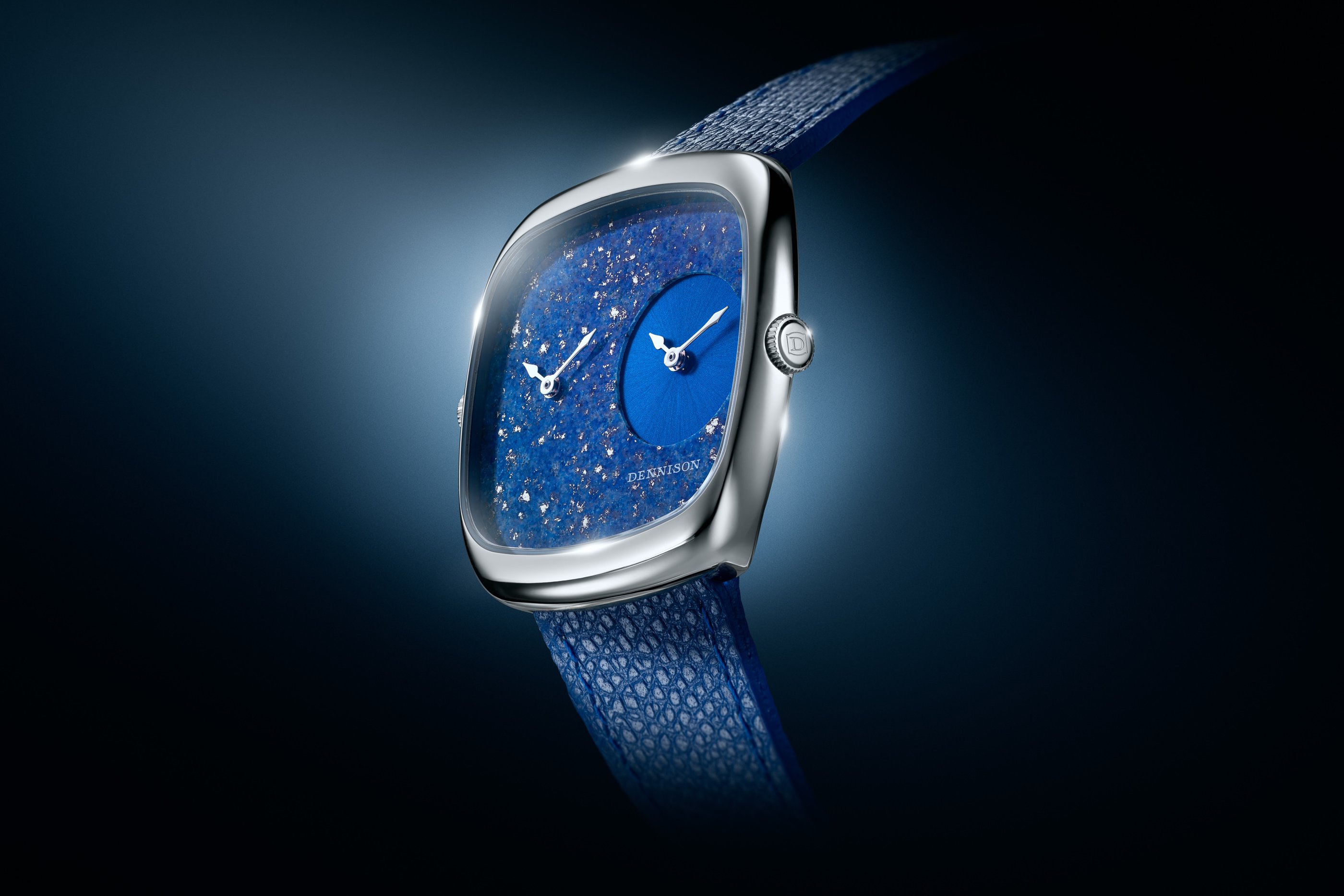
The first models, with their semi-precious stone dials and television screen-shaped cases, immediately appealed to younger generations, vintage watch lovers and collectors alike. Their attractive price did the rest. Some components come from Asia and the watches are assembled in Hong Kong, but the Ronda quartz movement that powers them is Swiss. The leather straps are also made in Geneva.

Last November, the brand won the Challenge prize at the Grand Prix d’Horlogerie de Genève. We meet Stéphane Cheikh, the brand’s managing director, and Emmanuel Gueit, the designer.
Europa Star: How did you feel when you heard the name Dennison announced as the winner of the Challenge prize during the GPHG ceremony?
Stéphane Cheikh: I felt immense joy at this wonderful award, which will give the Dennison brand great legitimacy, and also great happiness to see the hard work of the last 12 months recognised.
Emmanuel Gueit: I was first surprised that we were selected and then to be among the finalists. The audience’s reaction when the winner was announced moved me deeply.

What made you want to relaunch the brand?
Stéphane Cheikh: It’s a beautiful brand with a rich heritage: at the time, it manufactured cases for major Swiss brands such as Rolex, Tudor, Jaeger, IWC and Omega. My partner Toby Sutton and I thought it might be interesting to relaunch it. It’s not a new brand, the name already existed, but it wasn’t associated with watches. It was a case manufacturer that had made a few watches but didn’t follow through.
There are many dormant watch brands. Why did you choose to relaunch this particular name?
Stéphane Cheikh: Toby’s father is a vintage watch dealer, and when opening old Omega or Rolex watches, they often saw the name Dennison. When he was 21, he got tired of working in a bank and decided to buy a brand related to watchmaking. He chose Dennison. It had belonged to two heiresses who decided to cease all activity in 1967. The building had become a car park. It now houses flats in Birmingham in a neighbourhood that has become very posh. For 15 years, Toby did nothing with the brand. Then we relaunched it a year ago.

How did you get involved in this adventure?
Stéphane Cheikh: I don’t come from the watchmaking industry. I have a background in management and used to manage artificial intelligence projects. But I reached a point in my career where I no longer wanted to work for a company. I wanted to start my own business. Living in Geneva, I had the choice between chocolate, banking or watchmaking. One day, someone introduced me to Toby, and that’s how I ended up in watchmaking.
And how did you meet Emmanuel Gueit?
Emmanuel Gueit: Through social media (laughs)!
Stéphane Cheikh: I typed ‘watch designer Geneva’ into Google, and a certain Emmanuel Gueit came up. I sent him a message on LinkedIn and he replied! I was lucky. When I think about it, my life wouldn’t be the same and Dennison wouldn’t be the same brand if we hadn’t worked with him.

Emmanuel, what interested you in this project?
Emmanuel Gueit: Nothing. Stéphane contacted me. We met. We talked for an hour. I felt like I’d known him for 20 years. He told me they were looking for a designer for this brand they wanted to relaunch, that they had pitched other agencies, and asked me to send him some sketches. I told him to get lost (laughs). Since he insisted, I sent him some uninteresting drawings...
Stéphane Cheikh: ...Which we didn’t use, by the way. My partner told me that we had to do this project with Emmanuel, that he would bring legitimacy to the brand. We were right.
Emmanuel Gueit: The day I met all the partners, I was coming back from Berlin where I had been partying. I hadn’t slept all night, but Stéphane insisted that I meet them. I arrived with my little suitcase and ended up getting on well with everyone.
You mention other partners: are there more than two of you involved in the venture?
Stéphane Cheikh: There are two investors who are watch collectors. It was important for them to be there to give their opinion on the person we intended to work with. They are the ones financing the project.

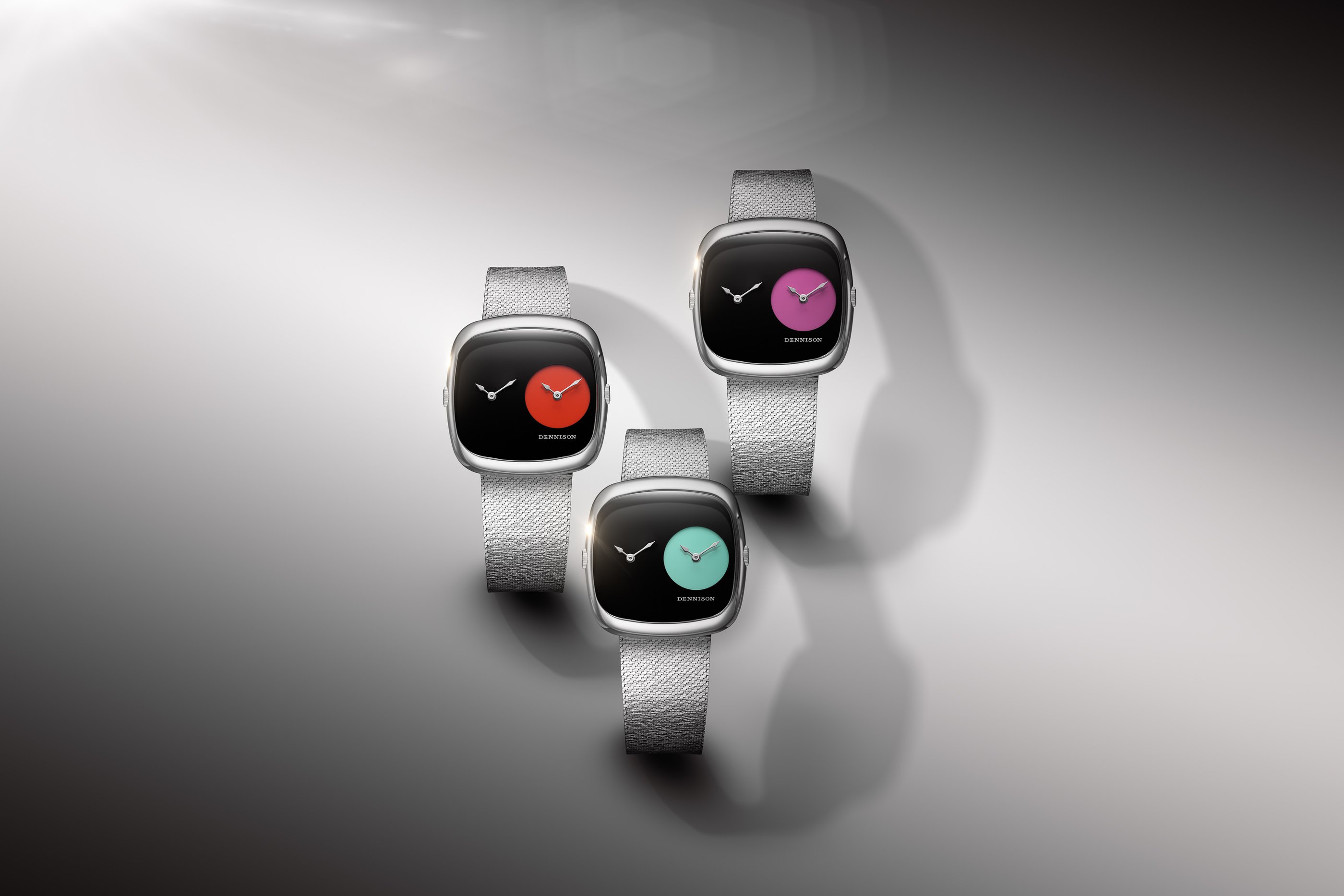
Why did you choose this television screen format?
Emmanuel Gueit: I suggested several formats and we agreed on this one. When I studied the history of the brand, I saw that it had stopped in the 1960s. I thought it would be interesting to pick up where it left off. What’s more, the 60s and 70s are in my DNA (editor’s note: his father Jean-Claude Gueit designed some of the most beautiful watches of that era), so it was quite easy.
Stéphane Cheikh: Initially, he had designed the case vertically, before deciding that it should be turned horizontally.
Emmanuel Gueit: Then I suggested different dials, some of which featured semi-precious stones. It made sense for the era.

What did you like about that era?
Emmanuel Gueit: The boldness! Nowadays, marketing manages product creation, but back then, marketing didn’t exist and we dared to be bold. Designers didn’t have computers: they created with their heads, a pencil and paper.
How will boldness be expressed in 2025?
Emmanuel Gueit: This model is not in line with Gérald Genta’s watches, which are sporty-chic pieces with integrated steel bracelets. It is the antithesis of that. At the time, there were Gérald Genta’s pieces on one side and Jean-Claude Gueit’s creations on the other: shaped watches with stone dials, diamonds, leather straps...
Are you following in your father’s footsteps?
Emmanuel Gueit: Yes, of course! And I’m very proud of it. It’s in my blood. We have the same perception of luxury. It may not appeal to everyone, but it’s our vision of beauty. I was born into his style: I watched my father draw from a very young age.
Stéphane Cheikh: It’s a beautiful style.
Emmanuel Gueit: Yves G. Piaget, who knew me as a child, invited me to lunch during the Watches and Wonders exhibition. That day, I was wearing a Dennison watch set with gemstones. He put it on his wrist and said to me: ‘That’s very Jean-Claude.’ I was touched. That was the goal.
Why hard stone dials?
Emmanuel Gueit: I love them. We decided to create them that way, and we did well because sales exploded immediately.
These watches immediately appealed to the younger generation. How do you explain that?
Emmanuel Gueit: I can’t explain it, and I’m the first to be surprised by it.
Stéphane Cheikh: My daughters, aged 25 and 27, and all their friends wanted to buy one!

What made you want to create a Dual Time model?
Emmanuel Gueit: My intuition. I thought the shape was ideal for creating a Dual Time. It was a way of developing the model. We could have placed the two movements in the original case, but the hands were a little too close together: so we stretched the case by 2 mm.
Stéphane Cheikh: To my knowledge, there are no other watches on the market with two time zones that are as attractive as this one and cost less than £1,000.
You created a model in partnership with John Reardon of Collectability. How do you explain the fact that your watches also appeal to collectors who have everything?
Stéphane Cheikh: It’s true that our watches appeal to both 25-35 year olds and collectors who have amazing watches. We met an American earlier who was wearing an Andersen watch and a Simon Brette watch, and he loves what we do. For him, the price didn’t matter: it was their beauty that counted.
Emmanuel Gueit: In New York, when the brand was launched, collectors told us that the fact that it was a quartz watch didn’t matter: what mattered was that it was beautiful.

How did you react when you found out that Alicia Keys wore a Dennison watch for her concert in Osaka last August?
Stéphane Cheikh: It was a surprise! We had no idea.
So it wasn’t a marketing ploy?
Stéphane Cheikh: No, not at all! Her husband (rapper Swizz Beatz, ed.) had bought several of our watches. On the evening of her concert in Osaka, Alicia Keys was wearing a malachite ring and asked her husband if he had a matching watch. He showed her the Dennison, she loved it and wore it. In fact, he filmed her backstage and sent us the footage, which we were able to use.
How did he buy them?
Stéphane Cheikh: Online! He found us on Instagram. He’s someone who really likes young brands. He loves our brand. We gave him two Dual Time watches and he bought five more at once. It was our biggest order ever. He wanted to buy them before they sold out (laughs).
Did this story have an impact on both the brand’s image and sales?
Stéphane Cheikh: We didn’t feel a big impact, it was a one-off. Swizz Beatz is already an ambassador for De Bethune. We would like to consider something more formal...

Have you considered working with other celebrities?
Stéphane Cheikh: No. It’s not part of our strategy for the coming months.
What place do you want Dennison to occupy in the current watchmaking landscape?
Stéphane Cheikh: That of a young Geneva-based company that makes beautiful watches designed by a great designer, sold at a price that is accessible to the younger generation.
Do you have a distributor?
Stéphane Cheikh: No, we have very few retailers. We sell almost everything directly.
How many watches have you made?
Emmanuel Gueit: We had planned to make 2,000, but we will reach 3,000 this year. What remains to be done?
Stéphane Cheikh: We’re going to try to enjoy it as much as possible because it’s a wonderful human adventure.