


 Español
 Français
 Pусский
 繁體中文
繁體中文 简体中文
简体中文 Select another language


t the foot of the Jura’s Franches-Montagnes, in Glovelier, at the heart of “Watch Valley”, the story of BIWI has been unfolding since the company was founded in 1981. But the adventure began earlier. Pierre Bourquard, the grandfather, was the son of a farmer and passionate about mechanics. He completed an apprenticeship in a bicycle repair shop before buying his first lathe so that he could manufacture parts himself. In 1952, in Boécourt, he founded Pibor ISO SA – the name standing for Pierre Bourquard Rebetez, incorporating his wife’s surname.
He specialised in the design and manufacture of high-precision components and became a major player in microtechnology, particularly for the watch industry. The company subsequently moved to Glovelier. His sons, Jean-Pierre and Pascal Bourquard Sr. – respectively the uncle and father of Pascal Bourquard Jr – joined the business. When the company was handed over to the next generation, the elder son, Jean-Pierre, took over Pibor, which by then employed close to 100 people.
Pascal, eager to prove himself, had identified the strong growth of the BIOUI department, which produced watch crown gaskets. He proposed taking over the unit together with four employees and, from this activity, founded BIWI in 1981. Spurred on by the competitive spirit instilled in them by their father, the two brothers developed their respective companies in parallel. BIWI overtook PIBOR in 2011. Beyond that initial rivalry, “today, it is a great source of pride for me and my cousins at Pibor to see how our two family businesses have developed,” says Pascal Bourquard Jr.

From father to son, but not in a straight line
Passing on a family business is not always straightforward and, at BIWI, the father set particularly high standards. Initially, his son, Pascal Bourquard Jr, had no intention of working for the family company. He recalls: “My parents divorced when I was four. My mother worked as a sales assistant in a bakery and she was the one who raised me, far removed from the industrial world. My father was mostly absent because he devoted his time to the company. But when I turned 18, he seems to have realised that there was some catching up to do in my education. I earned a diploma in micromechanics in Biel, which I followed with three years of training in business administration.”
His father attended his graduation ceremony. “That meant a lot to me – and he offered me a job at BIWI. At first I turned him down, then I asked him which department it would be in. ‘Safety,’ he replied. It was hardly my dream job. He pushed me to complete an additional year of training as a specialist in occupational medicine, health and safety so that I could take on the role. I did it, and I joined the company in 2010.”

The early years were difficult. There was no hint of nepotism. The current CEO recalls: “My father always used to say, ‘It is not blood that makes the man, but competence’... and he applied that principle in the strictest possible way. He was very hard on me, but I stood my ground. I earned people’s respect through what I did, not through my name.”
In 2012, Pascal Bourquard Jr took over quality management, giving him an overview of every process within the company. In 2014, he moved into the sales department to gain further experience. “Looking back, I realise that I learned everything on the job, starting right at the bottom, and that is what enabled me to take over the management of the company in 2017,” he says today. His father clearly shared that view, as he stepped back from operational management at that point and handed the reins of the company to his son.

From subcontractor to brand
When he became CEO, Pascal Bourquard Jr set about implementing his own vision for the company, which he saw as a brand in its own right. He began with a complete overhaul of the production facilities, improving both productivity and employee wellbeing, while adopting a more marketing-oriented approach focused on design and communication. He also expanded the R&D team to strengthen BIWI’s expertise in the transformation of advanced materials. One of the objectives was to develop a more proactive approach through the LAB, created in 2018, offering new materials, design services and prototyping.

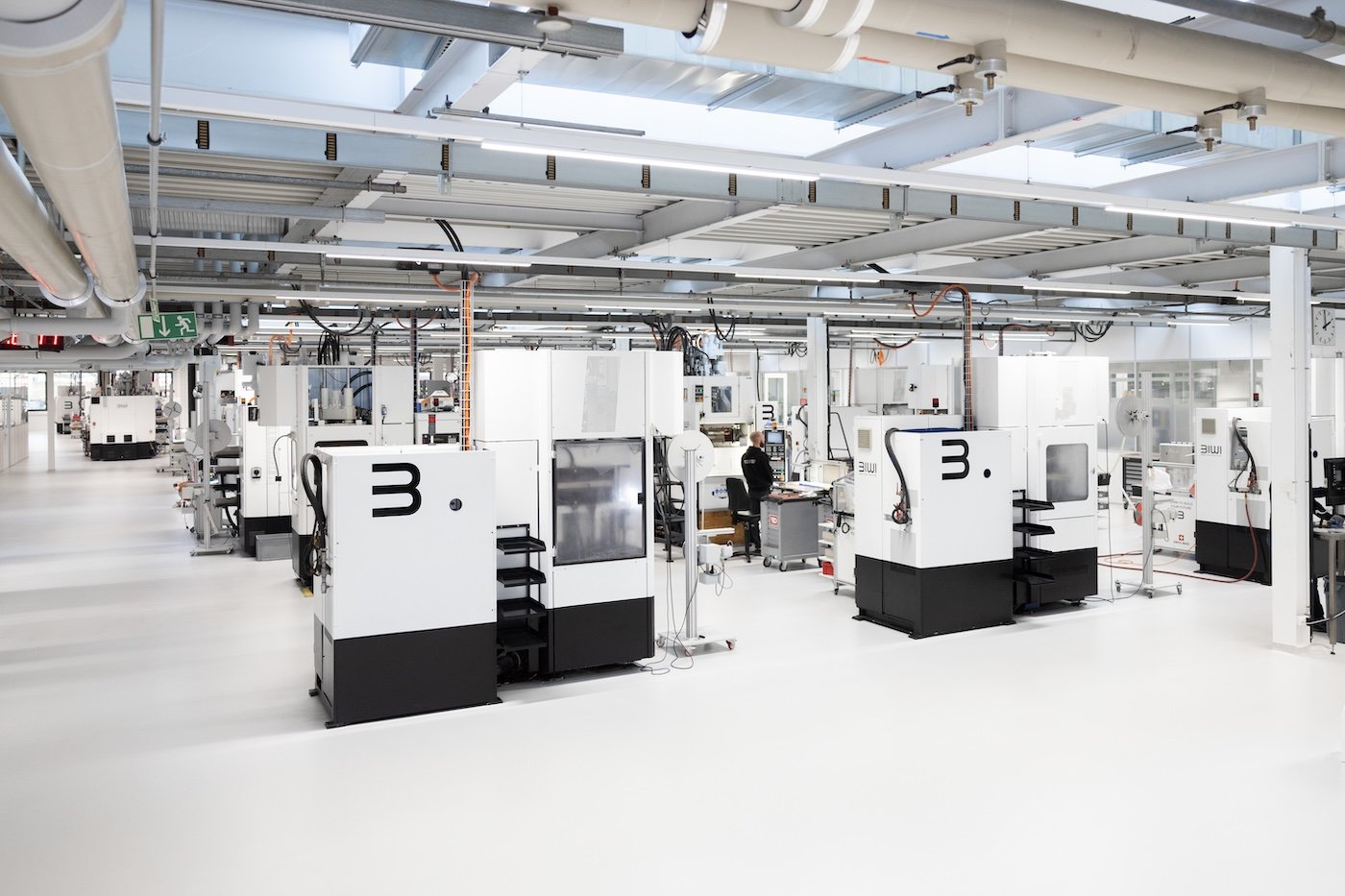
BIWI thus evolved from a pure “subcontractor” into a genuine partner brand for its customers. These include major names such as Hublot, a pioneer in the use of rubber, Audemars Piguet, IWC and Richard Mille – for which BIWI has produced a TitaCarb® case middle and bezel – as well as younger brands such as Norqain. Two new buildings have been added since then, and the machinery fleet now comprises more than 60 units.
A third building is currently under development and is scheduled to open in 2027, with an additional 40 machines. It will be dedicated to composite materials. All this is taking place despite the risks created by the many uncertainties surrounding the watch market. The 37-year-old CEO stresses: “We invested during Covid. It is often in times of crisis that you have to keep pushing forward. We gained in productivity and flexibility.” Diversification into other industries also remains a priority for the company, which now employs around 300 people.
From sealing rings to identity cards
O-rings, the black rubber seals that ensure water resistance, laid the foundations for the company’s success. The watch industry in general, and Swatch in particular, consumed huge quantities of them from BIWI’s earliest days. “We produced tens of millions of them, but it was above all my father’s vision of the potential for diversification into other sectors that propelled the company to another level,” says Pascal Bourquard Jr.
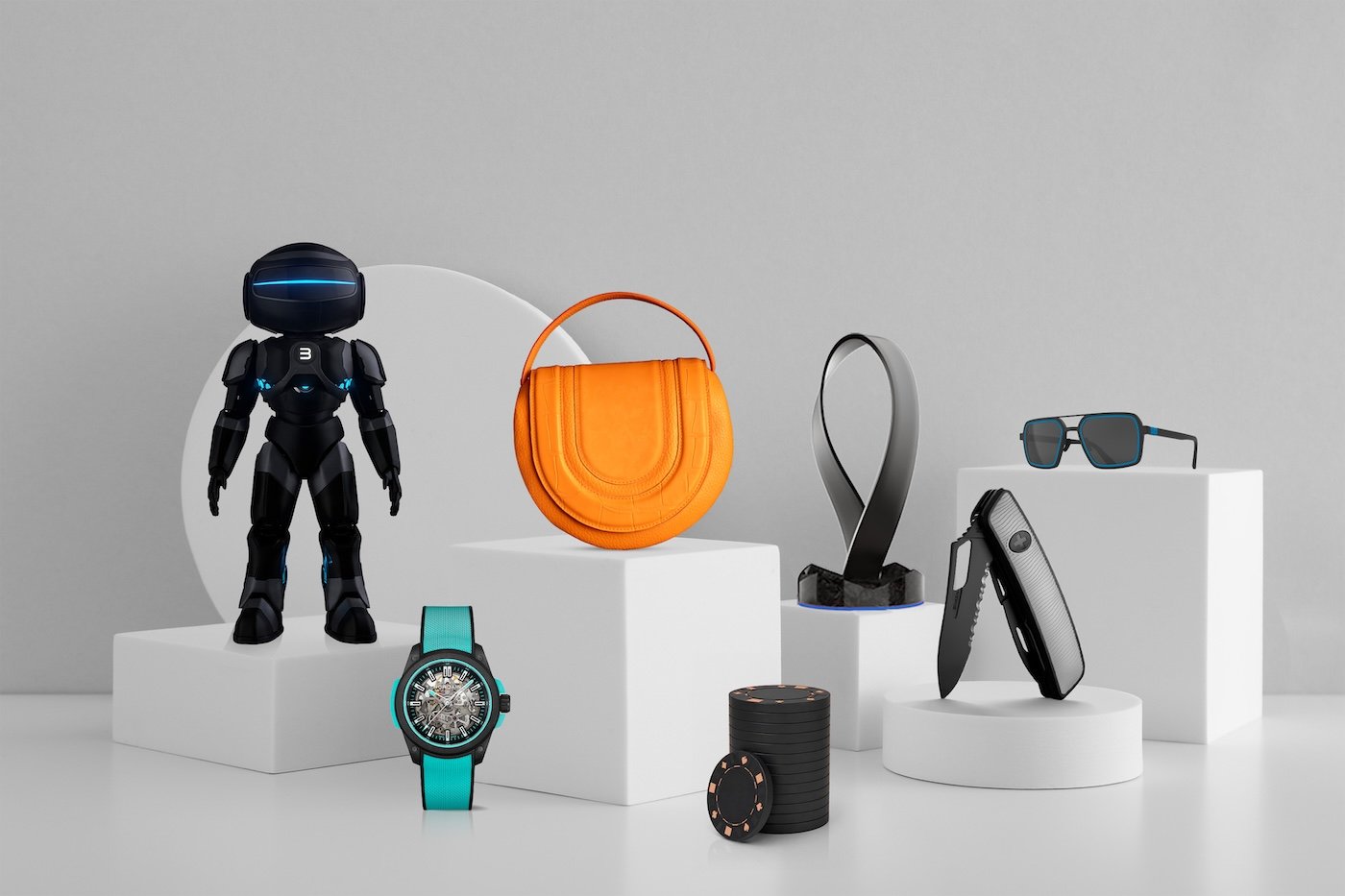
From 1990 onwards, BIWI began producing the famous mouse balls for Logitech. “The first order was for 5,000 pieces. Since then, millions of units have been produced, demonstrating the considerable potential for development in other sectors.” In 2000, the company manufactured gas masks for the Swiss Army – an order for 500,000 units. In 2010, the Swiss Confederation called on BIWI’s expertise to manufacture the country’s new credit-card-format identity cards. “We were producing 5,000 a day. This kind of diversification is also one of the reasons our R&D department has continued to grow. At first, we only made black rubber. Twenty years later, we had white, then five colours. Today, we offer a palette of more than 300 colours.”

This broader offering has enabled BIWI to reduce its dependence on watchmaking. Until 2016, the sector accounted for more than 90% of its customers, compared with 70% today. Pascal Bourquard Jr gives several examples of how the company’s activities have diversified: “We are active in the medical sector, jewellery and cosmetics. We make poker chips and mahjong pieces. We work with Swiss knife manufacturers – such as Swiza, whose Bioroc casing is made from a material that is 40% bio-based and derived from castor oil, editor’s note – and even in art, notably through our collaboration with Richard Orlinski, although not exclusively. Of course, many innovations are still developed for watchmaking, but these projects clearly show that our expertise can be applied to many other sectors. And our new factory will open up even more possibilities. The objective is to achieve an even balance between watchmaking and other industries.”
A responsible vision of innovation
Alongside the marketing, design and communication dimension that he has successfully integrated into his vision for BIWI, the CEO has also introduced a responsible approach to the company’s development. Its slogan, “Born to build your future”, refers not only to innovation, which lies at the heart of BIWI, but also to sustainability, now an integral part of the company’s strategy. This begins with ISO 9001 certification for continuous improvement in quality processes, followed by ISO 13485 certification for its quality management system, meeting the requirements of the medical sector.

But BIWI goes further, driven by what Pascal Bourquard Jr describes as “the need to do our part to provide future generations with a sustainable future.” Transparency is the first priority: “We are 100% Swiss made. Our tooling is manufactured in Switzerland. Wherever possible, we have introduced closed-loop systems internally. We even sell some of our recycled materials.” The lifespan of the company’s rubber materials has thus increased tenfold over the past 15 years.

“Today, we do not undertake any new development unless it is bio-based,” the entrepreneur continues. “Our Superlite X is made with 60% castor oil. Our Neocarb by BIWI, presented this year at Watches and Wonders, is produced using 3D printing with a polymer filament and a carbon-fibre filament. It allows us to make customised components with less machining – meaning less energy consumption – and less waste, bringing us close to zero waste.”

This approach is also reflected in the company’s active participation in Swiss Triple Impact since 2023, with the goal of offering 80% bio-based or recycled rubber and plastic materials, as well as its EVE Vegan certification, held since 2020, guaranteeing that no animal-derived ingredients are used and that no animal testing is carried out. BIWI is also EcoVadis certified. In 2024, the company obtained the “Great Place to Work” label.
Ultimately, BIWI demonstrates that the growth of a family business depends on strong visions for its development, and that every generation can bring renewed relevance and value to that process. Its story also shows that subcontractors have a central role to play in ensuring that this development is as sustainable as possible.


