
 Español
 Français
 Pусский
 繁體中文
繁體中文 简体中文
简体中文 Select another language

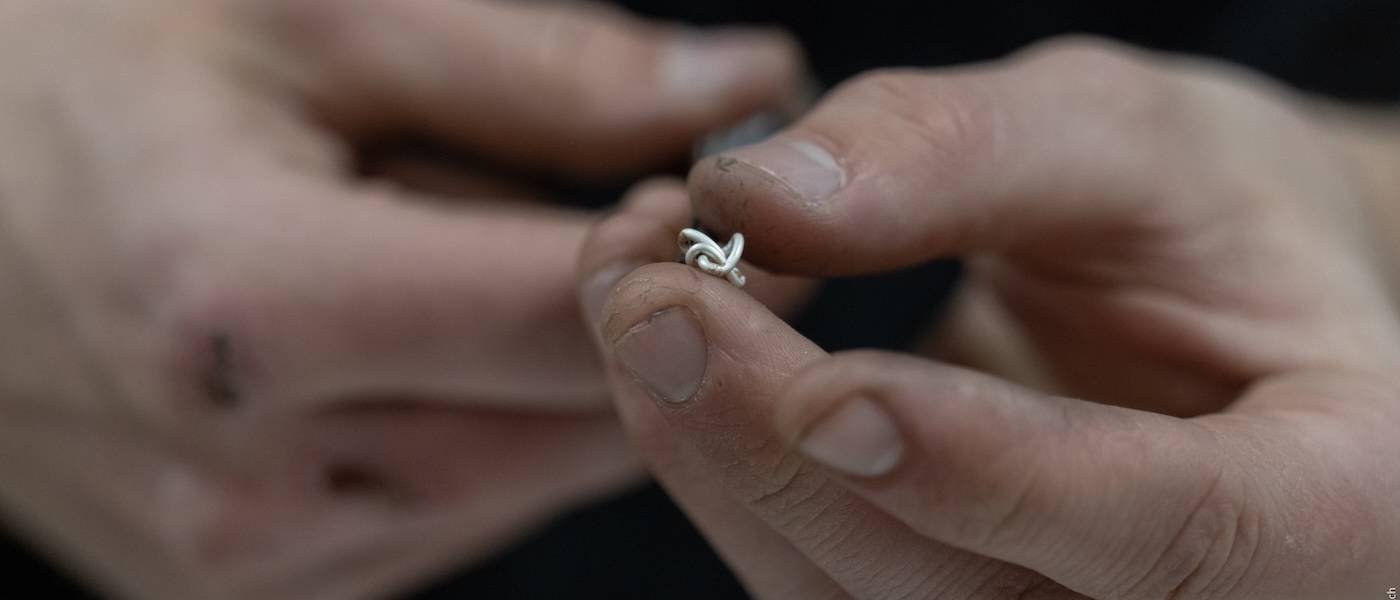
am a chain maker for the watch industry,” explains Laurent Jolliet, 46, welcoming us with a smile. It has nothing to do, however, with “assembly-line” labor imposed on factory workers.
Here, the intelligence of the hand takes precedence over speed — the privilege of independence. But what exactly does his expertise involve? How does he shape hexagonal links, turn wire into spirals, or handcraft a Milanese bracelet? And how does he view a traditional craft threatened with disappearance?
Studious harmony
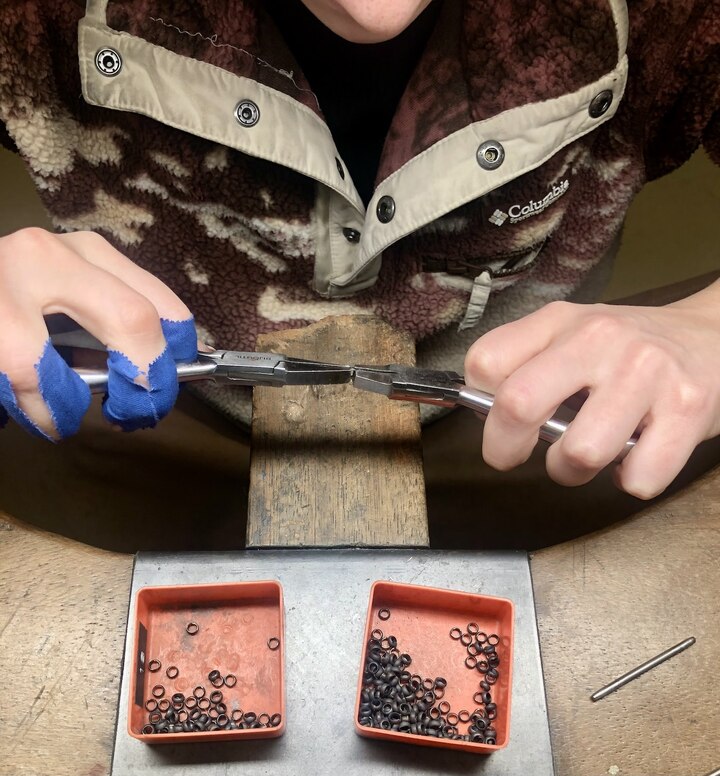
Generous blue bandages protect the fingers and right palm of Vanessa. A recent graduate with a Swiss Federal Diploma (CFC) in jewelry-making, she limits injuries caused by repetitive movements: sizing dozens of oval metal links measuring less than five centimeters, with a tolerance of five-tenths of a millimeter. A painstaking task that nonetheless does nothing to dampen her good spirits — nor those of her classmate working beside her, nor that of the master of the premises, Laurent Jolliet.
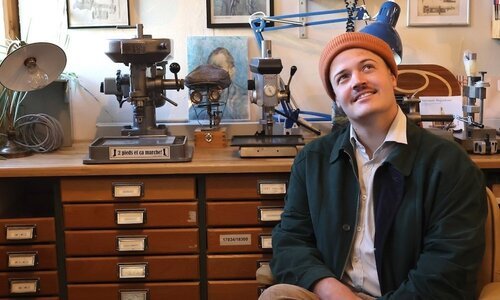
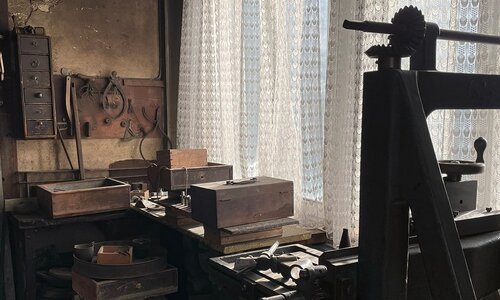
On the day of our visit, a relaxed atmosphere reigns in this former workshop of chain maker Michel Hess in Le Lignon, near Geneva. Laurent Jolliet recalls: “When I bought the workshop where we are now, back in 2005, I kept the tools,” he explains. “I only had to acquire a new laser welding machine.”
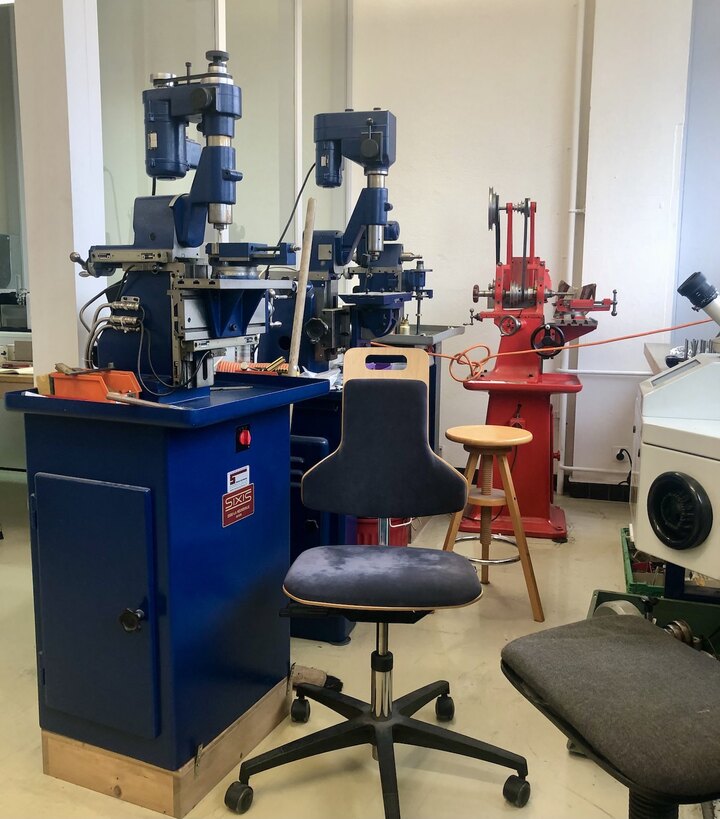
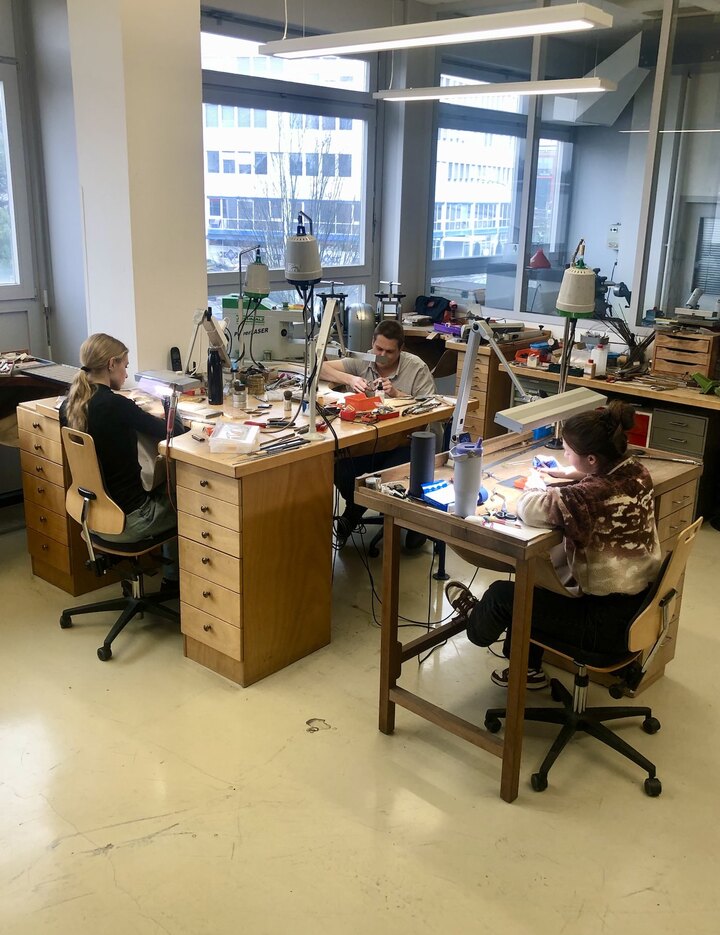
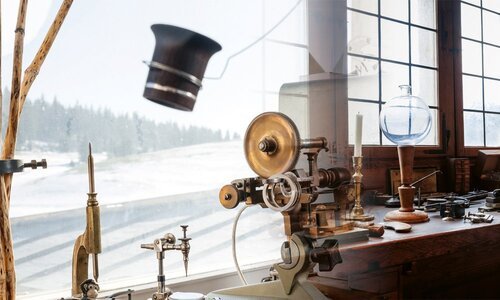
Three workbenches form an island near the windows. All around, the approximately five-hundred-square-meter space is divided into multiple workstations identifiable by their tools: a lathe, a milling machine, a winding device, benches covered with files and polishing sticks, micro-torch and laser welding stations.
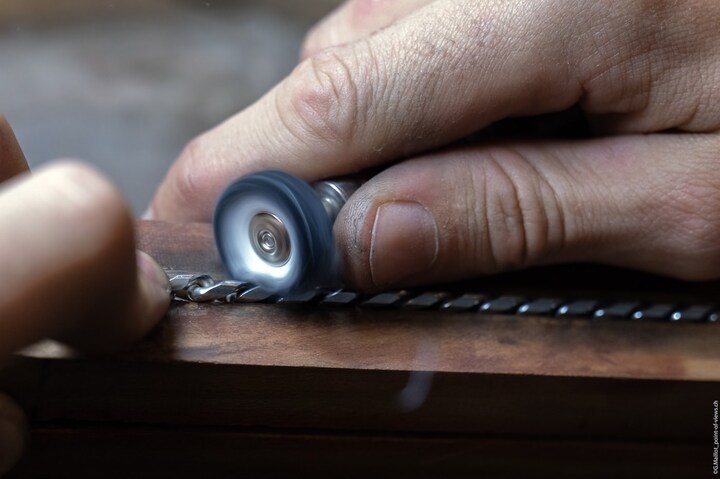
The artisan explains: “My methods and tools have been the same for decades. I use a century-old milling machine that I repair myself, while laser welding allows me, in restoration work, to add missing material. Sometimes I have to make my own tools — ones typical of the trade and now obsolete — such as skin pliers or certain link-cutting tools.”
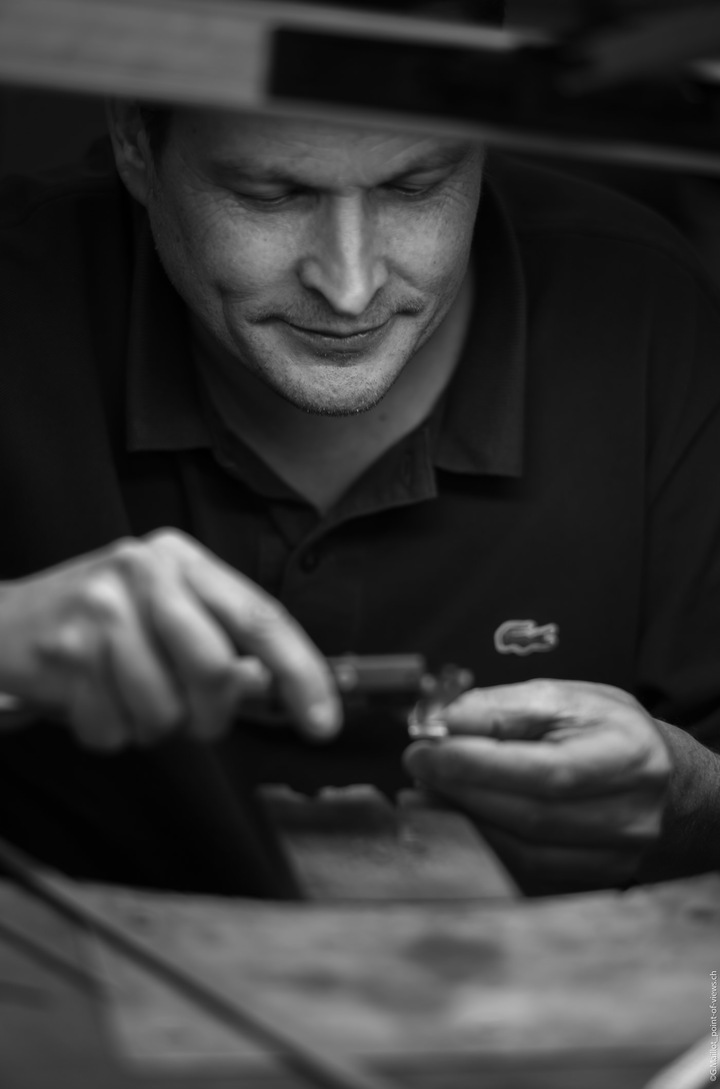
Laurent Jolliet claims a traditional approach to chain making, while leaving ample room for creativity in the plans and prototypes he proposes to clients. He refuses to enter into an arms race of equipment. “Sometimes I’m shown bracelets that are too perfect — you can still smell the factory on them!” exclaims the chain maker, who to this day uses neither loupe nor binocular microscope. For him, imperfection invisible to the naked eye is the hallmark of craftsmanship.
Industrial perfection leaves him unmoved, much like a growing number of collectors seeking the authenticity of the gesture. “We are very good craftsmen,” he says bluntly, “not artists!” Yet the line is thin: “With round, triangular, square, or twisted wires, you can build ten different metal bracelets from the same design.”
So how does he go about it?
“Sometimes I’m shown bracelets that are too perfect — you can still smell the factory on them!” exclaims the chain maker, who to this day uses neither loupe nor binocular microscope. For him, imperfection invisible to the naked eye is the hallmark of craftsmanship.

Arm in arm
To simplify, the chain maker crafts two major categories of metal objects: chains and bracelets.
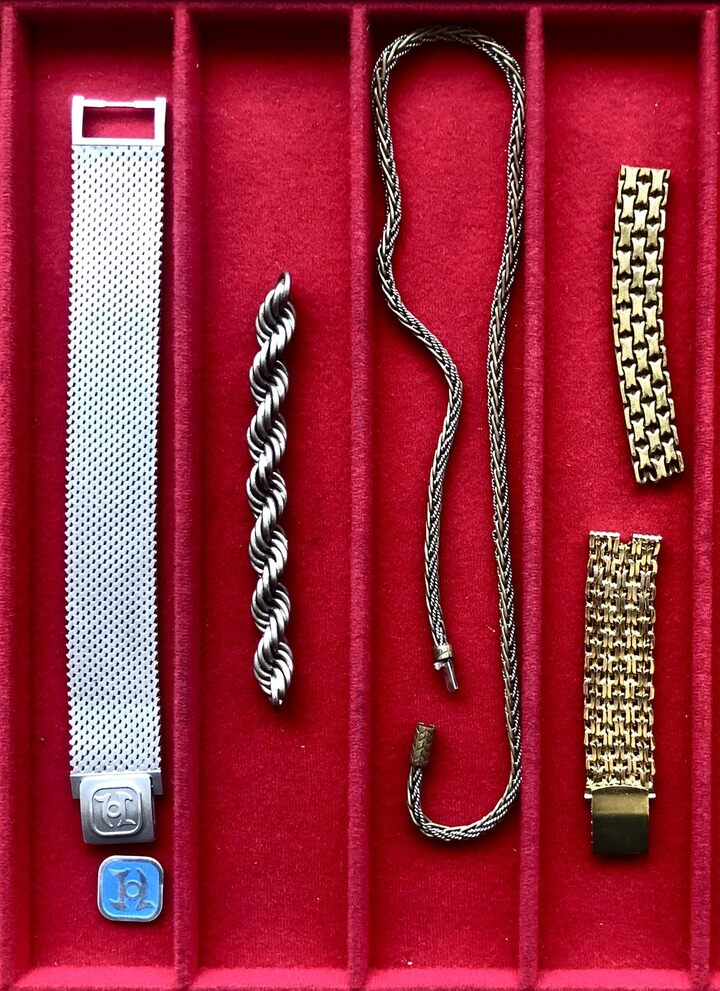
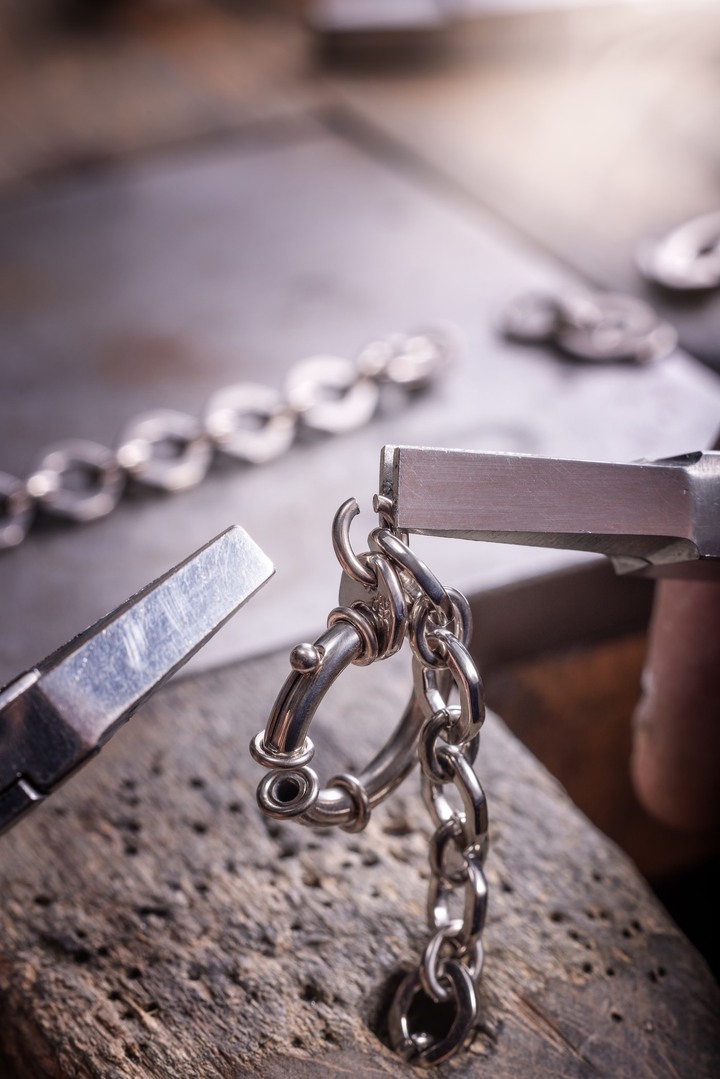
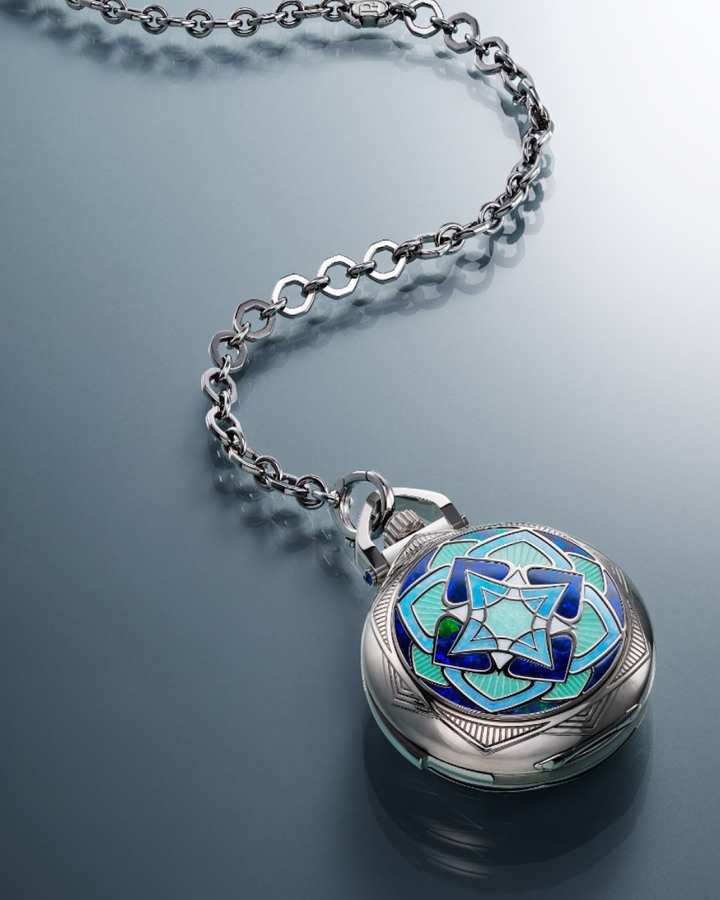
A chain is made up of a multitude of links, produced, adjusted and polished by hand. With the patience of an embroiderer, Laurent Jolliet assembles them one by one, following a known repertoire — rope, curb, English, American, royal, Garibaldi, basket or Chinese bead chains — or remaining faithful to a new design. The possible combinations are virtually limitless. The chain may be destined for a pocket watch, or to adorn the neck as part of a chatelaine or a long sautoir necklace.
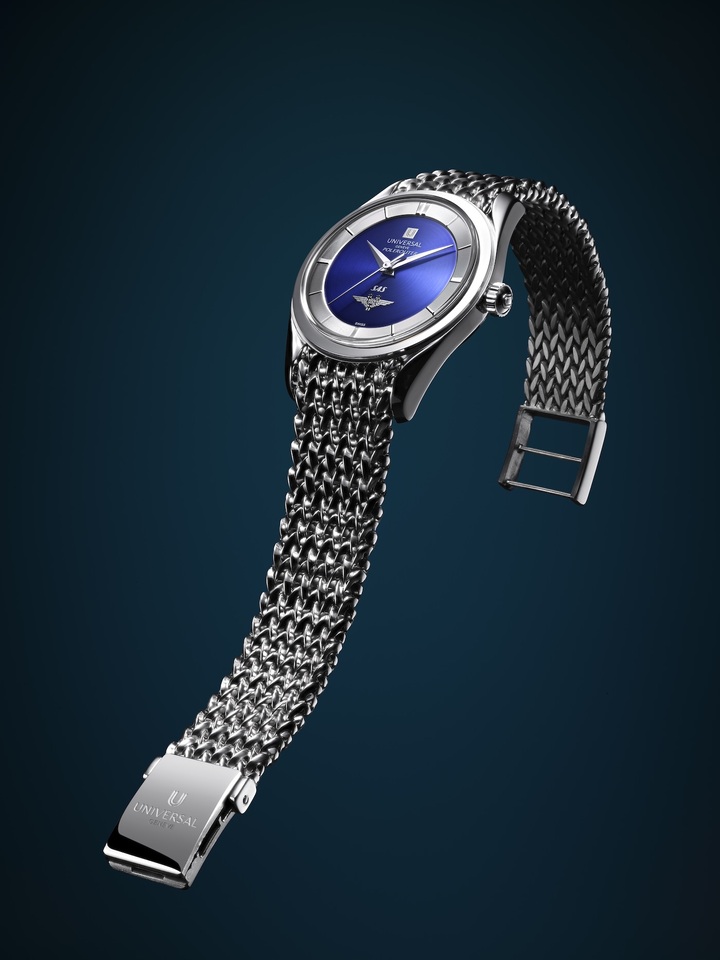
Because genuine leather is unsuitable for certain tropical regions as well as for water sports, designers very early on turned their attention to the ergonomics of the metal bracelet. Rolex led the way with the Oyster bracelet, followed by Audemars Piguet and Patek Philippe with “sport-chic” bracelets for the Royal Oak and Nautilus models, both designed by Gérald Genta. More recently, the strong enthusiasm for vintage watches has brought the Milanese bracelet back into fashion, celebrated for its textile-like suppleness on the wrist. Others have revived the Polish bracelet.

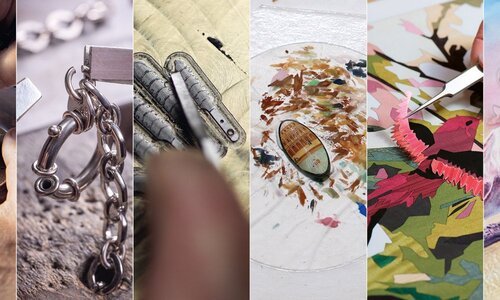
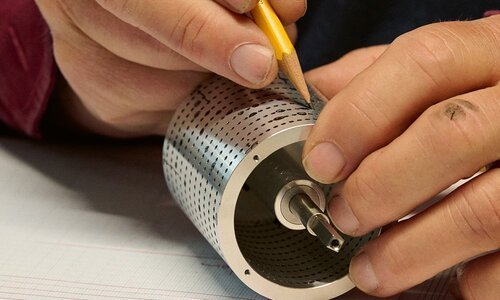
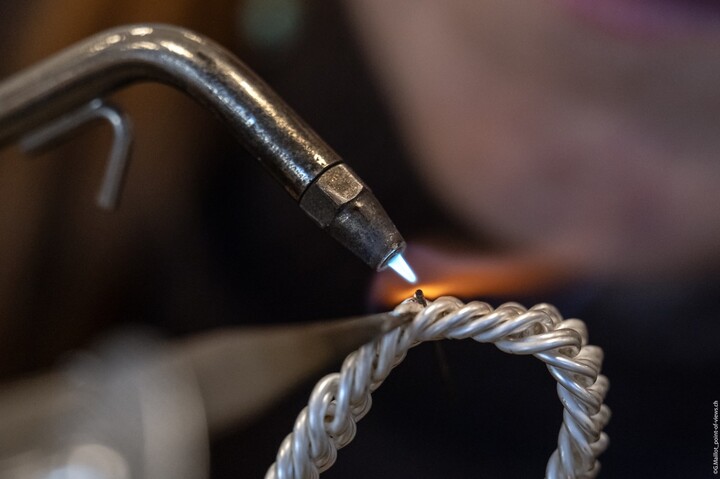
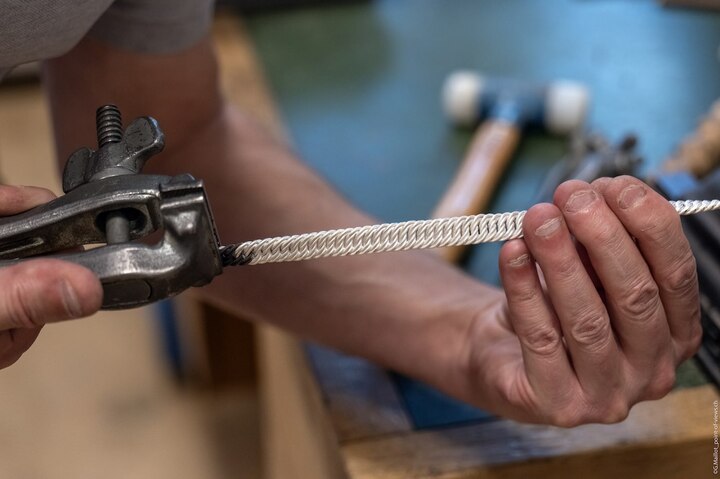
Milanese and Polish bracelets share a common backbone: the spiral. It is fascinating to watch a metal wire transformed into a spiral — a process Laurent Jolliet performs using a winding device, a mandrel and a guide. Two wheels of different diameters meet, and a crank twists the wire, which gradually coils around a cylindrical guide. The operation takes only seconds and demonstrates the dexterity, precision and patience acquired through years of experience. Craftsmanship in its purest expression.
For a Milanese bracelet, he builds the piece by sliding a new spiral into one already in place. Like stacking cards, the Milanese bracelet comes to life with each additional spiral. Once the final size is reached, the artisan begins an equally delicate phase: soldering the edges, pressing both front and back faces, and finally polishing the entire piece.
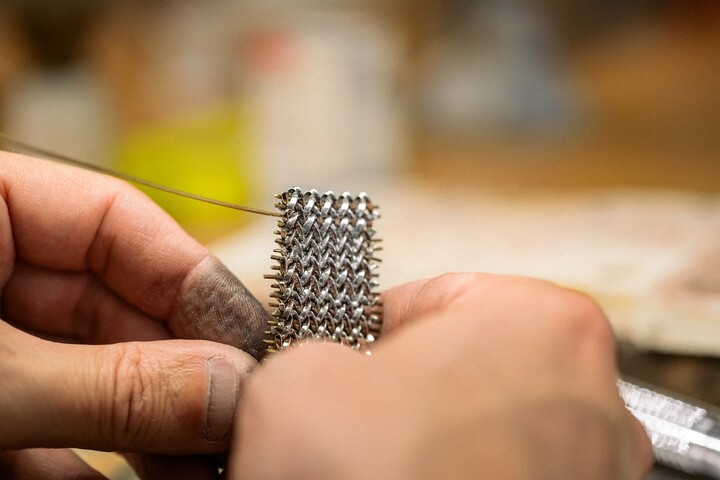
Although its transalpine cousin has conquered the world, the Polish bracelet is more complex in construction. To simplify, Laurent Jolliet alternates the direction of the spirals at each pass. The result? The visible sections of the bracelet are oriented alternately to the right and to the left. Here, pins are essential.
It is fascinating to watch a metal wire transformed into a spiral — a process Laurent Jolliet performs using a winding device, a mandrel and a guide. The operation takes only seconds and demonstrates the dexterity, precision and patience acquired through years of experience. Craftsmanship in its purest expression.
Independence and transmission
“Unlike resin models, my prototypes are functional and often even saleable,” explains Laurent Jolliet. Drawing on a wide range of metals — from gold to palladium and platinum — the artisan says he can produce a bracelet “in a single day.” An appealing timeframe for a growing number of watch brands. Although some years have been devoted entirely to restoration, the times seem favorable to the chain maker: “Crises are good for me,” he notes, “and 2025 was the best year of the past fifteen!”
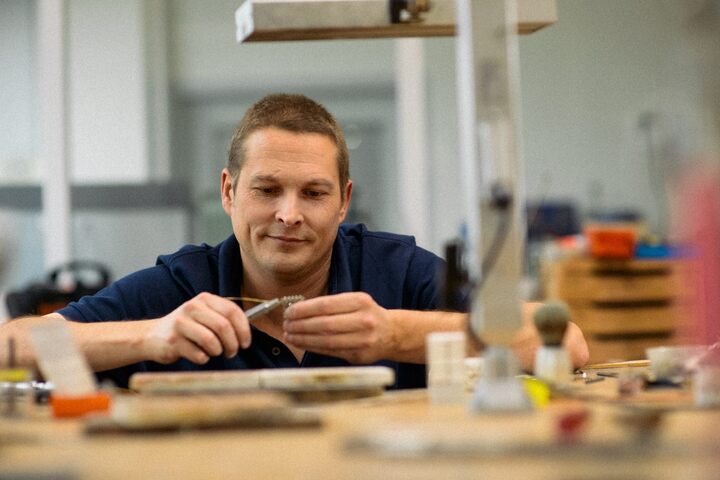
The independent craftsman is satisfied. His name and face are beginning to appear in promotional videos for certain models. More than recognition of his expertise, he sees it as the success of the high end, where pricing integrates the artisanal work behind a metal bracelet. Constantly working on five to six projects at a time, Laurent Jolliet nonetheless has no intention of expanding. For this independent craftsman, handmade work dictates its own rhythm.
For fourteen years, Jean-Pierre Hagmann (1940–2025), the celebrated maker of hand-crafted watch cases, worked in a workshop adjoining Laurent Jolliet’s: “We collaborated on many projects — he was a wonderful craftsman. I learned a great deal from him,” Laurent Jolliet confides. Though he resists expanding his workshop, he is now committed to passing on his expertise, paying tribute to those who came before him. Each year, for two weeks, he returns to his former jewelry-making school in central Geneva to teach younger students the art of twisted wire.
“His name and face are beginning to appear in promotional videos for certain models. More than recognition of his expertise, he sees it as the success of the high end, where pricing integrates the artisanal work behind a metal bracelet.”
BIOGRAPHY
1980 Born in Geneva.
1995 Begins his Swiss Federal Diploma (CFC) as a jeweler-chain maker. He studies one day a week at the Geneva School of Decorative Arts. For his practical training, he first spends three years at Gay Frères, the leading manufacturer of metal bracelets for the biggest watch brands. After Gay Frères was acquired by Rolex in 1998, he completes his final apprenticeship year with jeweler Gilbert Albert, located in one of the former Gay Frères premises on Rue Adrien-Lachenal, opposite a building designed by Le Corbusier.
1999 Obtains his CFC as a jeweler-chain maker, a certificate co-signed by “Rolex,” as part of the penultimate graduating class before the program was permanently discontinued in 2000. Joins the workshop of chain maker Michel Hess.
2003 Develops his practical knowledge at the jeweler Schönhaus & Pasquier.
2004 Final position as an employee with jeweler Jean-Marie Bächtold.
2005 Acquires Michel Hess’s premises, where he meets artisan Jean-Pierre Hagmann, renowned case maker and recipient of the 2025 Gaïa Prize and 2025 GPHG Prize. Their two workshops, connected by a shared door, facilitate collaboration for nearly two decades.
2005–2026 Restores and produces small series and prototypes for the watch industry.