
 Español
 Français
 Pусский
 繁體中文
繁體中文 简体中文
简体中文 Select another language

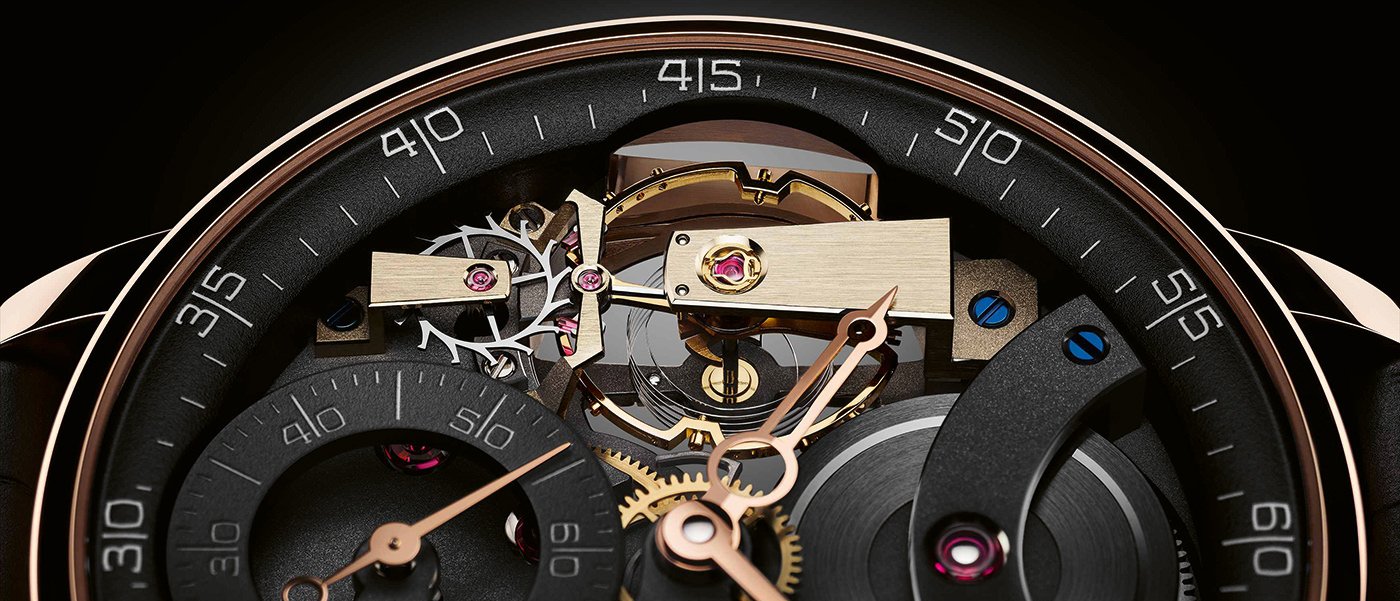
Chronomètre FB 3SPC
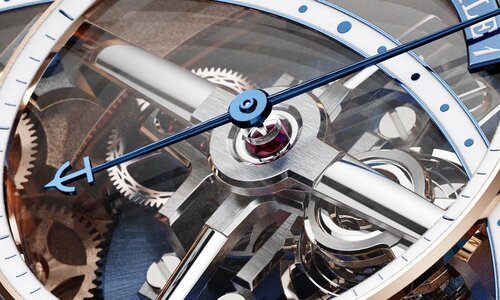
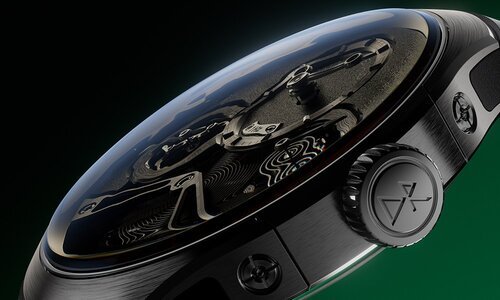
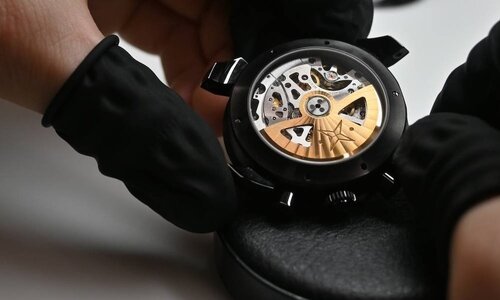
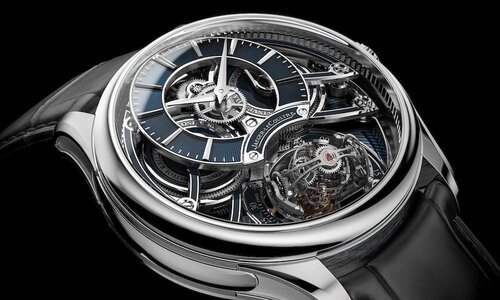
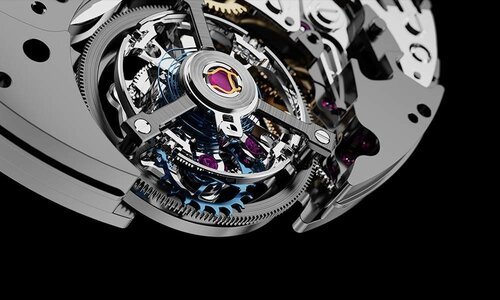
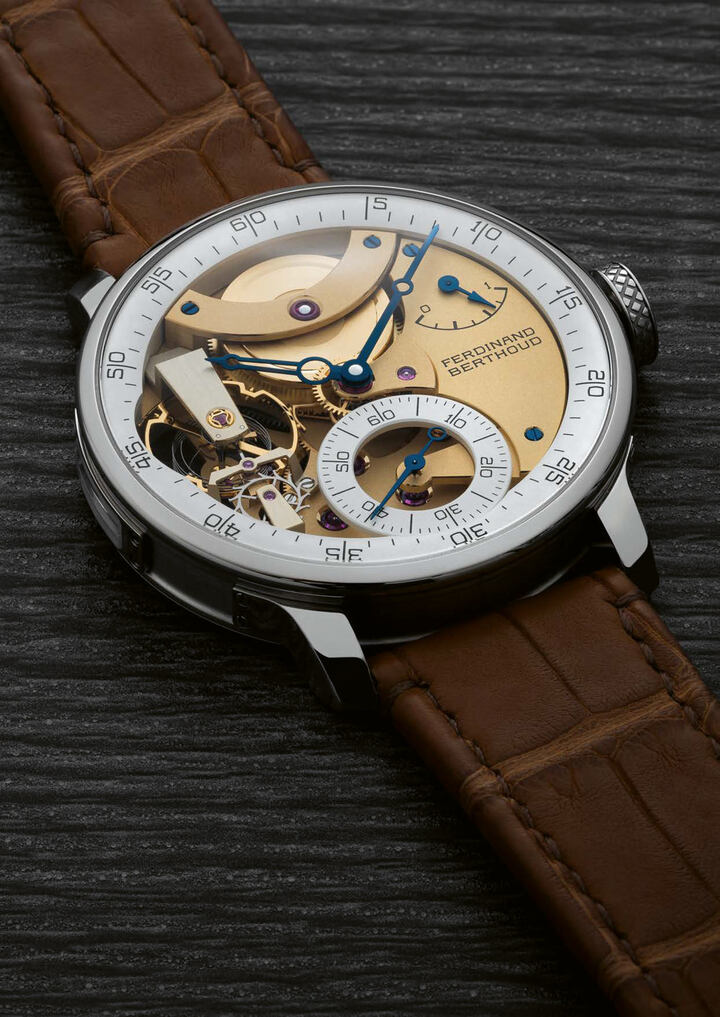
Drawing directly on Berthoud’s work, the Chronomètre FB 3SPC by Chronométrie Ferdinand Berthoud reinterprets past inventions through the lens of modern advancements, with a “classic” balance wheel and emphasis on a steady and constant flow of energy which, when not properly controlled, often results in errors of rate. Its standout feature, however, is a cylindrical balance spring. Widely used in marine chronometers, this type of balance spring is rare in a wristwatch.
The cylindrical balance spring
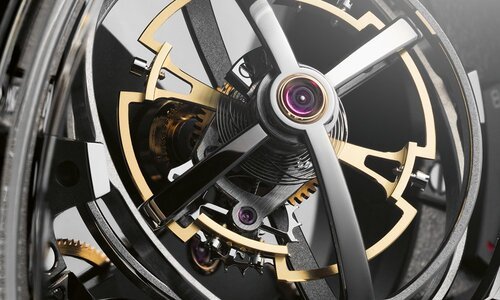
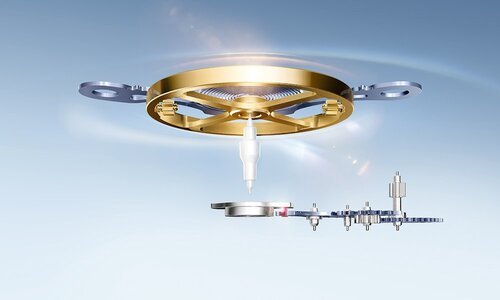
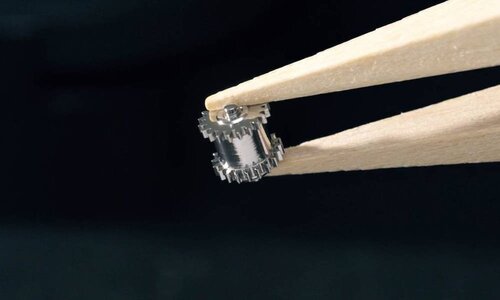
For the third pillar in its collections, Chronométrie Ferdinand Berthoud chose a cylindrical balance spring. Rarely seen in today’s wristwatches, because of the space it requires, the cylindrical balance spring was developed and patented by John Arnold, then adopted and improved on by Arnold’s contemporaries.
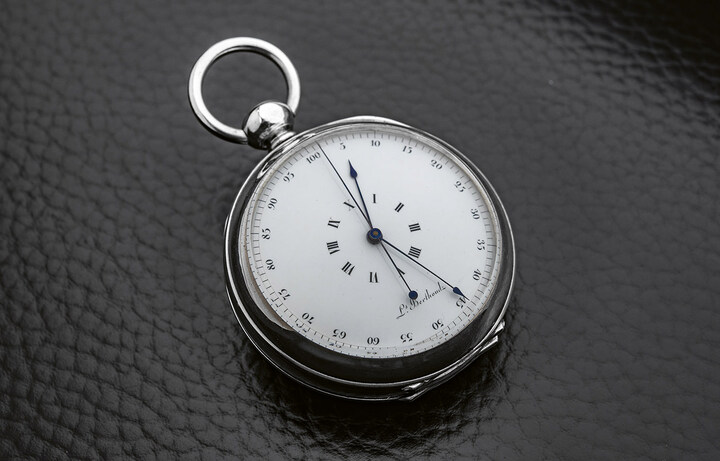
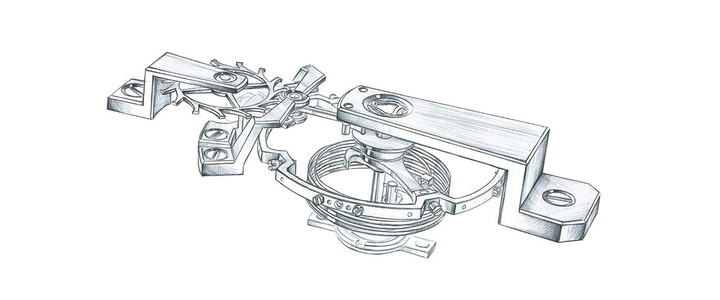
Whereas the flat balance spring devised by Christiaan Huygens does not “breathe” (expand and contract) concentrically, the coils of a cylindrical (or helical) balance spring develop concentrically in relation to the balance staff. Theoretically, this results in better isochronism and a more stable rate. Because of its round shape, the balance is by nature, and in theory, perfectly balanced. Before the invention of Elinvar (a nickel-iron-chromium alloy), flat balance springs were affected by external factors. Additionally, their non-concentric development produced more friction at the pivots, leading to differences in amplitude and, implicitly, errors of rate.
Because a marine chronometer is mounted in gimbals, its movement remains horizontal. The same is true of clocks with a fixed position. Adapting the cylindrical balance spring to a wristwatch is therefore no small achievement.
Disturbances due to the attachment points
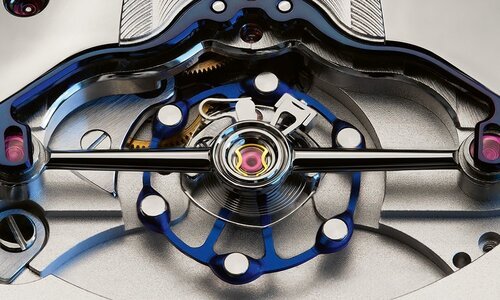
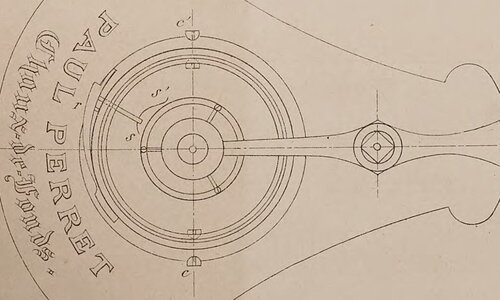
A conventional balance spring has two points of attachment: one inner and one outer. The inner end of the balance spring, at its centre, is fixed to the balance staff by a collet. The outer end is held by a stud. These two attachment points, which determine the active length of the spring, are the reason for non-concentric development.
This was the problem the engineers at Chronométrie Ferdinand Berthoud encountered when developing their cylindrical balance spring. When the balance spring was pinned to its collet, they noted its tendency to breathe asymmetrically, because of the additional mass of the pin and collet. Their response was to reduce the weight of the collet and re-centre the spring’s centre of gravity. Having reduced the collet’s weight, they then had to adjust the terminal curves and re-engineer the collet profile, so that both attachment points maintained the correct angular displacement, one in relation to the other.
The Chronomètre FB 3SPC derives its chronometric precision entirely from this cylindrical balance spring, with no other device to maintain the stability of the balance’s amplitude, such as a fusee and chain or a remontoir d’égalité which produce more consistent torque.
Thanks to modern alloys, geometric and mathematical calculations, and the hard work and effort of teams at Chronométrie Ferdinand Berthoud, a cylindrical balance spring defies both the laws of gravity and the criteria of the COSC, far exceeding even the latest requirements at -1 to +1 second/day.
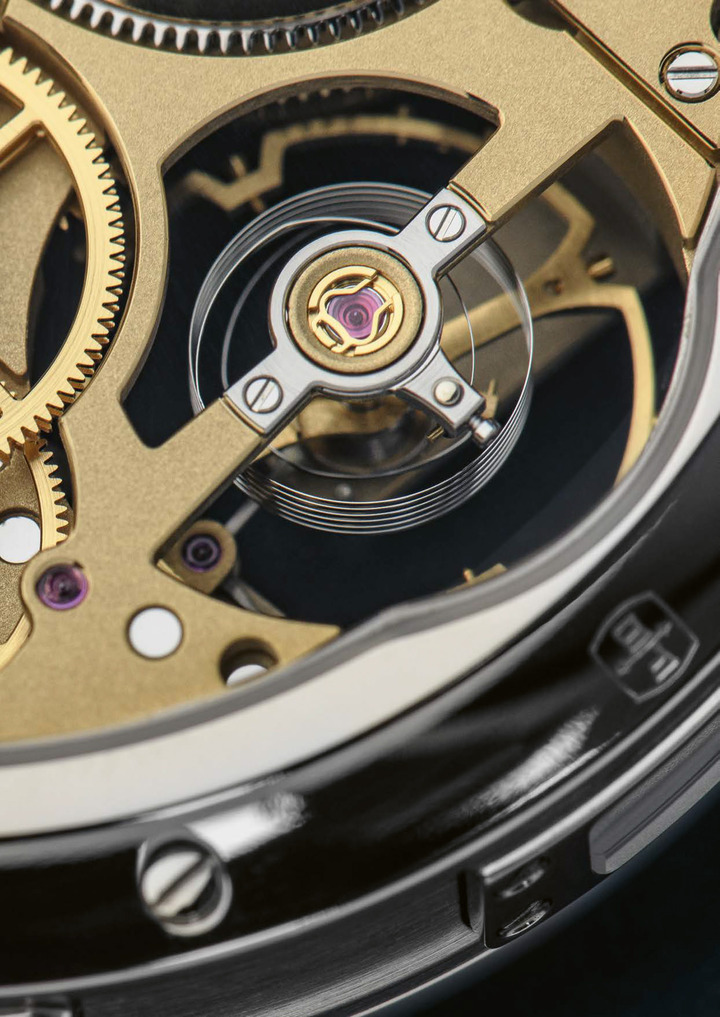
The cylindrical balance spring occupies more space in a wristwatch movement. It is also more time-consuming and more complex to produce. For these reasons, it will, in all likelihood, remain a niche product, reserved for very limited editions. Chronométrie Ferdinand Berthoud is one of the few makers to have risen to the challenge of fitting a cylindrical balance spring in a wristwatch which, moreover, has chronometer certification.