


 Español
 Français
 Pусский
 繁體中文
繁體中文 简体中文
简体中文 Select another language


pending time with Luc Tissot is akin to sharing a room with more than six decades of contemporary watchmaking. More than that. It is an encounter with an extraordinary saga, that of the Tissot family, that began many years earlier, in 1853, when Charles-Félicien Tissot (1804-1873) and his son Charles-Emile Tissot (1830-1910) established in Le Locle, in the canton of Neuchâtel, the brand that still bears their family name.

Luc Tissot was the last of the line to steer the family firm. However, as we shall see, the course of events, not least the upheaval of quartz technology, led him to take back his independence and forge a radically innovative path that would open new doors for the watch industry’s expertise.


An augmented vision of watchmaking
Luc Tissot was born not in Le Locle, a compact region of mountains, snow and valleys that was home to his forebears, a long line of watchmakers, but in the vast expanses of Argentina. His father, Edouard-Louis Tissot (1896-1977), “came from the branch of electricians in the family” and had settled in the north of the country, where he managed major electrical infrastructure projects.
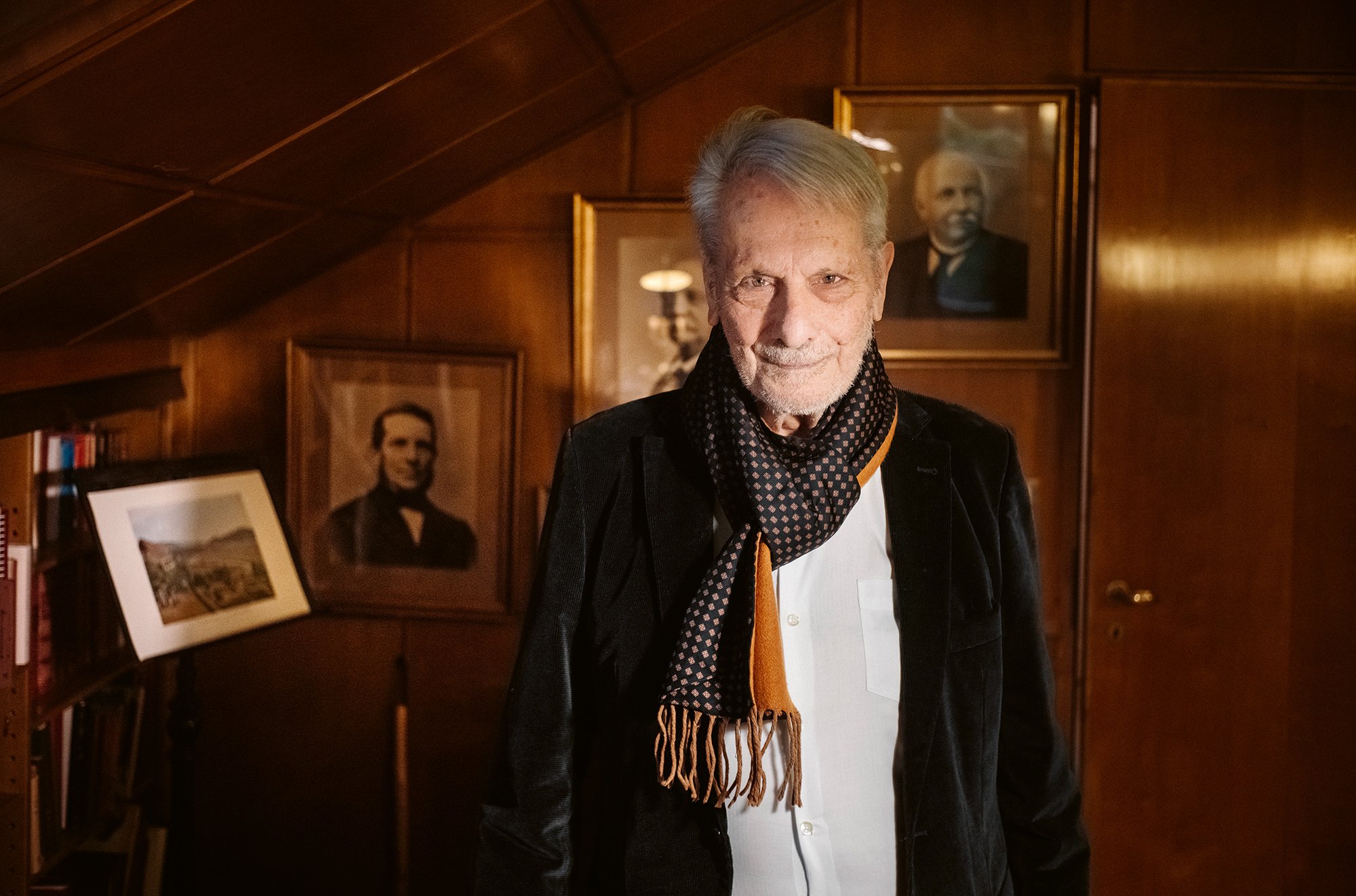
In 1951 Edouard-Louis was called back to Switzerland to take the head of the Tissot factory in Le Locle, alongside his cousin Marie Tissot. Still a young teenager, Luc had no choice than to leave behind the rolling landscapes and infinite skies of Argentina for the confines of Switzerland.
Clearly, he still has vivid memories of Argentina and his eyes light up as he recalls “the warmth of Argentinean life.” (He holds both Swiss and Argentinean nationality).

His early life on a distant continent, his father’s profession, the inventiveness of his grandfather, Dr Edouard Tissot, a pioneer in electricity who in the late 1800s worked with Edison at the Sécheron factories in Geneva: no doubt all these threads had a part to play in forming Luc Tissot’s extended, augmented vision of horology. The intrinsic qualities of production methods combined with a highly qualified workforce, skilled in micro-engineering, naturally led him into areas beyond watch manufacturing.
Overtaken by history
After a degree in mechanical engineering that took him to the Swiss Federal Institute of Technology (ETH) in Zurich, Luc Tissot studied at the International Institute for Management Development (IMD) in Lausanne, arming himself to join the family firm.
And so in 1965, age 28, he became the fifth generation to enter Tissot, where he rapidly made his mark. When in 1973, on his father’s retirement, he took over as CEO, the company employed more than 1,200 people in Le Locle and produced over a million watches a year. The modest workshops at 23, Rue du Crêt-Vaillant had grown into a global brand, renowned and distributed across all five continents. Its buildings, including the modernist Tissot Tower, dominated Le Locle.

However, the industry was about to be overtaken by history. Quartz would revolutionise the landscape, provoking a technological transformation but most of all an industrial crisis. Production methods, technology, jobs, distribution, financial planning, economic structures: no aspect of the industry was spared. From a 90,000-strong workforce in 1970, by 1988 the Swiss watch industry employed just 28,000 people.
Mapping competencies
But let’s not get ahead of ourselves. When in 1965 Luc Tissot took up his post as head of production, with 800 people under him, he searched for ways to improve working methods, bringing in new competencies in the process. Automation and robotisation were an important part of this, and new assembly lines were introduced, including for movement blanks. As technical manager then managing director, in 1968-1969 he was actively involved with Sapiam, in close collaboration with Joseph Holzer, the agent for Omega and Tissot in Mexico.
The project was launched by SSIH with a group of Swiss watch manufacturers after the Mexican government had announced it would no longer issue import licences for Swiss timepieces without the creation of a domestic watch industry. Sapiam would build a watch factory in Mexico from the ground up: an immense challenge. A report states that “the first stone was laid in the desert on 15 November, 1968 and the factory completed in August 1969." This highly integrated facility, managed by Germain Rebetez, produced movement blanks, cases and dials, and assembled watches that were sold under the Inresa brand.
Back in Switzerland, and fully aware of the challenges that lay ahead, Luc Tissot convened a group of Neuchâtel business leaders, who in 1969 commissioned Institut Batelle in Geneva for a comparative study setting out “the shortfalls and opportunities” of Le Locle and La Chaux-de-Fonds. The region had immense competencies through its watch industry and Luc Tissot was already convinced that, for this industry to survive, these skills should be mapped and promoted more broadly, creating openings in other fields.
"I’ve always believed a business has a duty towards its region, its population, its employees and the wealth of accumulated skills,” he tells us. “Sometimes this means a shift away from a purely economic objective in order to innovate and create new employment opportunities.”
From the calibre unique to the Astrolon
In 1965 Tissot was on an upward trajectory. Annual production had risen from 130,000 watches in the 1950s to over a million in 1970. Luc Tissot explains how “in 1959 my father, Edouard-Louis Tissot, introduced the calibre unique, a single base calibre for men’s watches that could be adapted as manual or automatic versions, with or without date, or with a day-date. The aim was to significantly rationalise production.” A reduction in costs, a new collection and competitive pricing contributed to a 400% increase in sales in less than ten years.

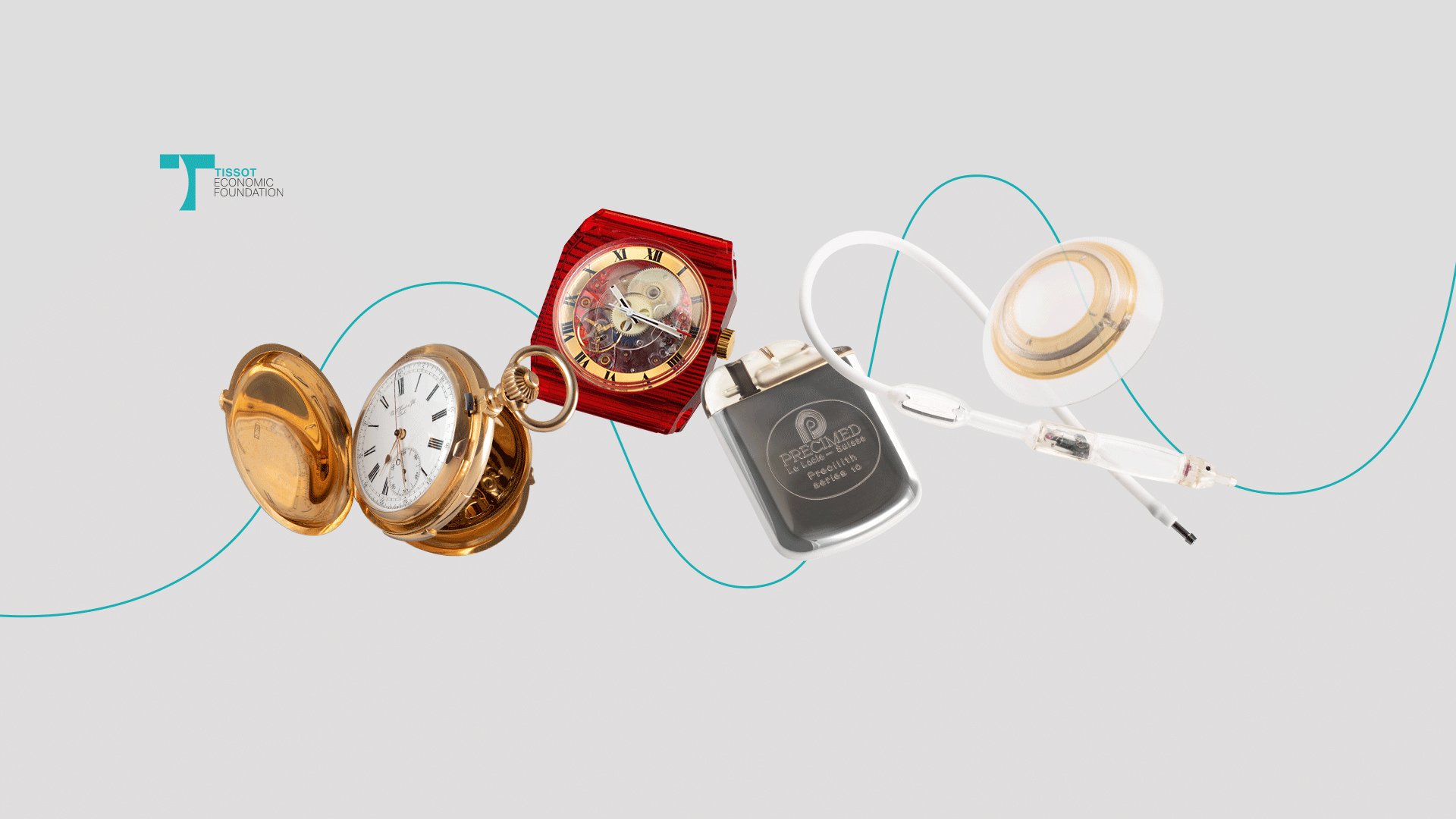
Tissot continued to break new ground and, in 1970, released the Astrolon, the first mechanical watch made in plastic. In addition to almost halving the number of parts from 90 in a conventional movement (including the calibre unique) to just 50, the majority of these — the lever escapement, gears, plates and bridges — were synthetic (the mainspring, balance and balance spring were metal).
More than 50 years later, Luc Tissot describes his father’s intention to “make a watch for the third world, as it was then known. Except that the group [SSIH, a holding company comprising Omega and Tissot, see below] had other ideas and instead positioned the Astrolon at the high end of the market, in a segment of more expensive, more elegant watches.”

Tissot manufactured hundreds of thousands of Astrolon, but this revolutionary idea for a mechanical watch made from plastic never took off. The market wasn’t yet ready to accept plastic as a luxury material but the root cause was the mechanism itself: even the most avant-garde mechanical movement would be no match for quartz. The Astrolon would be short-lived, but its influence was far-reaching.
Lessons learned
A few years later, the Astrolon came under intense scrutiny from, among others, Elmar Mock, one of the inventors of the Swatch: the now ultra-famous plastic watch, launched in 1983 and manufactured entirely on automated lines, that is credited with saving the Swiss watch industry.
There were takeaways within Tissot, too. Luc Tissot knew, from first-hand experience, that for the company to develop a product such as the Astrolon, it had had to develop technologies that were new to watchmaking. The Astrolon came out of a culture of innovation initiated by Edouard-Louis Tissot, who had set up a veritable “research lab where physics, chemistry, electrochemistry and metallurgy were assimilated, utilised and developed.” This research and its findings sought to improve precision, alter the watch’s appearance or rationalise production but, as Luc Tissot explains, “to get there, we had to borrow ideas and technologies from other industries, including the electrical industry. For example, in order to achieve the level of miniaturisation required, we had to develop machines that could inject plastic at very high pressure."
Building on this “expanded expertise”, Luc Tissot imagined “exciting possibilities to diversify competencies and markets and take decisive steps towards new products” beyond watches. He was under no illusion: job losses were inevitable and the Jura was already facing a decline in its human capital. How to counteract this was uppermost in his mind and in 1978 he launched a business incentive programme, the Promotion Économique, for the canton of Neuchâtel. Under Karl Dobler’s leadership, this unprecedented initiative would play a key role in Neuchâtel’s industrial diversification.
1970, a decisive year
A few words of context. In 1925 Tissot and Omega entered into relations which in 1930 would lead to the formation of a holding company, Société Suisse pour l’Industrie Horlogère (SSIH). The two manufacturers agreed that Omega would sell at the high end of the market while Tissot would position its production at 30% lower price points. Paul Tissot was appointed sales director for Omega and was also president of Tissot. Mainly commercial in nature, this alliance between Omega and Tissot would be beneficial to both partners, enabling them to pool their strengths without encroaching on each other’s market.

Then came the 1970s, a time of turbulence for the Swiss watch industry
Since the early 1960s, the SSIH together with Institut Batelle in Geneva had been working on a very high frequency circuit that would power the most accurate quartz watch in the world. Precision being the grail of every watch brand, Omega wanted to position this Megaquartz movement, certified accurate to ±0.1 second over four months, at the top end of the market. Except Japanese manufacturers had other ideas.

Having pushed ahead with industrialised, automated, integrated production, they burst onto the market with their own, very different product: a mass-produced quartz movement that was equally accurate, and certainly infinitely more precise than the best mechanical watch, fitted in cheaply priced watches. A winning formula. "It knocked us for six,” says Luc Tissot. “It was 1970 and almost overnight we were left with the Megaquartz at the high end of the market for Omega – which was more integrated than we were – and no more work for Tissot. We had to shut down production of movement blanks, 500 people were laid off. My question then wasn’t simply how we could employ them, but how we could employ them in a way that would make full use of their skills?”
A deepening crisis
At this critical juncture for Swiss watchmaking, the vast majority, if not all, its actors struggled to adapt. The industry was marked by a conservative mindset, its resources were spread thin and not enough had been done to industrialise production. In the face of crisis, lending banks drafted a major restructuring plan for the country’s industrial sector. To give some notion of how deeply embedded this crisis was, watch industry historian Pierre-Yves Donzé (a contributor to Europa Star) calculates that production at SSIH alone fell from 12.4 million units in 1974 to 1.9 million units in 1982.
In 1983 SSIH merged with ASUAG, a grouping of Ebauches SA (now ETA), manufacturers of assortments, balance wheels and balance springs, plus some fifteen brands and assemblers including Rado, Oris, Mido, Longines, Eterna, Edox and Roamer, to become Société de Microélectronique et d’Horlogerie (SMH) under Nicolas Hayek’s stewardship, then the Swatch Group we know today, with Omega and Tissot as global emblems.
In the midst of all this, Luc Tissot began to step back from SSIH management and the presidency of Tissot. He wanted to have his hands free to concentrate on the matter of greatest concern to him: create new employment prospects for an industry in crisis.
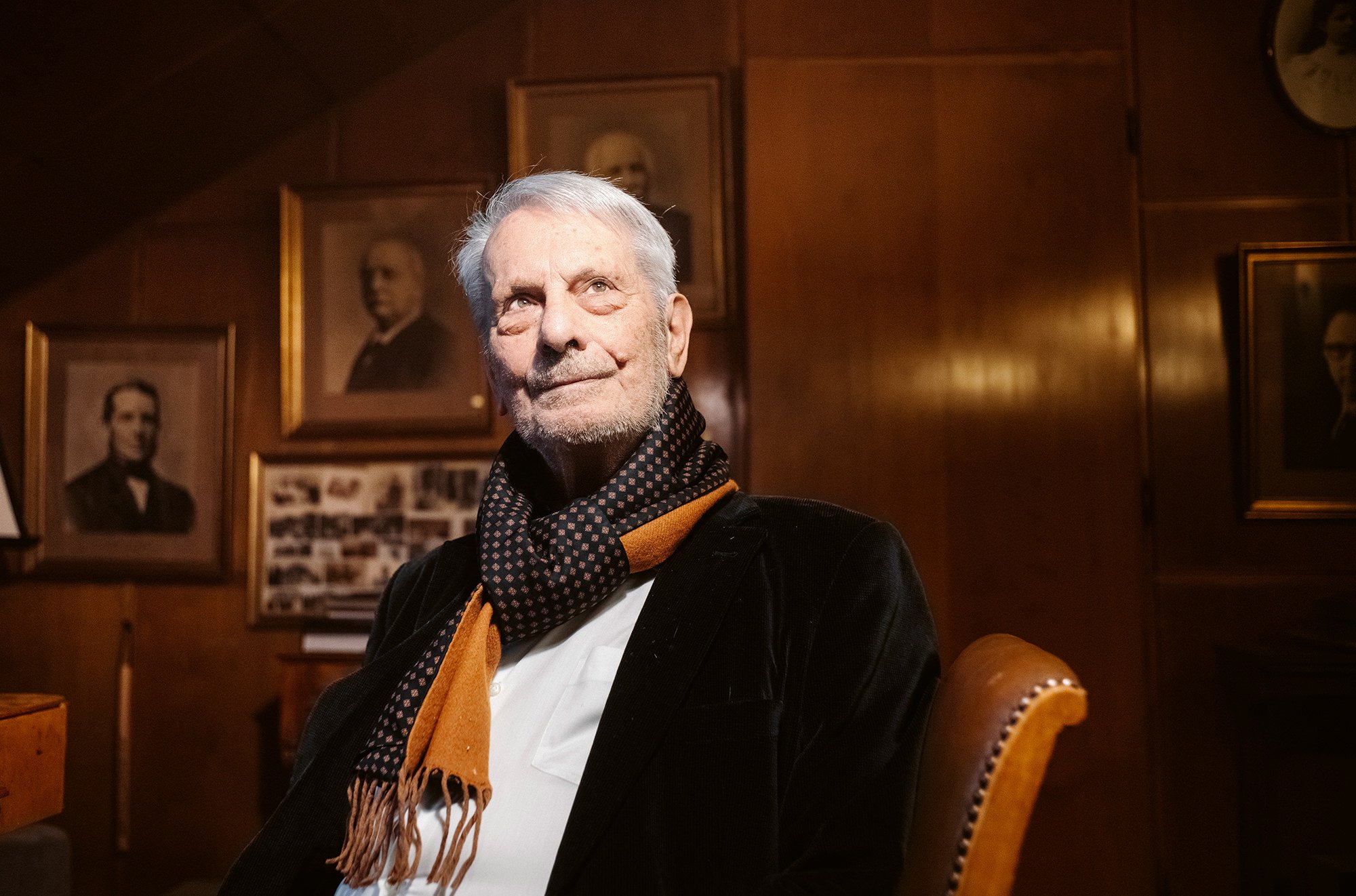
"I started thinking about how we could redeploy both our workforce and our production capital. Through our research lab, we had acquired expertise in plastic moulding and electroforming, and it occurred to me that we could apply this to manufacturing blood pressure monitors. I went to see Branco Weiss, who was both a senior executive at Hoffman-La Roche and the founder of Kontron, a medtech company. One of its products were pacemakers, that were made in Italy. He challenged me to produce a Swiss pacemaker and gave me a simple mock-up. That was all I had to go on.”
Pioneering horology-driven medtech
The creation of Precimed SA — the first company to transfer the micro-mechanical expertise of watch manufacturing into a different sector of activity — would be the start of a long and complex journey. First off, the new entity needed the industrial know-how to produce pacemakers. There were four European companies manufacturing pacemakers, in the Netherlands, Germany and Italy, plus Intermedics in the United States. Precimed could have obtained a licence from the American firm, which didn’t have a distributor in Europe. Instead, it opted to “go Dutch” with the arrival in Le Locle of a specialist engineer, Jerry Boer, along with his entire family.
After the SSIH declined to invest in the joint venture with Hoffman-La Roche, Luc Tissot, at that time still president of Tissot, personally took a 20% stake in Precimed SA, the company he would jointly manage alongside Jerry Boer and watch engineer Jean-Jacques Desaules. Tissot did agree to rent its now empty premises and let Precimed hire qualified staff who were being laid off.

They viewed this new venture, and their role in it, as a form of promotion. Manufacturing pacemakers implied cutting-edge micromechanical technologies and electronic systems, advanced knowledge of materials, including biocompatibility, precision soldering and assembly, and a much greater level of responsibility. “In their eyes, the pacemaker represented more quality and was more important to human life than a watch,” writes Maurice Favre in Les Tissot au Locle: Créateurs d’Industries. “Manufacturing pacemakers was seen as a promotion. As a profession, it was higher up the values scale and motivation increased accordingly. This was a principle Luc Tissot would look for in his future investments.”
In December 1978 Precimed delivered its first pacemakers to Kontron, with the scientific blessing of Prof Åke Senning, the surgeon who had implanted the first ever pacemaker in a patient in Stockholm, in 1958. Precimed, which was later bought by Intermedics, would employ as many as 300 people in Le Locle.
The hydrocephalus shunt
Alongside Precimed and its pacemaker, Luc Tissot founded Medos SA, also in Le Locle, with the ambitious objective to develop an implantable hydrocephalus shunt that could be adjusted without surgery.
Hydrocephalus, the only treatable form of dementia, is caused by an imbalance between the production and absorption of cerebrospinal fluid around the brain and spinal cord. This excess fluid is drained by implanting a shunt. Medos’s objective was to develop a means to non-invasively adjust shunt pressure, painlessly and in a matter of seconds.
The idea originated in 1982 with a phone call from a Colombian neurosurgeon, Prof Salomón Hakim, and his son, Carlos Hakim, a biomedical engineer and doctoral candidate at MIT.

As Jean-Jacques Desaules recalls, their conversation would be the start of a long brainstorming session at the Tissot Economic Foundation that Luc Tissot had established in 1980 with the motto entreprendre pour un développement humain (“working for human development”). After long days, nights and weekends of discussion, a bold idea emerged for a hydrocephalus shunt that could be adjusted by a system of magnets. It was a complex solution but the more they talked about it, the more convinced they became. The shunt already existed but they would have to develop and produce the magnetic programming system — which meant setting up a company and building a prototype. But wasn’t stamping, moulding and turning with micrometric precision, even with biocompatible materials, the very definition of watchmaking!


Despite its complexity, the project made rapid headway. Cleanrooms with laminar flow were opened and by early 1984 the first components had been made and assembled into the first shunt, which was successfully implanted in a patient during clinical trials. The company expanded as of 1987, female staff were recruited and trained, and sales launched in Europe and Japan in 1989. This “revolutionary shunt” came to the attention of one of the sector’s giants, Johnson & Johnson, at that time the global market leader for hydrocephalus devices. After several visits to Le Locle, in 1991 the American firm acquired Medos. With Johnson & Johnson’s commercial clout, the market exploded, although the Swiss shunt didn’t get US Food and Drug Administration approval until 1998.
The “Medos” valve is still produced in Le Locle. The company is now called Integra and employs around 300 people. Its neighbours are Cartier Joaillerie, Audemars Piguet Le Locle and, across the valley, Zenith. Clearly, the watchmaking/medtech implant has taken.
The Tissot Economic Foundation
As Luc Tissot likes to say, “every business contains the seeds of expertise for a new industry.” At the Tissot Economic Foundation, he observes a principle of mesology, an inherently transdisciplinary science that studies the relationship between living beings, in this instance humans, and their environment in the broadest sense. Applied to Neuchâtel’s Promotion Économique, this mesological model promotes strategic decision-making that examines all factors. Beyond the financial and fiscal incentives offered to investors, it highlights immaterial values of knowledge and expertise (micro-engineering and pharma in the case of Neuchâtel), alongside material values represented by human capital, a dense network of specialist and highly qualified suppliers, together with the canton’s environment in the wider sense and history.”The Foundation has been retasked with promoting this mesological approach for the canton of Neuchâtel. This means acting from the ground up and working directly with companies, SMEs, to develop opportunities for diversification. The expertise we have here in precision engineering should bring in startups, inventors and researchers. State bureaucracy supports what is already there. The baseline is that we have a network of competencies, relations and now global connections. We have a great hand to play,” enthuses Luc Tissot.
The future of watchmaking
Like a cat, Luc Tissot has had more than one life. In 2017, at the age of 80, he returned to watchmaking - "But I never left!” he protests. “On the contrary, I followed it to other industries.” – and revived Milus, a brand established a century earlier, in 1919.
This new venture also began with a conversation. "A friend I met at a research centre in Houston, 40 years ago, told me about a Chinese businessman who owned the rights to a Swiss brand but was no longer interested and had decided to park it. I asked around and found out that it was Milus, a storied name that I knew and respected. As an entrepreneur, I couldn’t let that happen and so I acquired the brand.”

An entrepreneur at heart, there is no doubt about that, but an entrepreneur who likes to weave together different forms of expertise. “I like to bring different competencies into play. As well as the product, an understated, ethical, quality, affordable watch, one of my motivations for Milus was to introduce my concept for a digital manufacture. We’ve built an innovative platform around Milus that enables us to coordinate the entire manufacturing process, through a network of suppliers in the region. Introducing digital to watchmaking is also what interested me.”

It’s the perfect time to ask Luc Tissot the question: how do you see the future of watchmaking?
“Watchmaking is different because it implies both technique and emotion. Imagining what might come next certainly isn’t easy. We can get it completely wrong. The one thing I am sure of is that many other areas can take inspiration from watchmaking, the quality of its research, its sustainability goals, its manufacturing precision and the rigorous standards it applies. Our knowledge is our strength, particularly in microengineering, and we absolutely have to keep that here. Achieving this supposes that business decisions include social objectives, too. We must be corporate citizens and, without forgetting it completely, shift our focus away from a purely economic objective and a short-term view. On the contrary, we must look to the long term and continuity. Preparing for the future means constantly innovating through a merging of expertise and experiences.”
A true life lesson.


