
 Español
 Français
 Pусский
 繁體中文
 简体中文
 Select another language


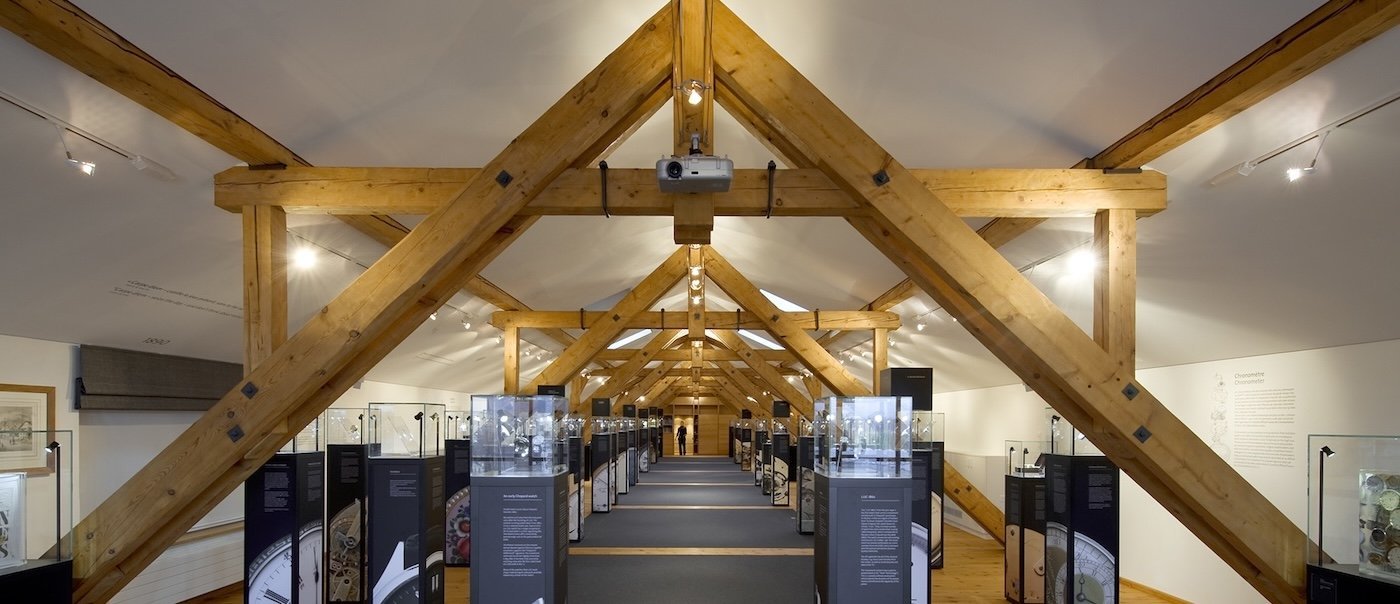
orn in 2006 of the vision and determination of Karl-Friedrich Scheufele, Co-President of Chopard and President of Chronométrie Ferdinand Berthoud, the L.U.CEUM is nestled within Chopard Manufacture in the heart of the village of Fleurier.
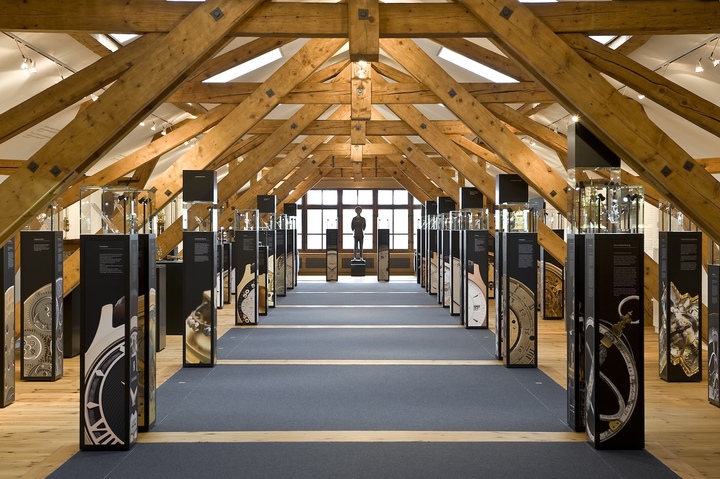
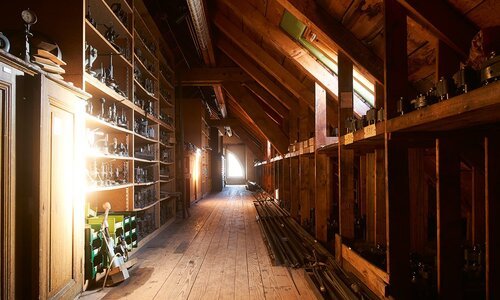
Conceived as a place to preserve and pass on the spirit and expertise of historical watchmaking, the L.U.CEUM is a private museum open exclusively to Chopard clients, partners, retailers and the press, by appointment only. Chopard’s research and development teams can study masterpieces of horological art here, with a view to creating movements and watches worthy of their illustrious predecessors, including Louis-Ulysse Chopard and Ferdinand Berthoud. Our interview with Karl-Friedrich Scheufele.

Europa Star: The name L.U.CEUM is a neologism combining “L.U.C” - Louis-Ulysse Chopard, who founded Chopard in 1860 - and the Latin word “lyceum”, a place of learning. Training and the transmission of knowledge are central to the L.U.CEUM project. Looking back, would you say it has fulfilled its mission?
Karl-Friedrich Scheufele: Through the L.U.CEUM collection, we not only preserve Swiss and international watchmaking heritage but also draw a great deal of inspiration from it. It began as my personal collection, including a few timepieces inherited from my grandfather, which I subsequently turned into a company collection. As I sought to expand it, I discovered the remarkable work of Ferdinand Berthoud, which was still relatively little known at the time.
Through our museum, and with the help of our curator, we acquired first editions of all the celebrated watchmaker’s books. We have drawn extensively on them to keep the master’s spirit alive in Chronométrie Ferdinand Berthoud’s contemporary creations.
Last year, we reached another milestone with Naissance d’une Montre 3: a watchmaking and heritage project of unique scope, the culmination of a human adventure and six years of work. We unveiled an exceptional wristwatch, certified as a chronometer by the COSC and made entirely by hand using traditional tools, without digital assistance. The L.U.CEUM provided considerable support for this project, which was unprecedented within our group.
Another aspect of our manufacture is its commitment to vocational training: in Fleurier, we offer apprenticeships in micromechanics and watchmaking leading to the Swiss Federal Certificate of Competence (CFC). During their training, apprentices also visit the L.U.CEUM and have the opportunity to ask our curator questions.

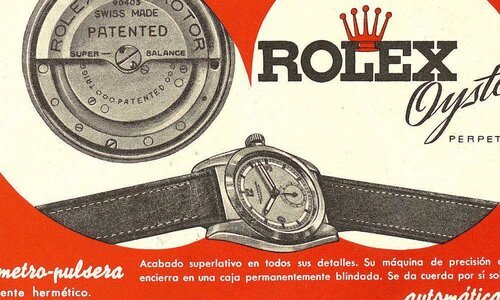
The L.U.CEUM takes an unusual approach to museum displays, with its key pieces arranged in thematic sections such as “great achievements”, “measuring precision” and “travelling with time”. Several historical watches are also displayed alongside contemporary models from Chopard’s L.U.C collection, creating a kind of dialogue between eras. What message do you hope to convey through this approach?
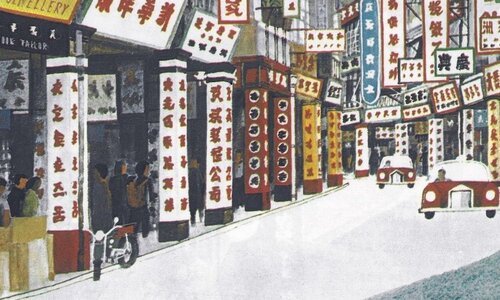
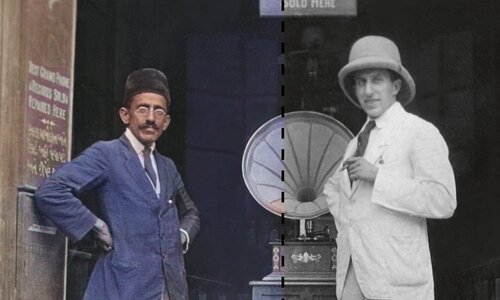
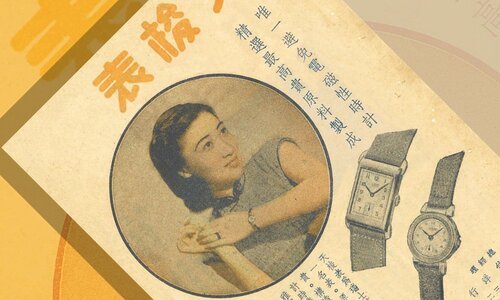
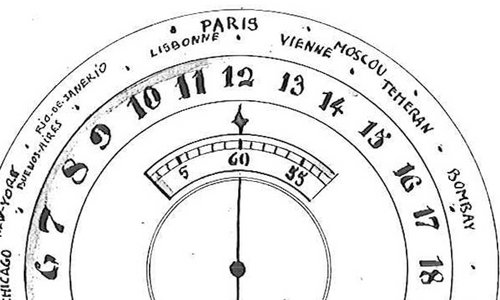
The timepieces on display at the L.U.CEUM are arranged around 12 themes, within which Chopard’s contemporary L.U.C watches find their place. The concept of time, in all its variations, has always fascinated me. This is why we defined 12 themes, in reference to the 12 hour markers on a watch dial, representing aspects of time measurement that particularly appeal to me: early timekeeping instruments, the first wheel-driven clocks, time on the move, watches for the Chinese market, subdividing time, and so on.
Naturally, the first two themes cannot be paired with a Chopard watch, given the age of the timepieces on display. Thanks to the breadth of our L.U.C collection, however, we were able to find a counterpart for every other thematic section. We also wanted to convey the timeless nature of these themes: knowing the time while travelling, for instance, has been a necessity for centuries, and exchanges with China are hardly a recent phenomenon.
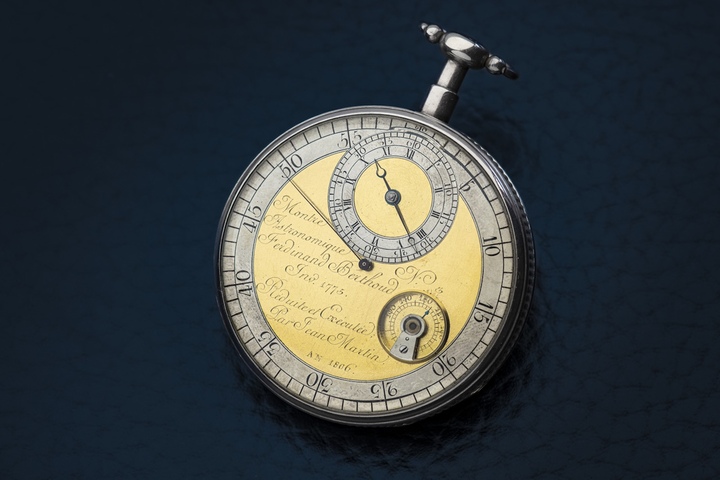
The acquisition of Ferdinand Berthoud’s Astronomical Watch No. 3 - one of the collection’s highlights - is described as the founding act of Chronométrie Ferdinand Berthoud. Could you tell us how this piece inspires the manufacture’s contemporary creations?
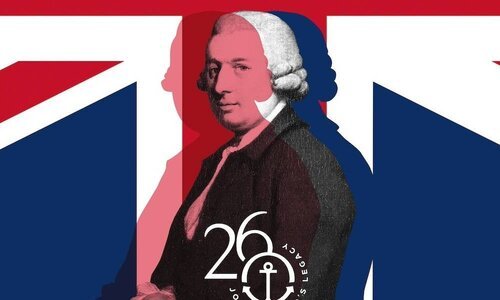
This watch was made by Jean Martin, a pupil of Berthoud, completed in 1806 and delivered to Jean Chaptal, Count of Chanteloup, a physician and politician. It has been part of the L.U.CEUM collection since 2005. Ferdinand Berthoud himself considered that this timepiece possessed all the qualities required for astronomical observations, which were notably used to calculate longitude.
Astronomical Watch No. 3 was the first Ferdinand Berthoud pocket watch to join the L.U.CEUM. Its aesthetics have informed several choices made by Chronométrie Ferdinand Berthoud. Its gilt brass dial, with applied silver chapter rings, is a composition echoed in our earliest creations and gradually interpreted in different materials. The use of Roman numerals for the hours and Arabic numerals for the minutes is another guiding principle found in the FB 2RE collection with remontoir d’égalité. From a technical perspective, Astronomical Watch No. 3 and most of our contemporary creations — notably the FB 1 and FB 2 collections — feature a movement with a fusée-and-chain transmission.
The choice of a large central seconds hand was likewise inspired by Astronomical Watch No. 3, as were the dial-side engravings and cursive lettering. The dial of Astronomical Watch No. 3 bears the date of its creation. On its contemporary creations, Chronométrie Ferdinand Berthoud replaces this with the geographical origin, “Val-de-Travers Suisse”. I believe it is a valuable source of inspiration for our contemporary creations.

The L.U.CEUM also has a space dedicated to modern and contemporary artworks exploring the theme of time. What place does art hold in Chopard’s history?
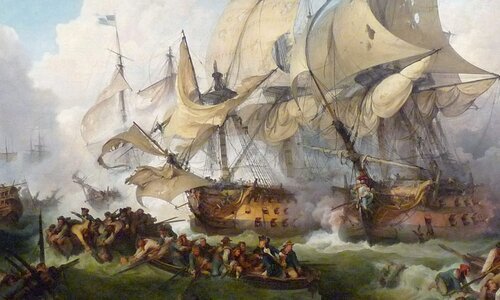
I have been collecting artworks through the L.U.CEUM for 20 years, and privately for much longer. Time naturally emerged as the theme for the L.U.CEUM collection, which brings together works from the Renaissance to the present day. Our premises in Fleurier and Geneva display art objects relating to time and its various representations across different periods: measuring instruments, pictorial depictions of fleeting moments, works of a more philosophical nature, regional art, and so on. Our scope is fairly broad, and I am guided by what moves me.
From a business perspective, under our family’s stewardship since 1963, Chopard has elevated fine craftsmanship to an art through the work of passionate artisans who are experts in their respective fields. My parents brought to Chopard the arts of goldsmithing and chain-making from their home town of Pforzheim. My sister Caroline has infused our jewellery creations and high jewellery collections with her passion for art and colour, and her boundless creativity.
For my part, with Chopard Manufacture, established in Fleurier in 1996, we returned to the roots of horological art. In 2026, Chopard Manufacture proudly celebrates three decades of watchmaking expertise, and we have just unveiled our L.U.C Grand Strike, which I consider a work of art in its own right. Within our company, more than forty traditional crafts give rise to unique creations, shaped by the most precious of tools: the human hand.
Finally, do you consider Haute Horlogerie an art like any other?
To my mind, Haute Horlogerie is not an art like any other: it is an all-encompassing art, in the fullest sense. It embraces both the aesthetic dimension and the technical achievements of watchmaking. From movement construction to assembly, through adjustment and the addition of complications, every watch is a marvel of reliability, precision and technical sophistication.
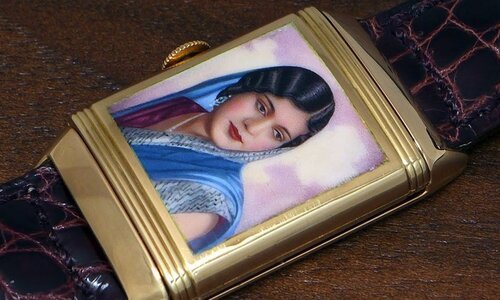
Beyond the meticulous art of timekeeping, we give free rein to artistic expression on the surfaces of the dial, case and movement. We are delighted to have established a Métiers d’Art department, which enables us to create masterpieces in enamel, Fleurisanne engraving, straw marquetry and Urushi lacquer, while also drawing on the in-house expertise of designers, gem-setters and artisans capable of extraordinary feats in the service of artistic beauty. Haute Horlogerie is therefore a multifaceted art in which two seemingly opposing aspects - technical performance and aesthetic harmony - complement rather than conflict with one another.