
 Español
 Français
 Pусский
 繁體中文
繁體中文 简体中文
简体中文 Select another language

n Geneva, technological innovation is part of the DNA of the Orchestre de la Suisse Romande (OSR). Founded in 1918 by Ernest Ansermet, the ensemble quickly established itself as a laboratory for music distribution: radio, television, stereophonic recordings… all technologies that the orchestra adopted early on to bring symphonic music beyond the concert hall.
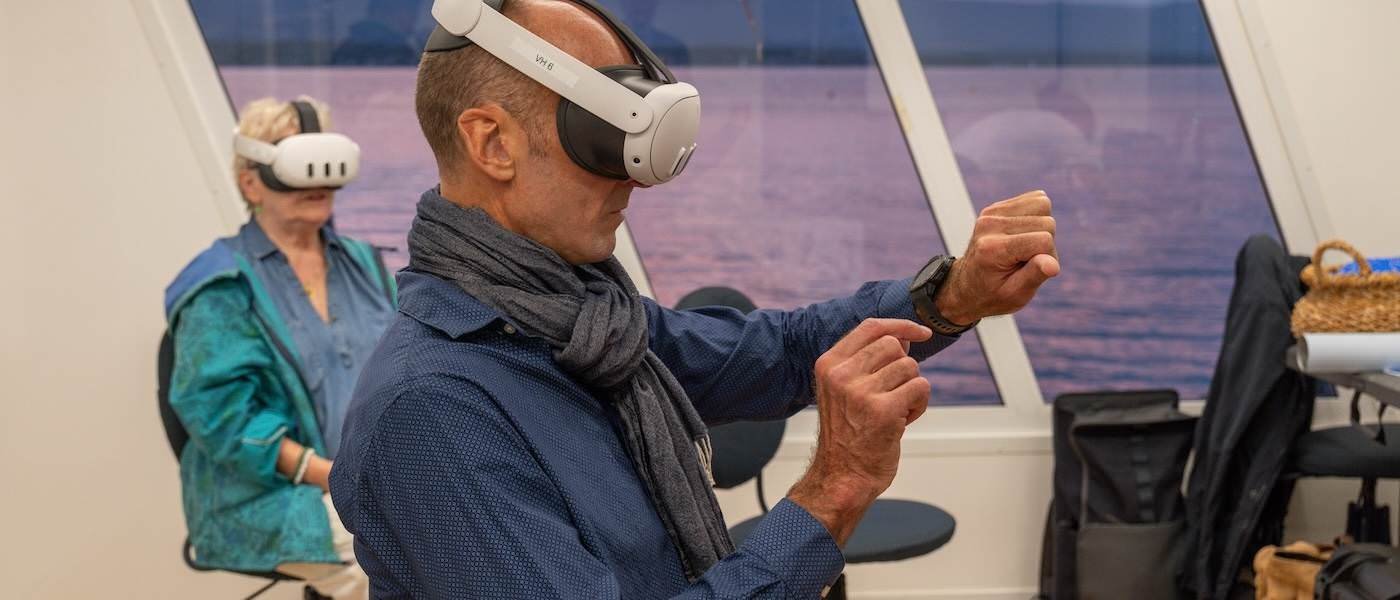
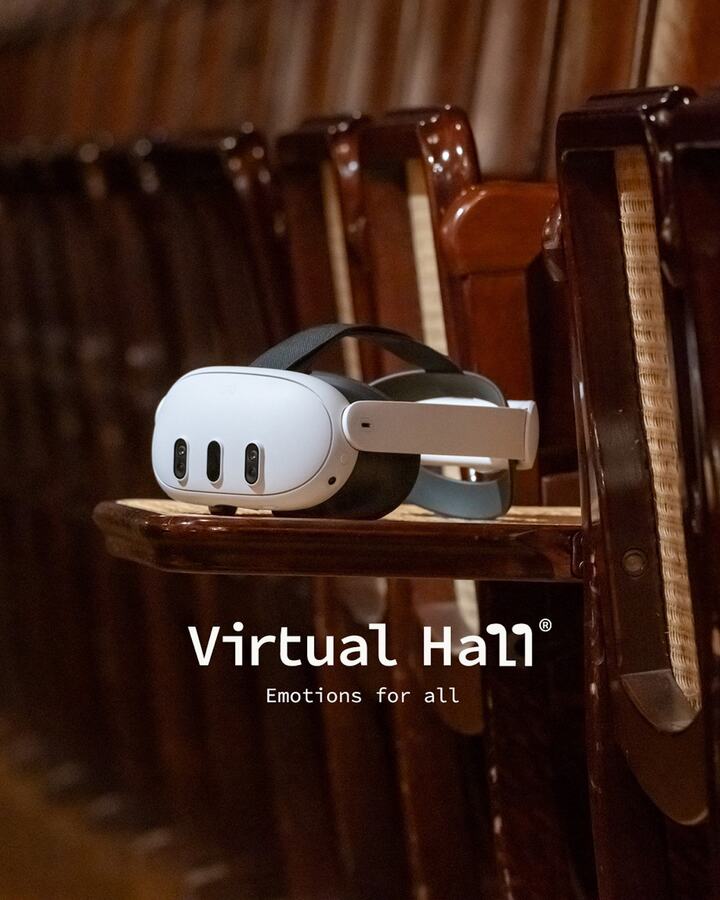
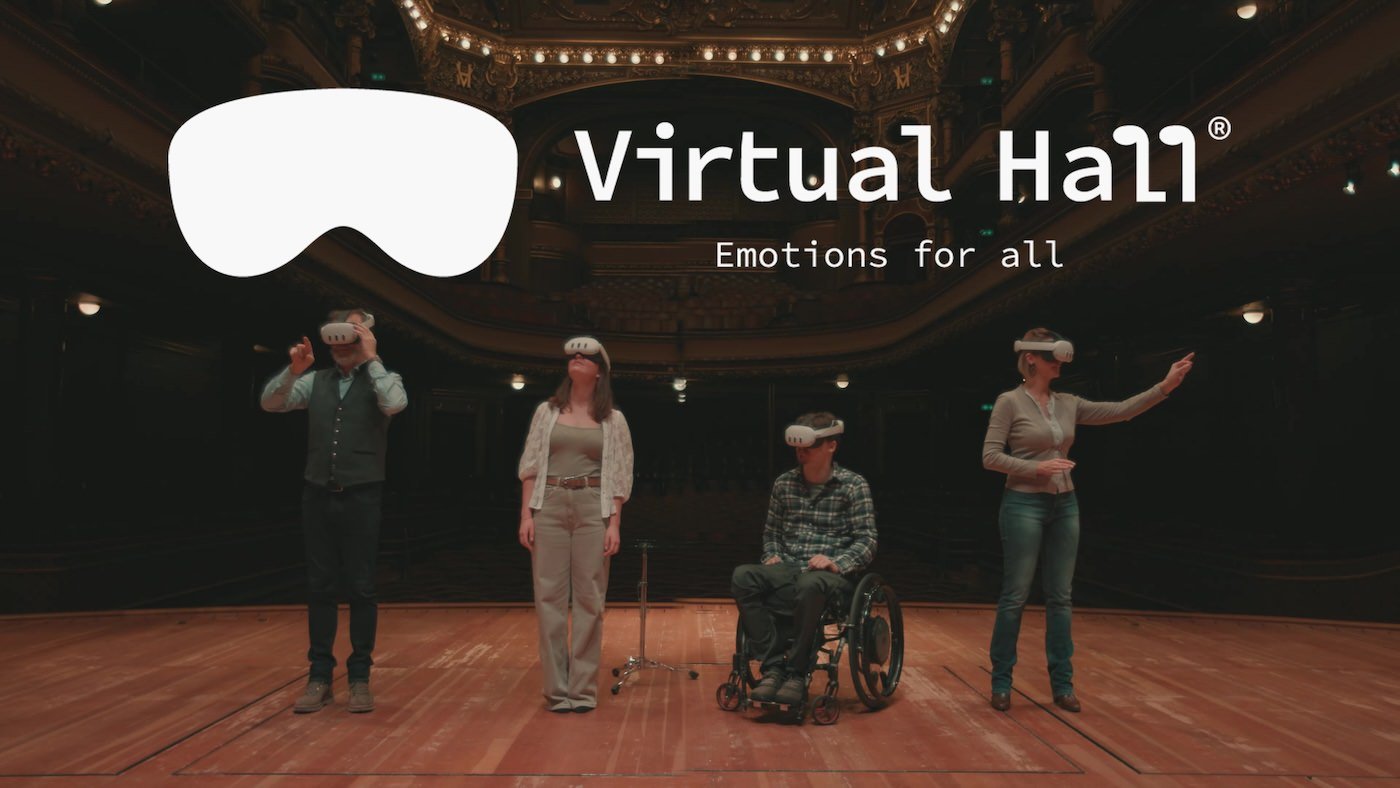
A century later, the OSR continues this tradition with “Virtual Hall”, an immersive application that allows users to experience its concerts in augmented and immersive reality. Equipped with a compatible headset (Meta Quest, Pico or others), users can virtually place themselves at the heart of the orchestra, follow the score, and change viewpoints during the performance.
“Everything that drives an orchestra is distribution,” explains Steve Roger, General Director of the OSR. “Even if nothing replaces the live concert, this is about adding an additional medium – and what a medium! Holography and immersion offer an experience vastly enhanced compared to television, cinema or radio.”
From hologram to Virtual Hall
The project was born from a meeting between Steve Roger and Pierluigi Christophe Orunesu, founder of Cybel’Art, based in Morges and active for more than twenty years at the intersection of art and technology.
“I have been working for about ten years on what I call ArtTech, the fusion of art and technology,” explains Pierluigi Christophe Orunesu. “Our philosophy is simple: we do not digitize humans, we humanize the digital. The goal is not to replace people with avatars, but to preserve emotion and real presence.”
Before the OSR, Cybel’Art had already experimented with this approach through holographic projects involving pianist Philippe Entremont and singer Henri Dès. These experiences made it possible to develop what Orunesu calls a “holographic matrix,” designed to capture and reproduce artistic performance with a strong emotional dimension.
When Steve Roger got in touch with him, the idea of applying this technology to a symphony orchestra quickly became obvious. “Even before taking up my position at the orchestra, I had already decided that I wanted to explore the possibilities of holography to distribute music across all possible platforms,” recalls Steve Roger.
A world first
Development of the Virtual Hall began in 2024. The first public trials took place in January 2025 at Art Genève, before the application was released on the Meta Store. The challenge is immense: recreating a symphony orchestra in an immersive environment involves a considerable volume of data and perfect synchronization.
“Synchronization of streams is one of the major challenges,” explains Pierluigi Christophe Orunesu. “For a work like Beethoven’s Third Symphony, ‘Eroica’, we work with around 45 gigabytes of data. The user can switch from one camera to another while remaining perfectly synchronized with the score.”
For the OSR, quality had to be flawless. “The image, sound and overall experience had to match the level of the orchestra and its reputation,” emphasizes Steve Roger. “We are pioneers in this field, but competition will come quickly. We must always stay one step ahead.”
A global distribution tool
Beyond technological innovation, the Virtual Hall serves a central goal: expanding access to symphonic music. “With television, we depend on broadcasters,” notes Steve Roger. “With this application, we can be everywhere. Someone can connect from the depths of Greenland and find themselves in the middle of the OSR.”
The orchestra has already begun installing setups in several Geneva institutions, notably retirement homes, and is in discussions with the Geneva University Hospitals (HUG) and the Bibliothèque de la Cité. In addition, a partnership with a German network of media libraries will allow the content to be distributed on more than 16,000 immersive headsets.
The OSR does not intend to keep this innovation to itself. In the long term, the platform could host content from other musical institutions.
“We are in discussions with several orchestras so that they can add their own recordings,” explains Steve Roger. “They could rent space within the application and offer their concerts. If sales perform well, revenues would be shared.” The OSR would ensure artistic curation, with a high level of standards and an initial exclusivity period.
A new chapter in the OSR’s history
For Pierluigi Christophe Orunesu, the Virtual Hall is part of a broader vision of a “phygital” future, where the physical and digital complement each other. “I don’t really believe in the metaverse,” he says. “I believe more in a phygital world: we start from the human, and technology amplifies the experience.”
While the application currently operates mainly with immersive headsets, he already envisions its evolution: “The headset is just a step. We will probably move toward masks or augmented glasses. Everything we have developed for the Virtual Hall will also work with these devices.”
For Steve Roger, the initiative is part of a historical continuity: “The OSR has always benefited from technological progress,” he recalls. “Ernest Ansermet was already at the cutting edge of technology: radio, television, stereophony… The orchestra was conceived as a tool for distribution. With the Virtual Hall, we are simply continuing this tradition.”
While the concert hall remains irreplaceable, digital immersion could well become one of the new vectors of symphonic music. “The goal is not to replace the concert,” concludes Steve Roger. “It is to multiply the entry points to music.”