
 Español
 Français
 Pусский
 繁體中文
繁體中文 简体中文
简体中文 Select another language

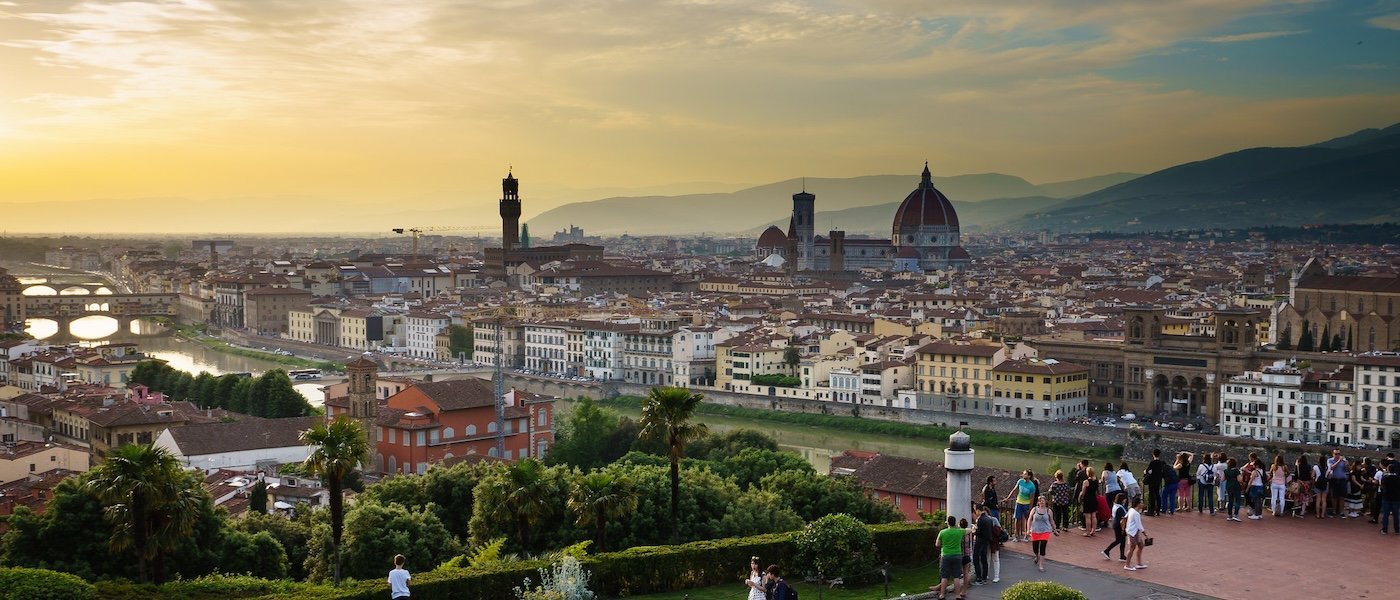
lorence is not a city easily impressed. It has witnessed the Medici, popes, bankers, artists, merchants and some of the most extravagant ambitions in European history. When it chooses to throw open its doors to a watchmaker, it is all the more reason to take notice.
That is the first thing that strikes you during the centenary celebrations for Panerai’s Piazza San Giovanni boutique. The whole city seems to have been invited into the story. The Museo Marino Marini hosts the Immersion exhibition. Florentine officials join the celebrations. And as evening falls, guests make their way to the Palazzo Vecchio to the sound of trumpets and drums. There is something delightfully theatrical about crossing the Piazza della Signoria in this manner before entering a palace that, since construction began in 1299, has served as the seat of Florentine government and later as one of the principal stages of Medici power.
Panerai CEO Emmanuel Perrin says his team had not warned him about this welcome, worthy of an official arrival in the 16th century, and that some guests took a moment to realise the celebration was for them. Historically, that was precisely the point of such ceremony: one did not simply enter the Palazzo Vecchio; one was received there. Drums, brass instruments, banners and processions remain part of the ceremonial language of the Florentine Republic’s great historical pageants.
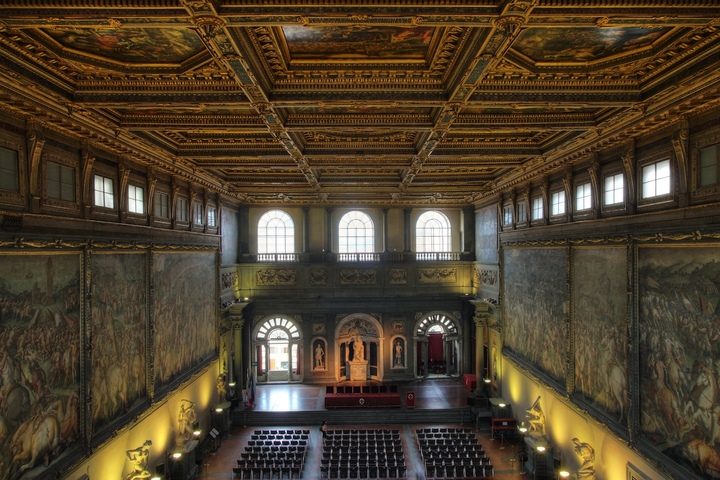
A few minutes later, the doors open onto the Salone dei Cinquecento. Suddenly, everything changes scale. Fifty-four metres long, 23 wide, 18 high. Above the dinner tables rises an immense coffered ceiling; on the walls, monumental compositions executed under the direction of Giorgio Vasari for Cosimo I de’ Medici glorify Florence, its conquests and ducal power. Created in the late 15th century to house the Great Council, the hall was extensively remodelled in the 1560s, notably for the celebrations surrounding the marriage of Francesco de’ Medici and Joanna of Austria. Looking up at these vast paintings, you cannot help wondering how many intrigues, shifting alliances, ambitions and secret conversations these walls have witnessed.
Panerai’s Florentine roots
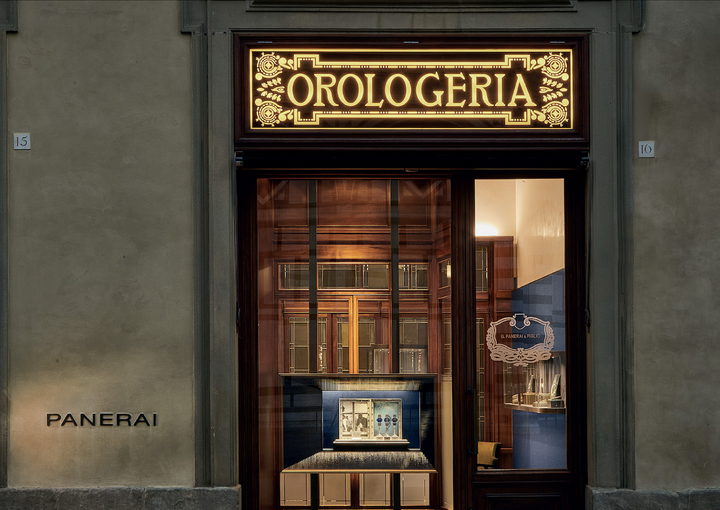
In truth, Panerai is celebrating more than its boutique’s hundredth anniversary. The watchmaker appears to be putting Florence back at the heart of its story. Before it became a manufacture based in Neuchâtel, Panerai was a Florentine story. The Piazza San Giovanni boutique dates back to 1926, when the family business moved to the premises under the name “Orologeria Svizzera”. But its history began much earlier, in 1860, when Giovanni Panerai opened a workshop and shop in Florence that would also become a watchmaking school. A century after moving opposite the Baptistery, the boutique is still there.
This mutual declaration of affection between Florence and Panerai is therefore more than commemorative. It also seems strategic. Having long made its military history central to its identity, Panerai appears keen to reach a little further back: before the combat divers, before the large tool watches, before even the references that have since acquired cult status. A return to Florence, to the family, to the workshop, and perhaps a way for the brand to define more clearly what it wants to become. Perhaps, too, a chance to broaden an identity that has seemed so tightly focused since the introduction of its first watches for the civilian market in 1993.
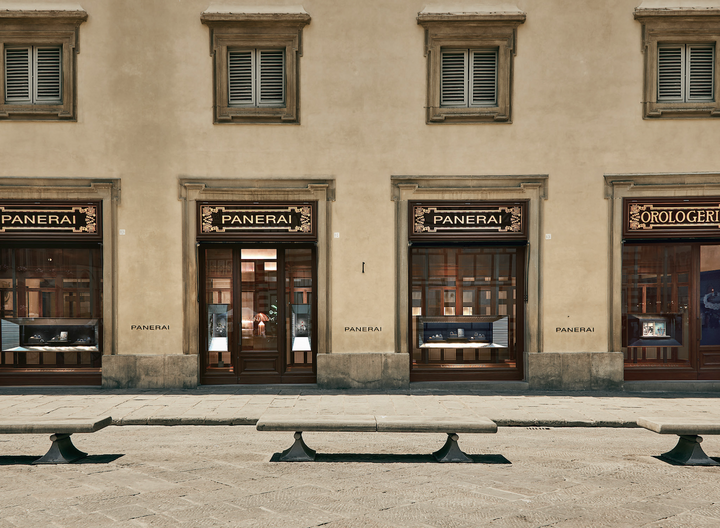
The façade of the Piazza San Giovanni boutique still retains its old wooden frame and “OROLOGERIA” sign. Inside, historical instruments, watches and a watchmaker’s workshop sit alongside the contemporary collections; upstairs, a salon overlooks the Baptistery. The brand took shape in the Italy of the late 19th and early 20th centuries, as the Panerai family developed its watchmaking business and technical instruments in parallel.
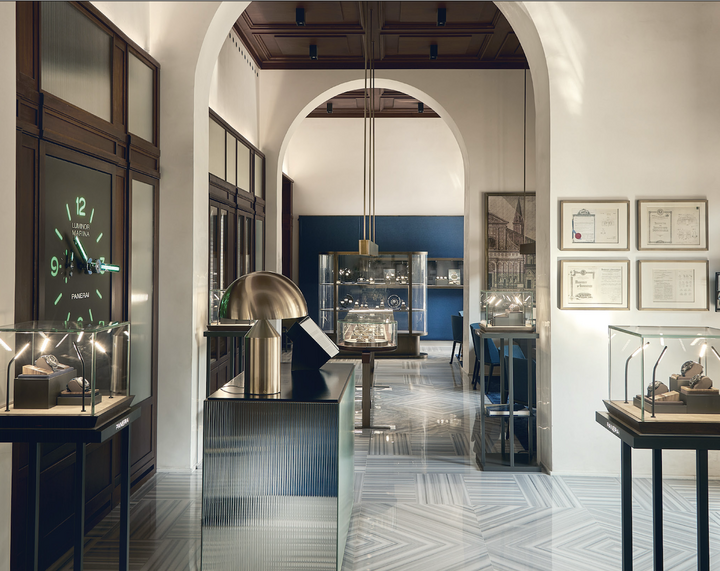
Immersion, from the workshop to the sea
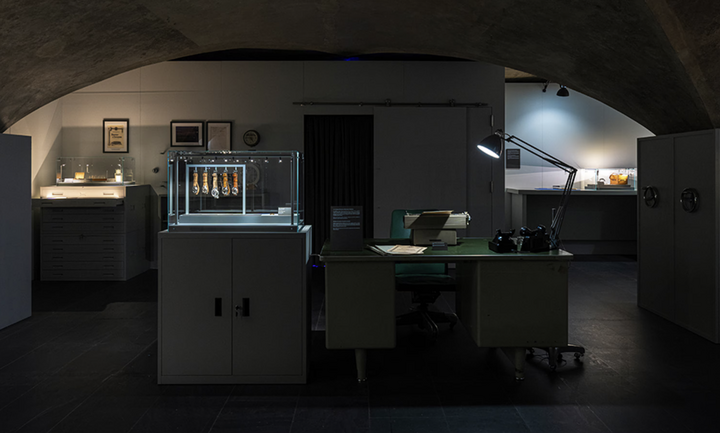
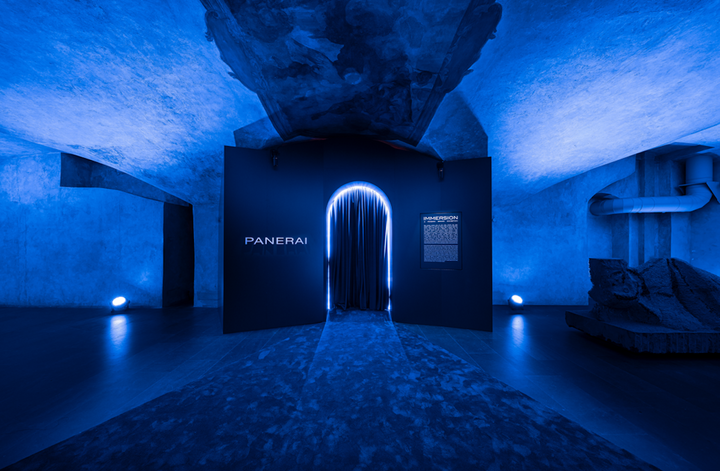
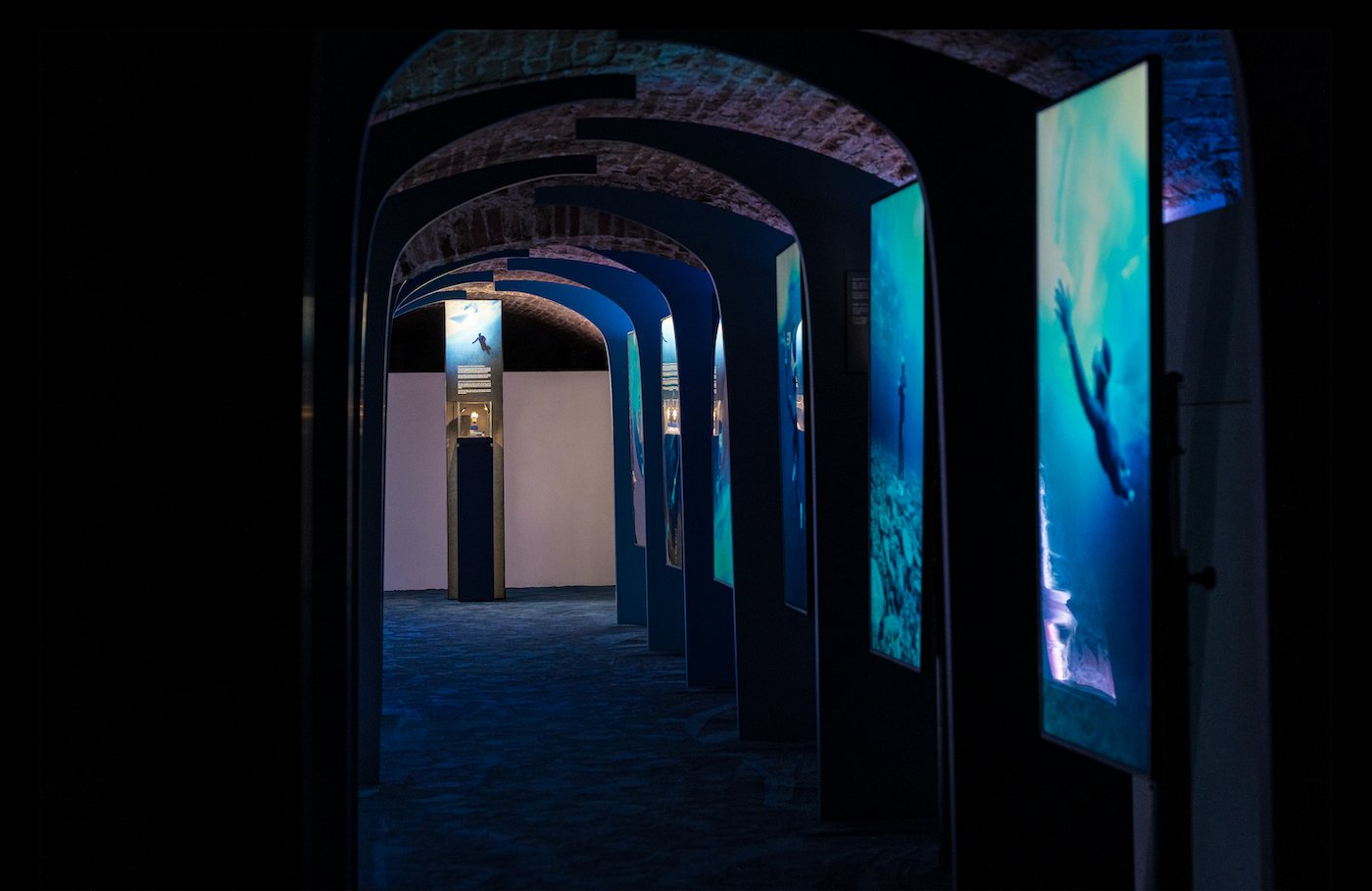
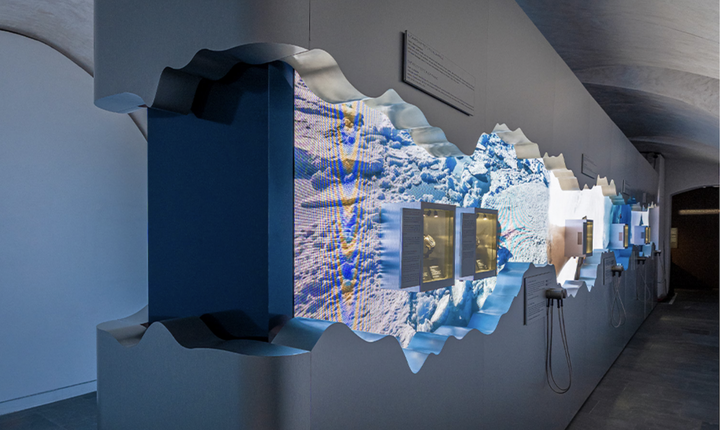
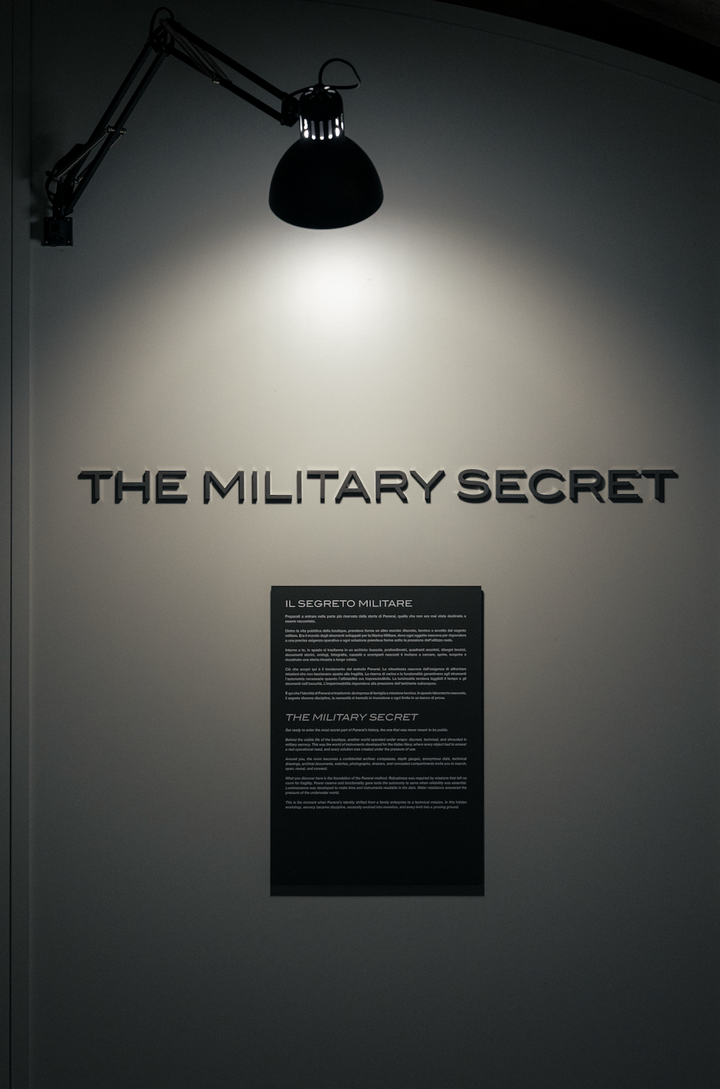
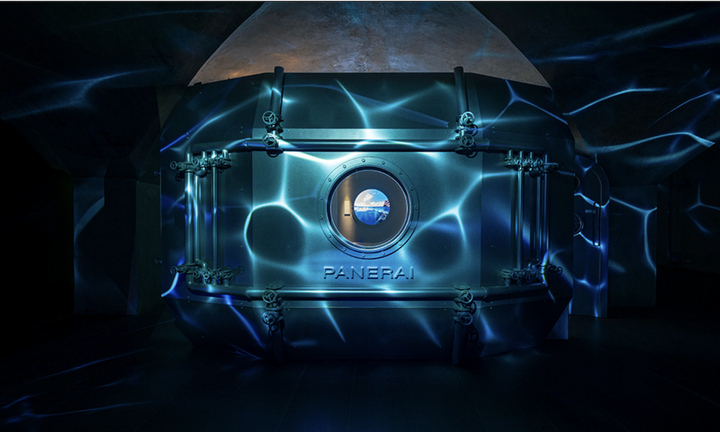
Emmanuel Perrin acknowledges that the celebrations also brought home to him the depth of the brand’s ties to the city. The presence of Florentine officials made a particular impression, especially the mayor’s “perfectly judged” speech at the Museo Marino Marini, which hosted the impressive Immersion exhibition in its crypt.
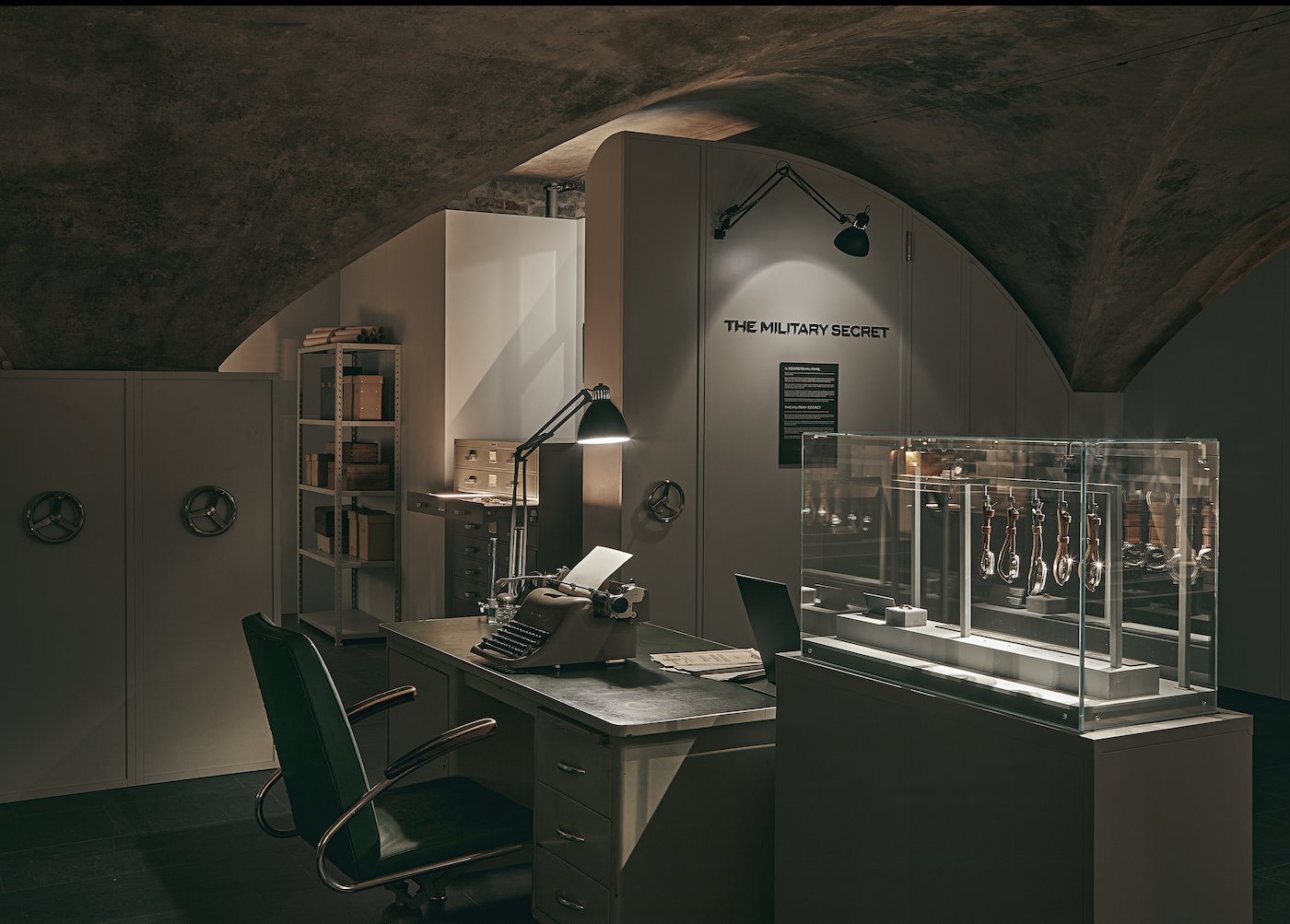
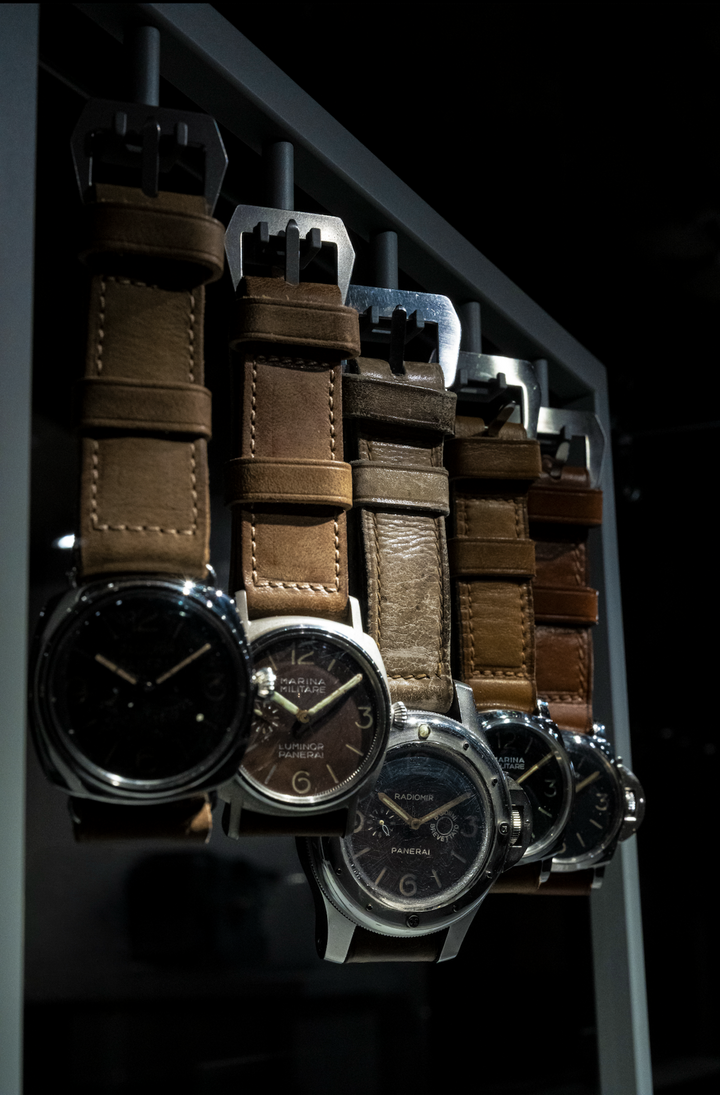
Rather than simply lining up vintage watches and documents in display cases, Panerai set out to create a journey through images, sounds, lighting and installations. It begins in 19th-century Florence and the family workshop, before gradually shifting towards the sea, darkness, pressure, underwater operations and, finally, contemporary exploration.
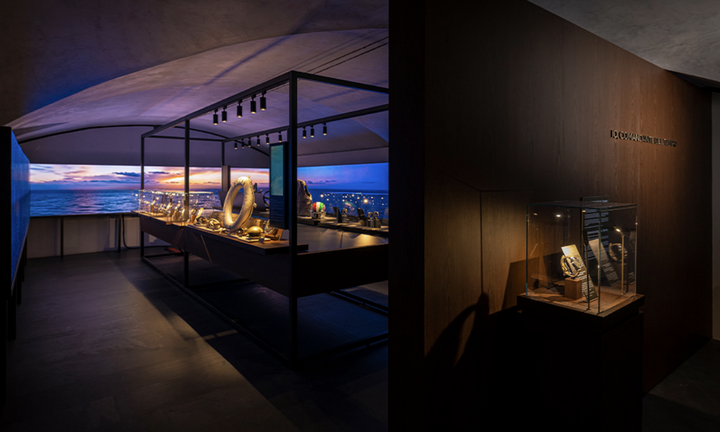
The choice of themes is revealing: the Panerai family, the Italian Navy, covert operations, luminescence, power reserve and watches conceived as true instruments. It is the connection with Florence and the Italian Navy that takes centre stage; the Neuchâtel manufacture remains in the background. In a twist you could hardly invent, the strong winds sweeping Florence on our arrival prevented some representatives of the naval high command from landing. A reminder that battling the elements has always been part of everyday life at Panerai… even in the heart of Florence.
Function before form
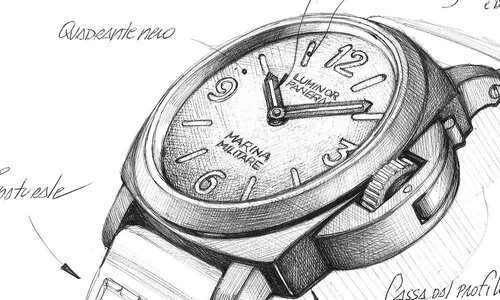
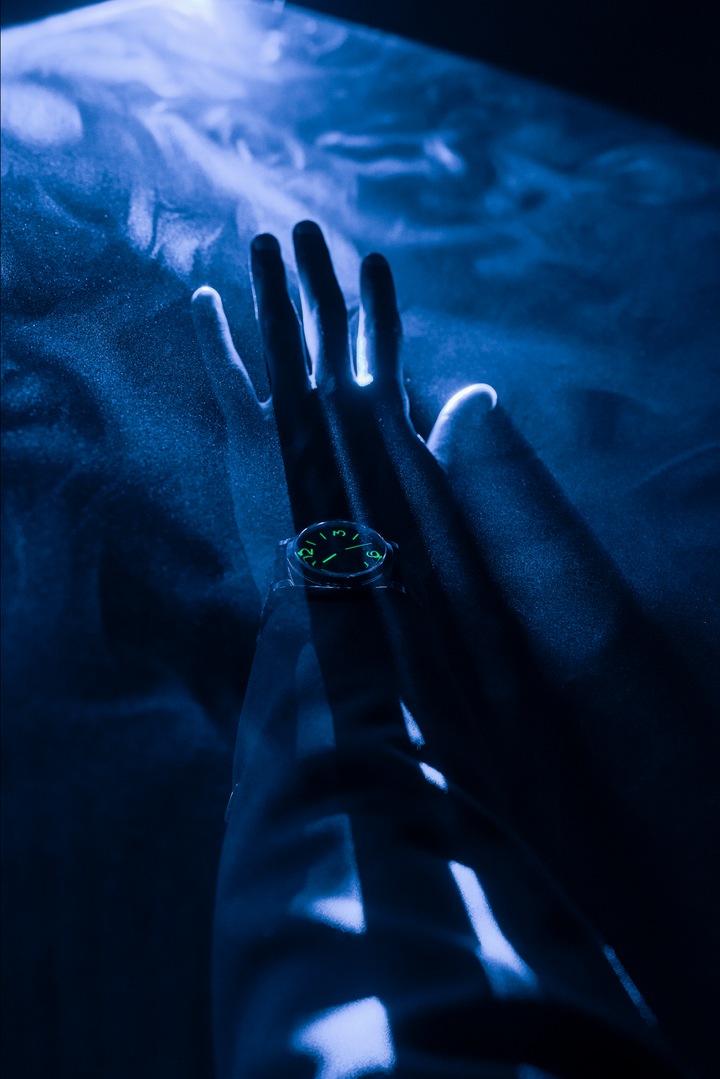
At Panerai, Emmanuel Perrin points out, much of what we now regard as signature design features originated as solutions to practical problems. The crown-protecting bridge is the clearest example. The same is true of certain dark surface treatments originally intended to eliminate reflections, the luminescence needed underwater, the long power reserves that reduced the need to operate the crown, and the robust cases.
Beauty follows. And this may be where Florence makes its most subtle reappearance: in the ability to turn a technical constraint into an instantly recognisable object. Today, Panerai groups its principal areas of research into four themes inherited directly from this history: luminescence, power reserve, materials, and water and shock resistance.
Two Luminor models mark the centenary
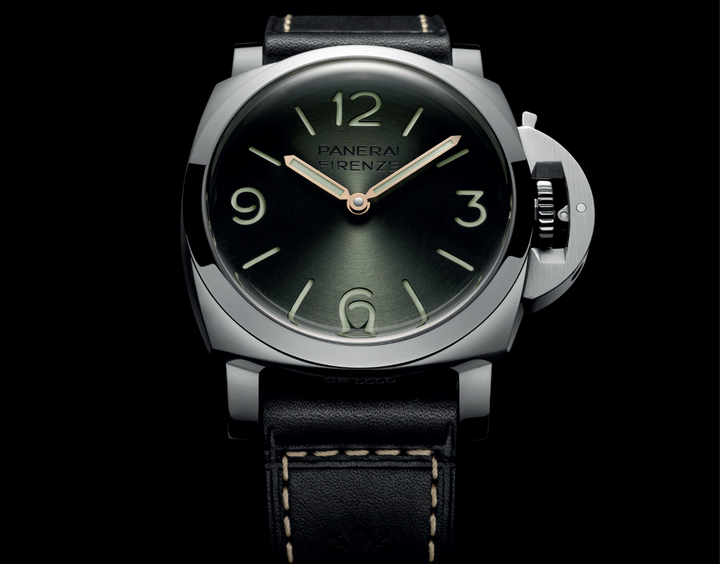
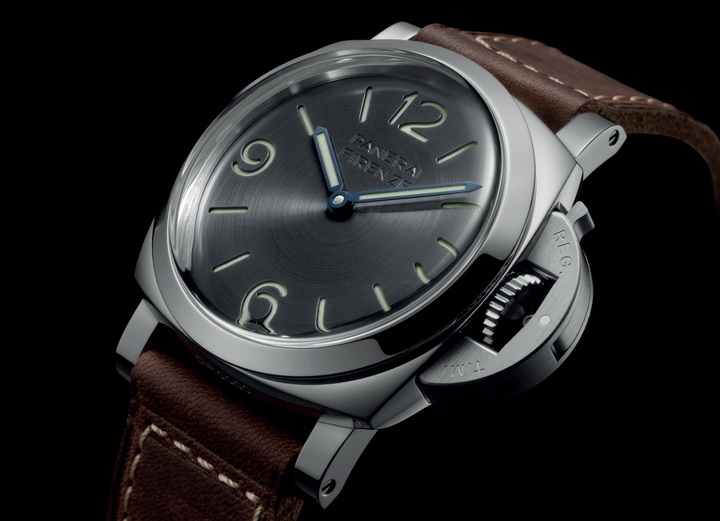
The two watches unveiled for the anniversary offer a fairly literal expression of this philosophy. The Luminor Firenze 8 Giorni PAM01734 and PAM01794 draw inspiration from a rare prototype of reference 6152/1, dated by Panerai to the 1960s and bearing the inscription “Panerai Firenze”. Both feature a 44 mm case and the hand-wound P.5000 calibre, with an eight-day power reserve.
Yet the most interesting detail is almost invisible. On the historical prototype, small grooves had been cut into the inner sides of the crown protector. Their purpose was practical: to make the watch easier to operate and wind while wearing gloves, in the dark or in difficult conditions. The PAM01734 now reprises this detail.
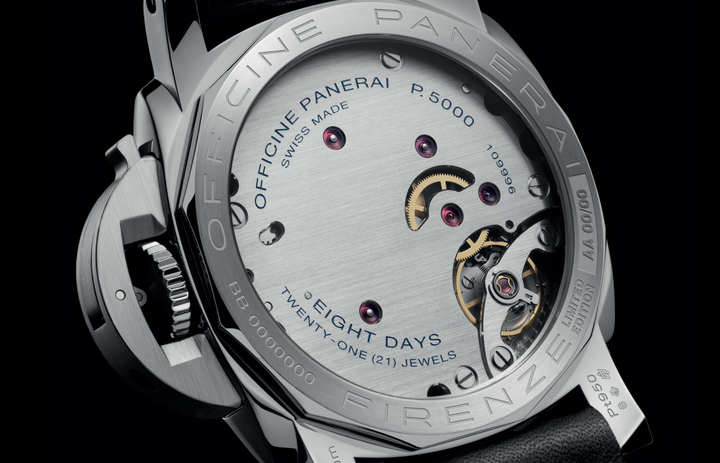
Limited to 100 pieces, the PAM01734 features a 44 mm Platinumtech case, a green dial, a sapphire caseback and a stated water resistance of 100 metres. The PAM01794, produced in a series of 1,000 pieces, combines steel, a black dial and a solid caseback, with water resistance to 300 metres. Both are powered by the hand-wound P.5000 and its 192-hour power reserve.
References to Florence run throughout: “Panerai Firenze” on the dial, “Officine Panerai Firenze” on the caseback, Tuscan calfskin straps adorned with the Florentine fleur-de-lis, and mahogany presentation boxes depicting the entrance to the historic boutique. “Florence is a living museum for Panerai,” says Alessandro Ficarelli, Chief Marketing and Heritage Officer.
A museum in Florence?
And that brings us to what may be the most significant announcement of this Florentine week. Panerai has invested in two buildings historically linked to the founding family, one used as a residence, the other as a place of work and experimentation. The plan is to create a dedicated Panerai centre with a permanent museum space, temporary exhibitions, a repair and after-sales service centre, a boutique and hospitality areas.
For Alessandro Ficarelli, a heritage space larger than the current boutique has become essential. The project will also allow Panerai to display the archives and objects it continues to seek out and acquire from collectors. Its timeline, however, depends on the approvals required for any work on Florence’s historic buildings.
The warmth of Florence’s welcome for “its” watchmaker during the *Immersion* exhibition gives every reason for optimism. Panerai came to celebrate a century. In the Salone dei Cinquecento, beneath Vasari’s sweeping battle scenes and amid the grandeur of Medici Florence, the city offered it centuries in return…