ENTRY-LEVEL
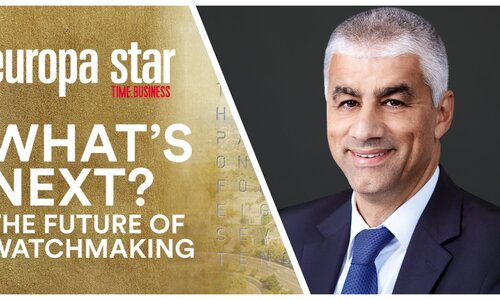
“The mid-range customer is less well-off”
“In the entry-level range, there’s a phenomenon of consumers
who are going to move on from smartwatches
to mechanical watches. But the effect on the bottom
line will be nil, because even more are going to be replacing
their Swiss watch with a smartwatch. Which explains
why quartz is receding. There’s also an economic
phenomenon, with an increase in inequality: a 500-dollar
watch is still very expensive at the global level. The
mid-range customer is less well-off, they no longer have
the means to buy a watch in the $500-$2,000 range,
which is suffering. The gap is widening. Moreover, the
60%-Swiss-made standard has had a direct impact on
quartz brands without much added value. They used to
offset that with the movement. Today,
they’re having to raise their prices. On
the other hand, the ‘false’ Swiss-made
watch costing less than 100 francs will
survive.”
POLARISATION
“A brand rationale rather
than a financial one”
“The industry is very polarised,
with four brands leading the dance:
Rolex, Patek Philippe, Audemars Piguet and Richard
Mille. Yet they have very different business models
when it comes to distribution: the first two work exclusively
on a wholesale basis, while the last two are
transitioning towards a wholly retail model. At the
same time, they share fundamentally identical traits:
independence, a certain vision and freedom of decision
applied over the long term. They’ve adopted a brand
rationale rather than a financial one. In stock groups
answerable to shareholders, collectors are well aware
of the fact that they lack identity and soul.”
"At the
same time, they share fundamentally identical traits:
independence, a certain vision and freedom of decision
applied over the long term."
DISTRIBUTION
“Direct-to-consumer sales are moving upmarket”
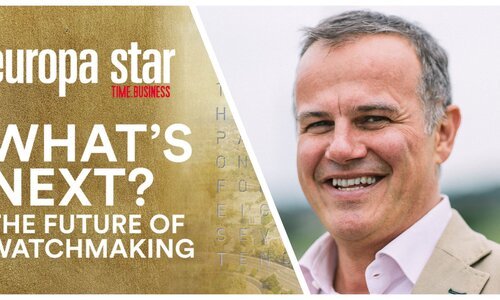
“As is often the case, the groundswell of ‘direct-to-consumer’
sales first began in the entry-level range, with Daniel
Wellington and brands launched on Kickstarter. This
phenomenon is slowly moving up through the ranges.
In any case, the distribution networks are saturated, so a
new brand is almost automatically going to head towards
direct selling. Today, some distributors have just abandoned
the entry-level segment, because everything is
available over the internet. For those brands, the savings
made by the ‘direct-to-consumer’ model allow them to do
more marketing. That has also sown huge doubts in consumers’
minds: ‘Why should I pay so much for a watch?’
A business always sets out to make profits by the shortest
route. But all romanticism aside, watchmaking is
still business: people don’t count for much. And today,
where distribution is concerned the shortest route is
online sales, especially if a brand already
has name recognition. A brand
will achieve more growth by selling
directly online than it can by selling
to China or Hong Kong today.”
"Today, some distributors have just abandoned
the entry-level segment, because everything is
available over the internet."
PRE-OWNED
“That’s signing the death warrant
of selective distribution”
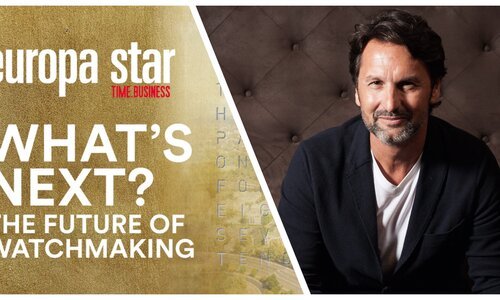
“The largest suppliers to the grey
market are the brands themselves.
And they instigated the crime by forcing their retailers
to take more stock. The latter had to expand their customer
base via the internet and by using the catch-all
term ‘pre-owned’. A large part of the pre-owned market
is liquidation in disguise: it’s a term that encompasses
a large number of watches that come straight out of the
factory and so can be sold without damaging image. But
beyond the discount, there’s also a whole, very lucrative
market to be developed, because via the pre-owned
market retailers have access to products they don’t have
in their boutiques. That’s signing the death warrant of
selective distribution.
Today you can see more Rolex
models in the windows of certain non-licensed retailers
than in the licensed ones. Also, the difference between
price (displayed in-store) and value (the actual price a
consumer is willing to pay) is now plain to see. Chrono24 and WatchBox have become the Standard and Poor’s
of the industry. Today, the curtains have been drawn
back and the king is naked!”
OPPORTUNITIES
“We need to be less individualistic, the watch
industry has a global battle to fight”
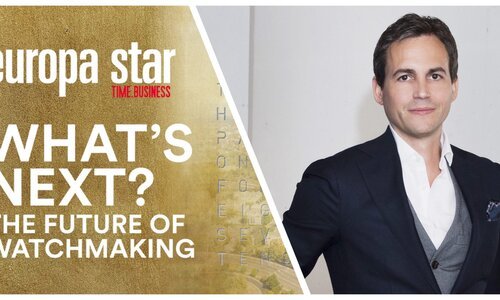
“The current problem is that if the battle to win wrist
share and extend the consumer catchment area is going
to be global but profitable for everybody, every
brand will be fighting for its profit margins in the next
quarter. I often use this metaphor for the watch industry:
the ice sheet is melting, but every bear tells itself
it will survive if the neighbouring bear dies and it gets
its fish! The profit equation is margin multiplied by
quantity. But the plate isn’t getting any bigger, just the
opposite, volumes are falling: 2.2 million fewer watches
since the start of the year. As a result, the brands are
focusing on increasing their profit margins through
direct selling.”



 Español
 Français
 Pусский
 繁體中文
 简体中文
 Select another language