
 Español
 Français
 Pусский
 繁體中文
繁體中文 简体中文
简体中文 Select another language

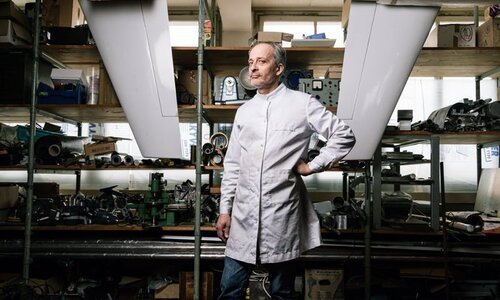
t first glance, Didier Cavasino’s career looks more like that of a production engineer than an independent watchmaker. Born in Marseille in 1985 into a family far removed from the sciences — his mother a French teacher, his father a lawyer — he developed an early fascination with mechanisms, initially automotive: gears, engines and small-batch precision engineering.
This affinity for precision and low-volume production led him to study engineering at Arts et Métiers, complemented by a Franco-German dual degree. There, he learned to machine, weld and work with materials, as well as to structure an industrial project. This dual grounding — in manual work and automated processes — would become a recurring thread throughout his career.
A decisive encounter
Watches, however, had entered his life early. His grandmother, who was of Armenian origin, would tell him that a man should wear a watch: “a man’s jewellery”. As a child, he wore one before he could properly tell the time. At around twelve or thirteen, another discovery fascinated him: some watches could run without a battery. How could a spring store energy, release it and keep an entire mechanism running for hours? His technical curiosity did the rest.
Around the turn of the millennium, the teenager began frequenting watch forums and collectors’ groups. The major brands still dominated the scene; independent watchmaking enjoyed neither the visibility nor the standing it has today. In 2001, however, when he was just sixteen, an encounter would permanently change his understanding of the craft.
At a collectors’ dinner in Paris, he spotted a platinum Daniel Roth tourbillon on another guest’s wrist. He was struck by its proportions, its slimness and, above all, the idea that such a watch could be associated with the work of an artisan based in the distant Vallée de Joux. For a young man accustomed to thinking of precision in terms of machines and industrial production, it was a revelation. More than twenty years later, that watch would become one of the deeply personal reference points for his own project.
The Rolex school
After completing his studies and working in the automotive industry and on microsensors, notably for motorsport, Cavasino joined Rolex in October 2008. His first position was in an industrial performance unit. Each engineer was assigned a production flow; his was clasps.
He discovered an organisation in which every detail could be measured, rationalised and improved: lead times, inventory, costs, industrial investment, training and team integration. This “constant pursuit of perfection” left a lasting impression.
A few years later, he moved into project management for new products. His first major assignment was the platinum Daytona. He subsequently worked on several developments with very different requirements and production volumes. Above all, the experience taught him an essential principle: repeatability. A fine finish or a good technical solution only makes industrial sense if the same quality can be achieved thousands of times over.
Yet while the engineer admired this mastery of processes, he also felt the need to get closer to the craft and the people who made these objects.
A passion for Daniel Roth
Chance would bring him back to the watch that had fascinated him as a teenager. Following a recruitment process with Bvlgari, Cavasino joined its manufacture in Le Sentier, in the Vallée de Joux, taking on production responsibilities for complicated movements, notably those associated with Daniel Roth, striking watches and the Octo Finissimo.
In 2001, a Daniel Roth tourbillon had done much to set him on his path into watchmaking. Almost two decades later, he found himself directly involved in making them. Above all, he discovered a very different community of people and crafts. Tooling, finishing operations, ultra-thin movements, striking mechanisms and specialist training: the Vallée became a second school, devoted to crafts and practical expertise.
His own brand began to take shape there. The ambition was not to become an “independent” in the romantic sense, working alone at a bench, but to build a small company capable of bringing carefully selected, recognised expertise together around a watch.
From 2022, the project acquired a more concrete structure. Having left Bvlgari, Cavasino took on consulting work both within and outside watchmaking, while gradually investing most of his time and personal resources in his future brand. Like many independents without outside investors, he financed the launch by selling his apartment and other personal assets.
The paradox of symmetry
His business vision: small production numbers, a close-knit network and, above all, no ambition to grow at any cost. “I simply want to make a living from my passion,” he explains, “and build a network of people committed to the project.”
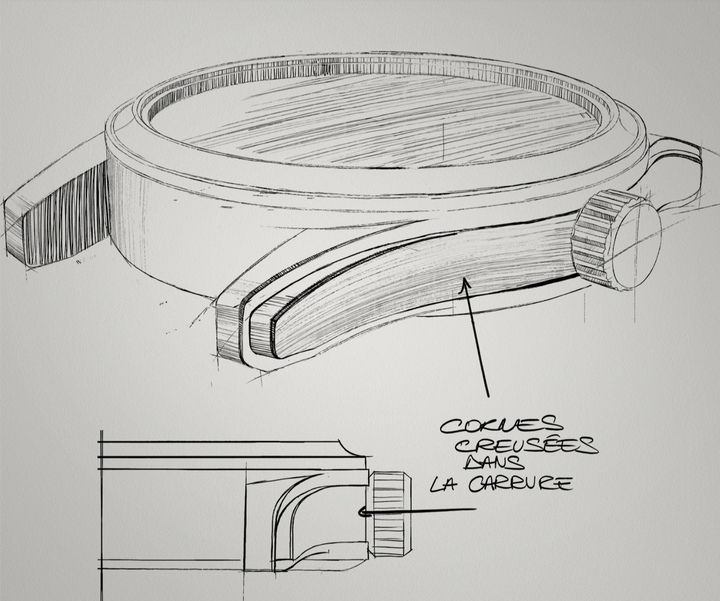
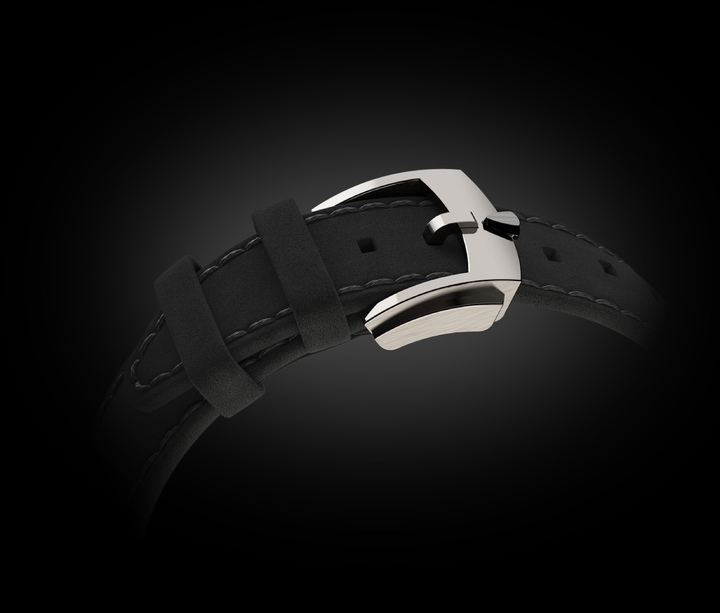
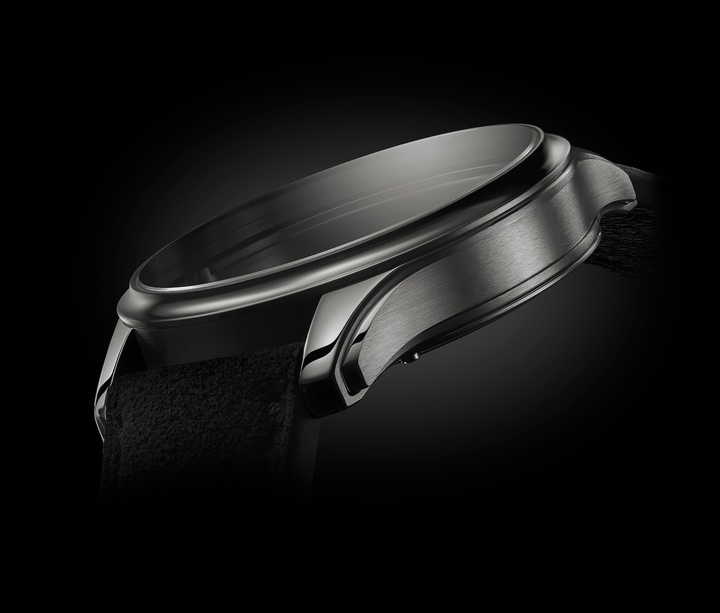
Cavasino is an engineer, not a designer. He does, however, know precisely what he wants his future watch to make him feel: two-part lugs, instantly recognisable hands, an architecture both traditional and contemporary, and a strong emphasis on texture. He therefore turned to an established designer whose experience included Laurent Ferrier, sharing images, intentions and constraints rather than a finished drawing.
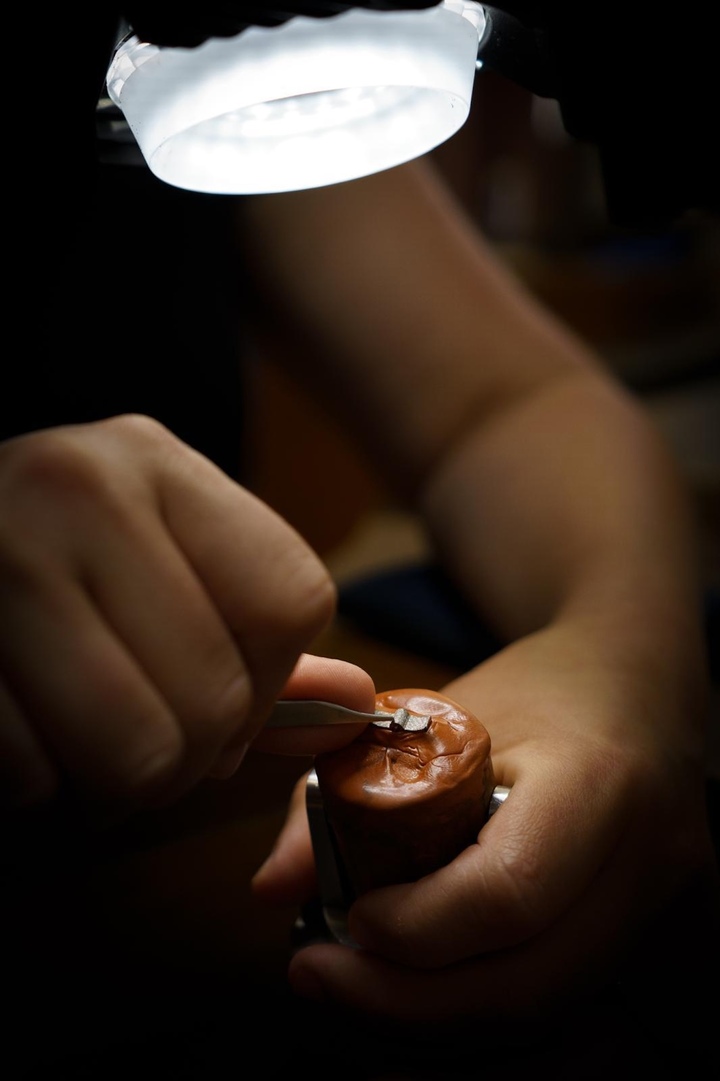
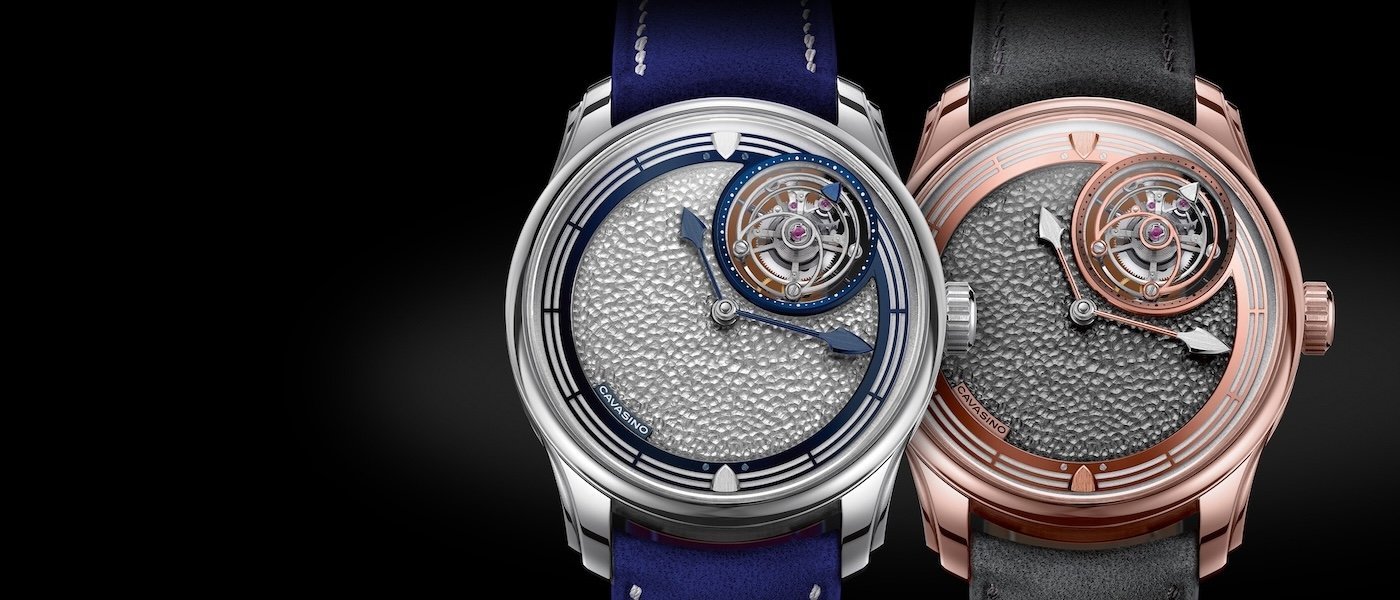
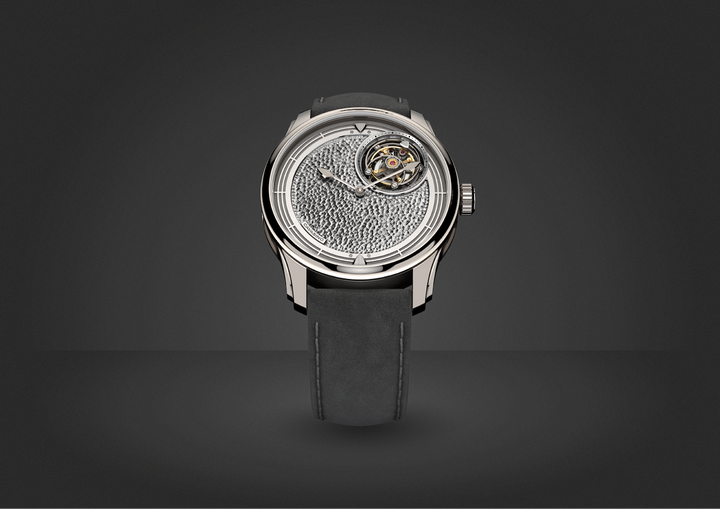
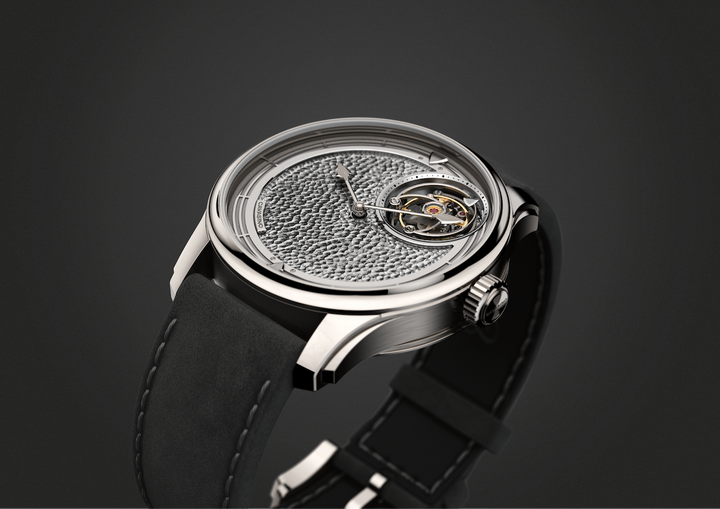
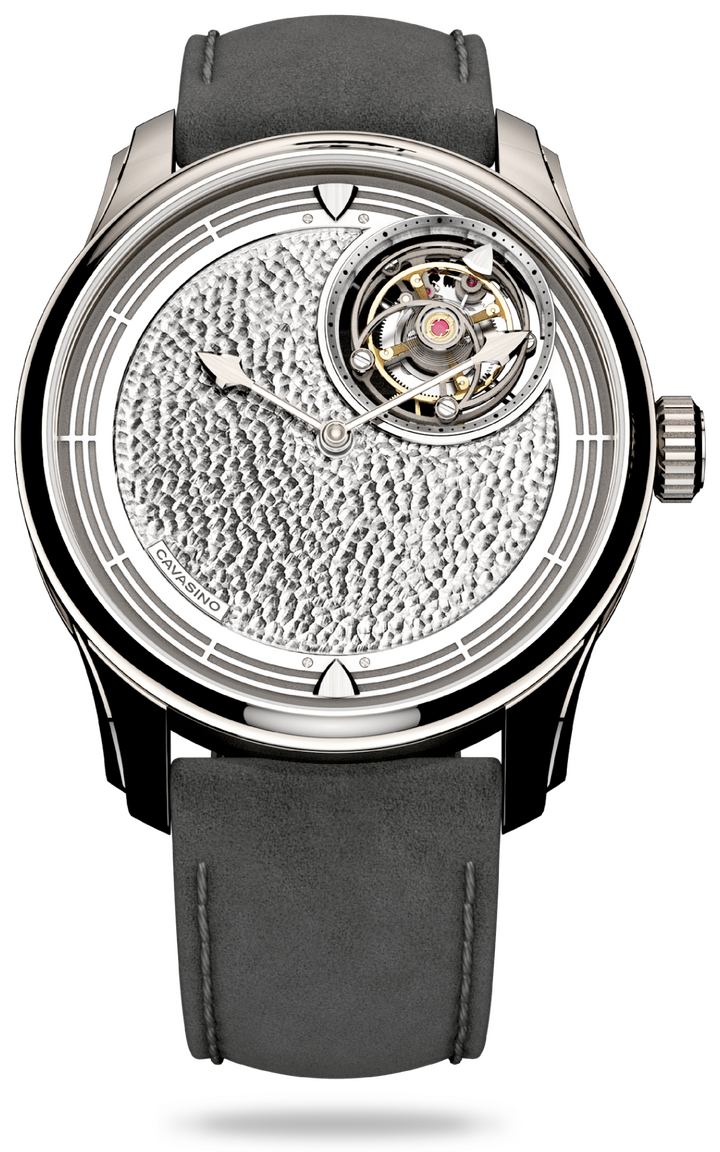
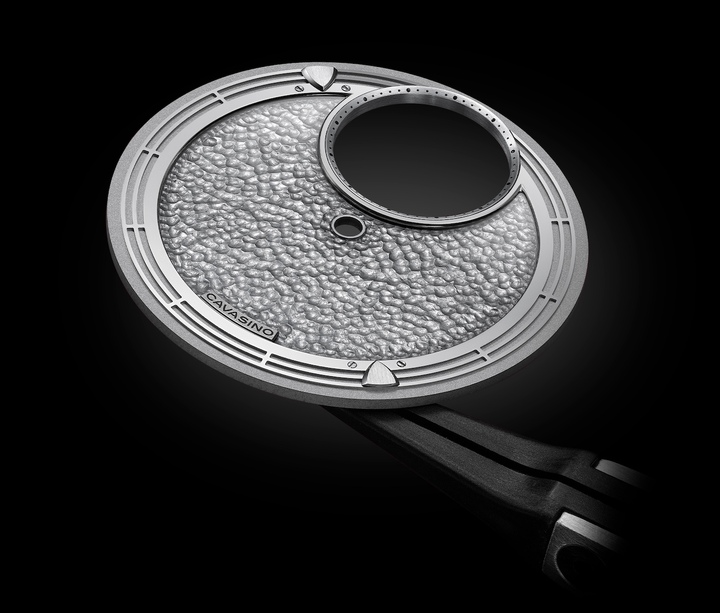
For his first watch, Cavasino set himself an additional challenge: monochrome. The aim was to create contrast without colour, relying entirely on surface treatments. The central section of the dial thus features a contemporary hammered finish beneath translucent enamel. Around it, the railway minute track adopts a much more classical aesthetic. The same principle applies to the case middle: some lines evoke traditional watchmaking, while other volumes are deliberately more contemporary.
His first watch, the Tourbillon Inaugural DCR-01, measures 38 mm in diameter. Its thickness remains around 10 mm, despite the presence of a tourbillon and a slightly domed crystal. This challenge of proportions was integral to the project: Cavasino wanted a complicated watch that remained easy to wear.
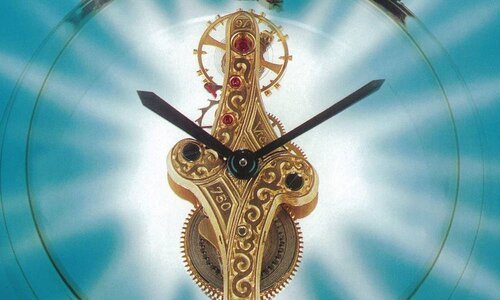
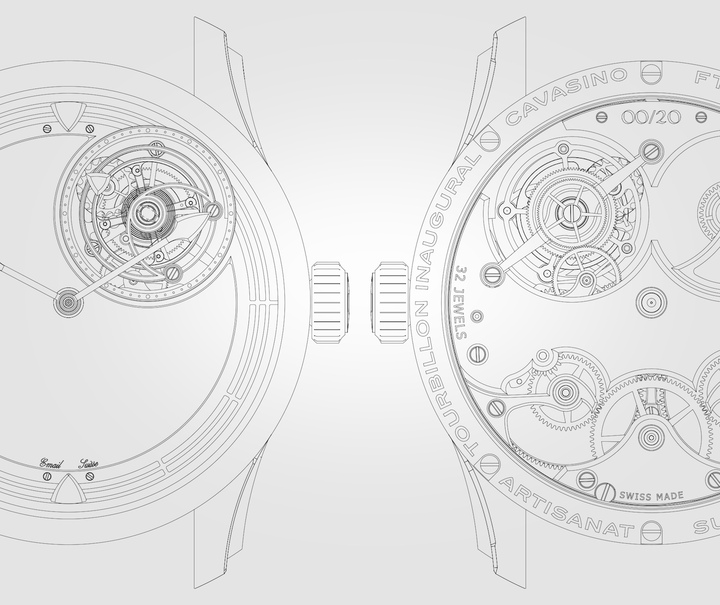
Its most immediately distinctive visual feature is undoubtedly the tourbillon at 1 o’clock. Why this unusual position? Because the face of the watch is the consequence of an architecture hidden beneath it.
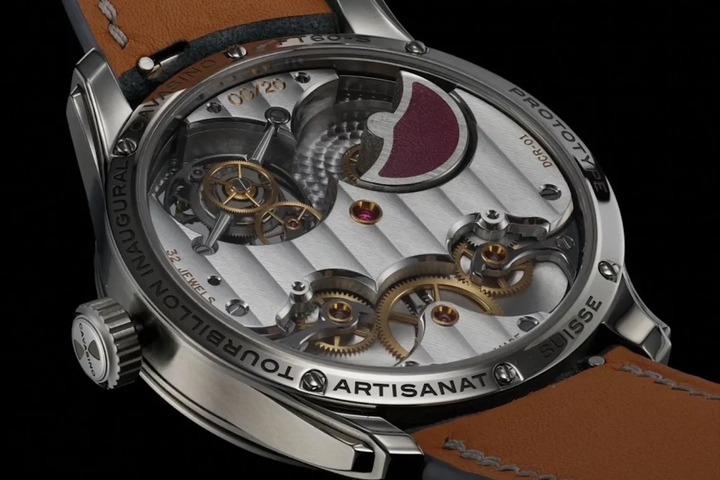
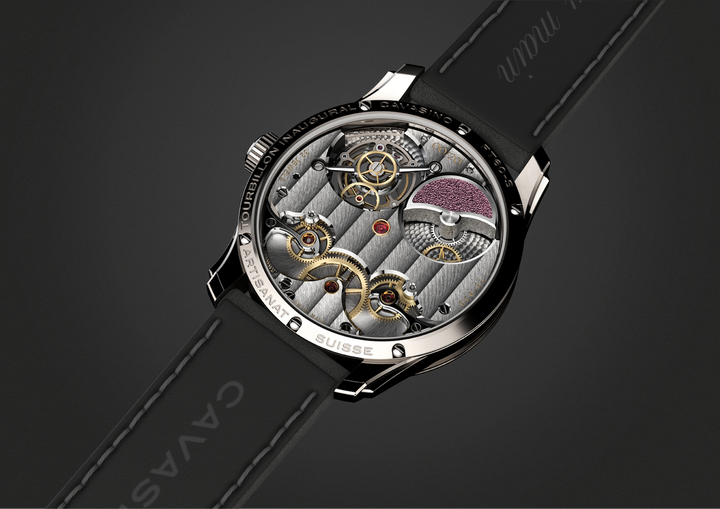
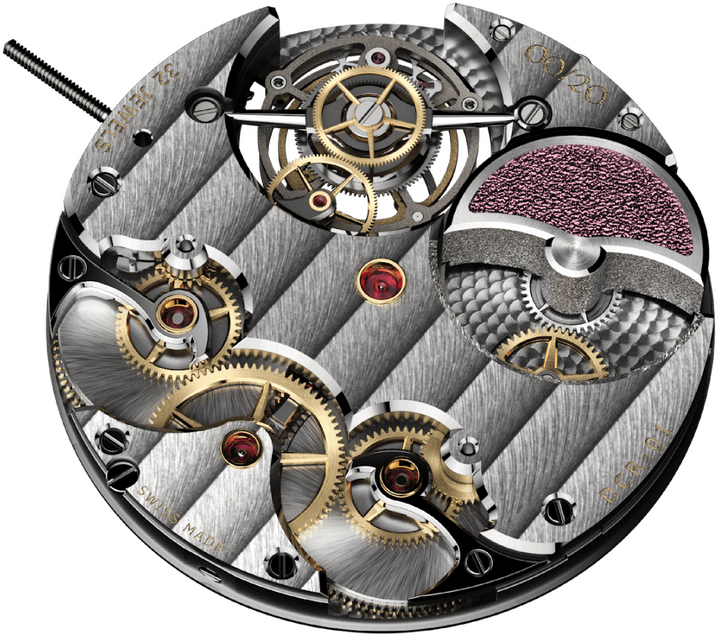
Cavasino readily acknowledges a fascination with symmetry. Viewed from the back, the movement is arranged along rigorously defined vertical and horizontal axes. The micro-rotor, tourbillon, barrels and principal components form a balanced construction around a large central chaton. Paradoxically, the dial’s asymmetry becomes the visible expression of mechanical symmetry. One of the brand’s most interesting signatures is this way of allowing the movement’s construction to determine the watch’s aesthetic identity.
The finishing, meanwhile, speaks a classical language: broad Côtes de Genève, generous bevelling, perlage, visible chatons and surfaces polished or engraved by hand. The micro-rotor also contributes to this pursuit of balance.
Engineering in the service of craftsmanship
For his first creation, Cavasino chose not to develop an entirely new movement from scratch. The hours-and-minutes base comes from Télôs, but it has been extensively adapted: the seconds indication was removed, wheels were added, a new tourbillon and escapement were developed, new mainsprings were introduced, and the architecture underwent specific revisions.
The tourbillon itself was designed to follow Cavasino’s guiding principle of symmetry. Its four main axes form a perfect square, and the cage was deliberately given generous dimensions to make its presence fully felt on the dial.
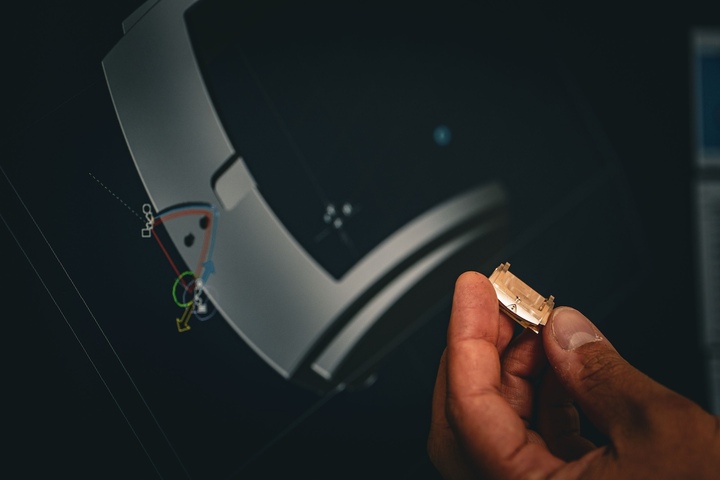
Another priority was the movement’s visual purity. The large main bridges conceal some of the smaller bridges and screws required by its construction. Rather than multiplying visible components to demonstrate complexity, the intention is to conceal it, giving the broad decorated surfaces room to breathe. The approach neatly encapsulates the engineer and his career: engineering should be present everywhere, but it need not draw attention to itself.
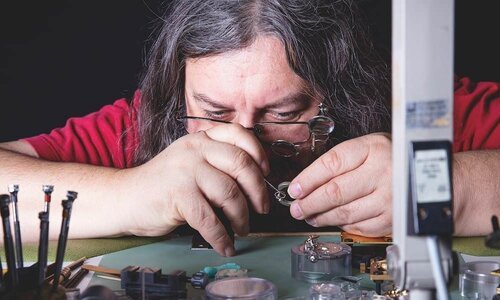
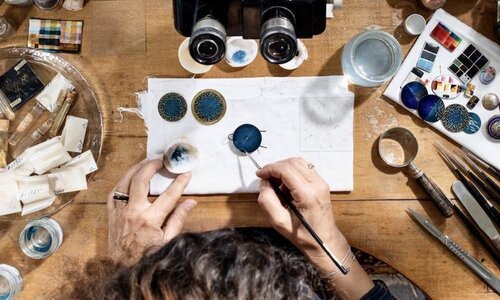
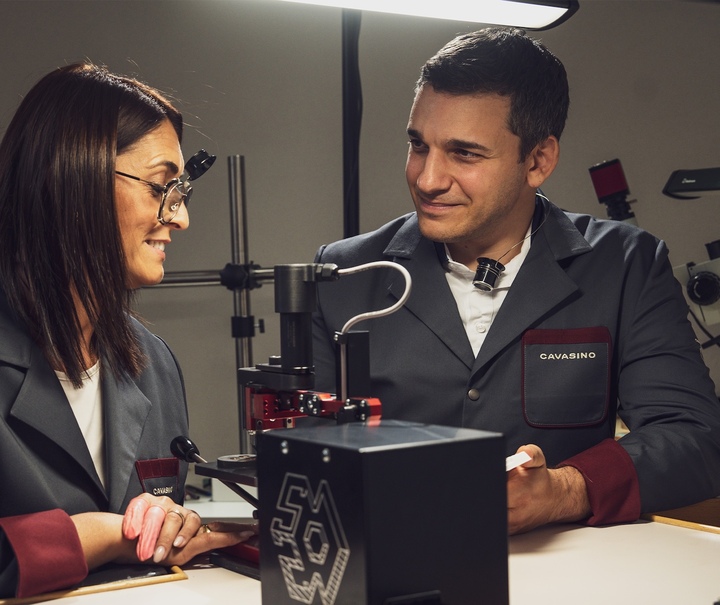
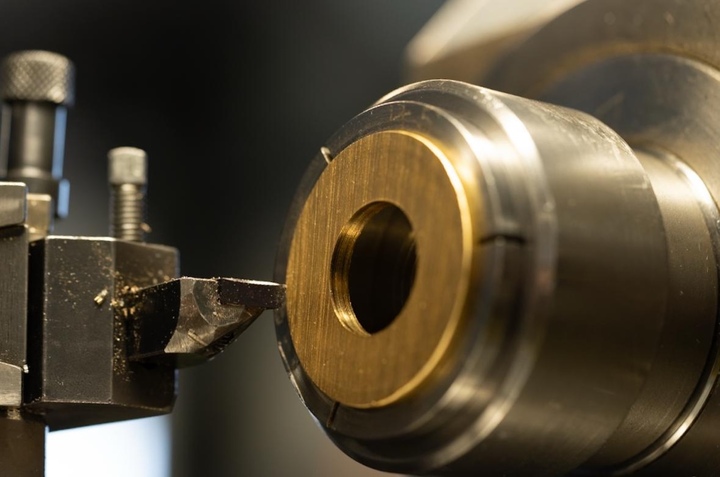
Cavasino is not a trained watchmaker, and he makes no attempt to suggest otherwise. His brand relies on a network of specialists, each entrusted with the operations that match their expertise. Dials, hammering, enamelling, chasing, cases, machining and decoration: the watch becomes a collective project for which he oversees the overall conception, aesthetic coherence, production engineering and execution.
This is perhaps where his background as a project manager comes fully into its own. Among emerging independents, a question regularly arises: how much must you make yourself to be considered legitimate? Cavasino offers a different answer. For him, independence is less about vertical integration than the freedom to choose his partners, production volumes, methods and timetable. His core skill lies in bringing these different crafts together without diluting the product’s identity.
A successful first subscription
The first collection is deliberately very limited and comes in several materials, from titanium and steel to rose gold and platinum.
An initial titanium series was offered by subscription before a physical prototype even existed. Twenty collectors agreed to buy the watch on the strength of drawings and renderings alone! Cavasino continues to favour direct sales. Most of his first customers are in the United States, followed by Asia, Europe and the Middle East. Meeting the collector is part of the experience. At this stage, he explains, volumes remain small enough to preserve that relationship without an intermediary.
His pricing follows the same logic. Cavasino says he does not want to apply the mark-ups traditionally associated with luxury to precious metals: according to him, the premium essentially reflects the additional material cost he bears himself.
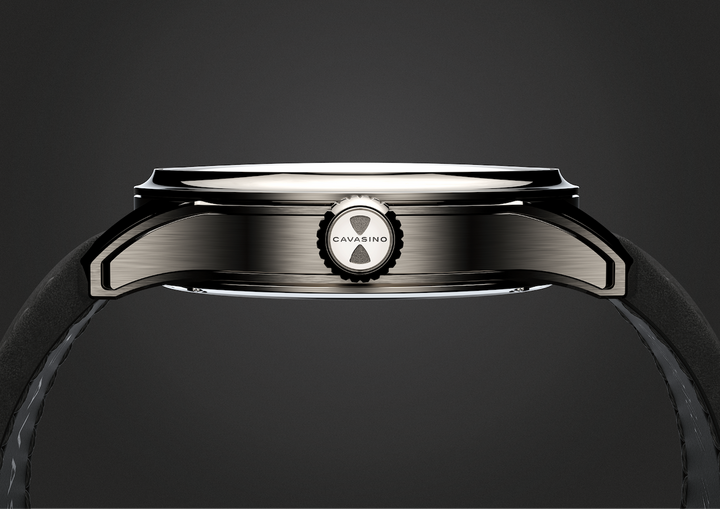
Beyond the success of a first model, building a brand demands continuity and a strong identity. Cavasino appears to have understood this from the outset, establishing several signatures: the double lugs, the tension between mechanical symmetry and dial asymmetry, and the contrast between traditional decorative techniques and more contemporary materials.
What will endure, he promises, is the ambition to construct movements around strong architectural principles, with small production volumes and a level of finishing that gradually establishes Cavasino within independent artisanal haute horlogerie.
It is too early to say what place the brand will occupy in a landscape with an ever-growing number of new independents. But Didier Cavasino has already undergone his own transformation: from engineer to artisan.