
 Español
 Français
 Pусский
 繁體中文
繁體中文 简体中文
简体中文 Select another language

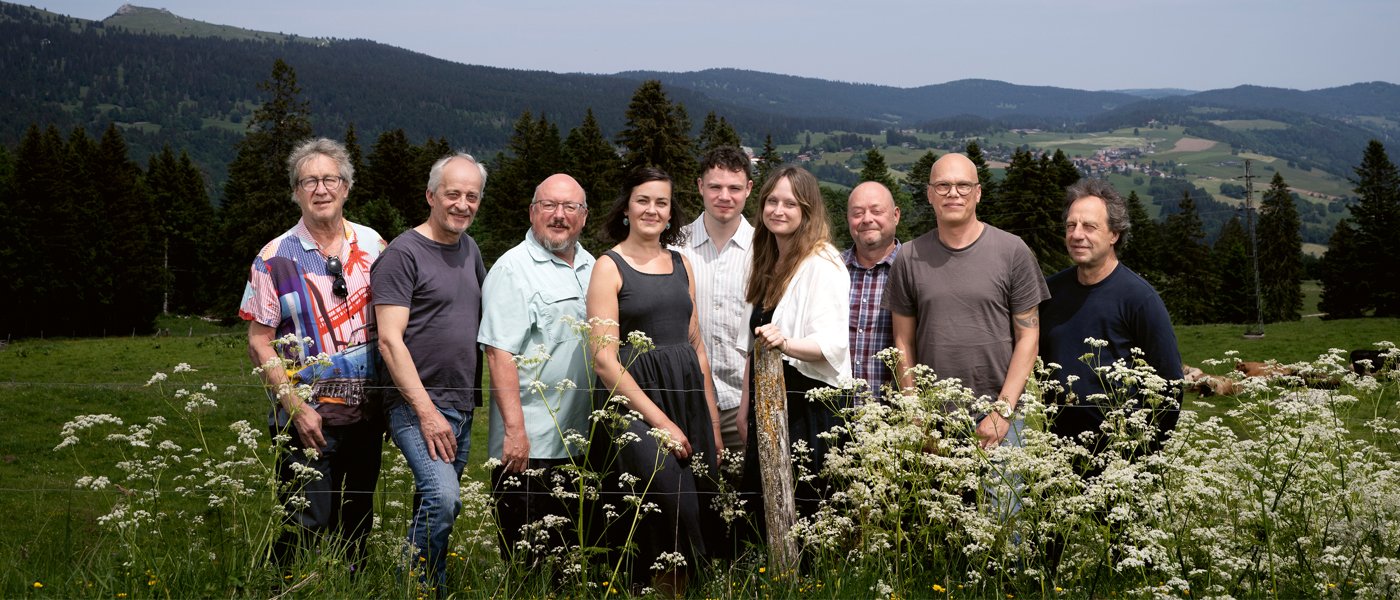
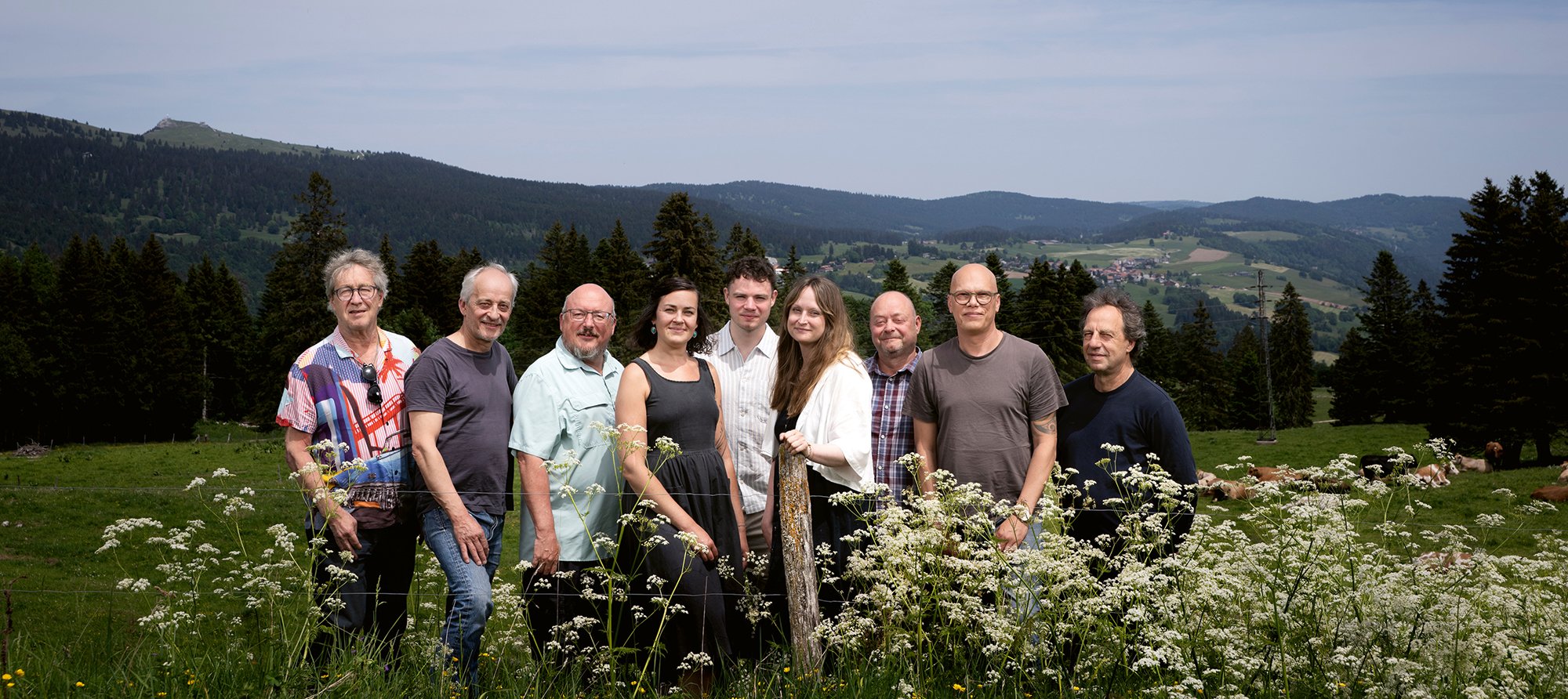
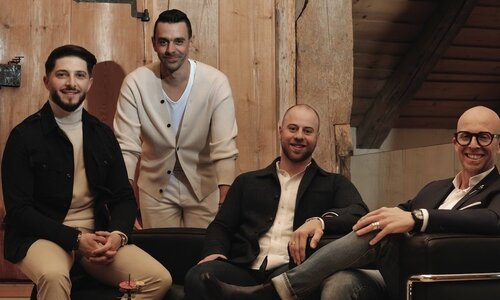
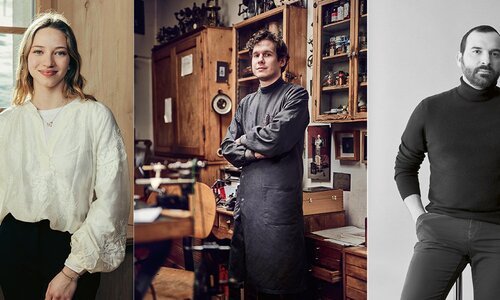
oining us for this fascinating discussion were Benoît Augsburger, automaton maker and instructor at Mec-Art; Jean-Michel Bolens, musician; Nicolas Court, watchmaker, automaton maker and instructor at Mec-Art; Diane Esselborn, curator and director of MUMAPS; Pierre Fellay, director of Mec-Art; Denis Flageollet, co-founder of De Bethune; Vianney Halter, watchmaker; Victoire Halter, jeweller and instructor at Mec-Art; Sylvain Pinaud, watchmaker.
THE FUTURE OF ART MECHANICS
Europa Star: We’d like to begin not by reflecting on the past — we’ll come back to that, as well as the present! — but with a question about the future of art mechanics, for the youngest among you, Benoît Augsburger, who works alongside his uncle, the renowned automaton maker François Junod who unfortunately couldn’t be with us today. Benoît, how do you see your future and the future of art mechanics?
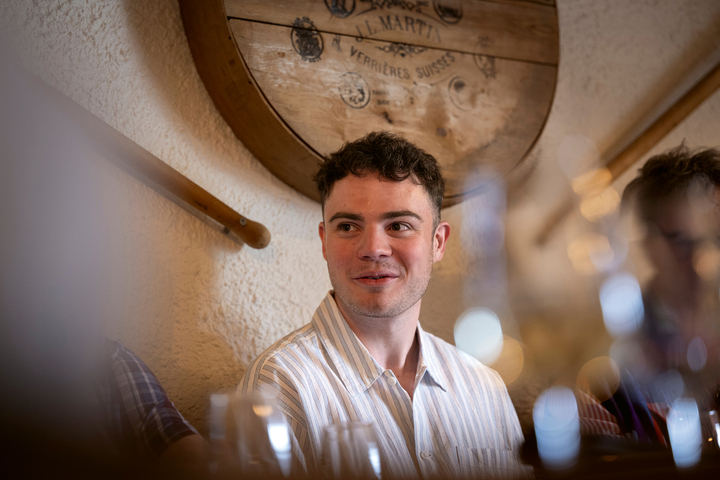
Benoît Augsburger: My future will always be in mechanics, at least I hope so, specifically art mechanics and automata. Of course you never know what tomorrow may bring, but there is a real sense of excitement around art mechanics right now. We’re on the right track and I don’t see that changing. Working at François Junod’s, I see the number of projects coming into the workshop. So many that we’ve gone from five to ten people in five years, including a lot of young people, which is cool.
Why is there such a buzz around automata? What, if anything, has changed?
Benoît Augsburger: I think recent collaborations with famous watch and jewellery brands have been an opportunity for us to go further in what we do and, more to the point, have put us in the public eye for the first time. More broadly, I’d say there is genuine interest in these ultra-luxury products. Collectors are often drawn to the fact that they are literally one of a kind.
Pieces such as La Fontaine aux Oiseaux, with Van Cleef & Arpels, or La Quête du Temps, with Vacheron Constantin… but these are unique objets d’art that took five and seven years respectively to complete. What about the rest, the more “affordable” pieces?
Nicolas Court: I agree with Benoît. These objets d’art train the spotlight on art mechanics’ creative possibilities. If you’re wealthy, then you can own jewellery, luxury cars, luxury watches, but there are other, highly collectible objects such as automata whose value lies also with the amount of work and human intelligence that goes into them, and the emotions they convey.
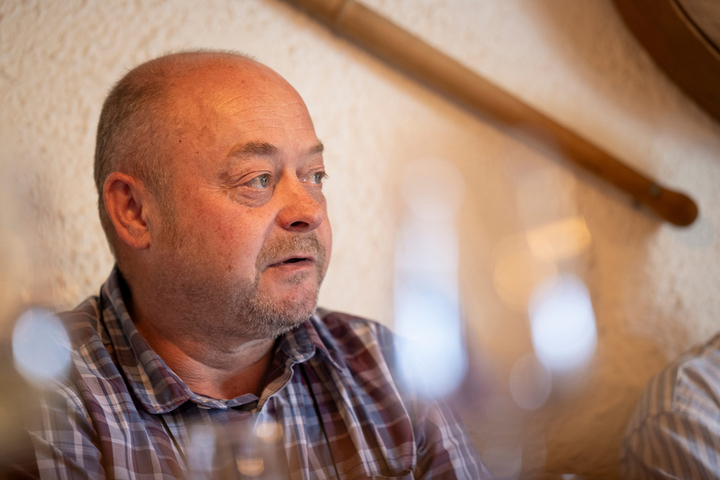
Virtually everything we make in Switzerland today is a luxury product, which is a terrible shame considering that we used to produce so many different things. Incredible machinery, bikes, there were no limits. The cost of living, rents, wage costs, everything is so high now that it’s no longer feasible to be making, I don’t know, little tinplate metallophone players. We used to make these really great things that everyone could afford.
Denis Flageollet, this must sound familiar. You took over Reuge, Sainte-Croix’s last surviving music-box maker, when it was in decline.
Denis Flageollet: When I arrived, Reuge was still making inexpensive music boxes with raised cylinders, which are of mediocre quality compared with pinned cylinders. They were losing between 10 and 20 francs on every music box and producing 5,000 to 6,000 a year. The company was haemorrhaging money. I immediately put a stop to that, firstly for reasons of quality. We took the decision to only use the higher quality pinned cylinders, and to increase prices sufficiently to break even. We’ve gone from a movement that cost us 60 francs to one at 100 francs. We’re making 3,000 to 4,000 a year, and preserving the machines, skills and knowledge for what we call la petite musique [smaller musical mechanisms].
Then you still have to make a music box in Switzerland from good Swiss wood, which adds between 200 and 300 francs. This brings us to between 300 and 400 francs, which is then multiplied by at least four in a souvenir shop.
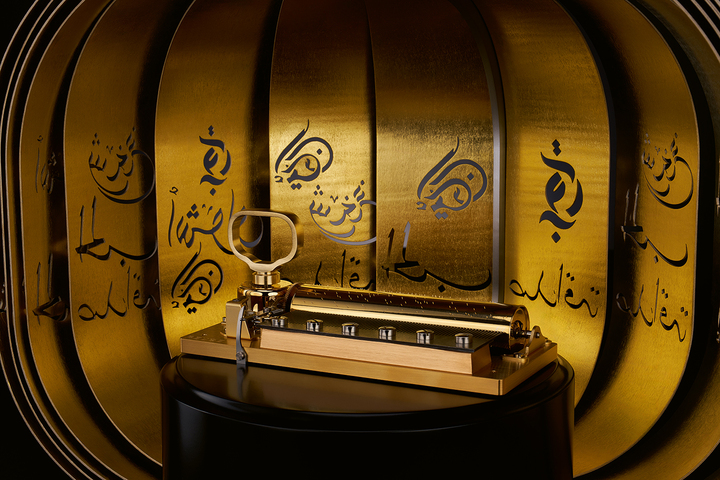
It’s much easier to sell a music box at 30,000 francs than one at 1,500 or 2,000 francs. The only way to keep an affordable range is through increased industrialisation. Like I said, we keep the machines running as best we can so that we don’t lose the manufacturing processes or the know-how, thanks to a few of the old staff and now some younger ones, too. We try to teach them the skills but we also have to let them work on the much higher-end pieces. No-one could work all day, every day on entry-level products. As it stands, we’re keeping the more affordable line going but it’s totally artificial.
Is there any way you could adapt this more affordable range?
Denis Flageollet: We could imagine some kind of evolution for the smaller animated music boxes, but it’s hard. I don’t know what will happen in the future but we’re working on it, moving forwards. We’re lucky enough to have a complete production tool. It’s not so much the melodies we should be looking at as what happens while they play. For example, for several recent pieces we’ve combined music with moving elements such as branches, parts that open and close, or figures that accompany the melody as it plays.
We’ve started to incorporate light, too. We developed a system for François Schuitens’ Captain Nemo musical that uses a dynamo, the kind you put on a bike. It’s entirely mechanical, there are no batteries or electronics. Today’s LEDs can produce a lot of light with very little energy. I think these are the directions we should be looking at for the future: enrich the experience while staying true to the fundamental principles of mechanical music.
Jean-Michel Bolens, you’re a musician and a specialist in arrangements for music boxes. How do you see mechanical music evolving? What about its limits?
Jean-Michel Bolens: What does the future have in store? I don’t have the answer. Of course there will be changes but no-one can say what they will be. I’m probably the oldest person around this table. I’m fairly old-school in my approach, I like traditional structures. This heritage means a lot to me.
Having said that, I adapt to the project, whether it’s a small project, a project for a watch or something as vast as La Fontaine aux Oiseaux for Van Cleef & Arpels. As for mechanical music’s limits, they depend on the technical environment you’re working with. You begin with a score which then has to be adapted and interpreted according to the object’s mechanical constraints, the materials and their resonance. The only instruments in the music-box orchestra are the cylinders, whistles, hammers and bellows that produce sound.
Denis Flageollet: The idea isn’t necessarily to move towards jewellery pieces but to also propose more “basic” though no less innovative designs, with animations, music or light, in the 1,500 to 3,000 franc bracket. Under 10,000 francs at any rate. I think we can appeal to people who are into interior design and would be willing to pay the price of a lamp for a piece of original art mechanics that would bring them just as much — probably more — joy. We have a lot to do in terms of communication.
Vianney Halter: There was a time when people saw music boxes as belonging to the past and forgot how contemporary they can be. A music box will always fire the imagination because it’s something only a human can make. It’s an expression of what it is to be human. It’s not AI and it’s not IKEA. I think new generations are becoming aware of the importance of this human factor.
That said, no way can we make stuff at 20 or 100 francs. It’s impossible. But we can prevent know-how from disappearing and we can preserve the human element, the dream, the history and the heritage, in a future-facing way. I think everyone here in Sainte-Croix knows the value of our unique industrial or artistic past, and I think we’re capable of going beyond that and preserving the human quality, the soul there was even in industrial mechanisms, in Bolex cameras or Hermès typewriters. All those precision mechanisms that were pushed out by electronics.
Denis Flageollet: Mechanical watchmaking went through the same critical period and 50 years later we realise it came back from the brink thanks to people who showed there was a human element in their product. I think art mechanics is in its infancy. So far it’s kept going and has developed largely out of passion. No-one knows what the future holds but we must never allow these skills to be lost. Watchmaking and art mechanics are like twins. It’s possible that art mechanics, in its own way, is beginning to enjoy the same contemporary success as mechanical watchmaking.
Let’s open the field a little. Victoire Halter, you’re a jeweller and you also teach at Mec-Art. What can the jewellery arts contribute to art mechanics and, conversely, what can they take away?
Victoire Halter: Historically, there have always been close ties between the two. In the past, mechanisms were often concealed inside objects whose exteriors were decorated to give them visual interest and beauty, while shrouding the mechanism in mystery. That’s changing now. There’s a greater tendency to put mechanisms on display but we also have to deal with more complex constraints. Contemporary jewellery must have a very lightweight structure that’s designed to show off the gemstones. As soon as you add movement, you have to consider weight, mobility, height and volume. Both disciplines face the same challenges.
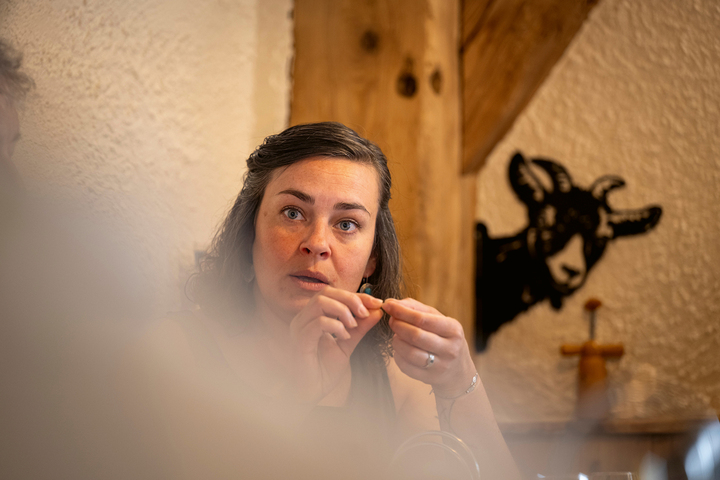
Don’t forget that jewellery went through a dry spell of its own before experiencing a resurgence of interest. Today, we’re witnessing a rediscovery of these skills and specialisations at the same time as people are rediscovering art mechanics. The two are progressing side by side. Coming back to what we were saying earlier, traditional jewellers considered that, for a piece to be of value, it could only be made with precious stones but attitudes are changing, which ties in with current thinking. Value isn’t exclusively material. Value also lies with time spent, the idea, the craftsmanship and creativity.
Denis Flageollet: The problem isn’t so much the cost of materials. The main costs are structural. Switzerland is an expensive country. Workshops carry significant costs. Labour costs are high. Training has a cost. But if we want to preserve these skills, we have to accept the situation as it is.
This explains why we’ll probably never be able to sell art mechanics for a few dozen francs… which doesn’t mean these objects don’t have a future. On the contrary. The more digital our society becomes, the more people will value objects that carry a human story.
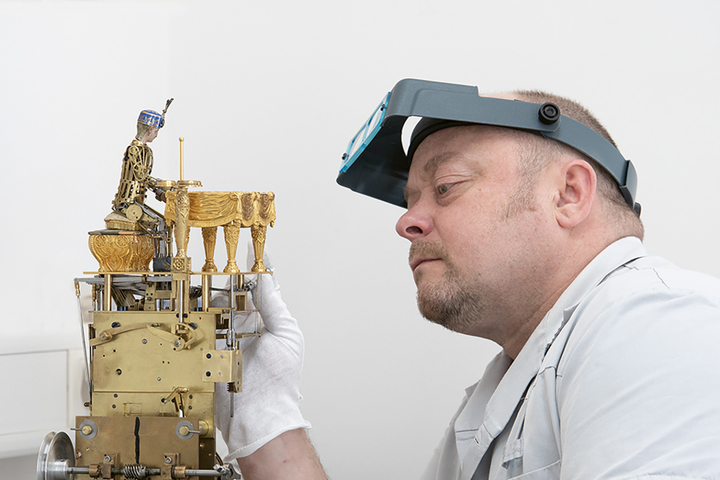
Nicolas Court: Exactly the same is true for restoration. Our prices may seem high but we really have no choice. The only alternative would be mechanical philanthropy...
A LONG HISTORY OF TRANSMISSION
We have with us three watchmakers from different parts of France who have put down roots here in Sainte-Croix and are now an integral part of its identity. Sylvain Pinaud, what made you set up in business here and, incidentally, why call your first watch Origine?
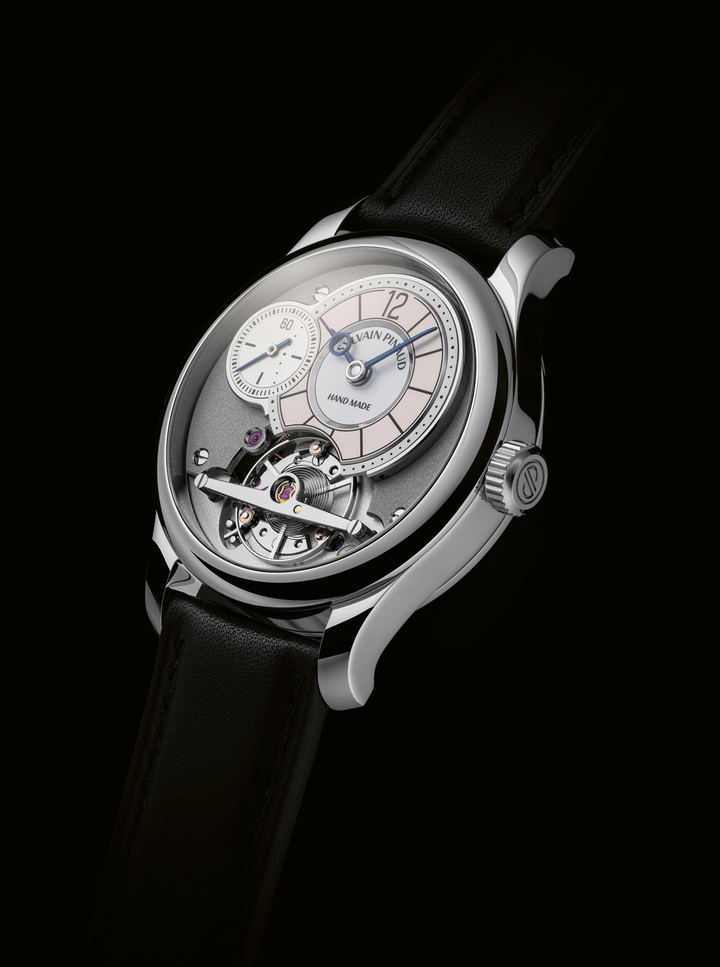
Sylvain Pinaud: The Origine name was intended as a nod towards everything I’d learned. When I first came to Sainte-Croix, more than 20 years ago, it was a revelation. I’m originally from Grenoble and had lived in other places, including La Chaux-de-Fonds and Geneva. When I arrived here and met all these people… I immediately felt a creative energy and freedom.
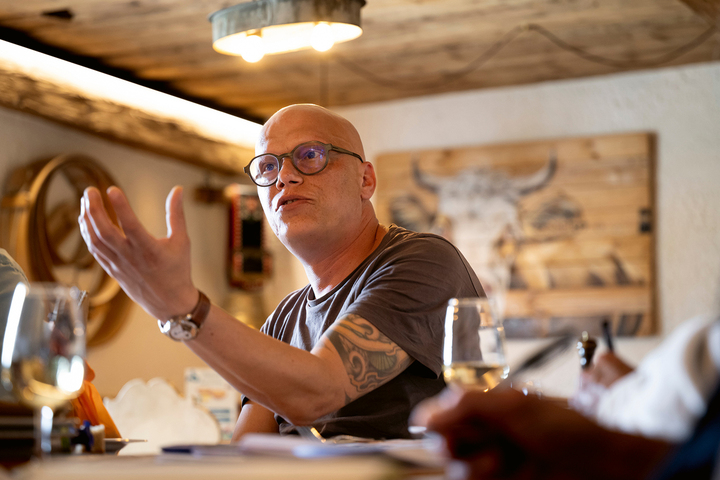
People would drop by the workshop: “Come and see this”, “Come and have a look at what I’m doing.” The mindset was like nothing I’d encountered before. That’s when I knew I would stay, that if I were going to do something, I would do it here. Because of that very particular Sainte-Croix mentality. Plus, it’s not just about the watch. There’s an entire industrial legacy here and highly specialised skills. How many small towns have made this many iconic industrial products, record players, cameras, typewriters? Very few. Straight away I was captivated by these improbable mechanisms that are a source of inspiration.
Denis Flageollet: I felt exactly the same way when I first came here. Take apart a gramophone motor or a Bolex camera mechanism or an old record player, and you discover the most extraordinary mechanical intelligence. Everything was calculated. Everything was dimensioned. Everything was designed to be functional, reliable and industrially made. If you want to recreate comparable mechanisms today, inevitably you end up with the same reasoning, the same calculations, the same principles. It’s an open book. The problem is, there is practically no art mechanics treatise.
None of this has ever been formalised but we are working on it. We learn through observation. The people who made these objects were far from stupid. They made them to do their job and to be manufactured by the thousands. Once you’ve studied these mechanisms up-close, there’s no going back.
Victoire Halter: A kind of magic formed in Sainte-Croix. People imagined Sainte-Croix as some sort of industrial wasteland when in reality it was fertile ground for the genius, passion and madness of the mechanics and watchmakers who arrived here, where they found the raw material to express their creativity to the full.
Vianney Halter: Nothing ever completely disappears, here. In a lot of places, when an industrial activity ends, the buildings are demolished and you move on to something else. That never happened in Sainte-Croix. We’re a little out of the way. The workshops stayed. The machines stayed. The buildings stayed. Most of all, the people stayed. There’s something here that is typical of mountain communities. A form of solidarity.
When you live in a place like this, you know you need other people. You might not get along with everyone every day, you pull together all the same, and I think that spirit continues. This solidarity didn’t disappear along with the mechanical industry. It’s still here.
One place in particular bears witness to this continuity and that is the Musée de la Mécanique d’Art et du Patrimoine, MUMAPS. Diane Esselborn, you are the curator of a museum that you describe as pretty much unique in Switzerland “because it doesn’t just conserve a heritage. It contributes directly to its transmission.”
Diane Esselborn: Not only that, it has done for many years. There was a Musée des Arts et des Sciences in Sainte-Croix as early as 1872, which for a small mountain town is quite extraordinary. This was all happening as we were moving from an agricultural society to an industrial society, from the craftsman to the worker. Already, there was a sense that certain knowledge, certain objects, certain techniques had to be saved.
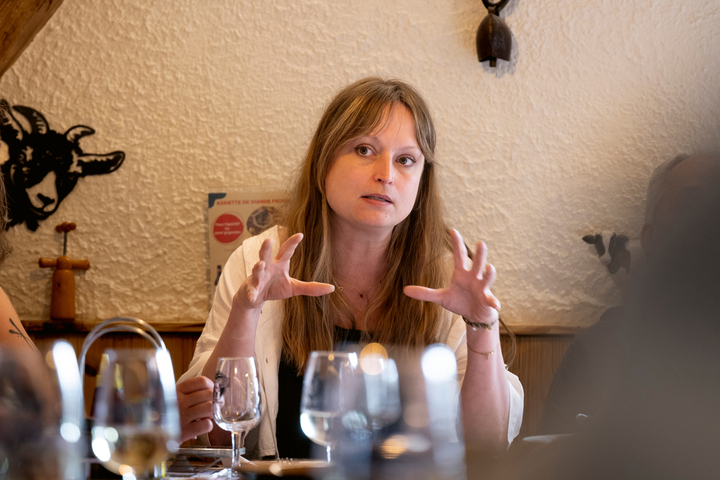
Little by little, the museum became a showcase for local production. Music boxes, mechanical objects, artisanal and industrial products, and later mechanical musical objects from the Baud museum. At that time there was virtually nothing like it anywhere in Switzerland. Visitors came in droves to look at the objects on display, but also listen to explanations by the people who had made or restored them.
The typical scenario for a museum is to conserve an item and not touch it once it has been restored. Not us. If we don’t play the music boxes, the automata, the gramophones, they lose an important part of their raison d’être. Of course, we need skills to make them work, and we’re in the unusual position of being surrounded by artisans who possess those skills. Without these craftsmen and women, it would be almost impossible. [For more about MUMAPS, read our article on page 70]
Some of the artisans who help you conserve this living heritage — one that has to be “played”, set in motion, hence serviced and occasionally repaired — have inherited knowledge and tools that were passed down locally, while others are from a young generation who moved from other places to live and work in Sainte-Croix. This is what happened with THA, Techniques Horlogères Appliquées, which opened in Sainte-Croix in 1989 with, among others, François-Paul Journe, you, Denis, and you, Vianney, and you, Nicolas Court. Without going into the whole story, THA was a driving force in the “restoration”, in every sense, of Sainte-Croix.
Denis Flageollet: There was already a microcosm of people working with their hands. There was an organ builder, there were people working on antiques, there was the clock restorer Dominique Mouret [unfortunately not with us that day], there was Pierre-André Grimm, a watchmaker and specialist in singing birds, and Michel Bertrand, a Parisian who made automata the old way. François Junod learned everything from him, before studying fine arts and opening his own workshop.
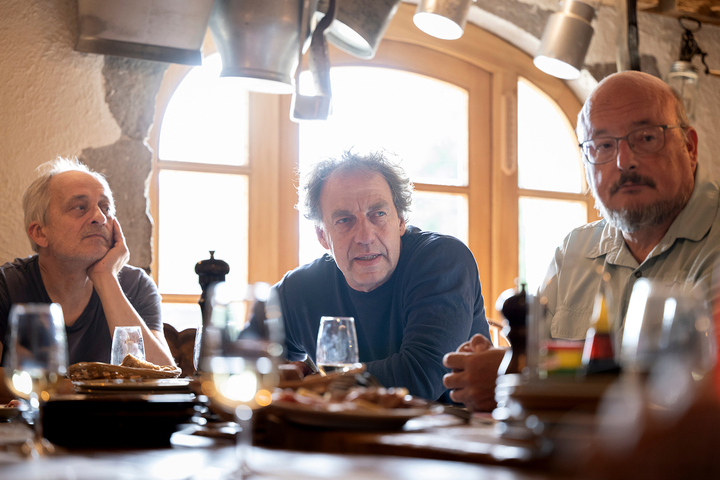
There was this idea to start up watchmaking again. Without going into detail, everything we achieved at THA was thanks to this microcosm. There was this amazing understanding of materials and metals and, on a more mundane level, there were empty buildings. And you could still meet all these people, visit them in their workshop, watch them at their bench. Not forgetting everything that revolved around the Centre International de la Mécanique d’Art, CIMA. People didn’t come to Sainte-Croix simply to work. They discovered an entire world. They became part of a community.
It seems one of these people in particular meant a lot to many of you here: Pierre-André Grimm.
Denis Flageollet: For me, Pierre-André represents something very special. An incredible open mind. When I met him, I met someone with the most extraordinary expertise. His knowledge of singing birds was unsurpassed.
Vianney Halter: And yet he shared everything he knew. He’d explain things, show how they were done. He didn’t hold back and this was exactly the image I had of Switzerland. A willingness to welcome people from different places and share knowledge with them.
Nicolas Court: They say watchmakers take their secrets to the grave but not Pierre-André. The exact opposite. He knew full well that skills had to be passed on. Of course, learning is a slow process. Sometimes he’d tell me, “You know, I’m getting on in years. If you want this to carry on then you have to take time to learn.”
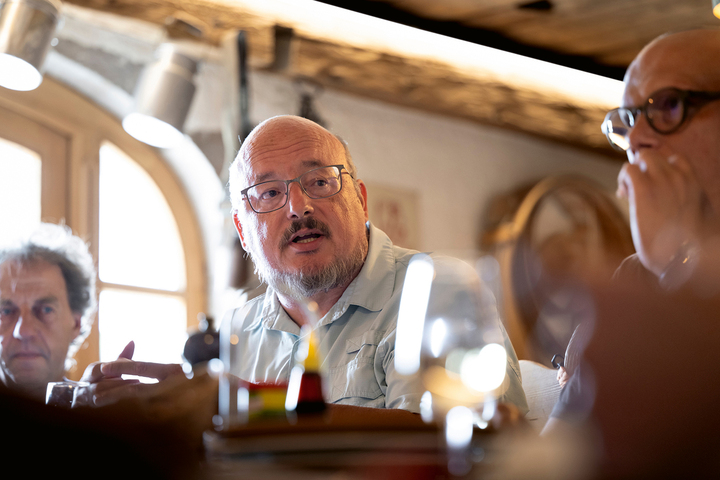
So learning is the key and the reason Mec-Art exists. But does it also owe its existence to the recognition of art mechanics by UNESCO?
Denis Flageollet: The canton of Vaud cultural department were looking for professions that could be put forward as representative of Switzerland’s intangible heritage. Some people from the department came to Sainte-Croix to meet François Junod and talk it through with him.
He suggested art mechanics, which the canton of Vaud then proposed to the Swiss Confederation at the same time as the canton of Neuchâtel was suggesting watchmaking. The people in Bern went through both dossiers and came to the conclusion that the two were very similar, and they were absolutely right. So they decided to put them together. Meanwhile, the French were getting their application ready. In the end, France and Switzerland submitted a joint application. But it originated here, with a reflection on art mechanics. As for training, we’d already started thinking about that, several years earlier. The idea was to set the ball rolling but not feel we had to put everything in place all at once. So knowledge, training and intangible heritage were all things we were thinking about at the same time, progressing side by side.
Diane Esselborn: Also, many artisans were beginning to realise their own value, that they weren’t just watchmakers or mechanics. They possess a huge amount of knowledge, some of which no longer exists anywhere else. Acknowledgement by UNESCO adds an extra layer of responsibility. Becoming part of humanity’s intangible cultural heritage isn’t only about recognition. There is a duty to show that this expertise is alive and passed down to others. Otherwise, sooner or later it will disappear. This can only happen if people actually, physically keep these skills alive. Which is what’s happening today, in Sainte-Croix.
[Read more about the expertise and training at Mec-Art in our presentation and interview with its director, Pierre Fellay, here.]
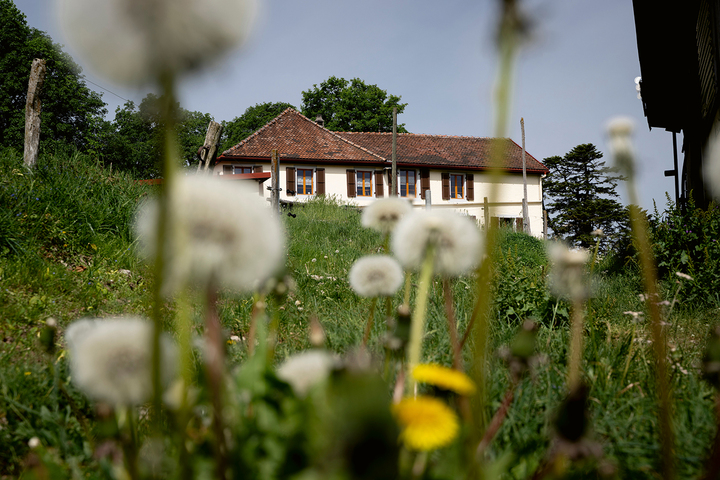
Time has flown by. Without further ado, we get up from our table at Chalet du Mont de Baulmes and head outside for a souvenir photo. Because as Vianney Halter points out, “the cows won’t wait.”