
 Español
 Français
 Pусский
 繁體中文
繁體中文 简体中文
简体中文 Select another language

n one side is the Gemological Institute of America (GIA), founded in 1931, which has become a global authority in gemmology over the course of almost a century. The American institution notably introduced the famous “4Cs” – Color, Clarity, Cut and Carat Weight – and the International Diamond Grading System, established in 1953. GIA has trained more than 200,000 professionals and now teaches at seven campuses across the United States, Europe and Asia.
On the other is the Fondation Haute Horlogerie (FHH), established in 2005 by Audemars Piguet, Girard-Perregaux and the Richemont group to promote watchmaking culture worldwide. Its FHH Academy, launched in 2014, has already trained more than 50,000 people and certified over 18,000 candidates in some twenty countries.
The two institutions have striking similarities. Both are non-profit organisations. Both position themselves as independent authorities in their respective fields. And both regard the sharing of knowledge as essential to building trust in their industries.

Their partnership also comes at a time when their respective worlds may never have been closer. Watches and jewellery share display windows, distribution networks and some of their customers. Jewellery watches bring these worlds closer still. Yet their educational pathways have long remained largely separate.
The agreement between GIA and the FHH aims to bridge that gap. From early 2027, GIA will offer its students FHH Academy programmes across its campus network and online, beginning with “Watch Advisor”, the first level of FHH certification. Online sessions open to individual enrolment and led by a dedicated instructor are also planned.
For the FHH, the significance extends far beyond adding a few more classrooms. The aim is to reach further beyond the traditional boundaries of the watch industry and connect with students, career changers, jewellery professionals and enthusiasts, particularly in the United States, where there is considerable potential for growth.
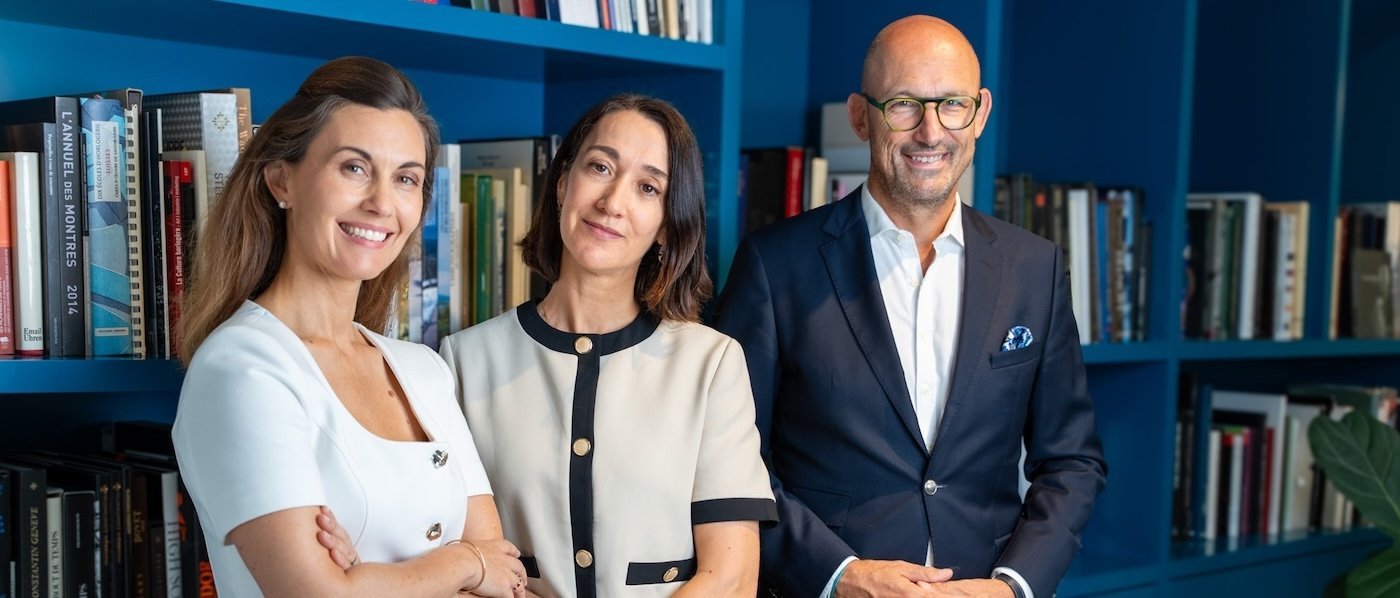
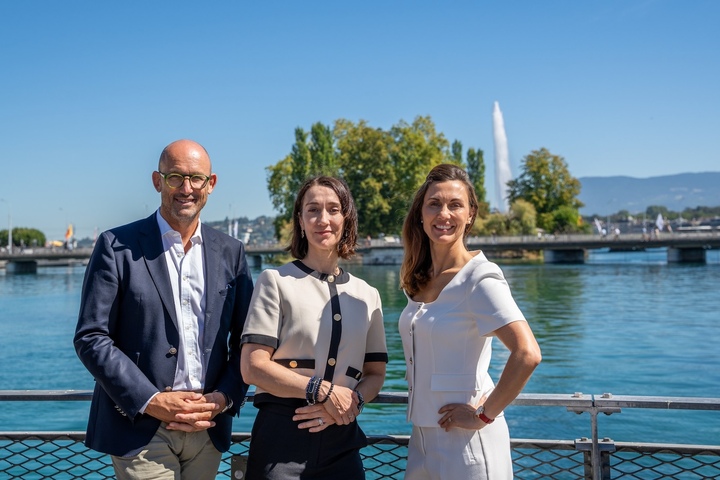
For GIA, the aim is to enrich the education of the next generation of gemmology and jewellery professionals with a closely related discipline. We spoke to representatives of both institutions.
Europa Star: GIA is now known around the world. But let us return to its origins. What were the circumstances of its founding in 1931?
Johanna Levy: It is a story we always enjoy telling because it helps explain our mission. When Robert M. Shipley founded GIA in 1931, he began with a fundamental observation: when customers walk into a jeweller’s, they need to be able to trust the authenticity and quality of what they are buying. And the jeweller must be able to build and safeguard that trust.
At the time, many retail professionals in the United States had no formal scientific training in the stones they sold. Robert Shipley therefore set out to professionalise the sector through education. He did so in quite an innovative way, notably through a correspondence school. From the outset, the idea was to make knowledge accessible beyond a physical location.
Almost a century later, our mission remains fundamentally the same: to build trust through education and science. The institution’s continuity is remarkable, too. In 95 years, GIA has had very few presidents. That speaks to great stability and a sustained focus on this mission.
In the meantime, GIA has become much more than a correspondence school…
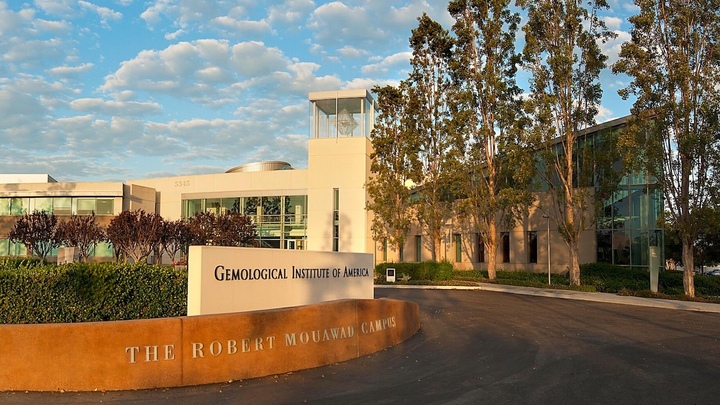
Johanna Levy: Of course. We now have seven campuses across the United States, Europe and Asia, and we continue to invest in our physical presence. For example, we have opened a new campus in Taipei and are also expanding our facilities in London and New York.
Our teaching formats have also become much more varied. We offer comprehensive programmes, such as the Graduate Gemologist, alongside short modules that can be completed on a smartphone and are aimed particularly at retail professionals.
Our students come from very different backgrounds: young adults, career changers and working professionals looking to develop their skills. We also have an exceptionally strong international alumni community that remains closely connected to the institution and the industry.

What place has watchmaking held in this ecosystem until now?
Johanna Levy: GIA was founded as a school of gemmology. Over time, we developed other courses in response to the industry’s needs, in areas such as design and diamond grading. But if you look at a jewellery store, the worlds of gems, jewellery and timepieces are naturally connected. We therefore seek to develop our teaching as the industry evolves.
This collaboration is nevertheless new territory for us: it will be the first time we offer watchmaking courses on campus. The FHH Academy’s recognised excellence in this field was a decisive factor. GIA has developed standards in gemmology and diamond grading. In entering the world of watches, it was therefore important to work with an institution with similarly established educational credentials.
The FHH Academy was founded in 2014. What need was it intended to address?
Aurélie Streit: Initially, our main aim was to support professionals, particularly sales staff in boutiques around the world. We saw a gap between the wealth of skills, expertise and knowledge within the manufactures and what ultimately reached customers in stores. We therefore created an academy that could provide a broad grounding in watchmaking from a neutral, industry-wide perspective.
The intention was certainly not to replace the brands’ own training. They obviously know their own history and products better than anyone. Our role is complementary: to provide a shared foundation of knowledge about the industry, its history, its professions, its techniques and its expertise. We wanted professionals to become true ambassadors for this world.
What do you hope to achieve through this new partnership with GIA?
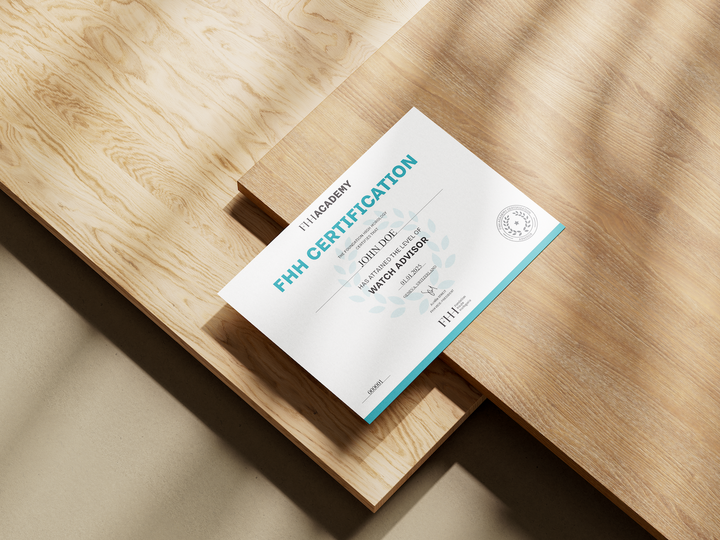
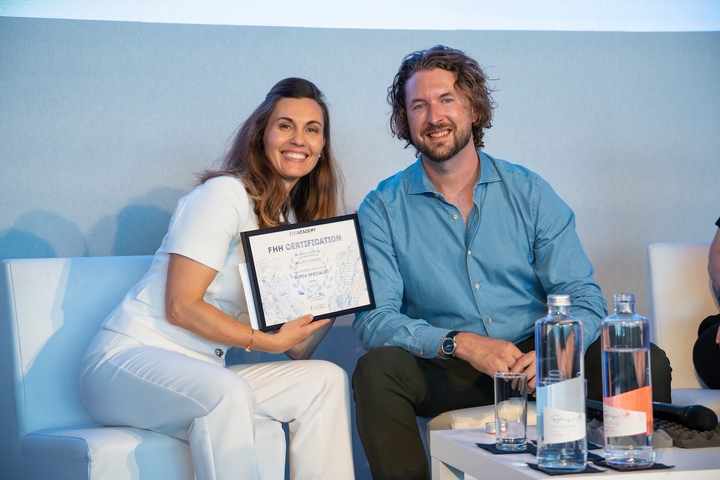
Aurélie Streit: We have gradually become a recognised authority in watchmaking education for people in non-technical roles. Our certification is now structured around three levels: Watch Advisor, Watch Specialist and Watch Expert. But that recognition brought something we had not necessarily anticipated at the outset: more and more individuals wanted access to our courses.
They might be students considering a future in watchmaking, people looking to change careers, those already working in the industry who want to deepen their knowledge, or simply enthusiasts.
Yet our original model was primarily B2B. We know very well how to meet the needs of a company wishing to train a group of employees. Responding to an individual on the other side of the world is more complicated. That is the real purpose of this collaboration: to broaden our audience and make our courses accessible to everyone who wants to develop their knowledge of watchmaking.
And GIA immediately gives you access to a global infrastructure…
Aurélie Streit: Exactly. Once we have the curriculum, the materials and the certified instructors, GIA provides an infrastructure that makes it much easier for us to establish a presence in different parts of the world.
But it is not just about infrastructure. We will also be able to connect with a community that does not necessarily come from the watch industry. There is obviously some overlap, but we will reach students and professionals who might never have approached the FHH of their own accord. This reflects one of our fundamental missions: to promote watchmaking culture internationally and introduce it to new audiences.

How will this collaboration take shape in practice?
Aurélie Streit: We are still at the beginning and want to move forward gradually. We first established that we shared a desire to work together and that our motivations were aligned. We have a long-term vision, but we now want to build it step by step. We will begin with Watch Advisor, the first level of FHH Academy certification.
Adapting to our audience is essential. Learning cultures are not quite the same in the United States, Europe and Asia. We therefore want to get started, test the approach, see what works and understand how to improve it before expanding.
Johanna Levy: For GIA, this programme also complements our mission to serve the next generation of gemmology and jewellery professionals. Watchmaking is closely connected to this industry. Giving them an opportunity to explore this world can enrich their education and equip them with an additional skill for their future careers.
Who will teach the courses?
Aurélie Streit: The FHH Academy operates through a worldwide network of certified instructors. An FHH Academy course is always taught by one of these instructors. We already have some in the United States, so it would be natural to begin with them. In the longer term, training and certifying new instructors is certainly an option.
The instructor’s role is fundamental. We are not simply looking for someone who can recite course material. We select people who can communicate a passion.

It may seem paradoxical: at a time when anyone can learn online, you place considerable emphasis on returning to personal, face-to-face teaching. Why?
Aurélie Streit: We naturally offer several formats. We have educational videos, live online sessions and in-person courses. These approaches complement one another. But we firmly believe that much more happens when an instructor is there in front of you.
Watchmaking is a world driven by passion. That passion can be passed on. And then there is the group itself. Participants exchange ideas, ask questions and compare their experiences. This comes through very strongly in the feedback we receive after our courses.
I think it reflects the watch community itself quite well. At events, you see people from completely different backgrounds who simply love getting together and talking about watches. For someone entering this world, an in-person course can therefore be their first real experience of that community.
Johanna Levy: This aspect is also very close to GIA’s educational philosophy. We prioritise practical, skills-based education delivered by trained, experienced experts. Technology and innovation are essential, of course. But knowledge is more than an accumulation of information. It is also built through experience and exchange.

For now, the exchange runs from the FHH to GIA. Could it eventually work the other way, with GIA gemmology courses offered to the FHH’s watchmaking audiences?
Aurélie Streit: That would certainly make sense. We see the two sectors moving increasingly close together, particularly through jewellery watches. Some of the brands whose training we support are already asking what we could offer them in gemmology.
At the FHH Academy, we have always sought to avoid spreading ourselves too thinly. We have, for example, been approached about developing sales training, but we prefer to focus on what we know and do well. If, however, we have a partner with expertise in its own field, then those connections become possible, provided we maintain the quality we insist on. And GIA would clearly be a natural partner for that.
Ultimately, who do you hope to reach by opening your courses to GIA’s network?
Aurélie Streit: Potentially, people from an extremely wide range of backgrounds. Take someone who would like to enter the watch industry. They may want to take their career in that direction but have no idea how to acquire an initial foundation of knowledge. We want to offer them that way in.
But it could also be someone who is simply beginning to take an interest in watches and wants to explore further. Or even someone looking to give an experience to a loved one who is passionate about watchmaking.
We have already begun opening our courses to individuals, online and through selected in-person sessions. But GIA will enable us to go much further, particularly in regions and time zones where our coverage is still limited. This is especially important in the United States, although our ambition is naturally international.

There could also be valuable opportunities for your institutions to share best practices…
Aurélie Streit: Absolutely! We have twelve years of experience, while GIA is approaching its centenary. This is something we discussed from our very first conversations. We are extremely interested in what we can learn from GIA: how to develop our formats, how to reach new audiences and how to adapt to different learning cultures. We are confident in the quality of our watchmaking content. But we can always improve the way we teach it.
Johanna Levy: I would add one point: the importance of “trust” in the role of both our institutions. Our mission is to help build trust in gems and jewellery through research, education and science. Back in 1931, the aim was already to give professionals the knowledge they needed to establish that trust with their customers. The tools have changed enormously since then, but the principle remains.
Aurélie Streit: We live in an age when anyone can find an almost infinite amount of information about any watch in a matter of seconds. But this abundance creates another problem: how do you know which information is reliable? How do you put it in context? That is where authoritative institutions have an essential role to play.