


 Español
 Français
 Pусский
 繁體中文
繁體中文 简体中文
简体中文 Select another language


et’s begin with the basics. Cementing years of strong growth, World Bank data shows that India is the fastest growing major economy, with a 6.5% rise in GDP in 2024. This is double global average growth (3%) and outpaces China (5%).
According to International Monetary Fund rankings, India has surpassed Japan to become the fourth largest economy globally, behind only the United States, China and Germany, with a GDP of $4.19 trillion. At this rate, the World Economic Forum predicts that India will become the world’s third largest economy by 2030.
Luxury in India
India is less of a frontrunner in the luxury market. Worth an estimated $10 billion, the country trails behind the United States and China, which weigh in at five to seven times more. However, certain analysts expect this figure to triple within the next five years, while some forecast a tenfold increase by 2040.
High Net Worth Individuals, defined as someone who holds at least $1 million in liquid assets, are a key population for the luxury sector, including high-end watches. Host to 917,000 US$ millionaires in 2024 (+4.4% according to the UBS Global Wealth Report 2025), India is gaining ground but again, this should be seen in the light of other key markets: there are almost 24 million US$ millionaires in the United States, over 13 million in Western Europe and more than six million in China. This wealth cohort is also expanding in the Middle East and Africa.

Moving up the wealth ladder, the 2025 Knight Frank Wealth Report notes a 6% increase last year in the number of individuals with a net worth of at least $10 million. These 85,698 affluent Indians represent 3.7% of the global US$10m+ population, behind the United States, China and Japan. The same report predicts that their number will rise by 10% to 93,758 between now and 2028. Other analyses go as far as to forecast a 50% increase over the same period. Superlatives are never far where India is concerned!
The increase in the population of Ultra High Net Worth Individuals (those with a net worth of at least $30 million) is even more marked. Again according to Knight Frank, this population will increase by 58.4%, from 12,069 in 2022 to 19,119 in 2027.
Such wealth creation is certain to generate a sharp increase in luxury spending, including on watches, hence brands’ eagerness to invest massively in this market. But what exactly does India mean for Swiss watches?
Swiss watches in India
Statistics from the Federation of the Swiss Watch Industry (FHS) show India’s current position in relation to other markets.
Despite encouraging figures, rising 25% year-on-year in 2024 and with continued growth in 2025, India is expected to just make it into the top 20 destinations for Swiss watches at under CHF 300 million in value terms at export price (which is less than retail price).
As two demographic heavyweights, India and China are often compared. Prior to the China-Switzerland Free Trade Agreement of 2014, China imposed tariffs of 25% to 30% on Swiss watches… which didn’t prevent the market from skyrocketing in the 2000s to reach a record high of CHF 2.967 billion in 2021. But India is not China, as Swiss watch exports to the two countries since 1990 show.
Swiss watch exports to India
- 1990: CHF 14’ 051’ 623
- 2000: CHF 21’ 925’ 856
- 2010: CHF 101’ 482’ 238
- 2014: CHF 123’ 405’ 994
- 2024: CHF 273’ 902 ’595
Swiss watch exports to China
- 1990: CHF 9 ’368 ’098
- 2000: CHF 45’ 041’ 176
- 2010: CHF 1’ 100’ 091’ 990
- 2014: CHF 1 ’401’ 421 ’458
- 2024: CHF 2’ 053’ 455’ 527
Source: Federation of the Swiss Watch Industry (FHS)
A country such as the United Arab Emirates, a “small” market in terms of population, was worth CHF 180 million in 2000, rising to CHF 579 million in 2010 then CHF 1.272 billion in 2024, becoming the ninth largest market for Swiss watch exports. In other words, population size is no guarantee that a market will take off (Brazil, Nigeria and Indonesia are further examples). India’s current ranking is roughly the same as in 2011, when the market gained 10% and Swiss watch exports were subjected to 25% to 30% tariffs (source: FHS).
The Deloitte Swiss Watch Industry Insights 2024: Spotlight on India forecast of CHF 400 million by 2028 would place India in fifteenth position, still well down the rankings. The road is long but growth is very real. In a survey published in the same report, 93% of Indian consumers said they planned on buying a watch in the next 12 months and 78% said they would buy one for their own use.
In today’s uncertain markets, every glimmer of hope is welcome. However, for brands to turn opportunity into sales, they must capitalise on every available lever. The first of these is, without question, the India-EFTA trade agreement that came into effect on 1 October 2025.
India-EFTA trade agreement
In March 2024, India signed a trade agreement with the European Free Trade Association (EFTA) of Switzerland, Liechtenstein, Norway and Iceland. Sixteen years in negotiation and the country’s first deal with European partners, the India-EFTA Trade and Economic Partnership Agreement improves market access for 94.7% of products entering the country, including watches. Over seven years, import duties on Swiss watches will be phased out from 20% to zero.
The agreement will also give brands easier and faster access to the Indian market by cutting through red tape and facilitating investment in the country. This should, in the long term, lower investment costs and reduce the time taken to enter the market.
India’s watch enthusiasts can hope for a 10% to 15% drop in the price of Swiss watches, aligning them with the rest of the world and stimulating domestic sales. The agreement should also broaden the choice of Swiss watches for Indian consumers as new brands enter the market, creating a virtuous circle in an historically underserved market.
Another benefit Swiss watch brands can look forward to is a curtailing of the grey market and counterfeits, thanks to stronger provisions for the protection of intellectual property rights. In return, the EFTA signatories are committed to $100 billion of investments in India over the next 15 years. Only brands that are willing to invest massively in the country will ultimately reap rewards. Quietly taking advantage of a Swiss-Made label that requires 60% of a watch’s manufacturing costs to originate in Switzerland, leaving the remaining 40% to manufacturers’ discretion, production of certain watch components or accessories is already sometimes offshored to India – another point of comparison with China.

This historic agreement also contains a legally binding chapter on trade and sustainable development, including a clause that parties will not derogate from their respective environmental and labour laws: an additional reason for watch brands to make ESG an integral part of their business model.
An interesting parallel exists with the jewellery and diamond market in India. On the back of an economic partnership agreement, India’s gem and jewellery exports to the United Arab Emirates climbed 60% between 2022 and 2024, from $4.95 billion to $8.04 billion, according to the Gem and Jewellery Export Promotion Council (GJEPC).
Figures from De Beers, the largest diamond mining company in the world, show that from just 2% of the global diamond jewellery market in 2005, India accounted for 11% in 2024 and is now the second-largest and fastest-growing market for diamond jewellery. It’s worth nothing that half of these consumers are aged under 35: the same generation that is driving demand for Swiss watches.
Growth levers within the country
For Swiss watch brands to benefit fully from this potential, they need to understand what motivates India’s luxury consumers, many of whom are young. The average age of a luxury consumer in India is 28. This is similar to China’s 29 years but considerably younger than the average 38 of American luxury buyers. India’s luxury consumers are globally connected digital natives, with very different consumption patterns to previous generations.
For the expanding affluent class, social standing emerges as a factor behind the growing interest in watches, particularly among a younger generation, whether for themselves or as a gift. Additionally, the Deloitte Swiss Watch Industry Study 2025 notes that 28% of consumers in India treat a watch as an investment, versus 17% overall, 25% in Singapore and 23% in the Middle East. However, the main purchase factor for Indian consumers when choosing a luxury watch is brand image, followed by design then price/value ratio. This emphasis on image over price (the latter being the most important factor in nine of the top 13 markets) illustrates Indian consumers’ desire for objects that show off their status.
Sushil K. Premchand is managing director of PRS Services, a family-owned wealth management company that offers services relating to business and strategic issues in and with India. He insists on the fact that “before starting out, you have to understand the Indian market. Any company that wishes to do business in India must take the necessary time. It has to understand what motivates Indian consumers, the growing appetite for luxury, accessories and clothes, and which cities are key to entering this market. Above all, it must understand the aspirations of young generations.”

He sums up the situation in one sentence: “Ten years ago, India’s youth were the biggest savers; now they are the biggest spenders.” Social status and international recognition go a long way towards explaining the appetite for watches in India.
Also a specialist in the Indian market, Asia Loopers founder and CEO Laure de Carayon shares this view: “Around 60% of the Indian population is under 30 and their ‘You Only Live Once’ mentality encourages them to spend.”
A Digital Luxury Group podcast analysed Google searches for watch brands around the time of the Ambani wedding in July 2024, which captured global media attention. According to its data, the event sparked search spikes for Audemars Piguet, Patek Philippe and Richard Mille. Proof, were it needed, that culturally significant events drive demand for watch brands.
Any move into India requires a detailed understanding of purchasing dynamics and the influence of celebrations and cultural moments such as Diwali and the wedding season. Luxury in India is about the story and the status it conveys in a culture that values tradition as well as aspiration. As Digital Luxury Group explains, “traditional Swiss houses like Omega (+15,2% year-on-year) and Patek Philippe (+30.3%) are growing steadily, but the explosive-growth brands understand something crucial: in India, luxury consumption is deeply tied to cultural moments, celebrity endorsements and social visibility.”
Brands are also forming what Digital Luxury Group describes as “deep cultural connections” by choosing Indian celebrities to represent them. High-profile examples include Rado, which has Katrina Kaif as global ambassador, Omega and Olympic javelin champion Neeraj Chopra, and Bvlgari whose global ambassador is Priyanka Chopra (see our interview with Jean-Christophe Babin in this issue). For this strategy to work, however, brands must make “smart” choices that resonate with Indian consumers.
Digital is also key to reaching the Indian luxury consumer, as the Deloitte Spotlight on India 2024 report confirms: “70% of Indian consumers purchase watches online, either through a multi-brand online platform or virtual marketplace, or directly from a brand’s website. In the US, that percentage is 38%, 54% in Germany, 46% in China, 34% in Switzerland, and 24% in Japan.” With 800 million smartphones and a younger population, online shopping is clearly a key component of the Indian market.
A developing retail network
India is a federal country (unlike China, although luxury brands do use the city tier system) with a growing infrastructure for luxury distribution, including on a nationwide scale in a regionally fragmented market. Numerous labels have announced boutique openings in the past two years, becoming more visible and more accessible to Indian consumers in the process. However, the number of brand-operated outlets remains small compared with China, which has a similar population to that of India. Bvlgari, for example, has just two own-name stores, in Delhi and Mumbai, versus several dozen in China.
Opened in May 2025 by Ethos, India’s largest retailer of Swiss watches, City of Time is characteristic of this evolution. Located in Gurugram, this ambitious, 2,000-square-metre complex marks a new direction in luxury watch retail. Five mono-brand boutiques, for Panerai, Ulysse Nardin, Bell & Ross, H. Moser & Cie. and Breitling, with Girard-Perregaux and Tudor launching soon, join a gallery showcasing over 50 independent brands. This interest in independents reflects a global trend and illustrates the increased knowledge and maturity of India’s watch enthusiasts.
New names in Indian watchmaking culture
The first ever India Watch Weekend, held in Mumbai on 25-26 January, brand activations, collector meetups and local watch magazines are signs that the market is becoming more structured, as is the launch of home-grown watch brands (many named after an Indian city, such as Bangalore Watch Company, Jaipur Watch Company and Delhi Watch Company). Meanwhile, Titan is looking to expand internationally, having acquired a majority stake in Damas Jewellery, an established luxury jewellery retailer in the Middle East (read the report on Titan in this issue).
A likely consequence of Indians’ increased interest in watches is the development of a market for pre-owned. The Deloitte Spotlight on India 2024 report reveals that “over 50% of surveyed consumers in India state that they are very likely or somewhat likely to purchase a pre-owned watch in the next 12 months compared to 38% globally.”
Price is the main reason, given by 49% of respondents, closely followed by immediate availability (40%). In a country such as India where choice is still limited, this suggests that purchasing decisions are made faster as availability increases. Deloitte concludes that “participating in the pre-owned market is a strategic decision to be considered by the watch brands as a separate set-up and some additional investments will be required.”
Strong performances by Ethos and by the TATA CLiQ online shopping platform are signs of a growing market, but as Deloitte observes, while the trade agreement with India will ease access for Swiss watch brands, “regulatory complexities and further import duties remain, necessitating a well-structured, long-term strategy for market entry and expansion. Seeking the right legal and tax advice as well as collaborating with local retailers and partners can help Swiss brands navigate these regulatory hurdles.”
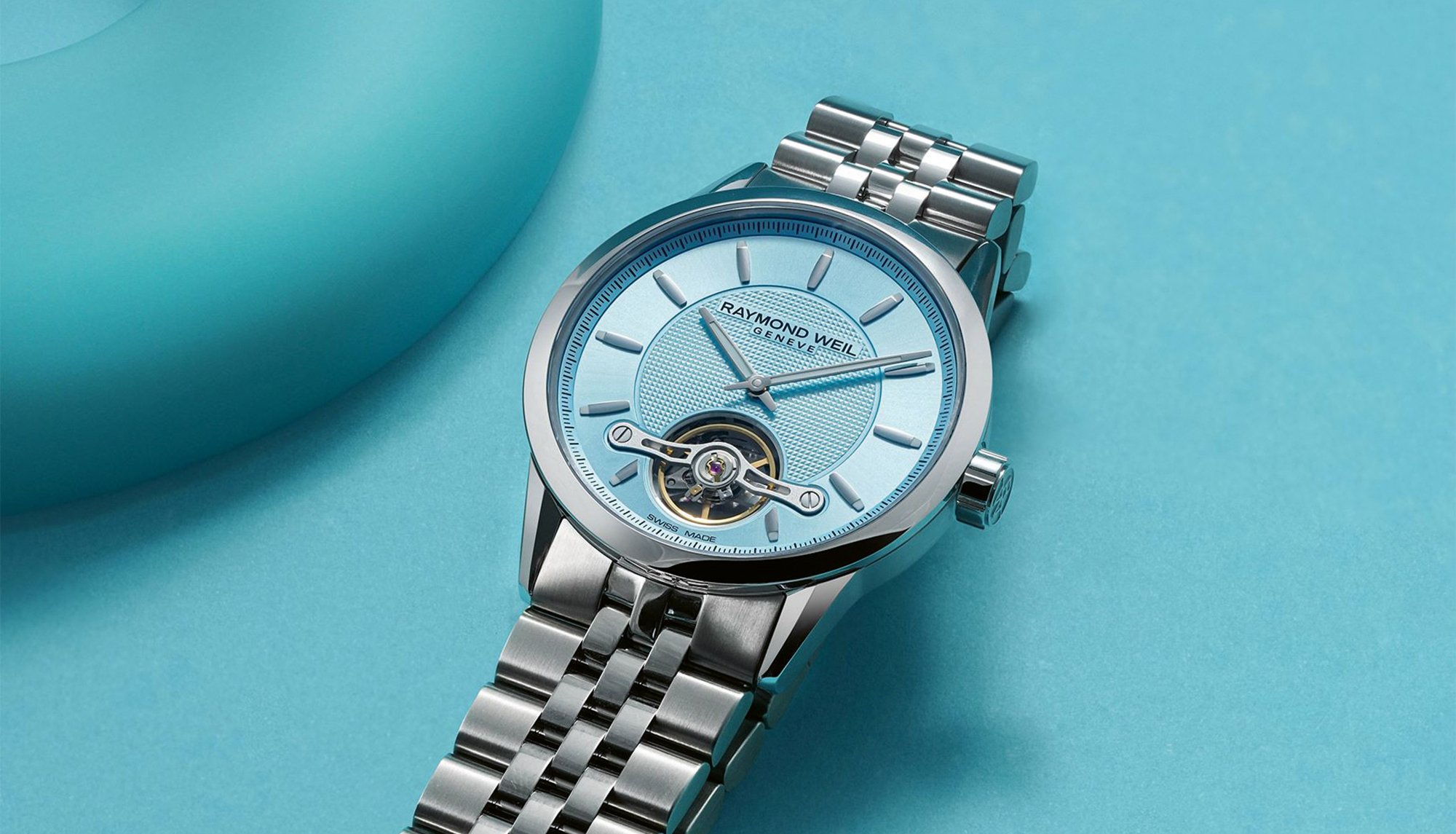
Rolex, Omega, Cartier, TAG Heuer and Breitling will continue to develop their presence in India. Other brands, such as Rado, have been there for decades and will capitalise on recent evolutions to grow what is already a lion’s share of the market. Raymond Weil, which opened in India in the 1980s, is set to expand while Favre Leuba, another Swiss brand with historic ties to India, is making its comeback. However, this dynamic doesn’t apply only to high-end watches nor even just Swiss watches. Casio’s launch this year of its first watches made by a local third-party manufacturer proves that every segment is concerned.
It comes as no surprise, then, that 79% of executives responding to the Deloitte Swiss Watch Industry Study 2025 quoted India as the most promising market, expecting medium to strong growth, ahead of the United States. (at the time of writing, India had been hit by higher US tariffs than Switzerland. The impact this will have on the country’s economic growth is something to watch closely).
Capitalising on India’s potential requires caution nonetheless, given the complexities touched on throughout this article. There is no fast track to success. Patience and a long-term strategy are vital when entering a market this size, as Sushil K. Premchand confirms: “A brand must present itself in the right way, with the right ambassador, in the right place, at the right time. Take time to reflect and take the long view. India is not for short-term thinkers.”
In conclusion, investment and a long-term strategy are key to success in India. But the foundations are there: expanding middle and affluent classes, greater international exposure and a growing culture of conspicuous consumption mean that a Swiss watch is no longer just for telling the time. It is a social and cultural statement.


