
 Español
 Français
 Pусский
 繁體中文
繁體中文 简体中文
简体中文 Select another language

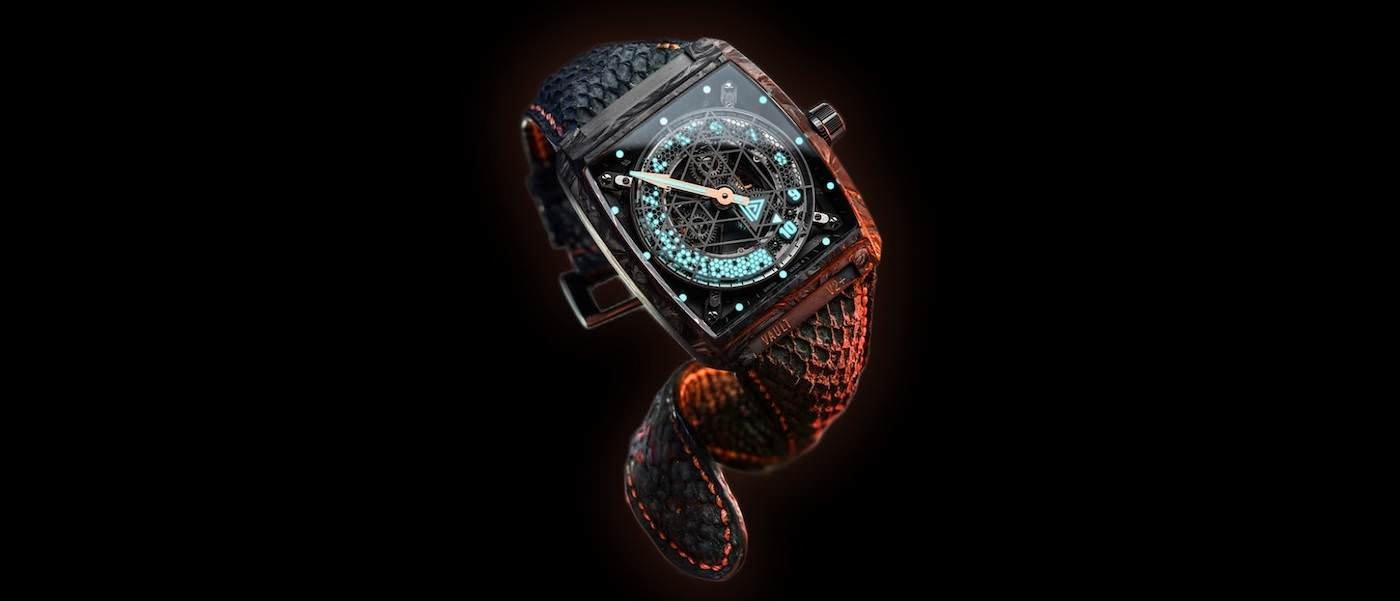
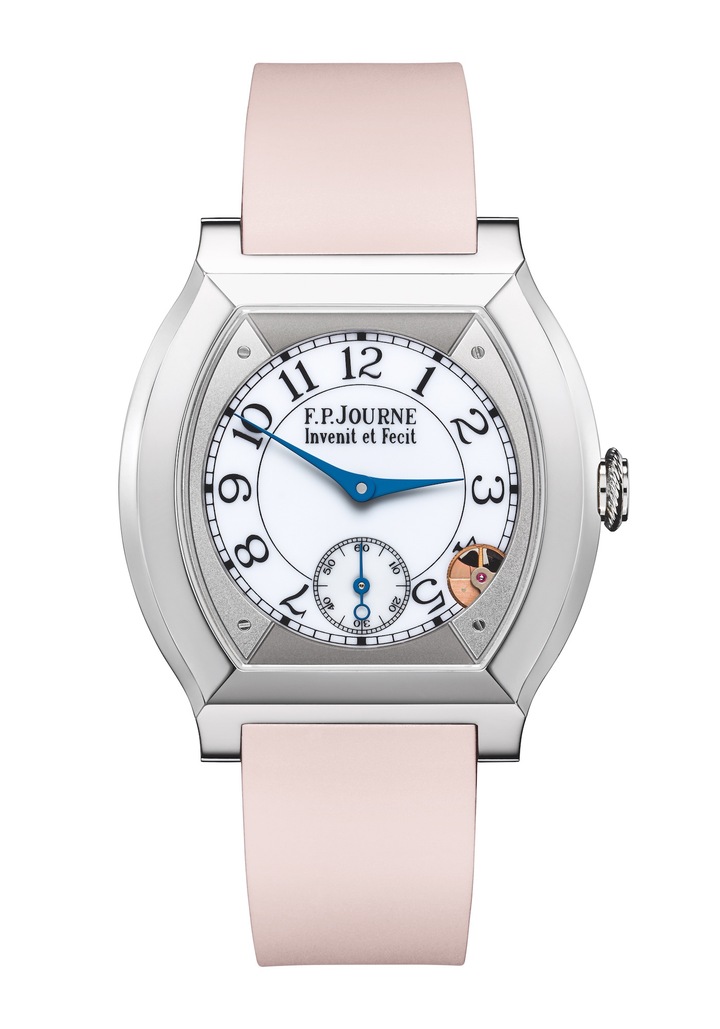
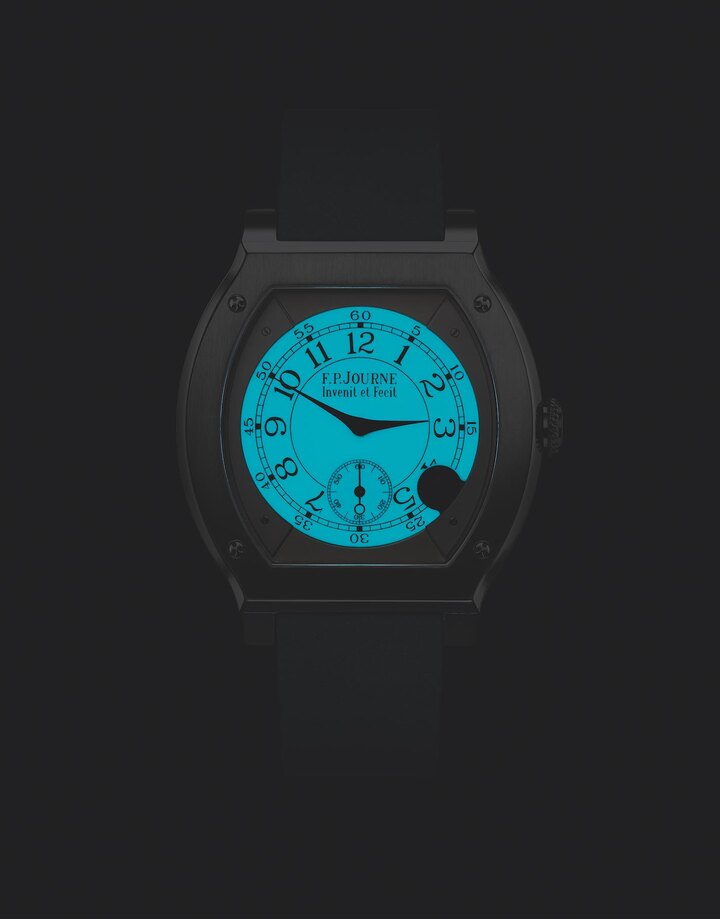
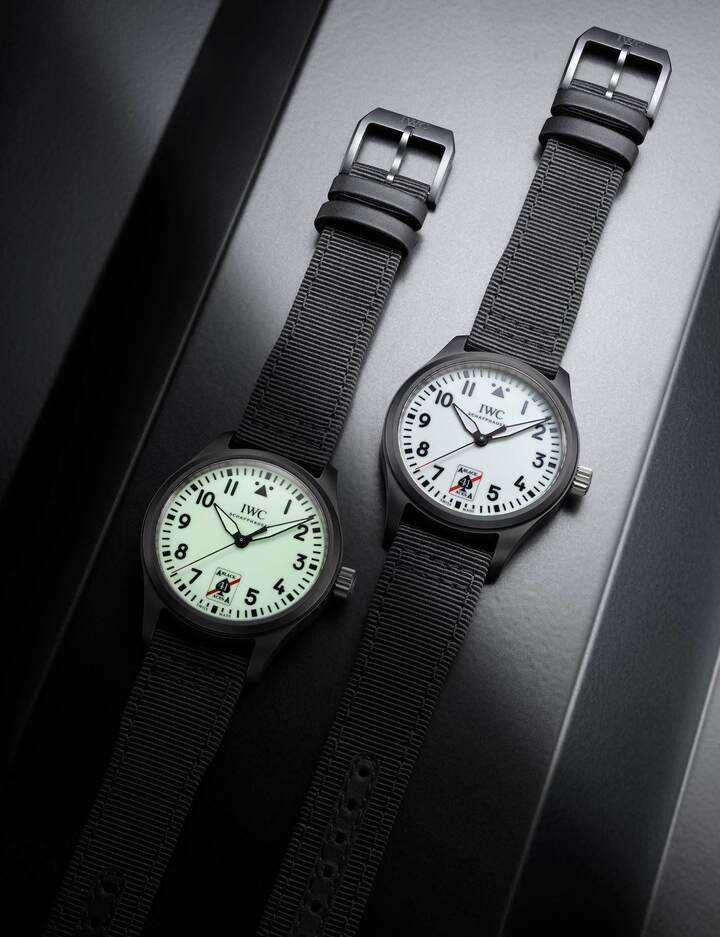
ume fever is causing upheavals in the restrained aesthetic codes of watchmaking. The luminescence that was formerly confined to the numerals and hands is now taking centre stage, deploying new-found attributes all over the watch face – witness the F.P. Journe Élégante, the Panerai Submersible eLAB-ID and the IWC Pilot’s Watch Automatic 41 Black Aces, as Albert Zeller, CEO of RC Tritec, the world leader of Swiss Super-LumiNova® explains: “What previously served solely to make a watch legible in the dark has today become a much-used design feature.”
Connoisseurs will remember the first Radiomir models, patented by Guido Panerai in 1915 in a context of armed conflict. The bold design of a two-layered dial allowed the radioluminescent paint to show through the openwork numerals. The invention was a response to the urgent necessity of the Italian navy to read the time in often adverse light conditions.
Perhaps the ingenious Florentine was guided by the Italian diaspora of the period who had settled across the pond. Coincidence or not, one year earlier, in 1914, the Radium Luminous Material Corporation was founded in New York and went on to set up factories employing hundreds of young female workers in New Jersey. The time is the 1920s and the company became the US Radium Corporation, the unfortunate protagonist of the book and film The Radium Girls. By forcing its employees to shape the brush hairs into a point with their lips before applying the luminescent paint, the company seriously harmed the health of these young women, who painted up to 250 dials a day.
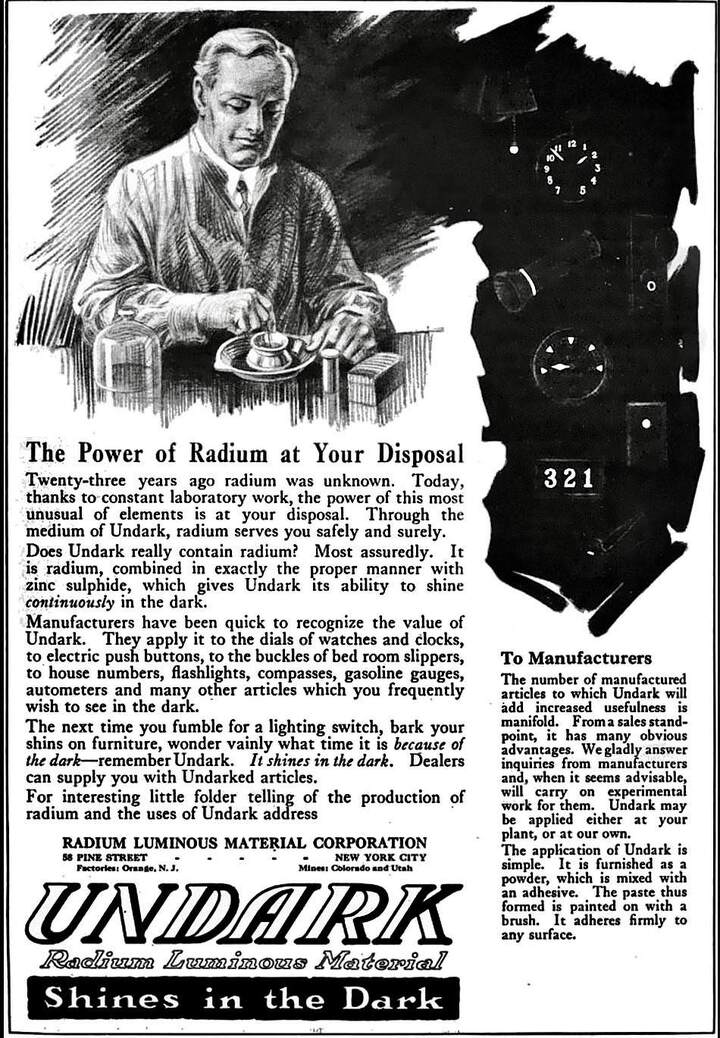
The enormous media attention attracted by the trial brought by the female workers of the US Radium Corporation still resonates today. According to historian Lukas Emmenegger, mandated in 2016 by the Federal Office of Swiss Public Health, more than 700 buildings used radium between 1920 and 1960, mainly in the cantons of Neuchâtel and Berne. Radioactivity is indeed present there, from the specialist workshops to the private houses where these employees operated.

At the time, the radioactivity discovered by Henri Becquerel and subsequently studied by the couple Pierre and Marie Curie in the early 20th century enjoyed huge prestige. Numerous manufacturers of cosmetic products – including the French company Tho-Radia – vaunted its benefits for health.
But what distinguishes these radioluminescent paints from modern phosphorescent material?
Radioactivity and self-luminescence
Radium is a radioactive substance. It emits no actual light itself. Only when mixed with a phosphorescent substance – zinc sulphide – does the paint become luminescent. The zinc sulphide interprets the gamma rays emitted by the radium like the photons in light. Radioactive paint is self-luminescent because it does not rely on light to “activate” it. Today, explains Albert Zeller, “there is no reason to go on working with radioactive substances which are dangerous for people and unstable over time”.
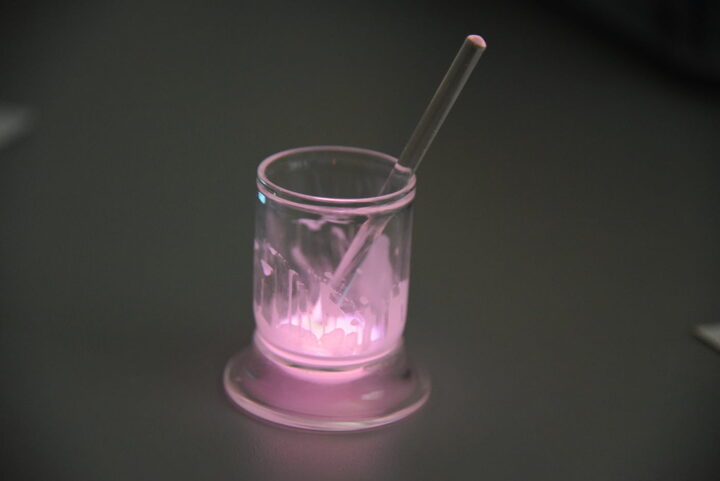
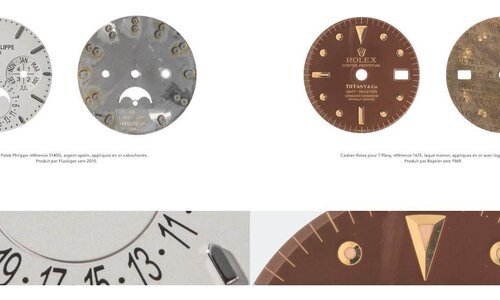
This trained chemist is the CEO of RC Tritec, a global specialist in luminescence for horology. He represents the fourth generation of a dynasty which has devoted its efforts to the industrial development of luminescent materials since 1934. In the 1950s, the family-owned company – Radium Chemie Zeller – explored the potential of tritium, a radioactive isotope of hydrogen, the beta-type emissions of which are weaker than the alpha-type emissions of radium. Rolex – among others – would inscribe the famous “T<25” at the bottom of its dials, indicating the presence of tritium with radioactivity of less than 25 microcuries.
Strontium aluminate
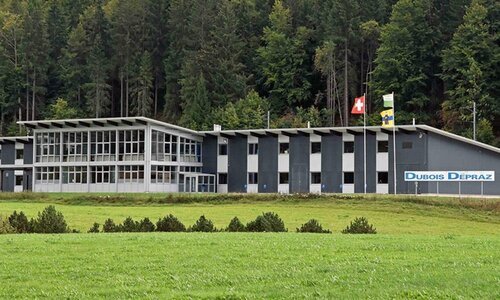
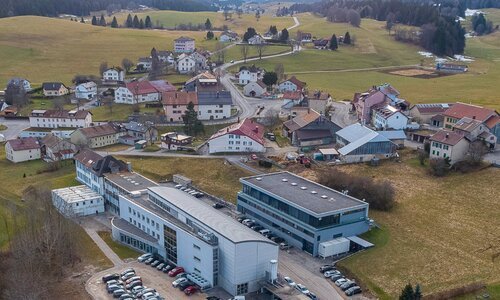
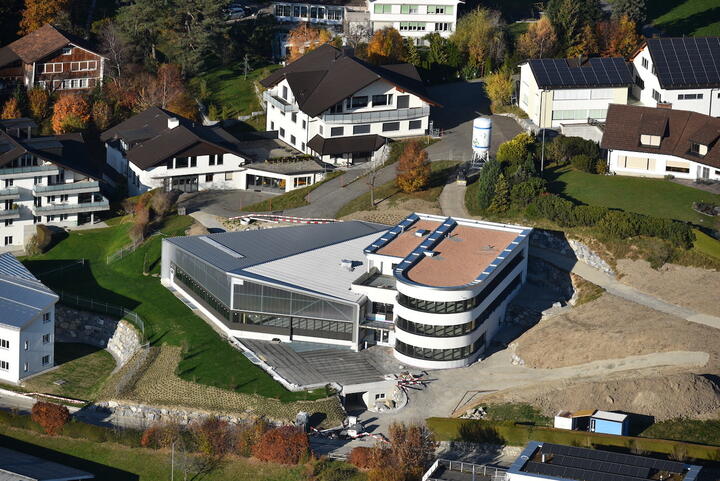
The LumiNova sold today by RC Tritec, a company with a workforce of 26 based in Teufen, near Appenzell, was developed as part of a Swiss-Japanese collaboration, as Albert Zeller recounts: “At the request of my father in the 1990s, the Japanese company Nemoto and longstanding partner, successfully studied the new phosphorescent material strontium aluminate, which resulted in a patent being filed for LumiNova in 1994.” Following this, RC Tritec and Nemoto set up the joint venture LumiNova Switzerland SA in Switzerland. This is run by the RC Tritec team and supplies the famous Swiss Super-LumiNova® (SLN) pigments to the Swiss watch sector.
“At the moment, Swiss Super-LumiNova® is the best luminous substance in the world in terms of intensity and durability,” underscores Albert Zeller. “Strontium aluminate is ten times more efficient than the known alternatives, including zinc sulphide.”
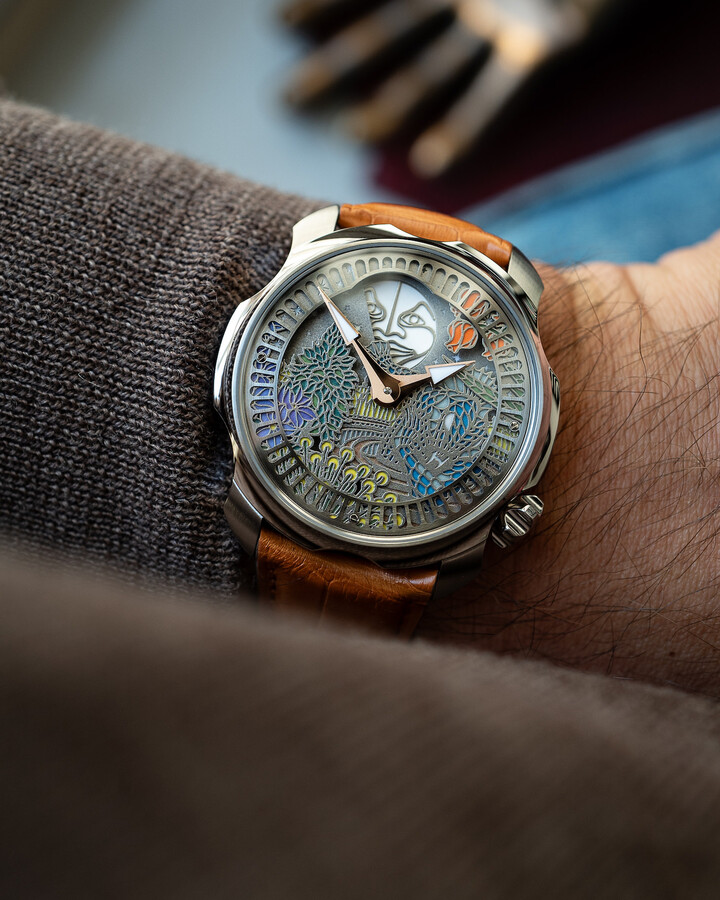
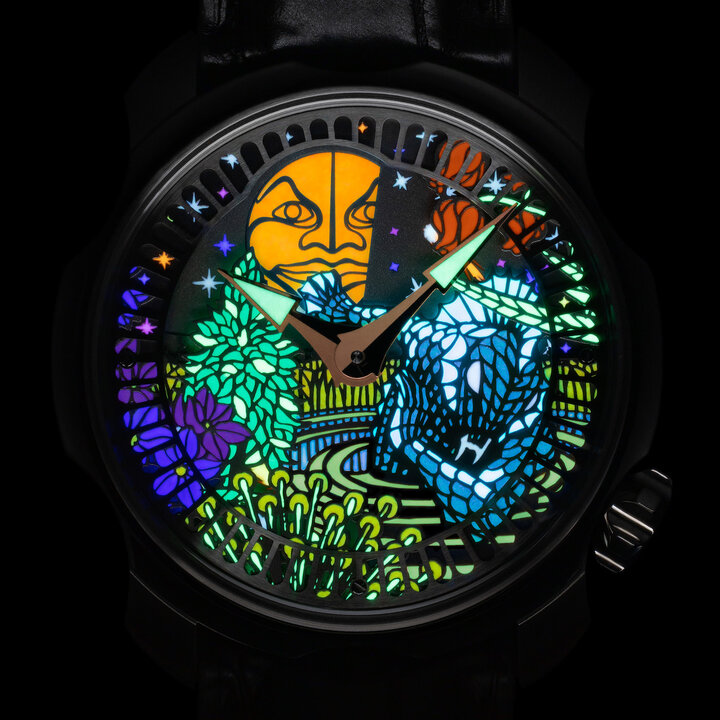
But at the same time, the Swiss company has never stopped commercialising tritium. What share of its business does radioluminescence still account for? “My grandfather invented tritium-based paints in the 1950s. When strontium aluminates came on the scene, we decided to end all radioactive luminescent applications in horology. But tritium is still used in a hospital context, in particular as a marker for new medication,” says Albert Zeller.
A final touch of colour
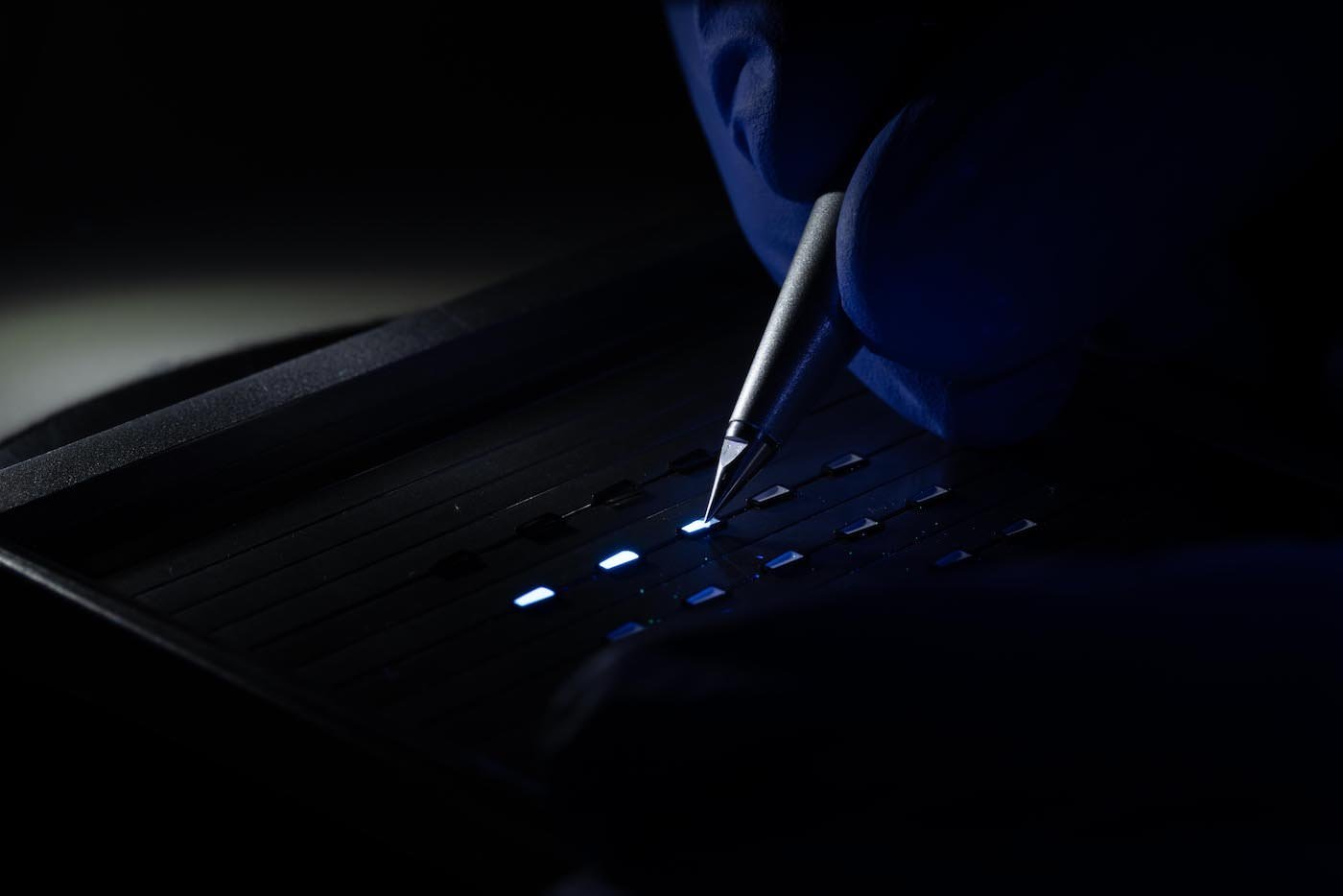
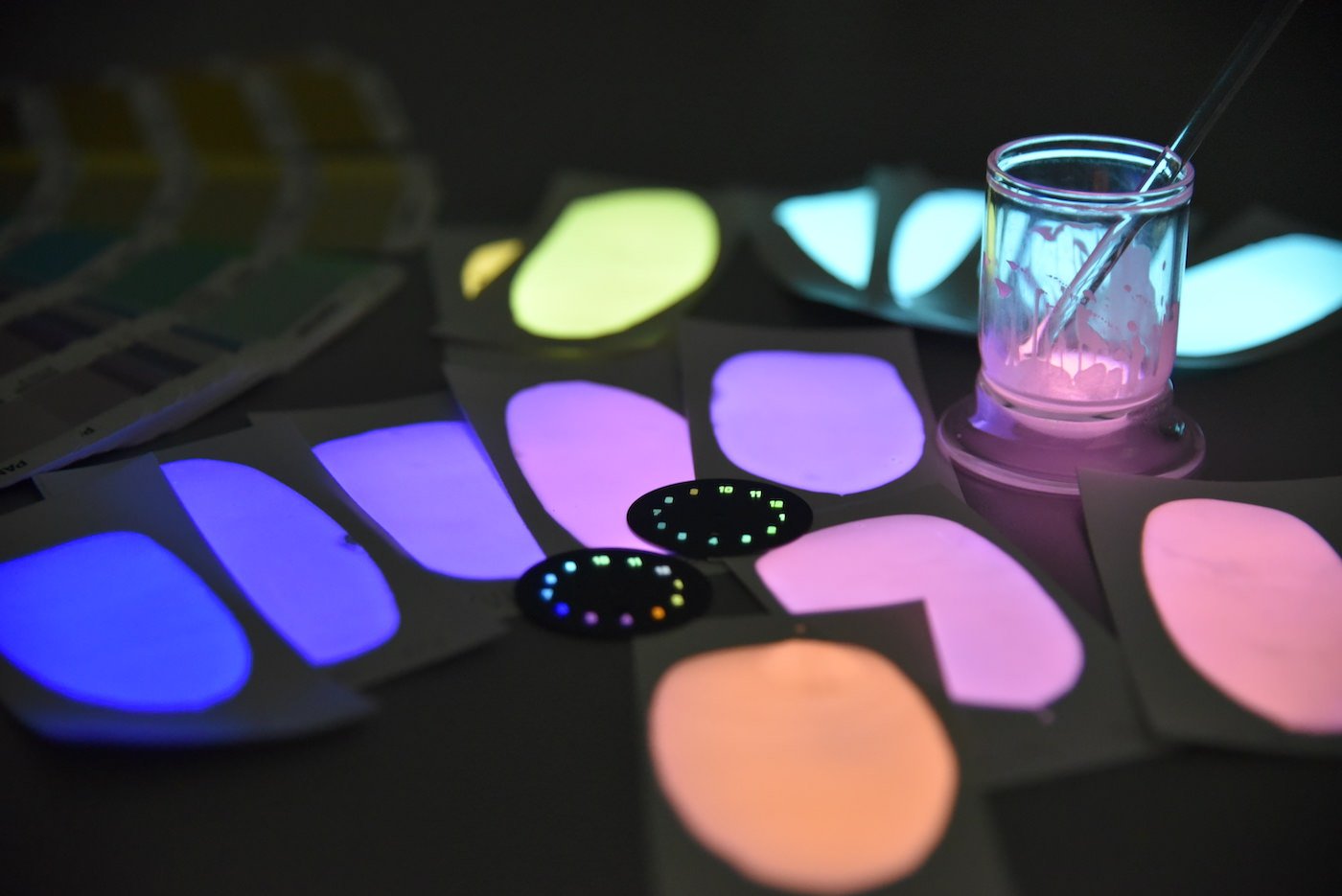
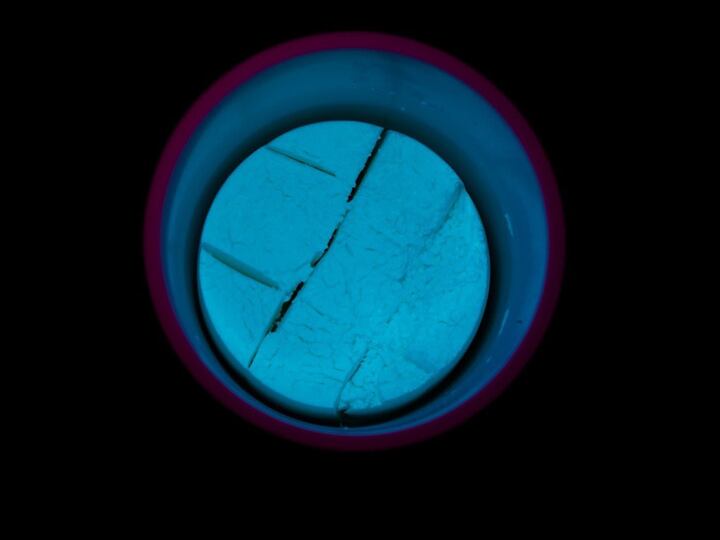
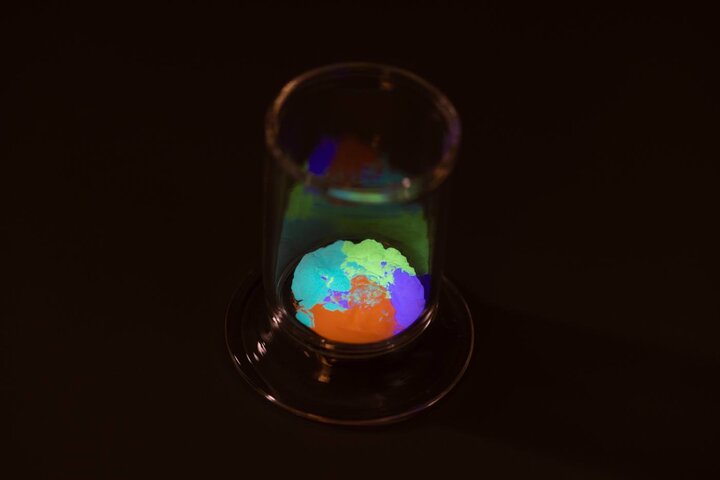
Today, RC Tritec offers a “rainbow” of SLN pigments. The chemist sets out the manufacturing process in detail: “After careful selection of the base materials, we clean them and mix them for baking in a high-temperature kiln. It’s during the baking process that the phosphorescent structure of the strontium aluminates (Swiss Super-LumiNova®) is formed. The resulting ceramic is then reduced to powder manually with the utmost care.”
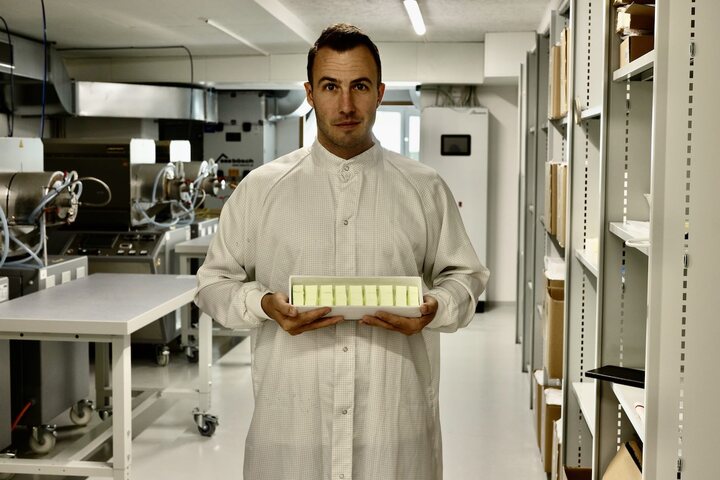
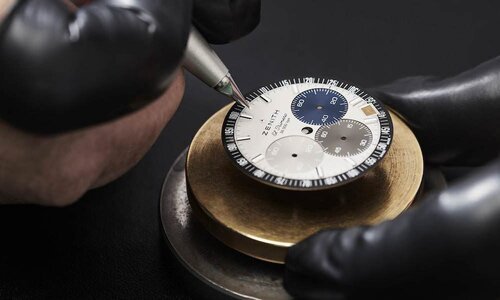
“After two quality controls, the base powder is tinted according to the customer’s wishes. We then conduct a further quality control, providing our partners with the guarantee that the material meets their specifications. These quality controls are crucial, because the Swiss Super-LumiNova® is always applied during the final stage in a component’s production. So with non-compliant material, we could destroy all the work done upstream. With one gram, you can manufacture between 100 and 300 dials. We can create all the daylight and all the nocturnal colours. The possibilities are virtually unlimited.”
A supplier to the entire Swiss and European horology sector, RC Tritec has adopted an environmentally responsible attitude to reduce its carbon footprint. “Our company is located in a very sunny region, which led us quite naturally to install solar panels. On average, we produce more energy than we use ourselves. Our premises are heated by the thermal energy from our production kilns and we use geothermal energy to heat the more distant premises,’ Albert Zeller tell us.
How does the entrepreneur envisage the future? “I think mechanical watches offer a good contrast in an increasingly digitalised world, something that a lot of people appreciate. Craftsmanship, but also the materials used, will continue to have great value for many people, because they convey constancy and security.” And he promises some new surprises concerning luminescence, coming soon...