Chrono24 is one of the main new actors
of the watch market in the digital age.
This leading global online marketplace
for buyers and sellers of vintage
and pre-owned watches, a German
company with offices in Asia and the
USA, is now aiming for a higher goal:
convincing the brands themselves,
which have been quite wary until now,
to also sell their own watches directly
on the platform.
W
ith around one million
registered users making transactions
worth a billion euros annually, Chrono24
is sitting on a gold mine of data –
meaning actual buyers of watches –
to try to win their hearts and minds.
Among the main new actors that appeared with the
advent of the internet era, Chrono24 has established
itself as a leading global marketplace for buyers and
sellers of vintage, pre-owned and, increasingly, new
watches. Brands as diverse as Frederique Constant,
Porsche Design and Louis Moinet have indeed opened
their own selling platforms on Chrono24. More brands
will follow, says the company.
Is it the beginning of a closer relationship between
the pre-owned market, which has been booming online
this last decade, and the contemporary market,
which has been struggling over the last three years
and is now rushing to develop e-commerce solutions?
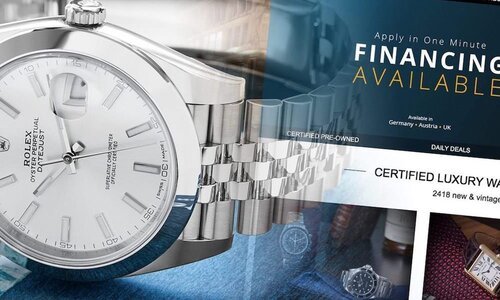
More than 2,000 dealers already sell watches online on
the platform, which is hoping to gain more leverage
with global watch collectors.
This is why Chrono24,
which employs more than 150 people from Germany
to New York and Hong Kong, for yearly transactions
of a billion euros thus organised a first “get-together”
last January at its headquarters in Karlsruhe, Germany.
“The event attracted more than 30 collectors, some
of them from as far away as London or New York. We
will now move forward with organising these kinds
of meetings in other parts of the world and on a more
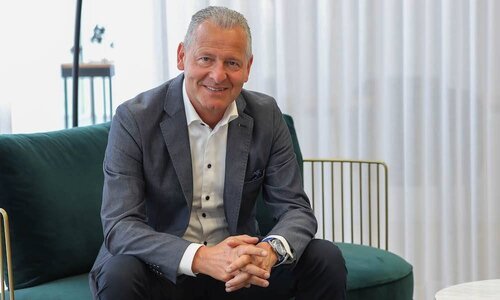
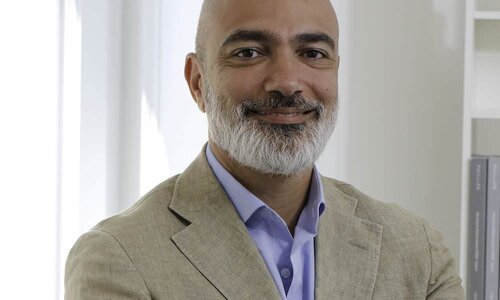
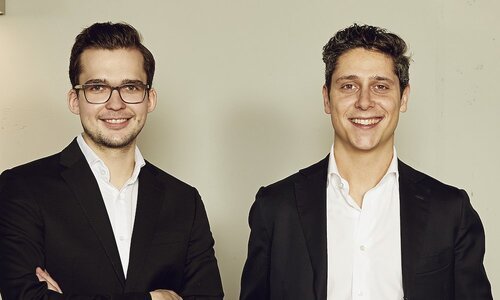
frequent basis,” says Tim Stracke, co-CEO of Chrono24.
Europa Star met him in order to better understand how
the platform works, and what it hopes to achieve.
Could you share with us a few numbers about
Chrono24, to give us a clearer picture of the platform?
Such as the volume of transactions by year,
the number of unique users, number of dealers, etc
We assume that one out of three watch lovers worldwide
uses Chrono24 from time to time. And we assume
that almost all collectors that use the internet also use
Chrono24. When we talk to dealers, it almost never
happens that they don’t know us. We attract between
10 and 12 million visits per month on our platform.
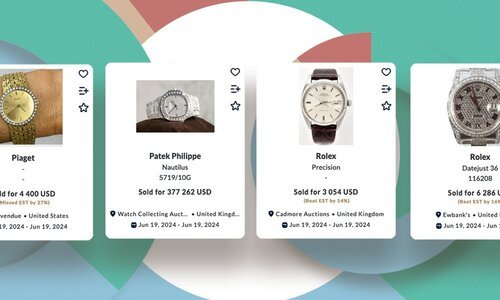
In 2017, the transaction volume generated through
Chrono24 was one billion euros. And it is growing by
around 25% per year.
What is the profile of the watch buyers, on one side,
and the sellers, on the other?
Almost all watch acquisitions are made by private
individuals. People use Chrono24 for inspiration, to
compare prices, to get information and ultimately to
buy or sell watches. On the sales side, more than 90%
of sellers are professional dealers. They include established
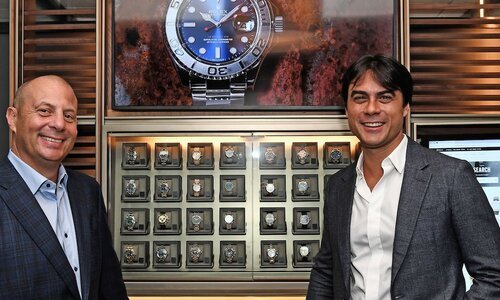
names like Govberg in the USA. We have 2,400
dealers registered and active on Chrono24.
What is the average price of the timepieces traded
on the platform?
It lies between 7,000 and 9,000 euros. The prices start
at a few hundred euros, up to more than one million
euros. Watches that are really expensive are usually
not transacted directly through Chrono24. They still
use our platform find the watch and communicate,
and then operate the transaction on their own.
How does your business model work?
It is a mix of listing fees and transaction fees. Our current
goal, however, is much less about generating revenue
than about increasing the user base and expanding
the platform through partnerships with brands
and the sales of new watches. The main benefit for
brands who join us is that they have access to a global
user base through Chrono24, and can convey their
very own message to these users.
Could you tell us more about the growth of the business
of selling pre-owned watches online since
you started, just a few years ago?
Chrono24 was founded in 2003. We have always focused
on listing as many watches as possible, and this
has attracted many sellers and subsequently buyers
onto the platform. It has made us the global player for
buying and selling luxury watches online.
But we are not only a marketplace. We are also a platform
that holds a lot of information and data about its
users. We want to use this information to help our users
find the best watches. Now, we know pretty well what
the users like, looking at their search profile and what
they have bought. We have also introduced a feature
where buyers can upload their existing watch collection
so that we can make tailor-made suggestions to them.
Do you share this data with brands?
First of all, we take private data protection very seriously.
We do share metadata with brands, to give them
deeper insights into their industry. We also help them
to get access to watch lovers and collectors worldwide
– but we won’t and are not allowed to hand over any
personal data to them. For instance, we know that
when someone is looking for a certain model, he
might also like another model.
Imagine you go to a store and you say that you are interested
in an Omega Speedmaster, and the seller presents
you some Speedmasters, as well as, based on our
research, watches from other brands with the highest proximity. It is purely based on data. It gets increasingly
interesting for the watch brands, even though they
might not publicly work with us on our platforms.
How do you intend to convince them to move to an
official partnership?
More and more established watch brands do want to
work directly with us, because of our global reach to
potential buyers, but they also realise that it is sometimes
easier to convey the brand message via the internet
than in the store.
A lot of brands have a strong heritage and the question
is: are all salesmen able to talk about it to potential
buyers? In many cases, the founder or the watchmaker
of the brand can do it much better and more emotionally,
using videos and images. It is sometimes better
than talking to a seller, who might not know the brand
very well.
But will buyers of pre-owned or vintage watches
convert to buyers of new watches?
Chrono24 already has the categories of vintage, preowned
and new watches. The biggest by far is the vintage
and pre-owned watch segment, but we are trying
to develop the new watch segment as well. We are already
working with brands that want to directly sell
to our users.
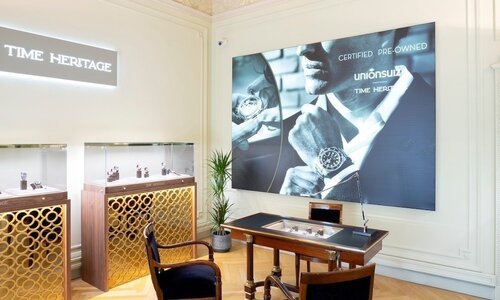
Some brands do it openly in our newly established
brand boutiques; other brands just advertise on our
platform or work with us in other ways to build a direct
bridge with the potential customer. For example, if a really
exclusive brand wants to host a collectors’ dinner
in Dubai or Tokyo, we can easily invite 20 to 30 people
in the city, who have a very strong tendency to buy this
brand or who have bought similar brands in the past.
Watch brands are very cautious about the pre-owned
market, which may look like a “parallel market”
jungle… What kind of relationship are you trying to
establish with them?
We are in talks with almost all brands and are discussing
potential ways of working together. Some brands
are already openly selling on Chrono24, others use a
partnership to connect to potential buyers worldwide,
and we are just opening discussions with yet
other brands. But there are very few brands that are
ignoring us, and not looking for a discussion at all. We
are open to discuss with all brands. But maybe we still
need a few big names working openly with us, to overcome
the psychological barrier.
You know the watch buying habits of millions of
people around the world. How do you collect this
data?
We know from our users what their core interest is by
looking at their search behavior, and we use this to
make better suggestions. We also gather data when
users upload their existing watch collections.
But the brands that join your platform would also
get access to data… and what about other brands
that are not on your platform but which are interested
in your data?
We are open to all kinds of partnerships.
We do careful due diligence on all the dealers that join
the platform, in order to be sure we keep only the best
ones. In addition, when you buy a watch on Chrono24,
we hold the money in an escrow account until the
watch is safely delivered to your home. Only when you
say that you are happy with the watch do we release
the money.
Otherwise, you get your money back. It is
very rare that a watch is really fake: there have been
fewer than five returns over the last few years because
of authenticity issues. And more than 100,000 watches
are being transacted through Chrono24 per year.
We would rather kick a dealer off the platform than
risking having a single fake watch.
That is also part of our policy. You can return any watch
that has been bought on Chrono24, no questions asked.
But very few watches are actually returned: very low single
digits. The most common reason for returns is that
the watch is not as it was described on the platform.
Only around 1% are returned without a specific reason,
just because the buyer does not want it anymore, mostly
because the watch is a bit smaller than expected, not
because it is fake or damaged! Our total return rate is
less than 5%.
We are indeed considering all kinds of measures to
bring people together and to build trust during the
transactions. Chrono24 is a lot more than a digital market
place. We are also considering developing logistics
services. There are a lot of developments to come yet.
KEY NUMBERS ABOUT
CHRONO24
• 10-12 million visits per month
• 1 billion euros in transaction
volume generated in 2017
• 2,400 professional
dealers registered
• More than 90% of sellers
are professional dealers
• 100,000 watches bought/sold
through Chrono24 in 2017
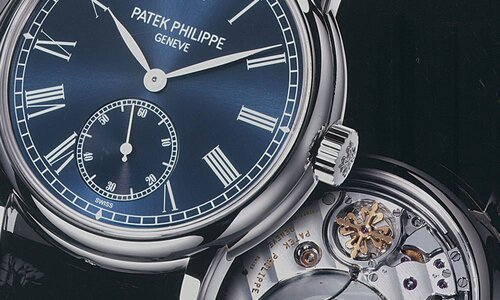
• The most expensive watch ever
sold through Chrono24: a Patek
Philippe Sky Moon Tourbillon,
for more than one million dollars



 Español
 Français
 Pусский
 繁體中文
 简体中文
 Select another language