
 Español
 Français
 Pусский
 繁體中文
繁體中文 简体中文
简体中文 Select another language

atch journalists love to seek out new “trends”. It both reassures them and strengthens their credentials in an ecosystem that is home to any number of self-proclaimed experts. They gather proof and follow clues that converge towards an original theory. In this respect, the role of the métiers d’art or artistic crafts in watchmaking is a prime subject for investigation.
Early indications
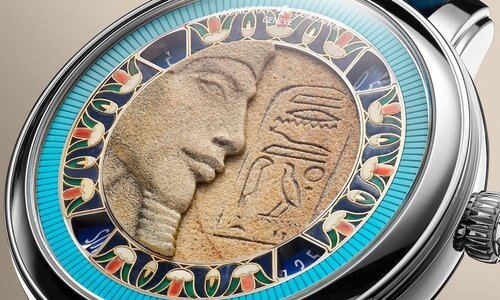
Watchmaking has always made a point of lavishing decoration on certain of its creations for women. Today, almost three decades after the mechanical watch made its grand comeback, a new generation of collectors appears all the more captivated by the métiers d’art when they are accomplished by talented artisans. Indeed, who can deny that the steady strokes of an engraver chasing a watch case are more appealing than a computer numerical control machine. Reading the room, brands are producing timepieces whose innovative decorations are created using in-house resources or with the help of external collaborators.
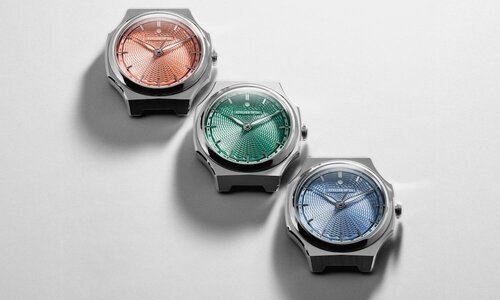
Evidence of this evolution can be found at the Grand Prix d’Horlogerie de Genève. The winning watches at the 2025 edition were infinitely more colourful, more richly ornamented than their counterparts in 2015. Gérald Genta, Chopard, Bovet, Dior Montres, Voutilainen and Dennison won over the judges with their explorations of decorative techniques and the métiers d’art.
The Swiss Confederation recently declared Les Métiers du Temps | Time Arts (MTTA) a “nationally significant research structure” and has awarded this centre for expertise a CHF 1.6 million grant. MTTA’s core missions are to preserve and promote “exceptional watchmaking expertise and artistic craftsmanship.”
Earlier this year, the Patek Philippe Salons on Rue du Rhône in Geneva were home to an exhibition of some 70 remarkable timepieces offering modern-day examples of handcrafts such as Longwy enamel on faience.
Handmade vs. machine-made?
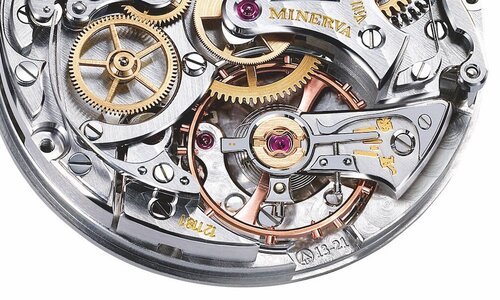
Any consideration of artisanal and industrial methods demands greater subtlety than to simply oppose the two: the hand shapes material using tools while the CNC machine is programmed by hand. The mutual respect that arose from this complexity is now undermined by financial imperatives and demand for productivity. The cat is out of the bag: productivity, the rate at which goods are produced. Yet any manual process, creative or otherwise, inevitably involves a lengthy process of trial and error, and error, by its very nature, is unpredictable and cannot be planned.
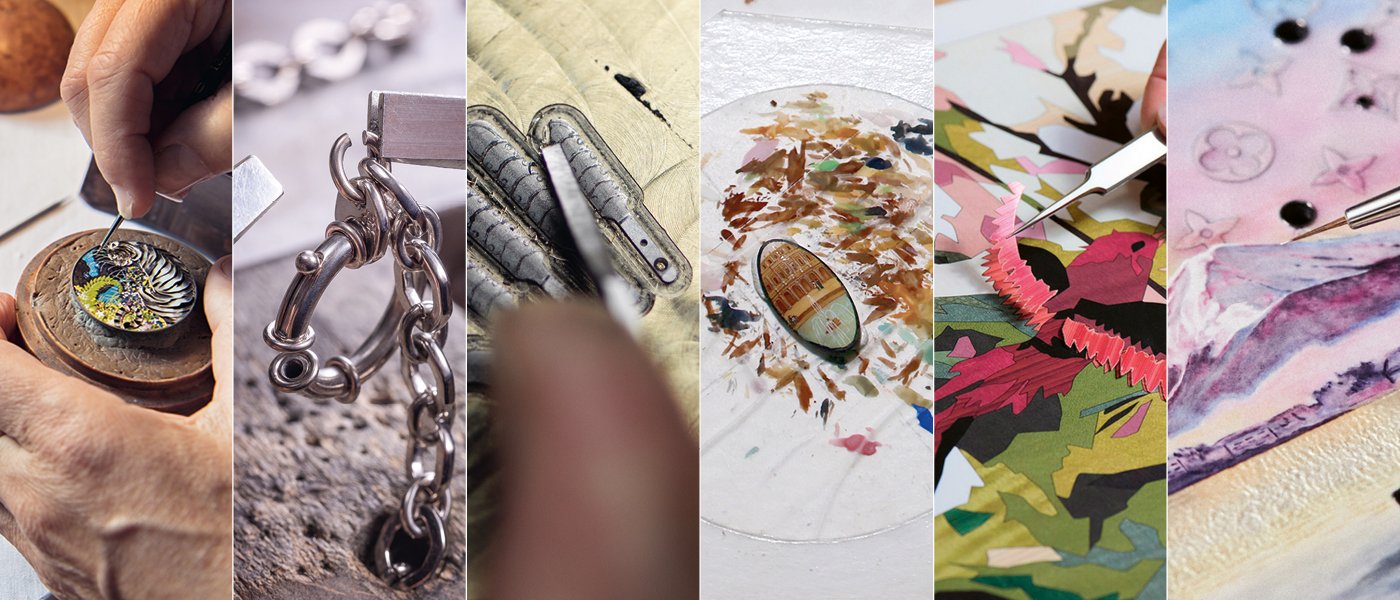
We wanted to understand what an independent artisan brings to watchmaking that is new; how they develop their tools and methods; how they pass on skills that are often threatened with extinction. By revealing the names and faces of six of these craftsmen and women, Europa Star gives a voice to the unsung heroes, the men and women the press releases sometimes forget to mention, the individuals working away from the media spotlight. At the insistence of a handful of discerning collectors, some of these invisible talents are stepping out of the shadows and giving new hope to professions that put the art into artisan.
ANITA PORCHET: PLAYING WITH FIRE
Who, in the rarefied world of watch enamelling, doesn’t know Anita Porchet? Heir to an ancient and almost forgotten art, this fiercely independent creative is a longstanding collaborator of the likes of Patek Philippe, Audemars Piguet, Chanel, Vacheron Constantin, Hermès, Piaget and Chaumet. “You can’t put a price on freedom. Independence is vital,” she explains. “The constant battle for survival fills you with creative energy. You can never stand still.”
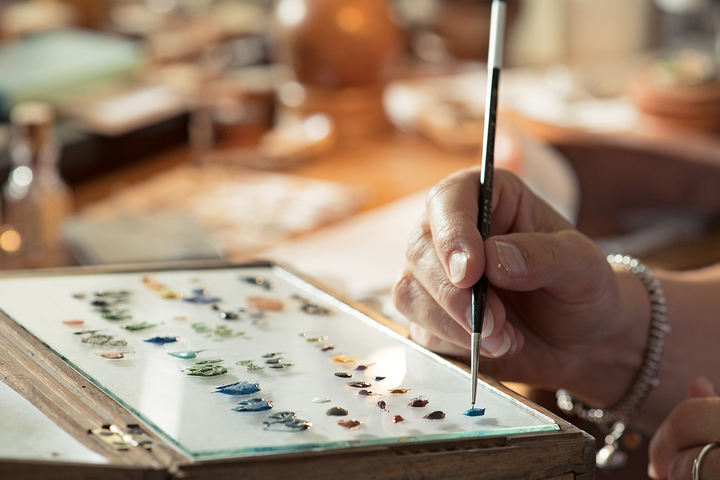
Versed in the classical techniques of cloisonné, champlevé, paillonné and, of course, miniature enamel painting, Anita Porchet has single-handedly developed her own multidisciplinary approach and occasionally invites other master artisans to work with her. This signature style, she tells us, has made her famous throughout the watchmaking ecosystem. In 2015 the Musée International d’Horlogerie in La Chaux-de-Fonds presented her with the Prix Gaïa for craftsmanship and creation in watchmaking — the same year that the Fondation de la Haute Horlogerie singled her out for distinction. Two years later, she was awarded the Special Jury Prize at the Grand Prix d’Horlogerie de Genève, an honour she shared with her mentor, Suzanne Rohr.
Anita Porchet is surprisingly self-effacing, a modesty no doubt forged from working in an art that is as demanding as it is unpredictable. “My starting point is a piece of glass, not a tube of paint. A flawless industrial product has no soul whereas a handcrafted product, because of its irregularities, feels alive.” It hasn’t escaped her attention that her customers, watch brands, are bringing the métiers d’art in-house, into their own studios, prompting her to question the real objectives behind these structures: “This segmentation of tasks, isn’t it more about increasing profitability and controlling artisans’ work?” before adding “An employee who applies only one colour isn’t an enameller. Even I have yet to master the profession’s many subtleties. Fire has a mind of its own!”
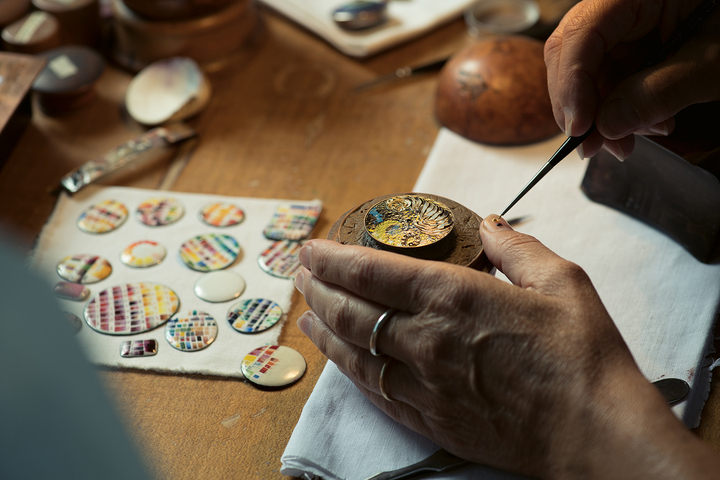
Two other enamellers assist Anita Porchet in her studio, in the Swiss canton of Vaud. Surrounded by rolling countryside, the three women evolve in an atmosphere of mutual respect, renewed day after day. Porchet knows full well that craft cannot be hurried. Her commitment is unwavering: “I’ve promised them I won’t make any changes. It’s taken years to build this trust.”
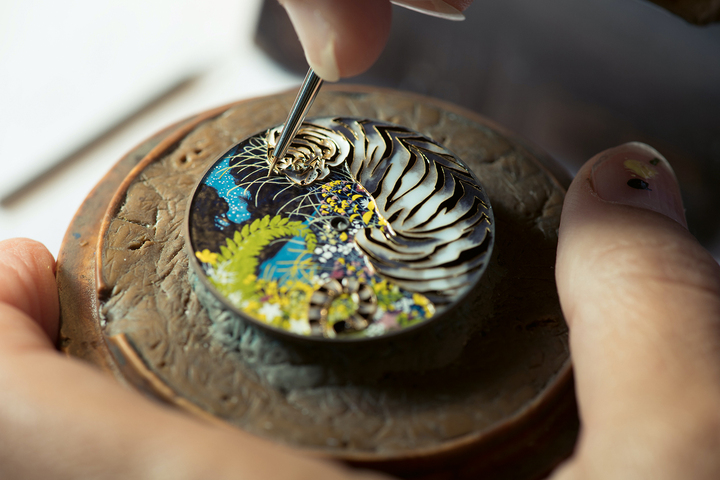
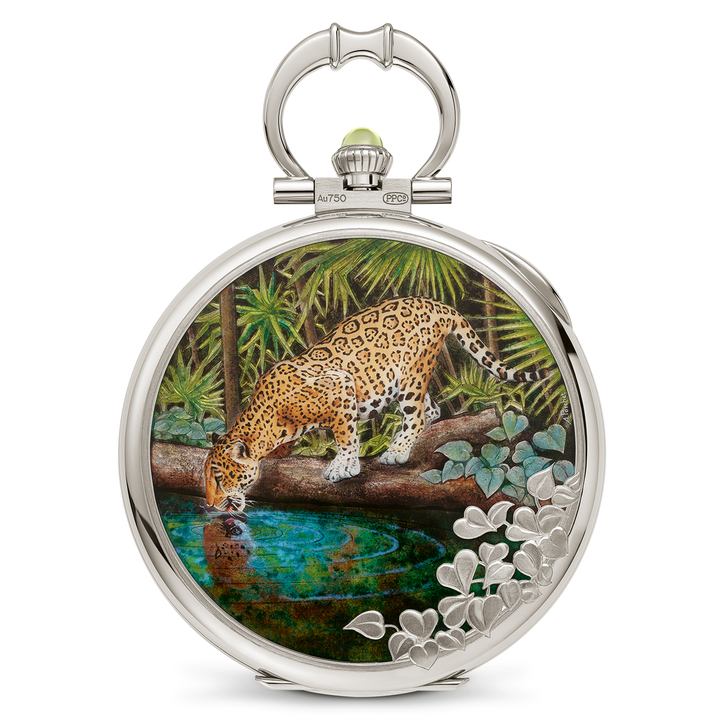
Her studio doubles as a laboratory. Porchet is a born creative whose constant experimentations reveal a keen artistic sense, where the pursuit of beauty is as much about pleasure as it is hard graft. One of her recent developments is a particularly fruitful conversation between enamelling and engraving: “I pitched the idea to an engraver friend that we should work together. Not one after the other. Together. The engraving was done before and after the enamelling.” After years of trial and error, setbacks and dead ends, in 2025 their efforts were rewarded with a remarkable pièce unique created in partnership with the venerable Patek Philippe (ref. 995/126G-001). Anyone observing The Jaguar’s extraordinary dial will see the South American feline drinking from what appears to be a small pond. It rests its legs on a tree trunk, before a curtain of luxuriant foliage that is hand-engraved on four levels and decorated with coloured enamel. The animal’s reflection, together with the turquoise ripples across the water’s surface, engraved under the enamel layers, appear astonishingly lifelike. The harmony of colour, the unbelievable diversity of the enamelling techniques, interlocking with the engraving, were not lost on Thierry Stern, the owner of Patek Philippe and a champion of artisanat d’art. Can we look forward to more “engraved enamel” pieces in the near future?
Respected throughout the industry, admired by her peers, Anita Porchet continues her journey. Despite being a role model for many craftsmen and women working behind the scenes, she refuses to embrace success and rest on her laurels. Day after day she is reminded of the need to constantly prove herself. “In this business, you either serve a purpose or you don’t,” she declares, a hint of regret in her voice. While her enamels speak volumes about the work she has accomplished, and her unique capacity to take her profession in new directions, including through collaborations with other artisans, Anita Porchet remains deeply reflective, with a final question directed perhaps at the brands themselves: “Will watchmaking preserve the métiers d’art by ensuring that independent craftsmanship survives?”
LAURENT JOLLIET: THE STRONGEST LINK
Laurent Jolliet is one of a rare breed. A chainmaker. With nothing but the naked eye, he hand-fashions a vast array of chains and metal bracelets for prestigious watch brands as well as private collectors, who come to his workshop in Geneva in search of his expertise. How does he view a profession on the brink of extinction?
Studious harmony
Blue adhesive bandages on Vanessa’s right hand protect her fingers and palm from cuts. A recent graduate in jewellery-making, her job today is to shape dozens of oval links measuring less than five centimetres to a tolerance of five tenths of a millimetre. It’s repetitive, painstaking work but she’s in a cheerful mood, as are her colleague (and former classmate) at the neighbouring bench and their boss: Laurent Jolliet.
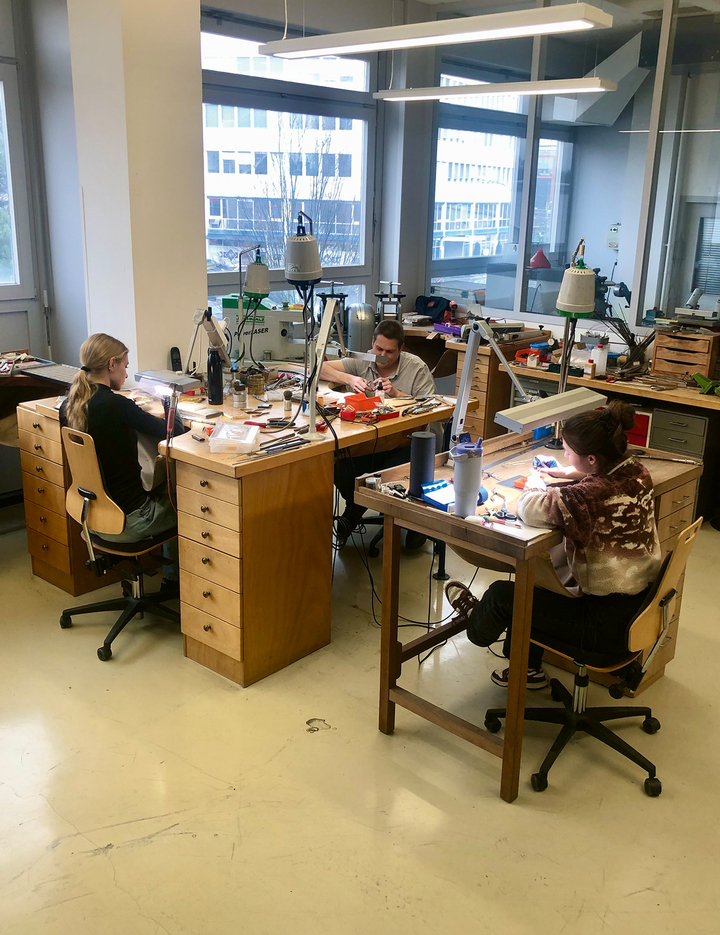
There’s a relaxed atmosphere in the workshop, in Le Lignon near Geneva, which Jolliet took over from another chainmaker, Michel Hess: “I bought the workshop in 2005 and kept all the tools,” he recalls. “I just had to invest in a new laser soldering machine.” Three benches form an island in front of the windows. Around them, the workshop’s five hundred or so square metres are divided into various workstations, identifiable by their equipment: a lathe, a milling machine, a winder, a bench covered with files and buffs, hand torches and laser solderers. As Jolliet explains, “My methods and tools are the same as decades ago. I use a hundred-year-old milling machine that I repaired myself. For restoration work, I use laser soldering to replace missing material. Some tools, certain pliers and wire cutters, are specific to chainmaking and impossible to find, in which case I make them myself.”
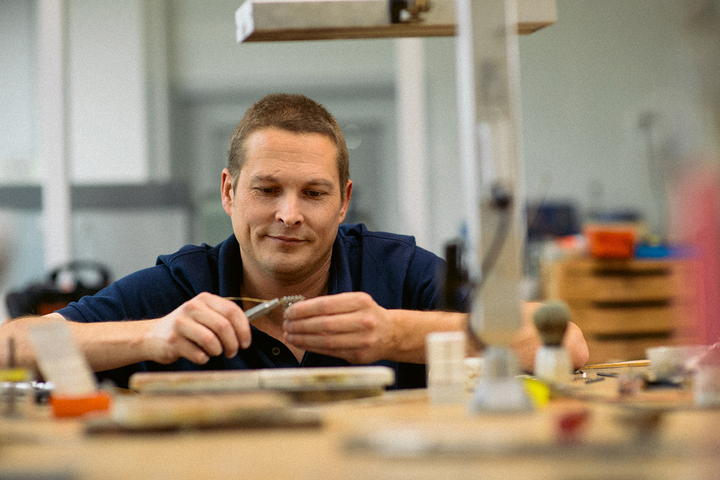
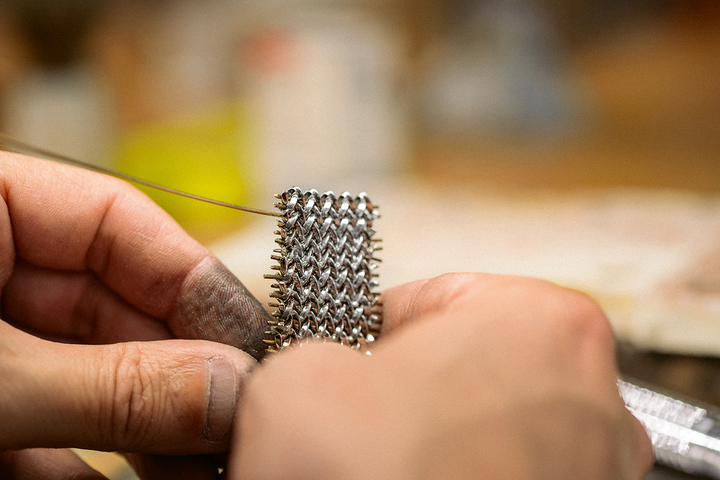
Laurent Jolliet advocates traditional chainmaking techniques while leaving ample room for creativity in the designs and prototypes he presents to his customers. He only invests in the machinery he genuinely needs and still prefers to work without a loupe or a binocular magnifier. In his mind, an imperfection, albeit invisible to the naked eye, is the sign of the artisan’s hand. Industrial perfection leaves him cold — a sentiment shared by a growing number of collectors in search of authentic craftsmanship. “I see bracelets so perfect you can smell the factory on them!” he says, insisting that “we’re excellent workers, not artists,” although many would say it’s a fine line between the two: “Round links, triangular, square, twisted… You can make ten metal bracelets from the same design.” So how is it done?
Over and under
Broadly speaking, a chainmaker works with metal to produce chains and watch bracelets. A chain is made up of multiple links which are formed, adjusted and polished by hand. With infinite patience, Jolliet assembles them one by one, following an established pattern — rope, curb, figaro, box, Garibaldi, herringbone, cable, snake, bead — or an original design. The combinations are almost limitless. The finished chain might be attached to a pocket watch or worn as a necklace.
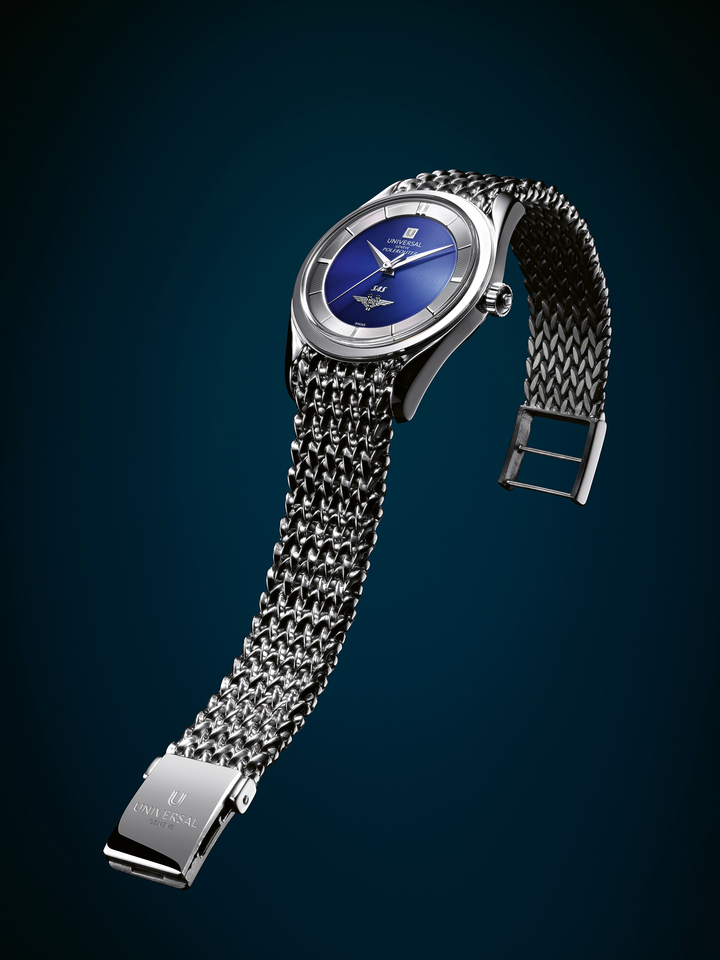
Because genuine leather isn’t suited to tropical climates or watersports, watch designers soon looked to the ergonomy of metal bracelets. Rolex blazed a trail with the Oyster bracelet, followed by Audemars Piguet and Patek Philippe who fitted their Royal Oak and Nautilus, two luxury sport watches, both designed by Gérald Genta, with metal bracelets. More recently, the resurgence of vintage watches has revived interest in the Milanese mesh bracelet, appreciated for its fabric-like suppleness on the wrist, as well as the Polonaise.
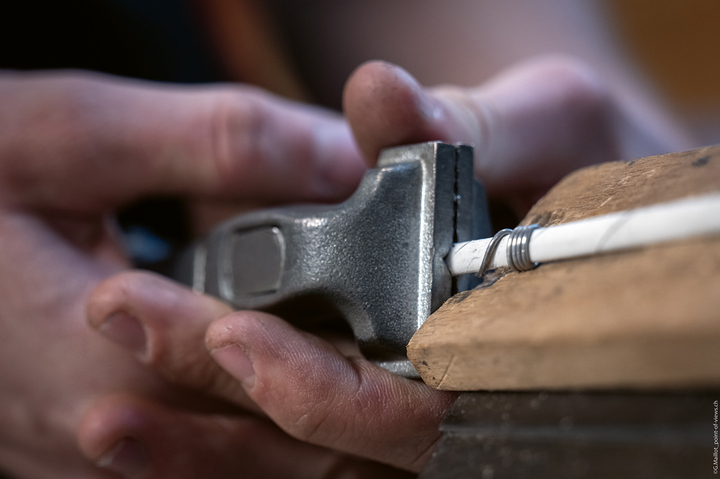
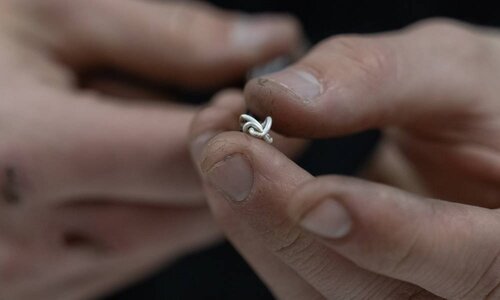
Both the Milanese and the Polonaise begin life as spiral coils. It’s fascinating to watch Laurent Jolliet transform metal wire into coils using a winder, a chuck and a rod. As he turns the winder’s crank, two gears, one larger than the other, mesh and the wire wraps around the cylindrical rod to form coils. The entire operation takes seconds and illustrates the dexterity, precision and patience that Jolliet has acquired through years of experience. Pure craftsmanship.
For a Milanese bracelet, Jolliet threads each coil through the corresponding coil in the row below, forming one row after the other to get the required length. He then carefully solders the edges, presses both sides and, last of all, polishes the entire piece.
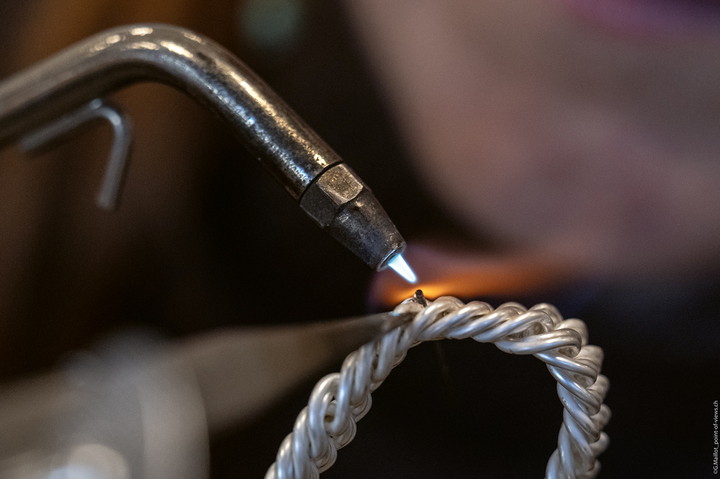
Less popular than its Milanese counterpart, the Polonaise bracelet has a more complex construction. In simple terms, Jolliet alternates the direction of the coils on each row so that the visible parts of the bracelet are oriented right then left. For this type of bracelet, pins play an essential role.
Independence and continuity
“Unlike resin models, my prototypes are functional and in many cases saleable,” Jolliet explains. Working with a range of metals, from different golds to palladium and even platinum, he says he can complete a bracelet “in one day.” A rapidity that more and more brands appreciate. There have been years when business has relied entirely on restoration projects but the present looks good for the artisan. “I’ve weathered every crisis,” he notes, adding that “2025 was the best year we’ve had in the past fifteen!”
Laurent Jolliet is happy with the way things are going. His name and face are beginning to feature in promotional videos for certain watches. More than recognition of his expertise, he sees this as a sign of a thriving high-end market, where the time and skill that go into handcrafting a metal bracelet are reflected in the price. Despite having five or six projects on the go at any one time, he has no intention of expanding the workshop. For this independent artisan, handcrafting dictates its own pace.
For fourteen years, legendary casemaker Jean-Pierre Hagmann (1940-2025) had the next-door workshop. “We worked together on a number of projects. He was an amazing artisan. I learned a lot from him.” While he has no plans to grow in size, Laurent Jolliet is determined to pass on his expertise and pay homage to his predecessors. For two weeks each year, he goes back to the school in Geneva where he learned his craft, to teach his skills to the students who will become the next links in the chain.
A CUT ABOVE JEANNE-VALENTINE ULRICH
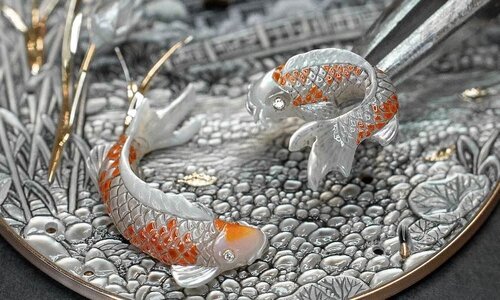
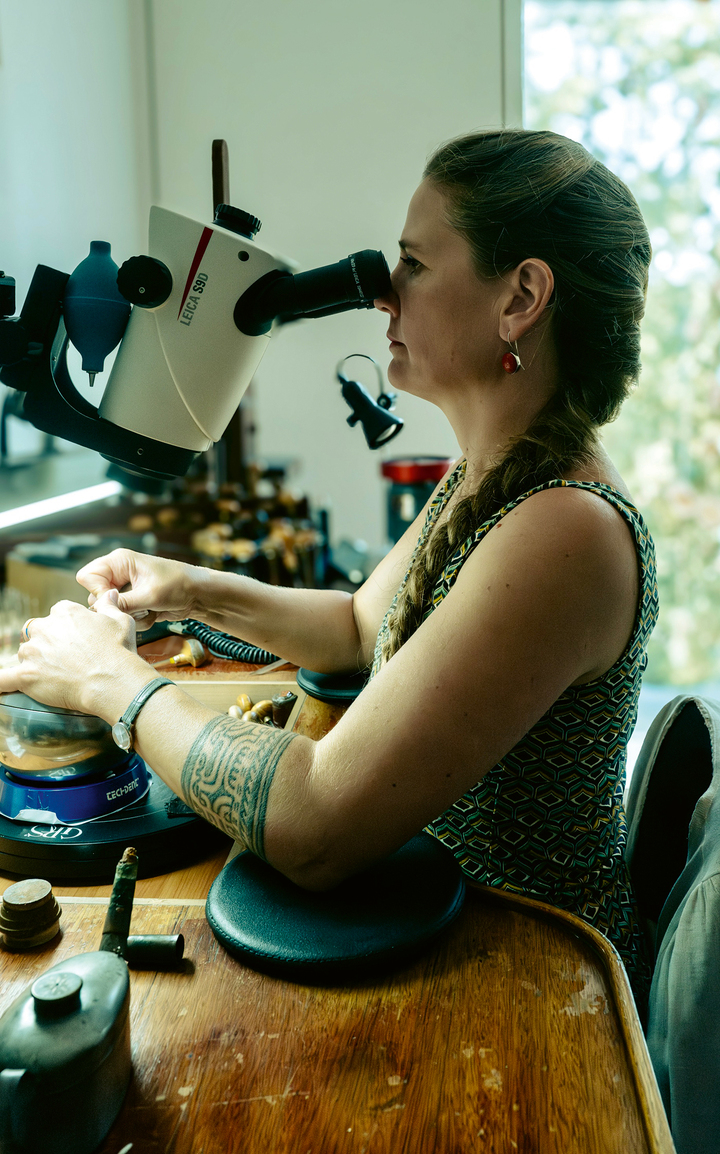
Her eyes glued to a binocular magnifier, her body completely still, Jeanne-Valentine Ulrich’s movements are barely perceptible. The blade of her graver, like a sixth finger, advances in measured strokes. Slowly, an image emerges from the finely carved furrows. “I enjoy sculpting materials,” says Ulrich, who applies her expertise to metal — copper, gold, titanium — as well as wood, ornamental stones, wax and mother-of-pearl. Such versatility is all the more remarkable as, for many years, engraving on watches was confined to the movement plate and bridges. No longer. Now, engraving extends to cases and casebands, lugs and, especially, dials, buoyed by a fresh appreciation for horological decoration that has turned the spotlight on guillochage, with its rice-grain and Clous de Paris motifs. However, a more ambitious project will often require the input of an expert hand. A complementarity of techniques.
The techniques and tools of hand-engraving
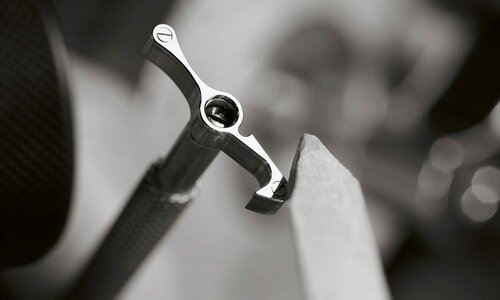
For Jeanne-Valentine Ulrich, traditional metal engraving is divided into three distinct techniques. The first is line engraving. Holding the graver almost vertically to the workpiece, incisions made into the surface produce clean, shallow lines. (The graver is the engraver’s principal tool, used by such masters as Albrecht Dürer (1471-1528). It comprises a steel rod with a square section that tapers to a sharpened tip, set into a mushroom-shaped wooden handle that sits comfortably in the palm of the hand.)
A second technique, taille de joue, is a variant of line engraving. “The graver is held at an angle,” Ulrich explains. “It makes a broader cut so that light can reflect along it.” An example of taille de joue are volutes, the scroll-like ornamentations seen on casebands.
When a project calls for complex textures and depths, the engraver will choose low relief (bas-relief) and high relief which, notes Jeanne-Valentine Ulrich, imply a wide range of tools from “traditional gravers to various files, as well as tiny burs and even fine stones.” The result is a sculptural, three-dimensional work that demonstrates the engraver’s range of skills.
From the mountains of Neuchâtel to the city
Jeanne-Valentine Ulrich welcomed us at her studio in Geneva. On the walls, illustrations of some of her many collaborations with prestigious brands are a reminder of the breadth of her practice. “I like to build bridges between disciplines,” she confides. These intricately decorated cases and dials also speak volumes about how far she has come, since studying at the Ecole d’Arts Appliqués in La Chaux-de-Fonds where she trained as an engraver.
She got her first big break from another independent engraver, Jean-Bernard Michel: “He was incredibly generous. It’s thanks to him that I started at Vacheron Constantin.” During her seven years with the prestigious Genevan watchmaker, Ulrich consolidated her technique until she felt confident enough to strike out on her own, in 2019.
Today, clients come to her rather than the other way round: “Brands want the experience and quality of my work,” she affirms. Among the many customers who value Ulrich’s versatility, drawing skills (she continues to sketch on a regular basis) and constant investigation of her craft, one in particular — a vocal supporter of independent artisans — would have a decisive influence: watchmaker François-Paul Journe.
An outstretched hand
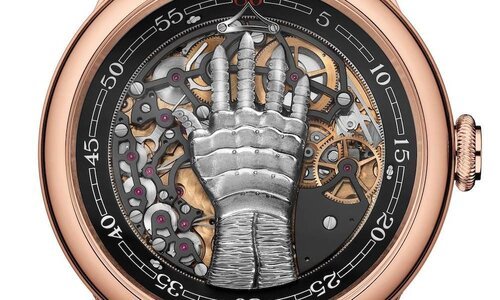
“François-Paul presented me with a drawing of an articulated prosthetic hand, designed by the surgeon Ambroise Paré. At that point I was completely in the dark about the project. It would be much later that I saw the technical drawings for the future F.P. Journe FFC. I sketched several interpretations and one was chosen.”
(What Jeanne-Valentine Ulrich didn’t know then was that the F.P. Journe FFC would go down as one of the most valuable models in the history of mechanical watchmaking. On December 7, 2025, the prototype Journe gifted to filmmaker Francis Ford Coppola was offered for sale at Phillips New York, where it fetched $10,755,000).
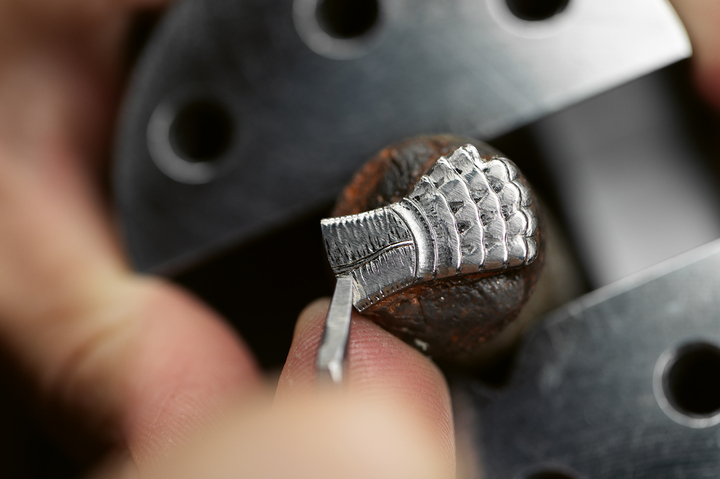
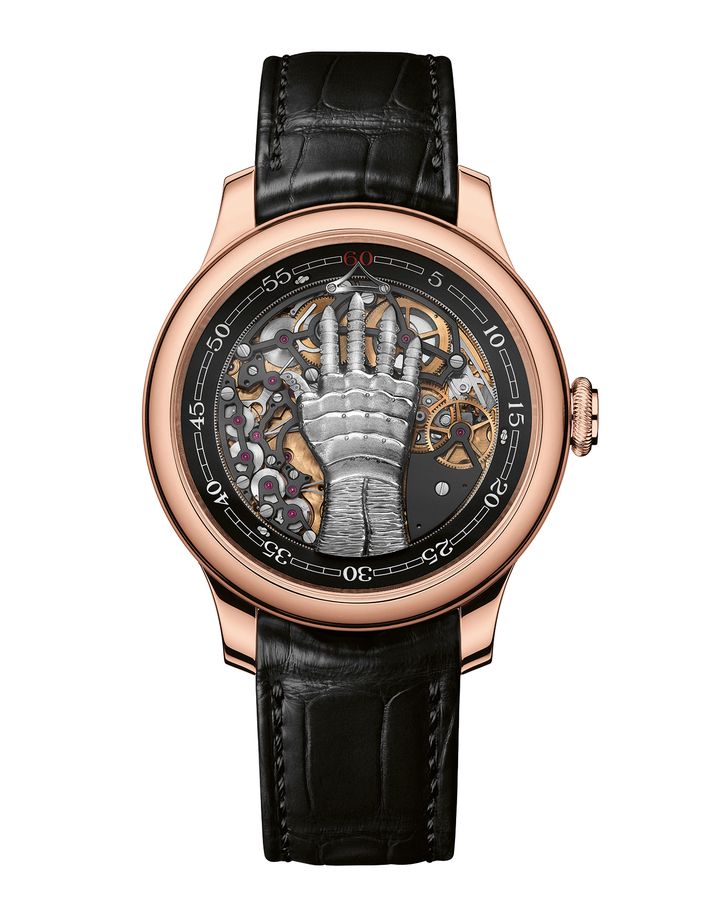
On the hand Ulrich received from dialmakers Les Cadraniers de Genève, the palm had been precisely machined but the visible surface was flat. “François-Paul wanted the hand to be expressive, with a metallic tone, close to the original drawing,” she recalls.
Summoning every inch of her artistic sensibility, experience and each of the tools at her disposal, Ulrich set to work. Her objective was to create contrast between the polished areas, conserve the titanium’s matte aspect and preserve “the space that had been carved out underneath to leave room for the fingers.” The finished hand displays a rich metallic texture, despite the challenge of rendering its volume within the height of the dial. The retractable fingers that indicate the hours were delivered to the studio already mounted. “Normally I would secure them in wax but they were so fine, moving them wasn’t an option so I engraved them step by step, directly on the mount.”
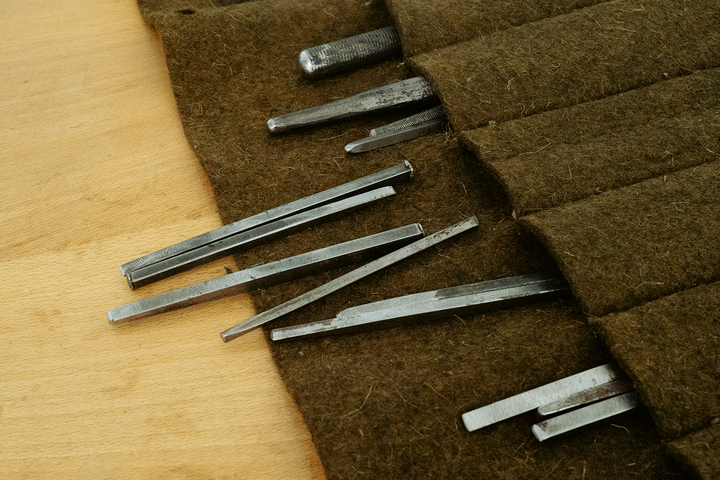
The unbelievably lifelike result shone a light on Ulrich’s expertise. François-Paul Journe publicly credited her for her work — a rare occurrence in an industry that seldom names the artisans behind the scenes, as Ulrich herself acknowledges: “That he mentioned me by name is a really big thing.”
Price, value and recognition
“François-Paul completely changed the way I saw my work. He told me I should set my price based on the value of the project, not the number of hours. He actually refused my first quote for the FFC and asked for a higher one!” A surprising response, though not for anyone familiar with the watchmaker’s uncompromising nature. François-Paul Journe’s commission for the FFC would mark a turning point for Ulrich.
Now, there aren’t enough hours in the day for this independent engraver, who can choose her projects. Whether a bespoke design for a private collector or a caseband for Vacheron Constantin, she maintains close relations with all her customers. When Laurent Ferrier needed an engraver for a limited-edition watch with artist Hervé Di Rosa, he contacted Ulrich, who was filmed working on the dial in her studio. “When it’s a complex project and I’m involved in the design and the creative process, it’s normal that I should be named,” she says. The dial is constructed in two parts. For the base, Ulrich engraved a pattern that resembles guillochage. For the more complex second part, that sits on the base, she sculpted Di Rosa’s star-like character in low relief.
The importance of training
Brands that employ the métiers d’art for their watches have their own (often several) in-house studios. Hiring independent artisans helps ensure that skills are passed on, in a context where formal training is virtually inexistant. The Ecole d’Arts Appliqués in La Chaux-de-Fonds is one of the few institutions that continues to deliver hands-on teaching of metal engraving, among other disciplines.
Ulrich is a member of the Association Suisse des Graveuses et Graveurs Manuels sur Métal (ASGMM), an association of Swiss hand engravers. Founded in 2023, its purpose is to promote the profession and training among the wider public. Jeanne-Valentine Ulrich insists on the urgency of the situation: “One of the reasons we founded ASGMM is that politicians don’t always realise how vital this training is… or the consequences if it were to disappear.”
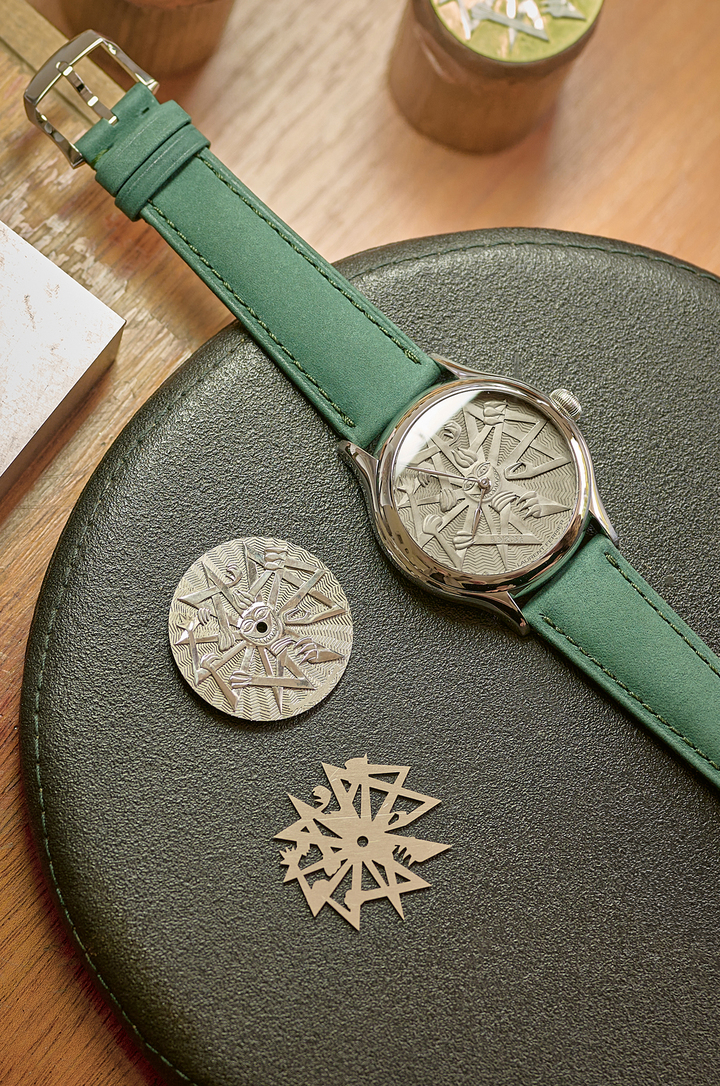
The Association also serves as a forum where the community of engravers can discuss contemporary issues such as recognition for their profession. This modern-day guild could well change the way watch brands see a centuries-old craft whose ability to reinvent itself is in no doubt.
As for the future, Jeanne-Valentine Ulrich remains optimistic: “There’s a lot happening. Engravers trained at Ecole Boulle, for example, are bringing fresh creativity. In Switzerland we tend to focus more on technique and what the industry wants.” She pauses, then adds: “I want to break the glass ceiling, for everyone to find artistic fulfilment and be recognised for what they do.”
PHILIPPE JACQUIN-RAVOT: MINIATURE PAINTING IN ALL ITS FORMS
Philippe Jacquin-Ravot is a distinctive presence among the practitioners of watchmaking’s métiers d’art. This miniaturist is first and foremost a painter who has been captivated by the vibrancy of colour since the epiphany of seeing Monet’s water lilies series for the first time, and later the Yves Klein retrospective in 1983. His sensitivity and experience give him the freedom and confidence to take on the most complex requests. Whether working in acrylic, enamel or Super-LumiNova, he explores all types of media, refusing to box himself in or align with a particular school or category. Independent and something of an iconoclast, Philippe Jacquin-Ravot remains true to his first love: miniature painting.
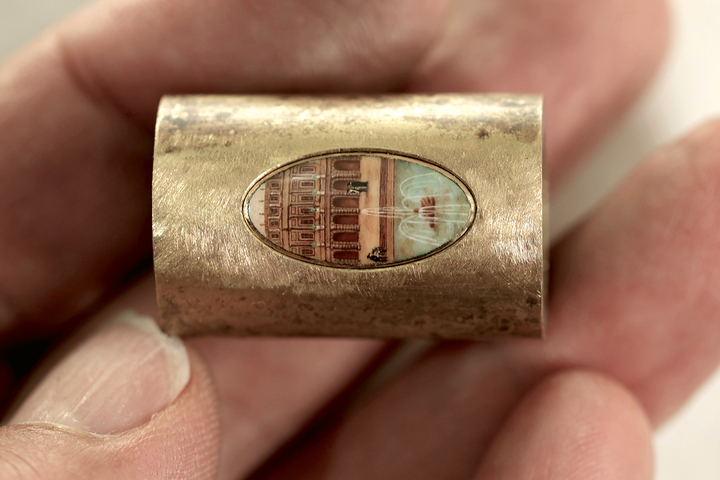
On the day of our visit, the reason for the smile on Jacquin-Ravot’s face is nestled in the hollow of his hand. A tiny grey cylinder. He hands us a loupe and, as we lean in for a closer look, we’re stupefied to discover, inside an oval medallion just millimetres high, the main body of Château de Versailles, rendered with startling precision in enamel. Warm yellow and ochre shades elegantly complement the blues of the fountain in the foreground. “I’m pleased with the result,” says Jacquin-Ravot. Produced over months of exchanges with the creative teams at Montblanc, the miniature will be set into one of eight pens, each magnificently chased, for a limited series inspired by the Palace of Versailles, the principal residence of Louis XIV, the Sun King. Montblanc regularly collaborates with artisans and, with a degree of transparency seldom seen in the luxury world, associates them with these projects. Word of Philippe Jacquin-Ravot’s work as a miniaturist started to spread.
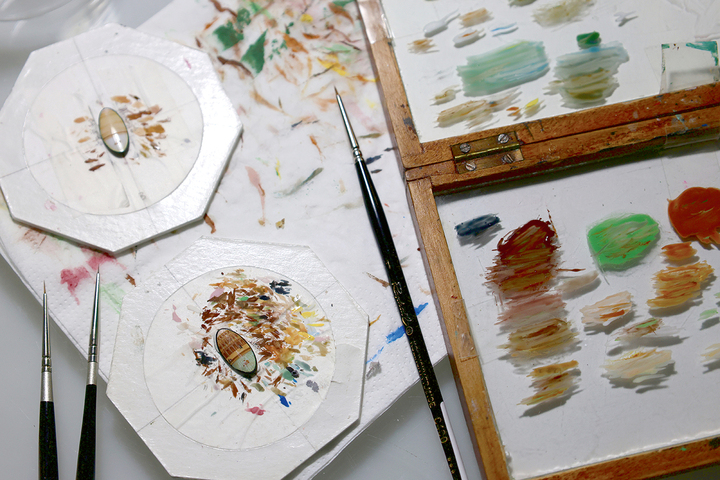
This graduate of Ecole Nationale Supérieure des Beaux-Arts in Lyons began his career a long way from royal residences, having spent twenty years with DCM, a manufacturer of ocular prostheses in Lyon, where he painted “tens of thousands of irises on prosthetic eyes.” This experience left him with the rare capacity to work on three-dimensional, concave or convex surfaces.
A somewhat shy child, Jacquin-Ravot was already fascinated by miniature worlds, whether that meant “observing ants or carving tiny figures out of erasers.” His time as an art student, then at DCM, confirmed this affinity with the infinitely small. When in 2018 he turned freelance, watches and jewellery were his first port of call.
“I got my first commission from GVA Cadrans, painting a dial for Graff,” he recalls. More projects followed, “all different,” he notes, “meaning I could test and learn.”
His natural curiosity led him to train in enamel painting, which he insists is “a speciality in its own right.” After completing a class in Morez, in the French Jura region, he continued to progress independently, in his studio. The artist gave way to the artisan, each experience of different mixes and firings, each error another step on his journey towards becoming an enameller. He found himself engaged in “the enameller’s constant battle with air bubbles, temperature and, more broadly, firing” but pressed on, setting aside entire days for experimentations: a process he describes as “extremely time-consuming.”
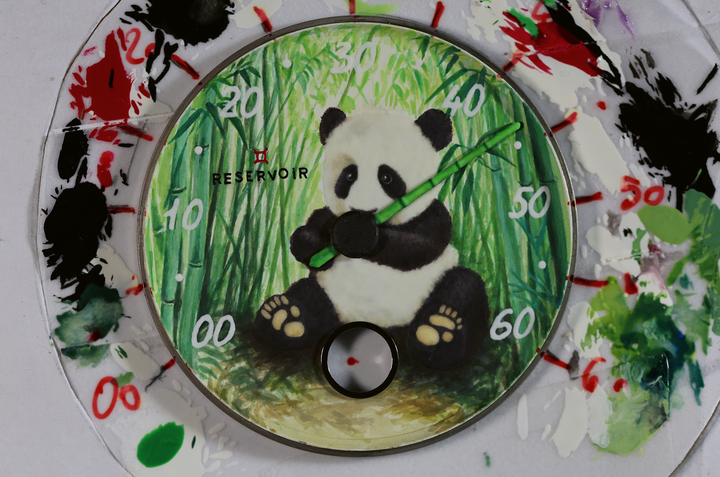
Philippe Jacquin-Ravot now devotes a large part of his activity to “personalised projects” such as the dial depicting a panda that he created for watch brand Reservoir and Asian retailer The Lavish Attic. The artist came up with the bold idea of applying an underlayer of white Super-LumiNova then acrylic for the black areas. The unique depth and luminosity made possible by the Super-LumiNova are accentuated by the green retrograde minutes hand that mimics bamboo. On November 24, 2024, “The Panda Edition” sold at Phillips for HK$ 254,000.
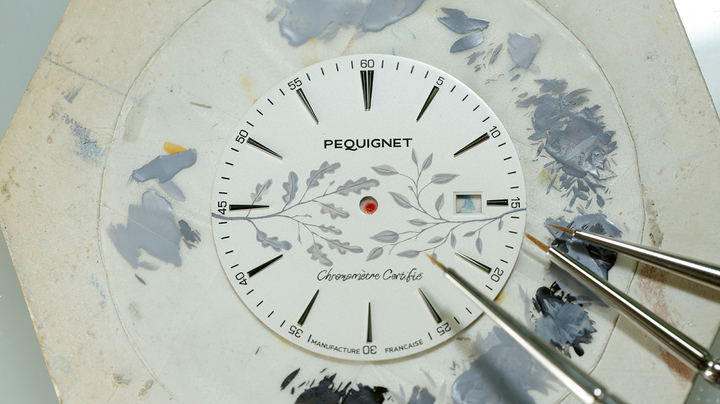
More recently, Manufacture Péquignet invited Jacquin-Ravot to decorate the dial of a watch that would be a gift from France to the Emperor of Japan. Miniature-painted branches of oak and cherry blossom meet at the centre of this unique piece. “The brand wanted an artisanal solution which allows more subtle gradients of grey than would have been possible with pad printing,” the artist explains.
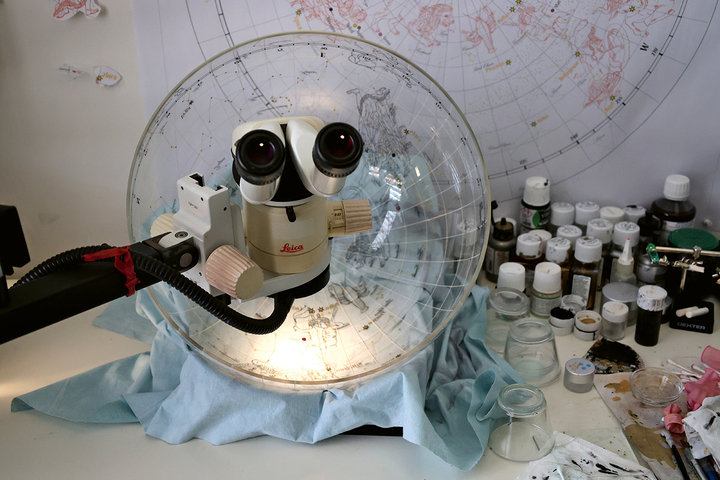
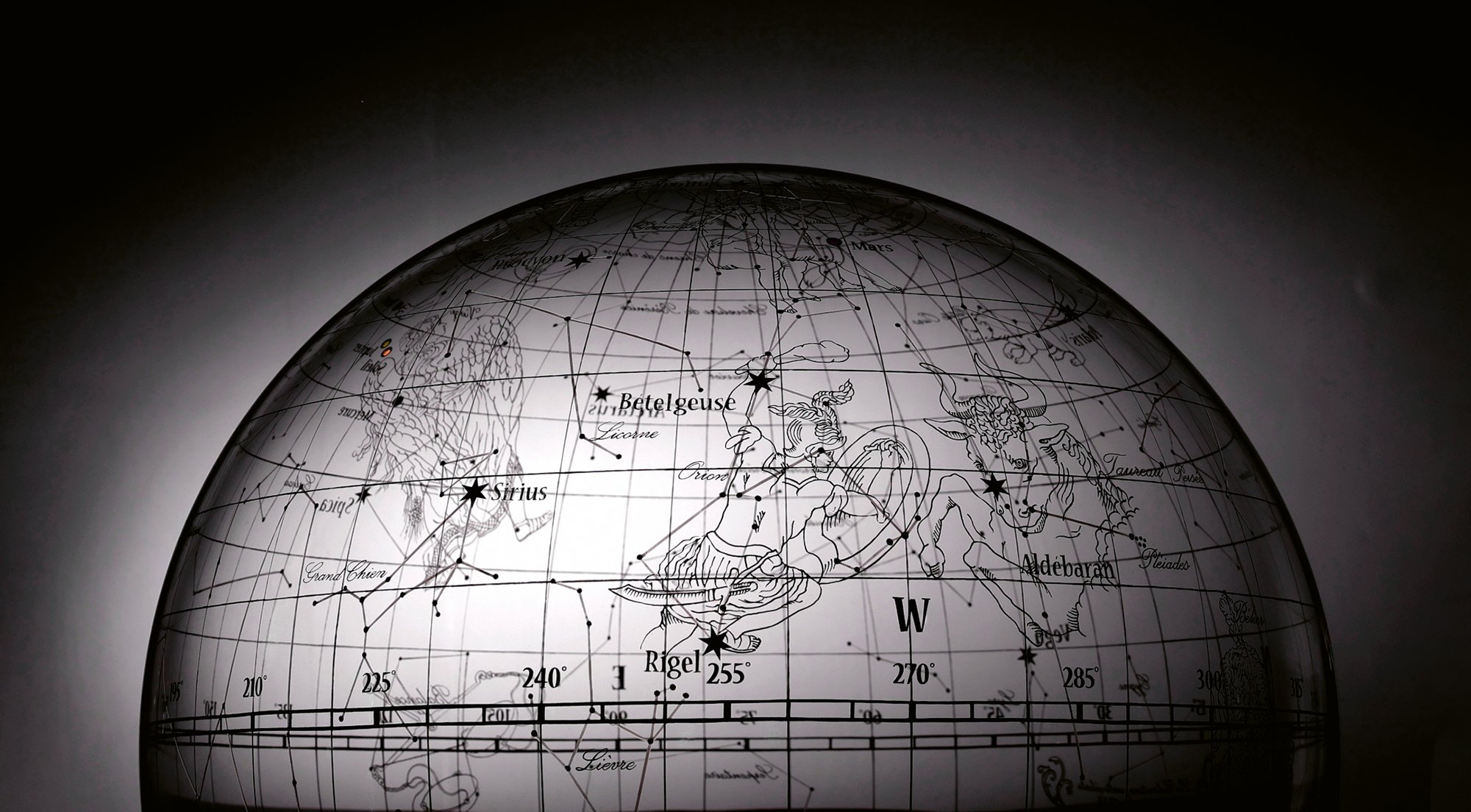
Jacquin-Ravot employs his knowledge of graphic art techniques, along with his practice of painting and photography, to develop new approaches, and has produced complex prototypes combining multiple techniques for watch and jewellery brands. Certain projects extend over months, such as his miniature-painted celestial vault for La Quête du Temps — the extraordinary mechanical object imagined by Vacheron Constantin in honour of its 270-year existence. To paint 39 constellations, 10 chimeras, 11 stars, 5 planets and 36 meridians with the requisite finesse and precision is already an exploit. Imagine, then, what it must be to paint them upside-down on the inside of a concave surface.
As our conversation nears its end, Philippe Jacquin-Ravot puts the tiny grey cylinder back into its leather case. The independent entrepreneur’s anxiety has gradually given way to confidence in the future: “So much is possible,” he says, still smiling. “We have to go on sharing and teaching people how to see. I’m convinced that watches and jewellery will continue to embrace the métiers d’art.” Judging by his order books, he’s right.
ROSE SANEUIL: ENCOUNTERS IN MARQUETRY
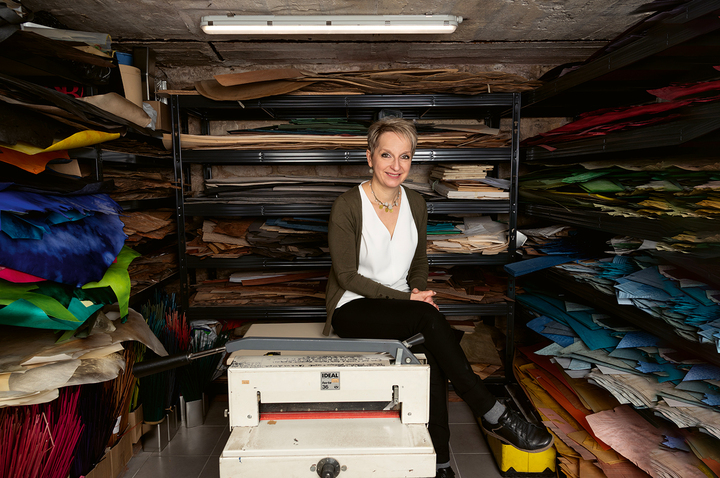
Marqueteur Rose Saneuil is revolutionising a craft historically associated with André-Charles Boulle (1642-1732), cabinetmaker to Louis XIV, by exploring infinite combinations of materials — to her own delight and that of the many prestigious brands that engage her services. Meticulously assembled in a harmony of colours, her multifarious designs adorn presentation boxes, dials, pens and jewellery. Each of her creations expands the visual and sensorial repertoire of miniature marquetry, an art that is gaining recognition.
A wish fulfilled
Life hasn’t always been kind to Rose Saneuil. Growing up in France’s rural Sarthe region, she followed a path chosen more by others than by her own volition. As a young girl, she had enjoyed sketching but artist was never a career option when there were economic realities to consider. But as she blew out the candles on her thirtieth birthday cake, Rose Saneuil took the decision to start afresh. At the age of 31 she enrolled at Ecole Boulle in Paris, earning diplomas first in cabinetmaking then in marquetry. On completing her studies, she was hired by Elie Bleu, a maker of luxury wood boxes. By day, she crafted marquetry decorations for the likes of Cartier, Boucheron and Van Cleef & Arpels. By night, she experimented with her own designs using offcuts of stingray leather that she was allowed to take home.
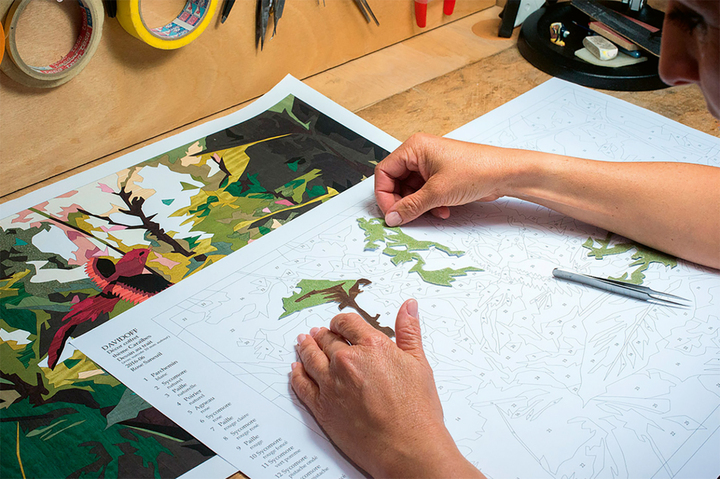
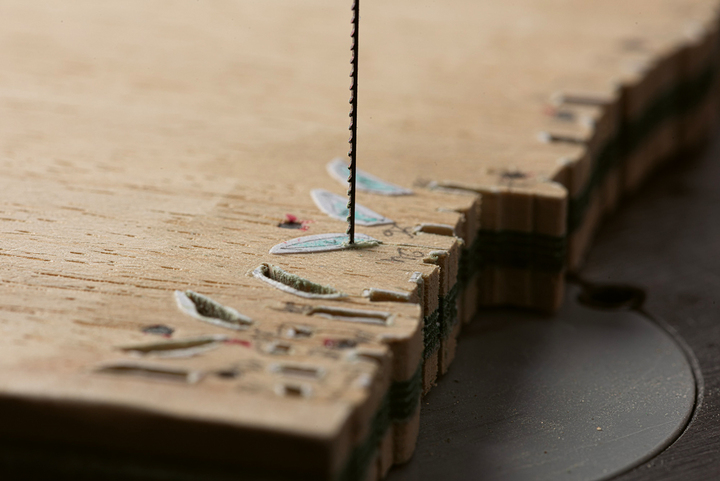
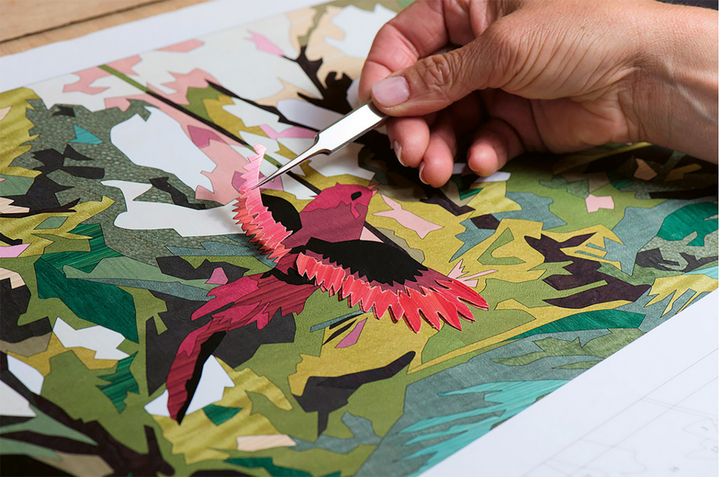
Independence beckoned and within ten years of opening her studio, collaborations with watchmakers and jewellers from Piaget to Montblanc or Louis Vuitton would be testament to her extraordinary work ethic and remarkable creativity. Project after project, with each new accolade, she carved her path with the tenacity of life’s survivors. Such resilience, matched by undeniable artistic talent, have shaped a singular personality, always searching for new ways to combine materials. She acknowledges that she has “a distinctive style. Over time, my miniatures have become more fluid, the joints are more and more precise.”
Rose Saneuil belongs to a small circle of artisans d’art who are publicly credited for their work: “Piaget has always shone a light on my production and I’ll be eternally grateful to them. Montblanc and Louis Vuitton have also mentioned me by name. I’m very lucky.”
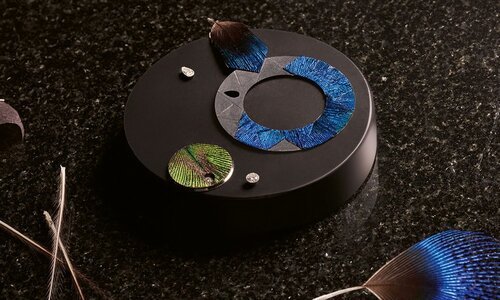
She knows customers come to her when they have a particularly complex project in mind. With time and patience she has acquired not just experience but a huge stock of materials, seizing opportunities as they arise, such as the many species of wood she obtained from a company that had gone into liquidation, gradually adding the rest: stingray, leather, mother-of-pearl, etc. “I’m always on the lookout for different materials. Right now I’m experimenting with slate and feathers. The prototypes reflect the light in a very particular way that enriches the colour. They have a slightly raised texture that differs from classical marquetry, where the pieces must lie perfectly flat, on a single plane. But I like that.”
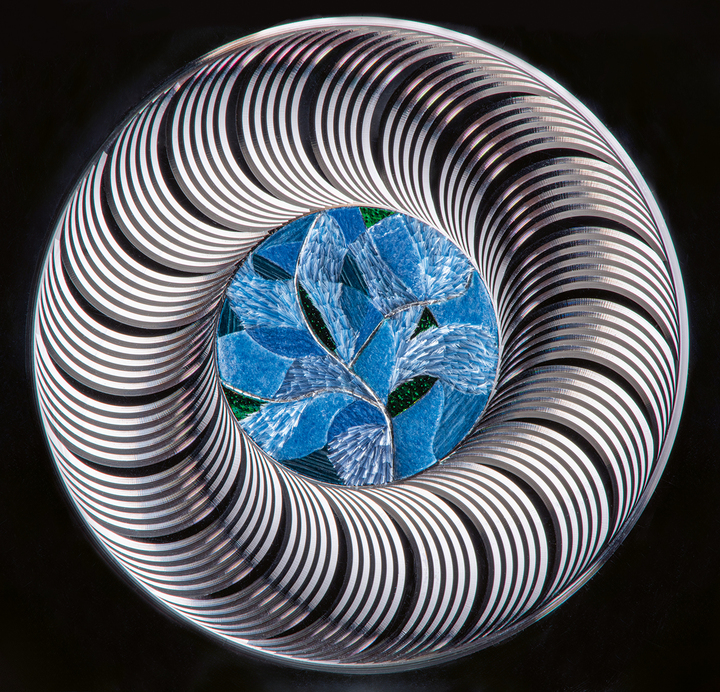
More than once, Rose Saneuil has been headhunted by luxury brands but has always held onto her independence, a decision she savours: ”In July 2023 I celebrated my first ten years as a freelancer. It’s amazing to think how many projects I’ve completed in such a short space of time and how different they all are,” she comments before adding, almost as an afterthought: “I’m glad I took the plunge.” Rose Saneuil, multi-material marqueteur, has “never been happier.”
DEBORA MARTINEZ: MINIATURE PAINTING 2.0
She’s beginning to make a name among collectors, chipping away at the wall of silence that surrounds watchmaking’s artisans d’art. Enamel miniature painter Debora Martinez is behind some of the most desirable watches right now. Co-founder in 2022 of the Miniare enamel studio, her love of experimentation is revitalising this grand tradition.
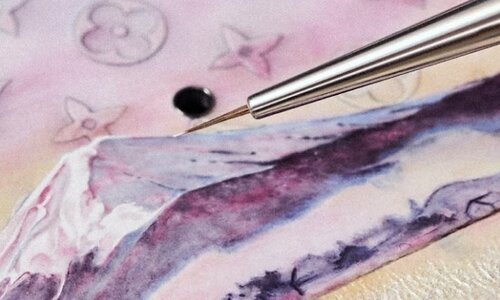
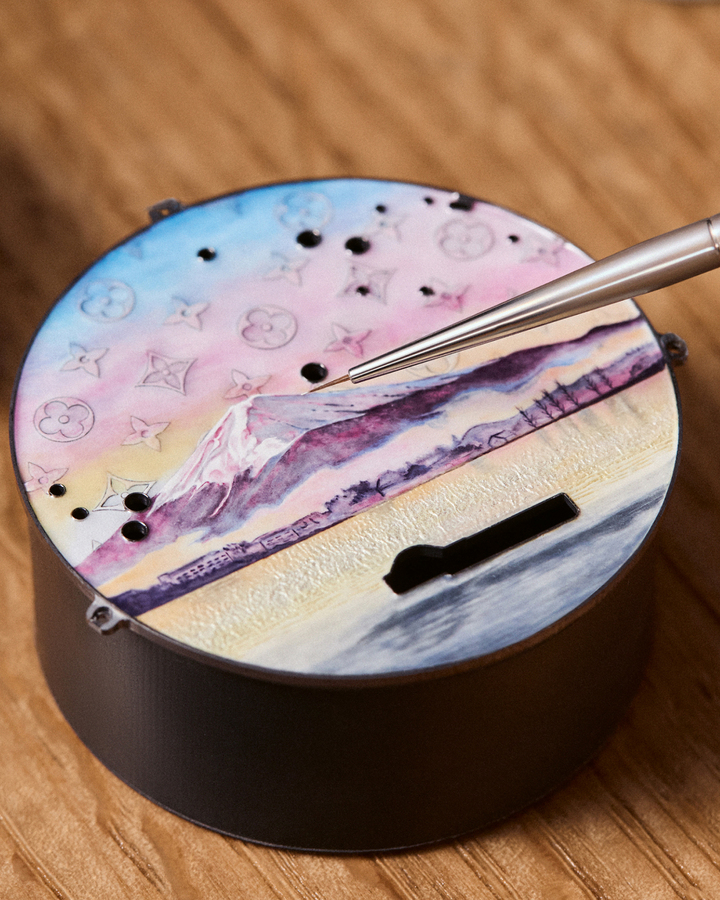
Her movements are as precise and controlled as those of a qi gong master. Speechless with admiration, we watch as Debora Martinez, armed with a hand-trimmed brush, deposits a few grains of enamel so tiny they are invisible to the naked eye. Mount Fuji blushes with delight, echoing the pinks and carmine of the cherry blossoms that frame its famous silhouette. Louis Vuitton’s Escale au Mont Fuji pocket watch is almost ready for a lucky owner to enjoy. At Miniare, the tortoise’s steady perseverance triumphs over the hare’s speed.
A platonic relationship
A day in the (working) life of Debora Martinez is filled with conflicting emotions. Joy one minute, frustration the next: “This is such a rewarding profession but an ambivalent one, too,” she says “It’s almost a platonic relationship. We’re constantly pursuing something we can never fully achieve. The enamel decides for us. It teaches us humility.”
Smiling, she downplays her role: “You can make a plan, number the zones, define a strategy for how you want to apply the enamel, but once the workpiece goes into the kiln, it answers back. It doesn’t always behave as you’d expect. From the very first brushstroke, the entire process is one long series of risks.” Such modesty is a common trait among the craftsmen and women who, though often invisible to collectors, are at the heart of the watchmaking ecosystem. At the same time as they develop their own enamel studios, watch brands continue to work with independent artisans, to ensure a broad range of suppliers as well as benefit from their expertise. Job offers soon came pouring in but Debora Martinez had other plans. She chose independence.
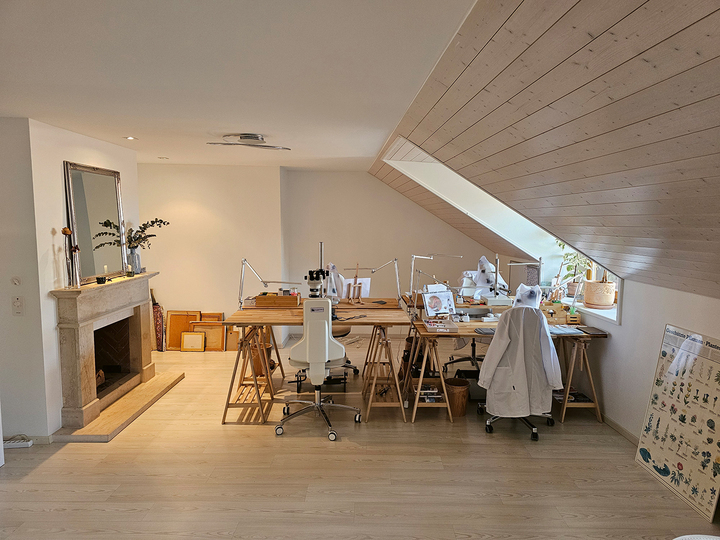
In 2022 she and her partner Francisco Morales, an experienced enameller, took a leap of faith and set up Miniare. The studio works in all the traditional techniques of cloisonné, grisaille, champlevé and paillonné, although Martinez owns up to a particular affinity with miniature painting. Sitting in the sunny, converted attic space in Nyon that she shares with five other enamellers, she pauses before answering our question, weighing her words carefully: “If I had to describe myself, I’d say I’m a miniature painter. The word ‘painter’ is important because it connects what I do with my Fine Art studies. I paint with enamel but for a lot of people, ‘enameller’ is a more abstract notion. I want the artistic and pictorial aspect of my work to be clear.”
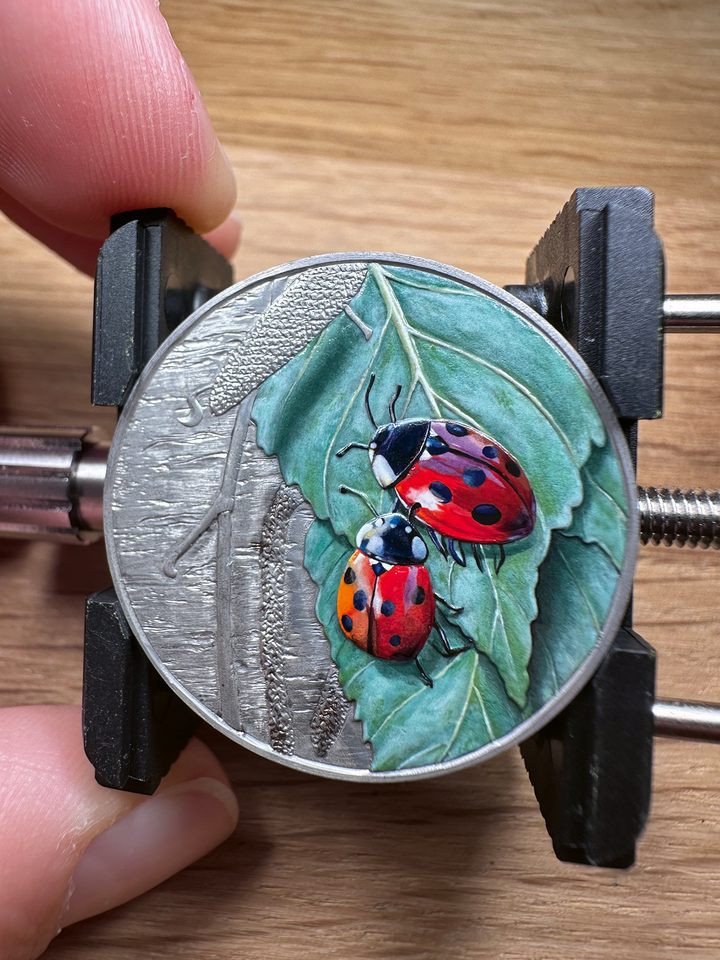
Because there is no national vocational qualification in enamelling in Switzerland, enamellers must learn “on the job”, taking advantage of opportunities offered by more established practitioners in their studios to gradually learn new skills. For a beginner, practice and observation are essential — qualities that Martinez has developed over the course of her enamel journey.
Near-obsessive intensity
In 2012 this now great admirer of enameller Anita Porchet was far from imagining that a taster day at dialmakers Stern Creation would, in her words, “open the doors to a world I didn’t even know existed.” That of the artistic crafts in watchmaking. This Fine Arts graduate from the University of Málaga, the birthplace of Pablo Picasso, was hired by Dominique Baron’s enamel studio, which gave her the opportunity to return to her native Geneva. “For the entire first year, I was invested in my work almost to the point of obsession. I really wanted to keep this job and stay in Switzerland. I needed to put down roots somewhere.”
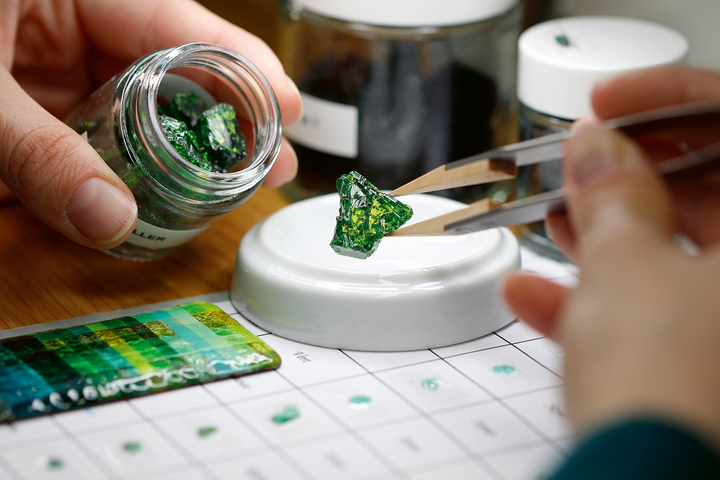
Three years later, she joined the team at Christophe Blandenier’s newly created enamel studio. “My colleague Clotilde and I were given tremendous freedom to experiment. Thanks to this, I was able to break down the very structured training of my early years and explore different oils, materials and fluxes while finding my own solutions.”
At the same time, Debora Martinez enrolled in a Master’s in Museum Studies and completed an internship at the Musée International d’Horlogerie (MIH) in La Chaux-de-Fonds. It was love at first sight. She remembers “handling pieces, some dating back to the sixteenth century, whose colours were as vibrant as ever.” This is when she grasped “enamel’s historical significance and the importance of its legacy.” Like the best independent watchmakers who honed their technique by restoring clocks and watches of different types and periods, Martinez pored over old manuals and books on enamelling. When in 2022 the MIH staged Eclats de Verre, an exhibition on the art of enamel, she created a grisaille dial depicting bees on flowers, which the museum went on to acquire.
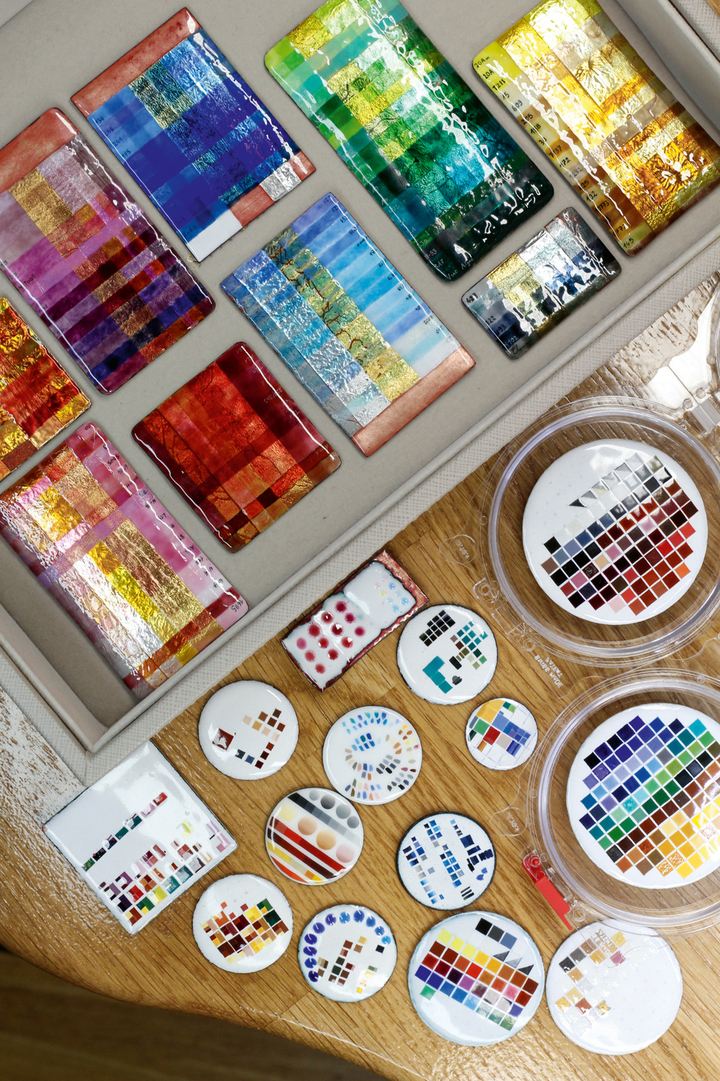
The Covid lockdowns gave many of us time to think. For Debora Martinez and Francisco Morales, buoyed by their ten years of experience, now was the time to set up Miniare. “Independence is great,” enthuses Martinez. “It gives us freedom to choose materials and techniques. We never stop experimenting with new ideas.”
All fired up
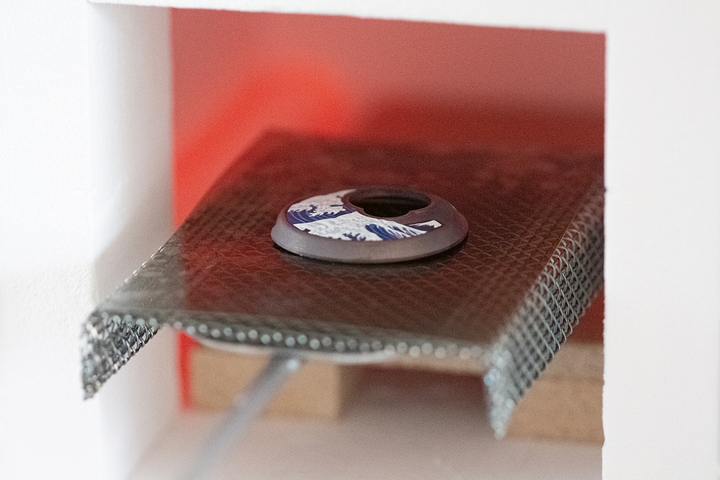
For any watch enthusiast, or anyone with an interest in enamel, the vocabulary can be confusing. What exactly is Grand Feu? Is miniature painting an enamel technique? What’s special about Geneva enamel? Enamel is painting with fire. Enamel powder is fused to a copper or gold substrate by firing in the kiln. Martinez insists on the importance of the term “Grand Feu”: “It distinguishes what we do from other techniques that use resins, lacquers or hybrid ceramics. I define Grand Feu as enamel, which is primarily silica mixed with metal oxides, that is vitrified at high temperature, between 700 and 900°C.”
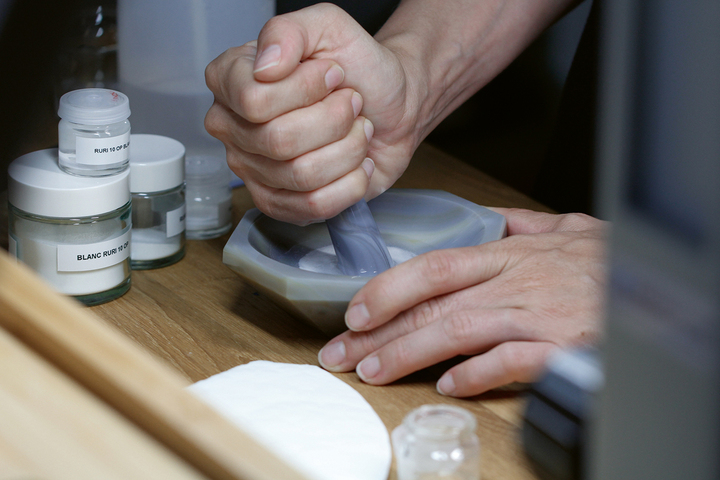
To answer the second question, miniature painting is an enamel technique. The raw material — enamel — and firing process are the same as with cloisonné, champlevé or plique-à-jour. The difference lies with the binder, which is the medium added to the enamel powder so that the grains stick together. Enamellers use demineralised or, preferably, distilled water as a binder for every technique except enamel miniature painting in which case, as Martinez explains, “the enamel is finely ground on an agate mortar then mixed with oil, such as lavender, lily, clove or terpineol. The type of oil influences the fluidity, evaporation time and stability of the powder grains.”
For the technique of Geneva enamel, a layer of translucent enamel or flux is applied on top of the miniature painting then fired. This seals the miniature and preserves the intensity and depth of its colours. Martinez insists on the importance of the flux: “It isn’t one final coat. It has to be applied in very thin, successive layers, otherwise microbubbles form and the translucency is affected.”
Enamel’s evocative nature is captured in the Escale au Mont Fuji pocket watch. Martinez described the different stages in its conceptualisation, from the choice of the 23 translucent, opaque or transparent enamels, to the 35 firings in the kiln. Figures that reveal nothing of the numerous difficulties encountered. So as to suggest the water’s shimmering surface, silver leaf was applied under the enamel. However, as Martinez explains, “silver leaf tears easily and must be handled with extreme care. Also, silver reacts with enamel which can alter the colour.” As for the centrepiece, a miniature-painted Mount Fuji, “certain areas intentionally blend into the background to preserve the ethereal quality of the natural landscape.” Lastly, the flux is mirror-polished to enhance depth and accentuate transparency.
The raw materials
“Currently, we work with over a hundred colours,” says Debora Martinez. “We didn’t inherit an existing stock. Instead, we’ve built up our own palette. We’ve purchased, tested, ground and classed every colour ourselves. Some become translucent after firing. Others reveal their depth after multiple firings.” Indeed, Martinez’s greatest strength, and that of the studio, is almost certainly a command of enamel colours and how they respond to firing.
The storeroom is neatly stacked with row upon row of glass pots, like miniature jam jars. On each one, a fired enamel sample indicates the exact shade of the powdered enamel it contains. Moving on, we see round or rectangular pieces of copper covered with vitrified enamels, like so many artist’s palettes. Each colour has been labelled with a reference number that corresponds to the glass pots. Everything is rigorously organised, the result of hundreds of hours of tests. From the Renaissance onward, artists such as Fra Angelico (c. 1395-1455) ground their own pigments. Their frescoes’ vibrant colours proceed from months of research. Debora Martinez knows her art history.
This mastery of colour is splendidly illustrated by Taco, one of the dogs in the Hermès Arceau Jour de Casting series. Subtle shading and delicate brushwork render the fur with such incredible realism we almost want to reach out and stroke him. His gentle blue eyes, in cloisonné enamel, make him even more delightful. A wonderful example of two techniques, miniature painting and cloisonné, together.
Epilogue
We leave Miniare, its enamellers and its co-founders Debora Martinez and Francisco Morales, having learned so much more about enamelling, an ancestral art that is enjoying a remarkable revival. In France, for example, La Maison de l’Email in Morez runs courses teaching these age-old skills. Says Debora Martinez, “There’s no such thing as instant gratification with enamelling. It takes years to grasp. For me, research is a huge motivator, exploring and testing new combinations. Enamelling has a beginning but no end!”